How to Grow Mustard Microgreens: Pick the Heat, Sow It Dry
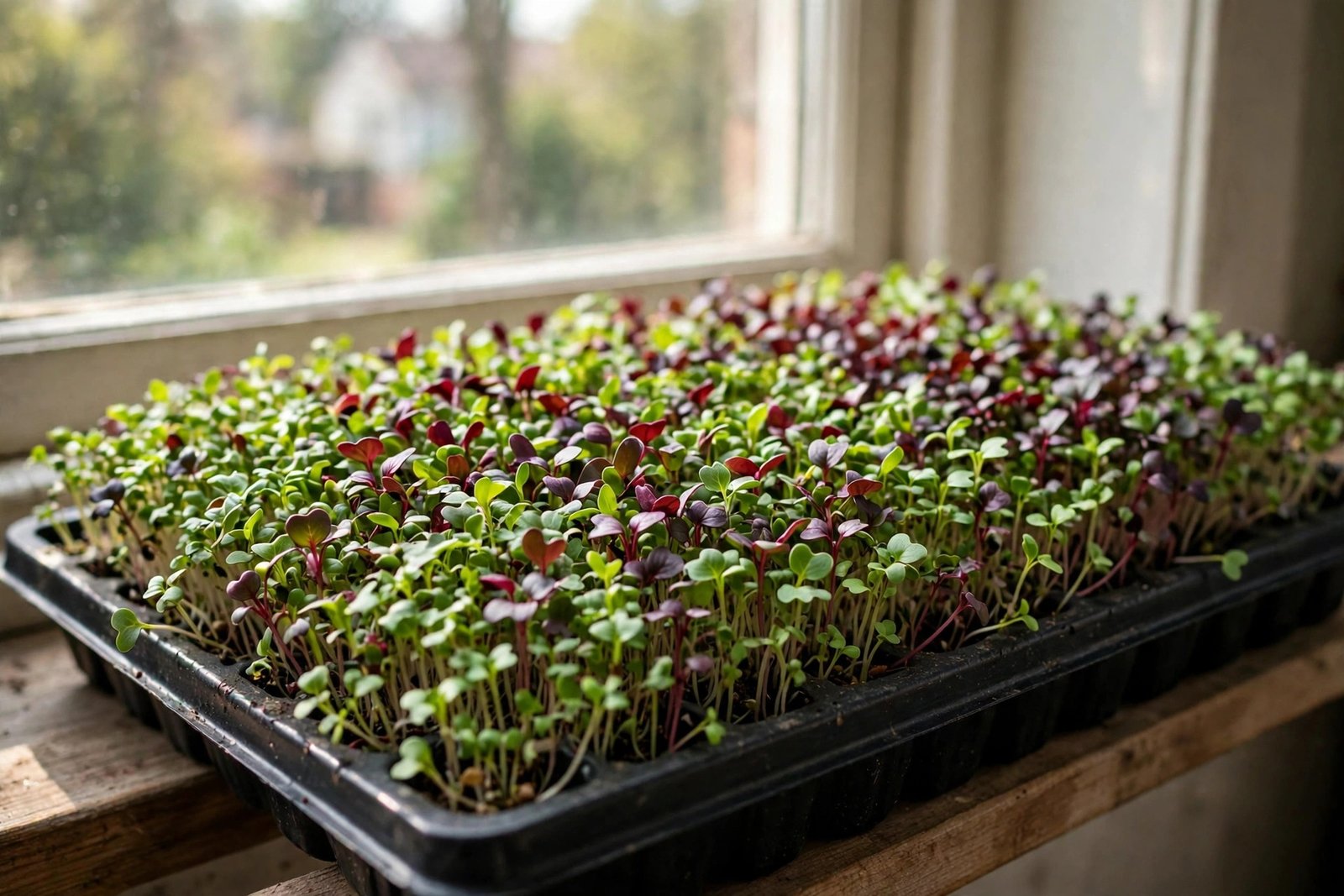
Mustard microgreens are the hot ones. A pinch tastes like a tiny bite of wasabi, warm and sharp, and a little goes a long way. They are ready in 7 to 12 days, they grow fast, and they give a big tray from a few grams of seed. In one Indian taste test of six microgreens, mustard took the top scores for taste and flavor. The variety you pick decides how hot the tray is, so this guide starts there, before any steps.
The trap is the seed itself. Mustard seed gets gooey in water, so soaking it turns a sowing into a clump. Sow it dry, keep the cover light, and the tray mostly takes care of itself. This guide is microgreens only. Mature mustard greens take 20 to 35 days, and growing mustard for seed takes 45 days or more, so do not mix the two up.
Pick Your Heat First
Mustard is not one flavor. Brown, white and black mustard are three different species, and the red types are selections of brown mustard bred for color. The heat sits in compounds called isothiocyanates, the same family that gives broccoli its bite, and mustard carries more of them than broccoli or kale. Pick from the table, then buy seed sold for microgreens or sprouting from a reputable supplier. Grocery store seed is meant for the kitchen, not the tray, and it is less likely to sprout well.
| Variety | Heat | Look | Best for |
|---|---|---|---|
| Brown / Indian mustard (Brassica juncea), incl. ‘Red Lion’, ‘Garnet Giant’, ‘Red Lace’ | Hot, wasabi-like | Green or deep red leaves | The classic hot tray |
| White mustard (Sinapis alba) | Spicy | Pale green | A first tray |
| Black mustard (Brassica nigra) | Spicy | Green | A small tray first if you have never tasted it |
| Mizuna | Mild, peppery | Feathery green leaves | Salads, first-timers |
| Gai Choy (Indian mustard) | Mild in microgreen form | Broad green leaves | Pickles, Asian dishes |
| Florida Broadleaf | Full flavor | Green | Southern cooking |
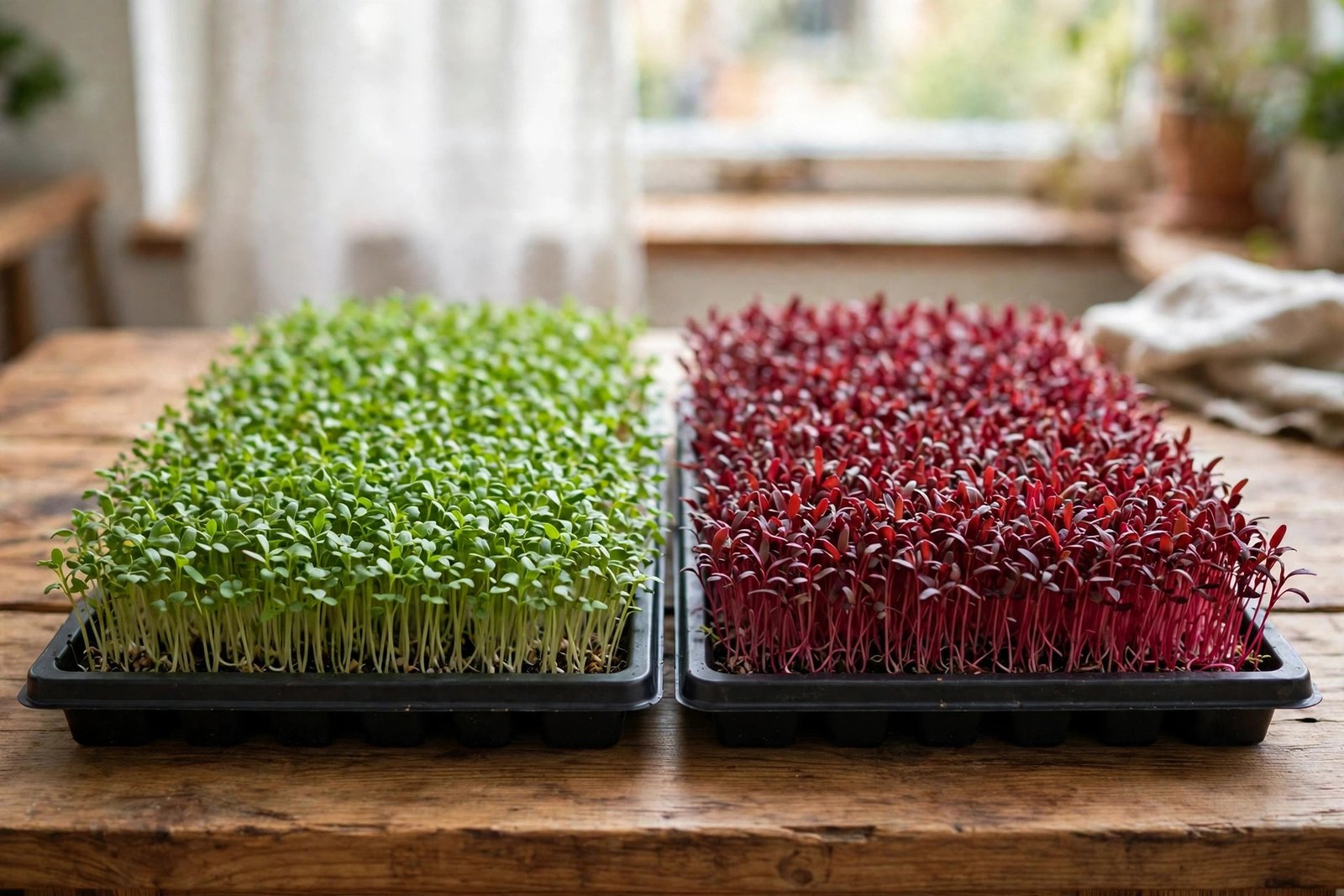
Red types are the showiest. Epic Gardening lists ‘Red Giant’ among its mustard picks, a red mustard with burgundy to brown leaves and a hint of horseradish, and it calls Mizuna the milder pick. If you want color and heat in one tray, start with a red brown mustard. If you want the heat without the color, start with plain brown.
Mustard is a brassica, like radish and broccoli, but it does a different flavor job. Radish is peppery and crisp, and broccoli is mild and green. Mustard is the hot one. If you want to see how it sits among the other crops, our types of microgreens guide compares the full set.
How Much Seed: Density, Not Weight
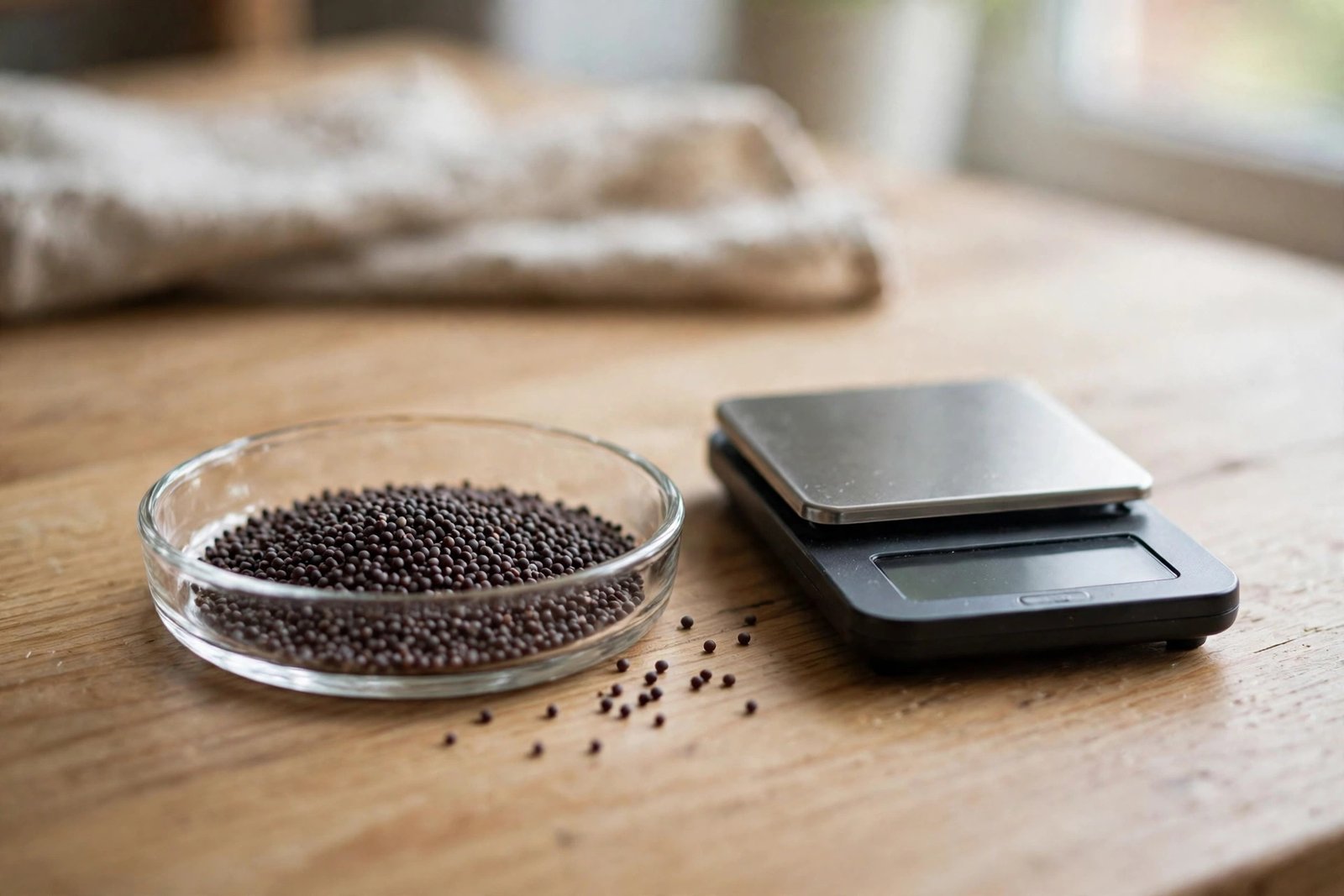
Mustard seed is tiny. One thousand ‘Garnet Giant’ seeds weigh just 2 grams, so the number that matters is seeds per square centimeter, not spoonfuls. A study-checked guide that read 16 studies puts the range at 3 to 5 seeds per square centimeter, about 10 grams for a standard 25 by 50 centimeter tray. That is the range to aim for.
| Tray size | Seed to sow |
|---|---|
| 25 by 50 cm (10 by 20 in, standard) | About 10 g |
| 25 by 25 cm (10 by 10 in) | About 5 g |
| Ceiling, any tray | Never above 8 seeds per cm2 |
The ceiling matters more than the exact number. An Indian study tested Indian mustard at 6, 8 and 10 seeds per square centimeter. More seed gave a bigger harvest, but above 8 the shoots grew long and thin, air could not move between them, and quality fell. The study picked 8 as the best rate, and this guide treats it as the limit, not the target. Weigh the seed on a small digital scale. Mustard spreads its leaves wide, so a crowded tray is a floppy tray.
The Method in Five Steps
The steps below follow Epic Gardening and the study-checked guide, and they work on soil or coco coir. Our general microgreens guide covers the tray setup in full if this is your first tray of any kind.
Step 1: Sow the Seed Dry
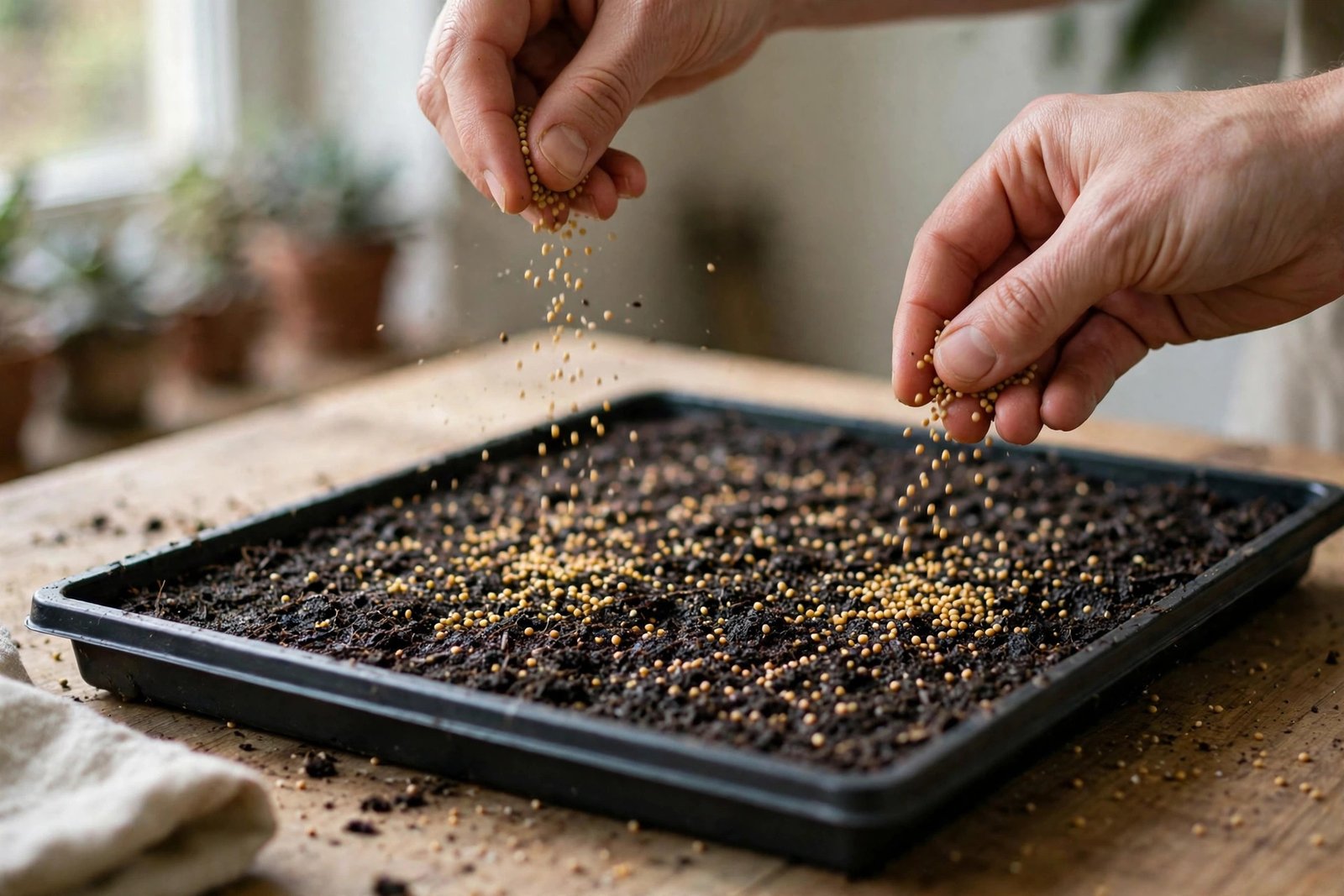
Do not soak mustard seed. Like chia seeds, it gets gooey in water, and a mass of goo is hard to spread. Fill a tray with drainage holes almost to the brim with fine, damp seed-starting mix, level it, and tamp it lightly with your palm. Scatter the seed dry across the surface, close enough to grow a mat of greens but far apart enough to let air move. Mist it well after sowing. Most studies sowed dry seed, and the study-checked guide recommends no soaking. One study did soak the seed for 24 hours first, but that is the exception, not the rule.
Step 2: Cover It and Weigh It Down
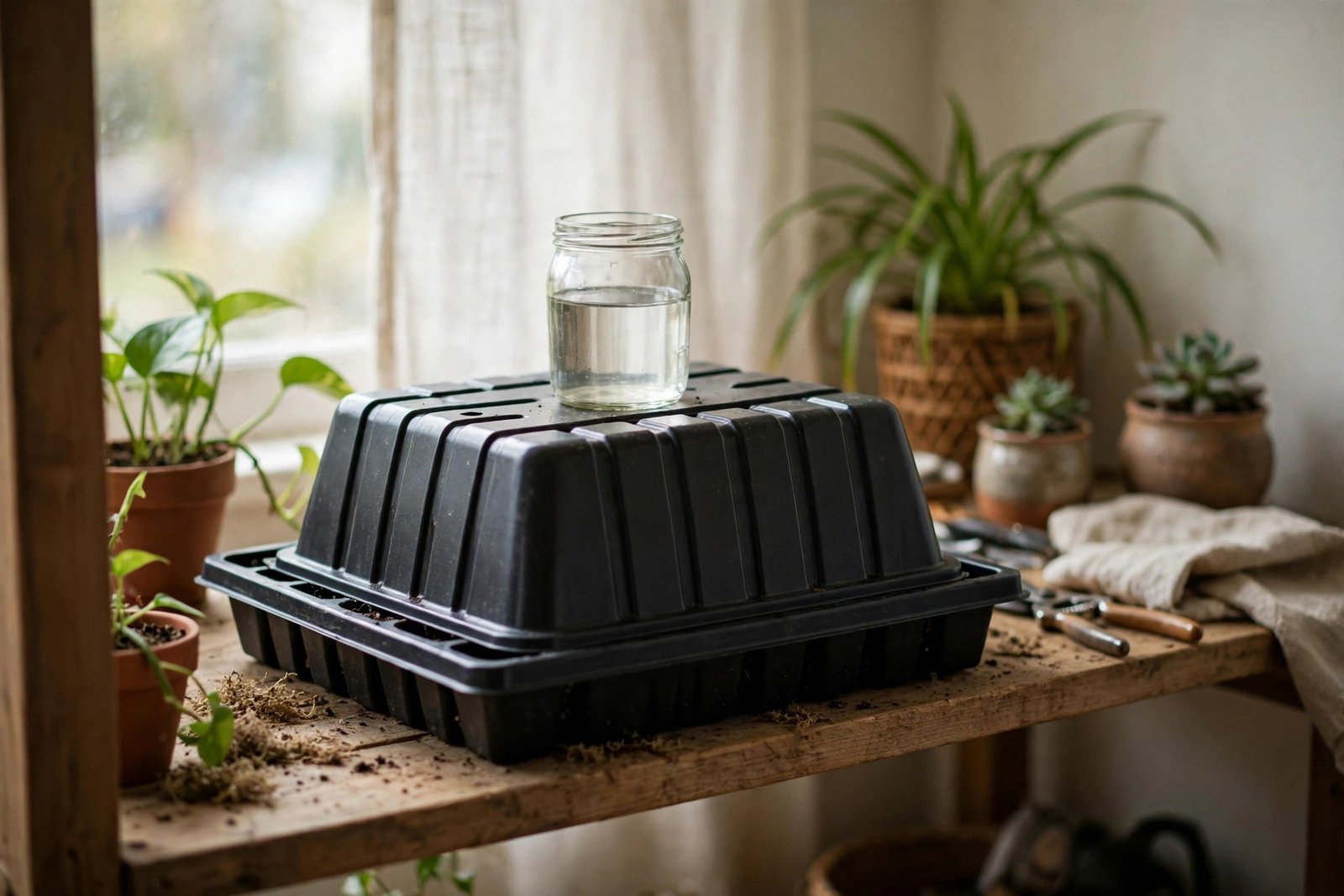
Set a second tray without holes directly on top of the seed. It should block out all light and press down on the soil, which helps the roots grow down into the mix. Add a small weight on top to press the seed in. Most microgreens can hold up to 5 lb, but mustard can only take 2 lb tops, so keep the weight light. A heavy book is too much. A small jar or a light plate is enough.
Step 3: Blackout for 2 to 4 Days
Keep the cover on and the tray in the dark for 2 to 4 days, until most seeds have roots and small shoots. Germination takes 2 to 3 days. Check the moisture daily and mist as needed. The surface should stay moist, never soggy.
Step 4: Light and Water
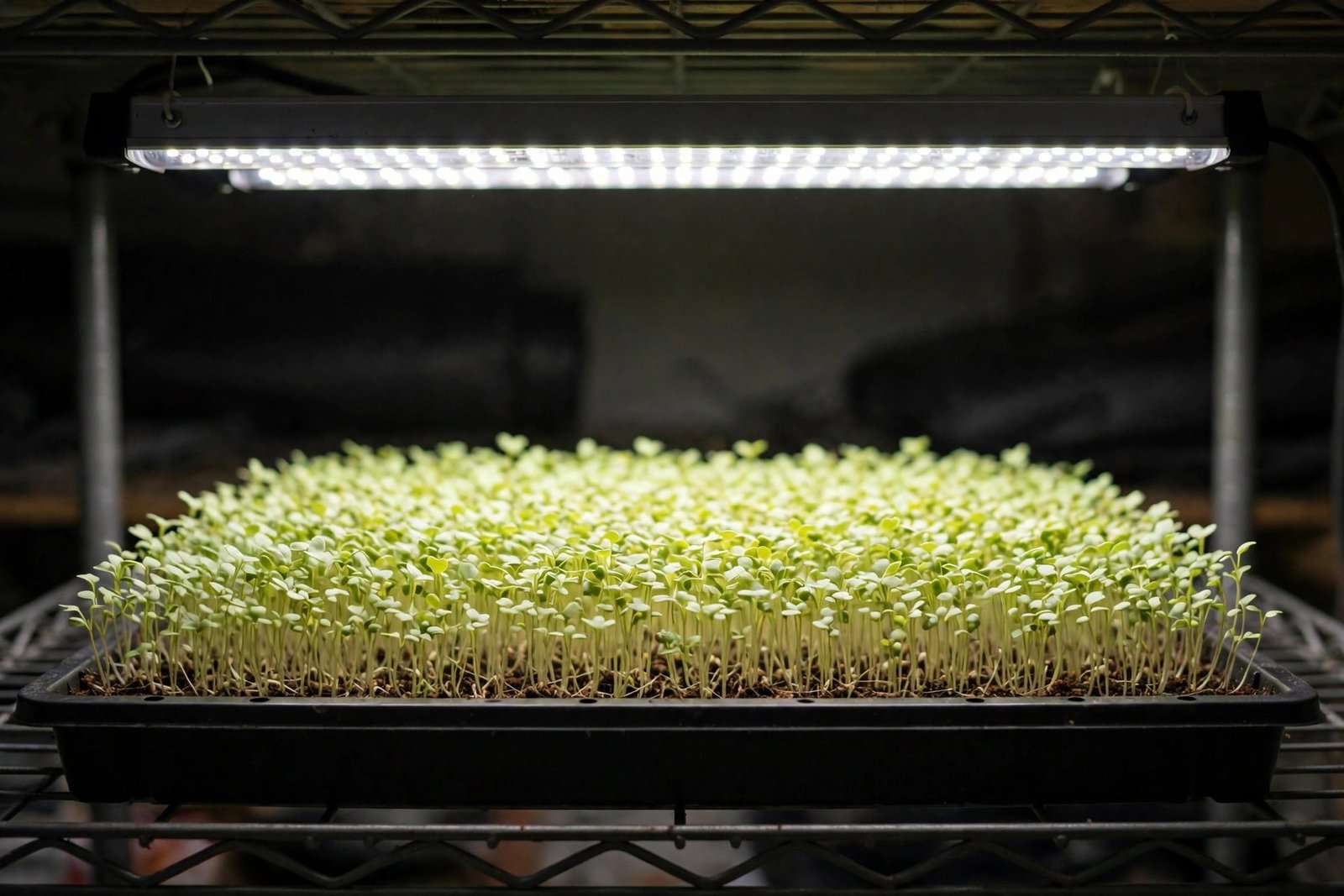
When the seedlings push the cover up and the seed leaves show, take the cover off and move the tray into light. A bright white LED for about 16 hours a day is the most common setting in the studies. Hang it about 12 inches above the tray. Weak light makes mustard stretch, and a crowded tray does the same, so keep the light close and the sow thin. The leaves may look yellow from the dark at first, but they green up fast.
Keep the room near 68 to 75F. Warmer is faster but taller, and a cooler room gives a sturdier, slower tray. Water from below: fill the cover tray with an inch or two of water, set the growing tray inside, and let the soil drink for about 10 minutes. Bottom watering keeps the surface dry, and a dry surface is what keeps mold away.
Step 5: Harvest and Store
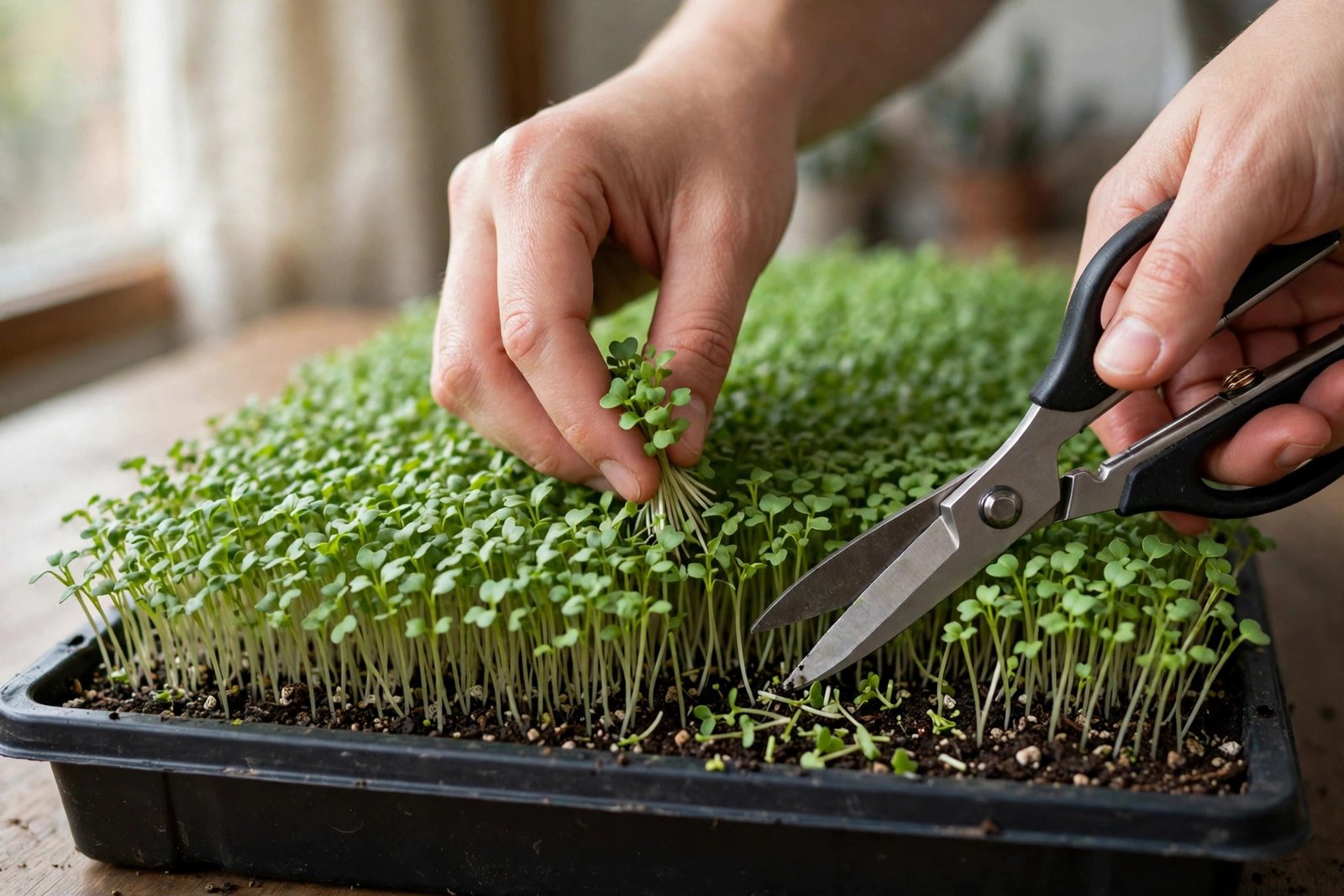
Most trays are ready 7 to 12 days after seeding. Harvest when the seed leaves are fully open and the shoots stand 1 to 3 inches tall, before the first true leaves show up. The taste and texture change once true leaves arrive, so do not wait for them. Cut about 1 cm above the soil with sharp scissors. Mustard is a one-and-done crop, so pull out the spent seed and compost the soil when you are finished.
In a warm, bright room a tray can be ready from day 5, and past day 12 the stems get long and the heat turns rough. Pick the day by the look of your tray, not by the calendar alone.
Use the harvest soon. Plan on 5 to 7 days in the fridge, up to 10 done well, sealed in a bag or box and fully dry before it goes in. Our guide to how long microgreens last covers the full storage routine. At room temperature mustard spoils in a day, so get it into the fridge straight after cutting.
When a Tray Goes Wrong
Most mustard problems trace back to light, density or moisture. A few specifics:
- Pale, floppy shoots. The light is too weak or too far away. Move the light closer and give the tray about 16 hours a day. A tray that is already floppy will not stand back up.
- Long, thin shoots. The tray was sown too thick, above 8 seeds per square centimeter. Air cannot move between the shoots. Sow thinner next time.
- Mold on the tray. Dense mustard traps moisture, and moisture favors mold. Water from below, keep air moving, and throw away any tray with mold or a bad smell. Our mold guide shows how to tell mold from healthy root hairs.
- The tray tastes rough or too hot. It was harvested late, after the true leaves came up. Cut before the true leaves show, and use a smaller pinch next time.
- The tray dries out in blackout. Check the moisture every day while the cover is on. Mist lightly to keep the surface moist, never soggy.
How to Use the Harvest
Use mustard microgreens like a spice, not a salad base. A little goes a long way. Put a pinch on eggs, soups, sandwiches and grilled meat, and add it at the end so it keeps its bite. Heat tones the spiciness down, so if you cook with it, add it off the heat. It is also good on hot dogs and in Indian dishes, and a few sprigs give a green smoothie a peppery kick. More than a few sprigs can be too hot.
That is the whole crop: pick the heat, sow the seed dry, keep the cover light, and cut in about a week.
Frequently Asked Questions
Do I soak mustard seeds before sowing?
No. Mustard seed gets gooey in water, like chia seeds, so a soaked batch turns into a clump that is hard to spread. Sow the seed dry on damp mix and mist it after sowing. Most studies sowed dry seed, and the study-checked guide recommends no soaking. One study did soak the seed for 24 hours first, but that is the exception, not the rule.
How much seed do I need for a tray?
Aim for 3 to 5 seeds per square centimeter, about 10 grams for a standard 25 by 50 centimeter tray and about 5 grams for a 25 by 25 centimeter tray. Never go above 8 seeds per square centimeter. Above that the shoots grow long and thin, air cannot move between them, and the tray loses quality. Weigh the seed on a small digital scale.
How long do mustard microgreens take to grow?
Most trays are ready 7 to 12 days after seeding. Germination takes 2 to 3 days, blackout runs 2 to 4 days, and the tray spends about 4 to 8 days under light. In a warm, bright room a tray can be ready from day 5. This is a microgreens guide only. Mature mustard greens take 20 to 35 days, and growing mustard for seed takes 45 days or more.
Why are my mustard microgreens long and floppy?
Weak light is the usual cause. Mustard stretches fast under weak light, and a crowded tray does the same. Give the tray a bright white LED for about 16 hours a day, keep the light close, and sow at 3 to 5 seeds per square centimeter next time. A tray that is already floppy will not stand back up, so start the next tray with more light.
Sources and Further Reading
Epic Gardening, Mustard Microgreens Growing Guide
microgreens.org.gr, Mustard Microgreens Growing Guide, checked against 16 studies from the EVEC science library
Priti et al., 2022, Indian mustard seeding-density study (named in the study-checked guide)
Arya et al., 2023, taste test of six microgreens (named in the study-checked guide)