
How Long Do Microgreens Last?
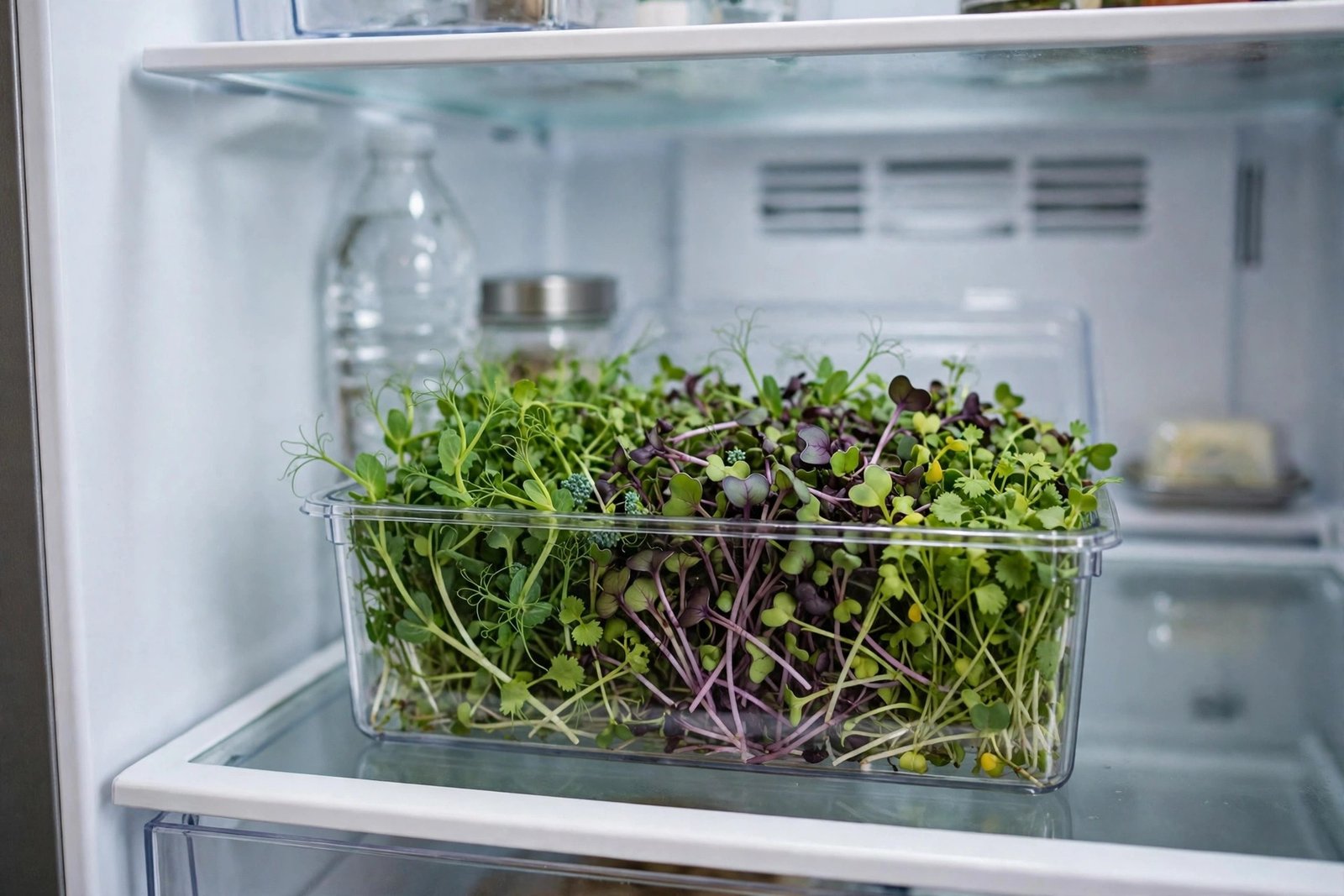
Here is the short answer. Most microgreens last 5 to 7 days in a home fridge. Stored well, they can reach 10 days. Anything past that belongs to research storage, not a kitchen shelf.
If that sounds lower than the two weeks some sites promise, there is a reason. The numbers online come from different conditions, and the conditions decide everything. A tray cut dry and packed cold lives on another clock than greens washed, sealed wet, and left in a warm fridge door.
This guide gives you the honest ladder first. Then it shows the storage system that puts your harvest at the top of it.
The Honest Answer: One Ladder, Not One Number
Extension sources do not agree on a single day count, because they are describing different setups. Read the ladder by the row that matches your kitchen.
| Where the greens sit | What to expect | Who says so |
|---|---|---|
| Home fridge, cut dry and packed well | Plan on 5 to 7 days | Extension home-grower guidance (Connecticut, Massachusetts and Purdue extensions all land here) |
| Home fridge, every step done right | Up to 10 days | University of Maryland Extension |
| Research storage, steady 41°F and dark | 10 to 14 days | Penn State Extension storage research |
| Kitchen counter at room temperature | 2 to 4 days | Penn State Extension, same research |
So the 14 day figure is real, but it is a research result, not a home promise. Penn State Extension’s microgreens guidance measured it under a steady 41°F in dark storage, with humidity held consistent. A home fridge gets opened twenty times a day. Plan your meals on 5 to 7 days, treat 10 as a good run, and let anything longer be a bonus.
The planning rule: cut for the week ahead, not the month. Five to seven days is the honest home window, and the rest of this guide is about landing at the top of it.
Why Cut Greens Spoil: Three Drivers
Every storage tip that works traces back to one of three things. Control these and the days take care of themselves.
Moisture sitting on the leaves
Wet greens spoil faster than dry ones. That is the whole ballgame. Penn State points at a subtler version of the same problem: temperature swings make condensation form inside the container, and that condensation shortens post-harvest life. Greens packed dry can still end up wet if the container keeps warming up and cooling down.
Warmth
Cold slows everything down, including spoilage. The USDA and FDA consumer standard is a fridge at 40°F (4°C) or below, so set yours there and keep it there. The 41°F in the research above is about fridge temperature, not a reason to run your fridge warmer than the safety line. And the counter is not a storage spot at all. At room temperature the same greens that last a week cold are done in 2 to 4 days.
Torn tissue
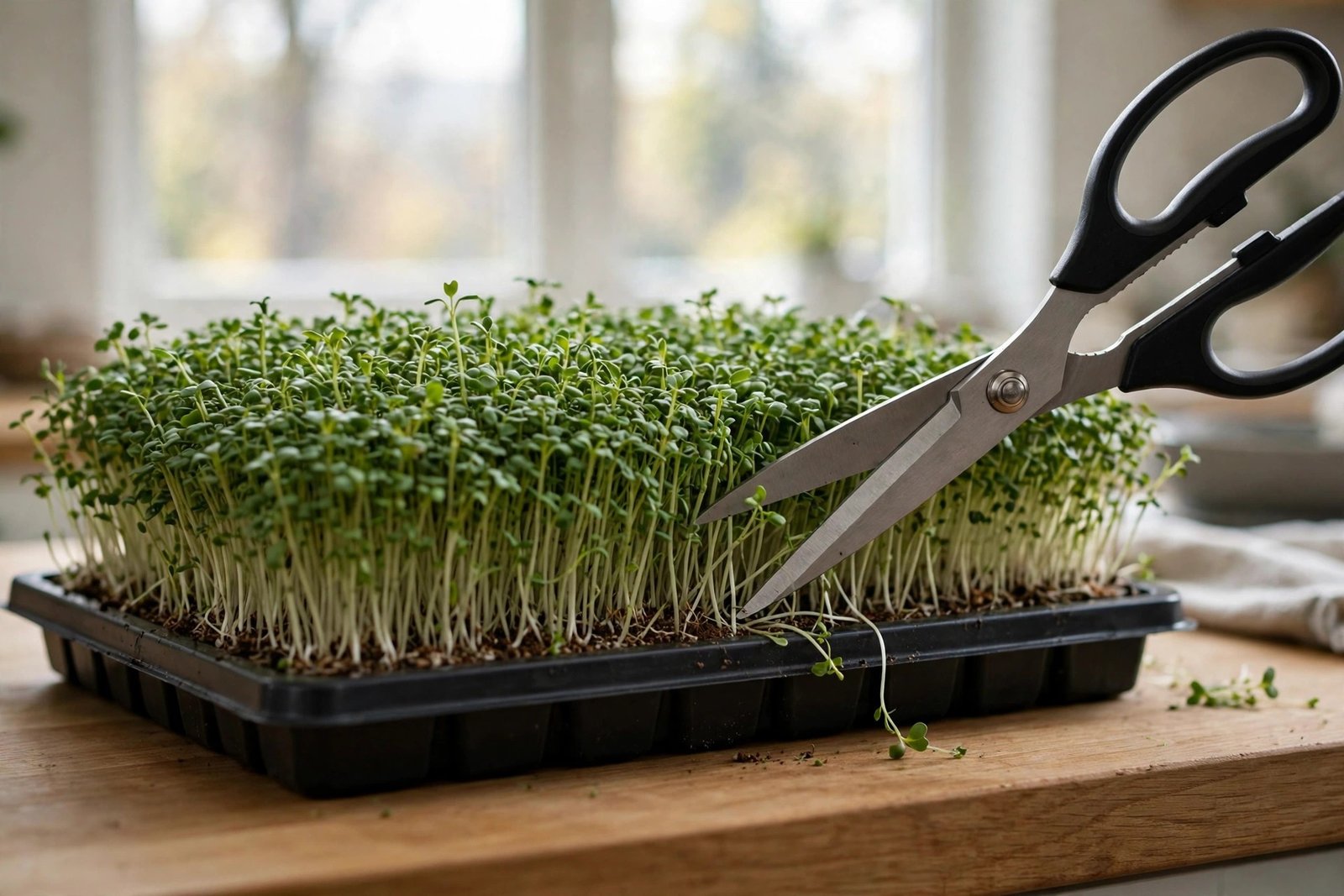
A rough harvest costs days. Penn State notes that tissue torn during cutting reduces post-harvest life, because damaged cells break down first and take the leaves around them along. A clean scissor cut is a storage step, not just a tidiness habit.
Shelf Life Starts at the Cut
The best container in the world cannot undo a wet, rough harvest. Storage really begins about half a day before you pick up the scissors.
Experienced growers stop watering roughly 12 hours before cutting, so the leaves go into the container dry instead of freshly misted. Treat that as grower practice rather than a lab finding, but the logic is the moisture driver above: water you never add is water the towel never has to absorb.
Cut with clean, sharp scissors, right above the soil line. Work in small handfuls. And cut only what fits loosely in your container. A harvest crammed in to save space is a harvest that spoils from the middle out.
The Container System, Step by Step
This is the setup the crop guides on this site point to, laid out in full. None of the steps is fancy. Together they are the difference between day 3 slime and day 8 salads.
- Start with a clean, dry, rigid container. Rigid walls protect the greens from getting crushed by whatever lands on top of them in the fridge.
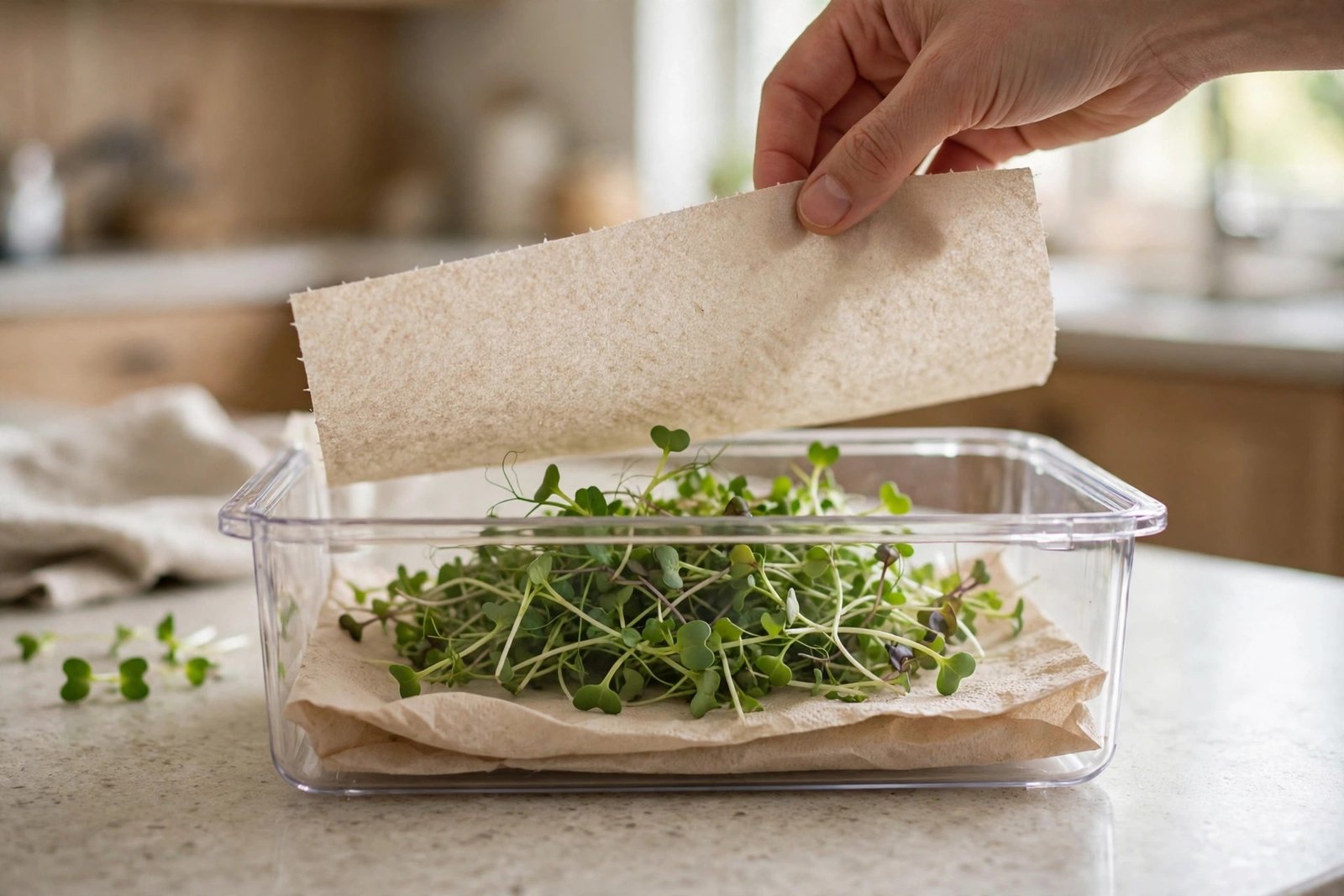
- Line the bottom with a dry paper towel. The towel pulls stray moisture away from the lowest layer of leaves, which is where spoilage usually starts.
- Add the greens loose and unwashed. Do not pack them down. Air gaps are fine. Crushed leaves are not.
- Cover big harvests with a second dry towel before the lid goes on, so the top layer gets the same protection as the bottom.
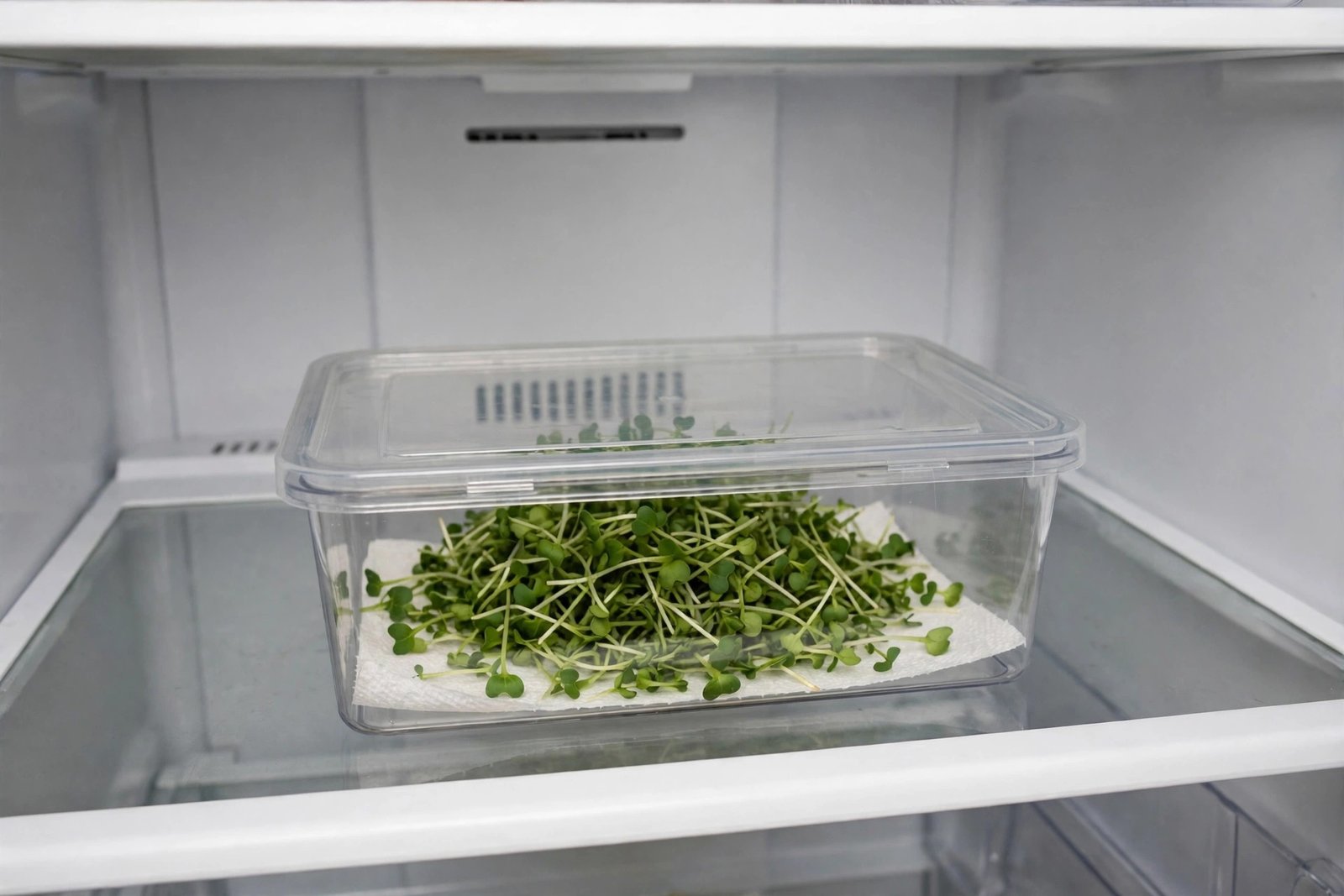
- Put the lid on. More on the lid debate below. The towel system matters more than the lid style.
- Set the container in the middle of the fridge, not pressed against the back wall. Growers favor the middle because delicate leaves can take freeze damage against the cold back wall, and the middle shelf holds the steadiest temperature.
- Swap the towel when it turns damp and give the greens a ten second check every couple of days. Pull out any leaf that has gone dark so it does not spread.
Sealed or vented? Nobody honest declares a winner
Storage sources split on lids. Some swear by airtight containers, others use clamshells or lids set on loosely for air flow. There is also a quiet disagreement about the towel itself: one extension summary describes a lightly damp towel wrap, while most growers and guides use a dry towel that absorbs moisture. This site’s own crop guides already run on the dry towel, and dry is the method here. The constant across every source is the same: a rigid container, an absorbent layer, and steady cold. Get those three right and the lid style is a detail.
Which Crops Keep Longest?
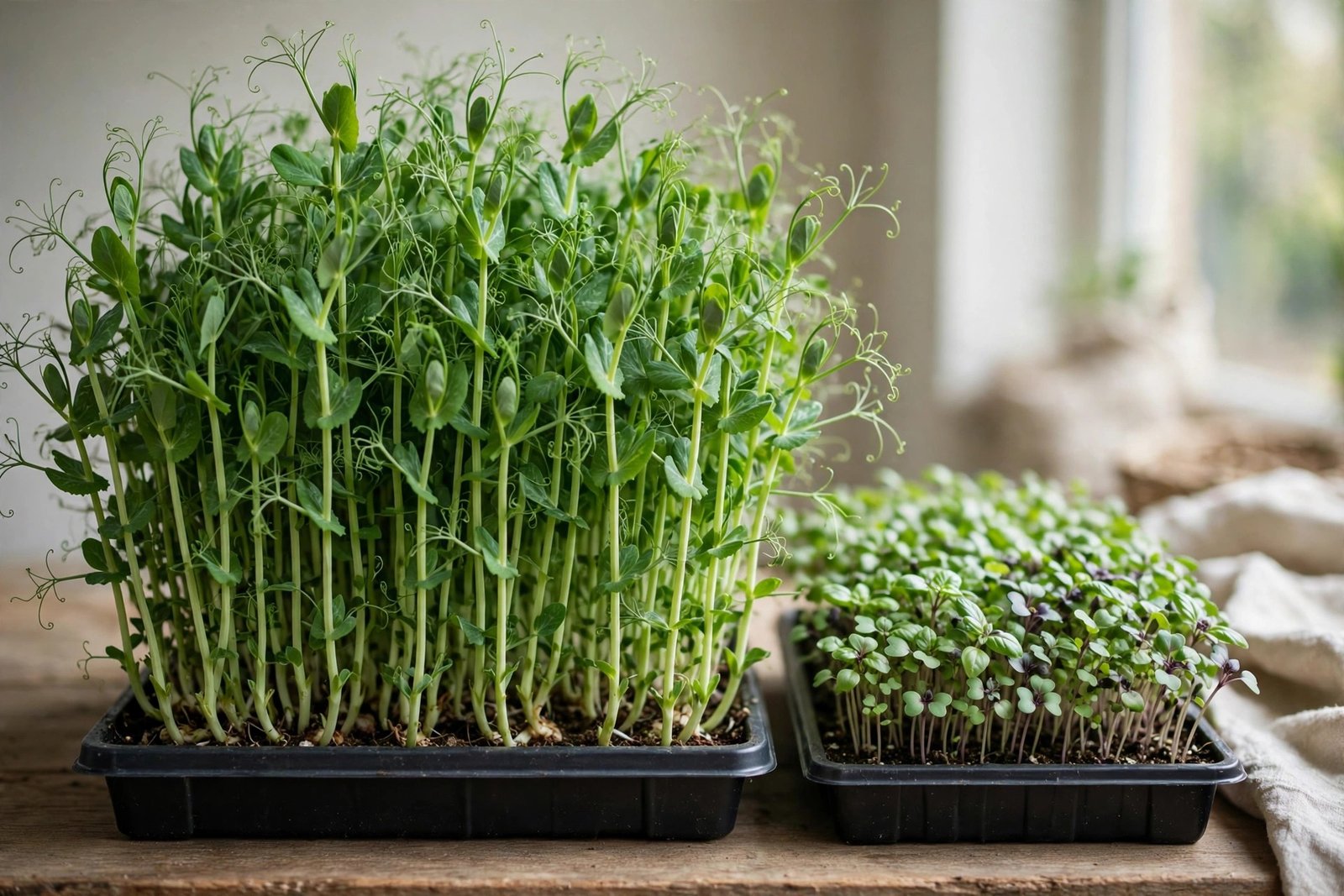
Not every tray runs on the same clock. Growers group crops into three bands, and the pattern is consistent: big seeded, sturdy crops outlast small seeded, tender ones. Treat this table as grower experience, not extension promise, and let the ladder above overrule it whenever the two seem to disagree.
| Band | Crops | What growers report |
|---|---|---|
| Hardy | Pea shoots, sunflower | The longest keepers. Sunflower holds about 5 to 8 days stored dry, the figure our own sunflower guide uses. Pea shoots often run a week or more. |
| Everyday | Radish, broccoli, mustard and most brassicas | The middle band. Plan inside the standard 5 to 7 days and use them on schedule. |
| Delicate | Basil, cilantro, amaranth | The shortest keepers, around 3 to 5 days in grower tables. Grow these in smaller trays and eat them first. |
The practical move is simple. When a hardy tray and a delicate tray are ready the same day, the delicate one goes on the menu first. The full crop map in our guide to the types of microgreens shows where each crop sits for flavor; this banding adds the storage side of the same choice.
Six Mistakes That Halve Shelf Life
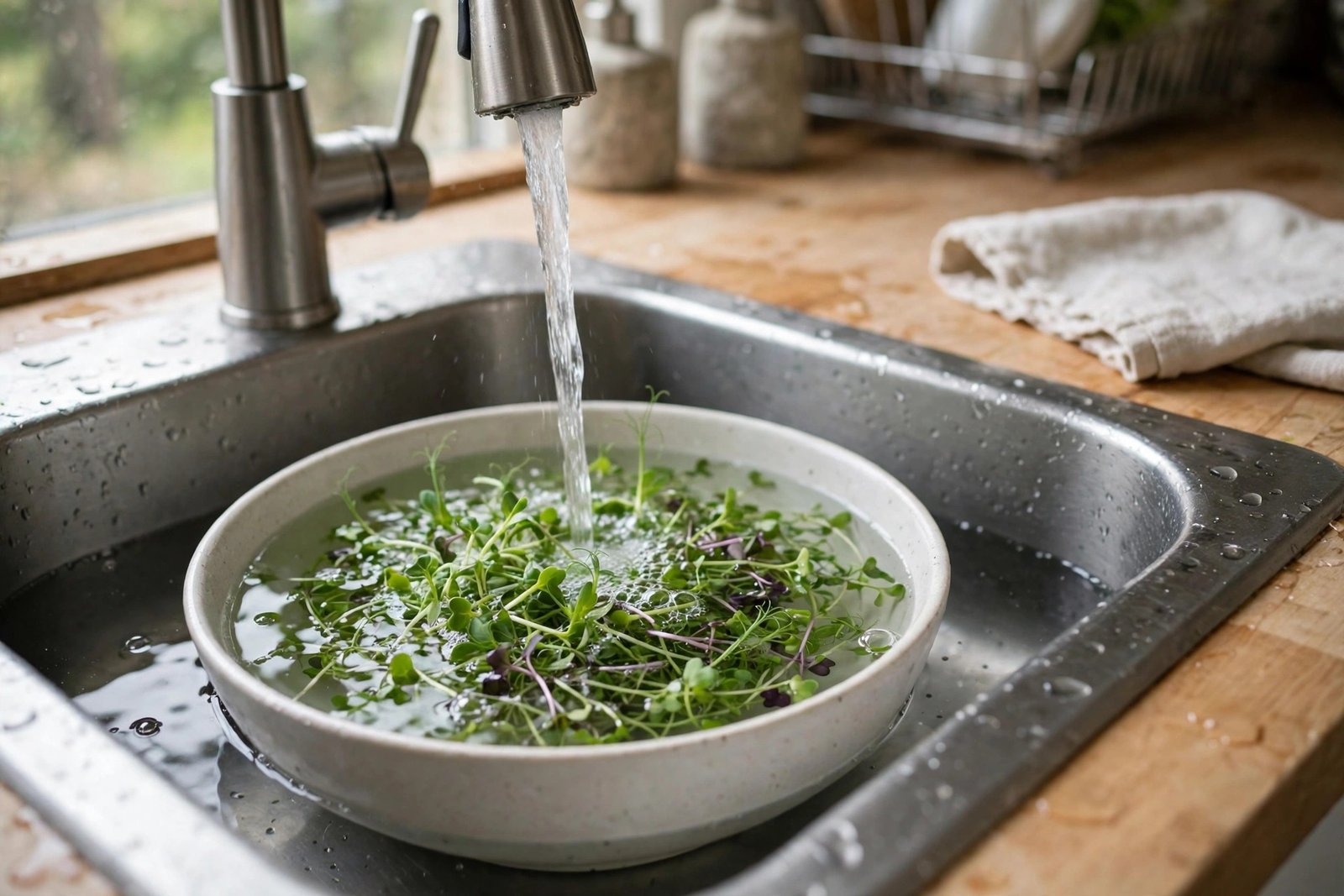
- Washing before storage. Penn State is direct about this one: washing microgreens before they are stored or sold decreases their post-harvest life. The real sin is storing them wet. If greens must be rinsed because mix is clinging to them, dry them thoroughly before the container. Otherwise, store unwashed and wash at eating time.
- Skipping the towel. Bare plastic against wet leaves is the fastest route to slime. The towel is the cheapest insurance in the whole system.
- Leaving the container out. An hour on the counter during dinner, back in the fridge, out again tomorrow. Every warm spell feeds condensation, and condensation feeds spoilage.
- Running a warm fridge. If your fridge sits above 40°F, no container system will save the greens. Check it with a cheap fridge thermometer if the greens keep dying young.
- Packing tight. Crushed leaves break down first, and one breaking layer wets the rest. Use a bigger container or a second one.
- Tearing instead of cutting. Pulled and pinched harvests carry torn tissue into storage. Sharp scissors, one clean pass.
Spoilage Signs: When the Answer Is the Trash
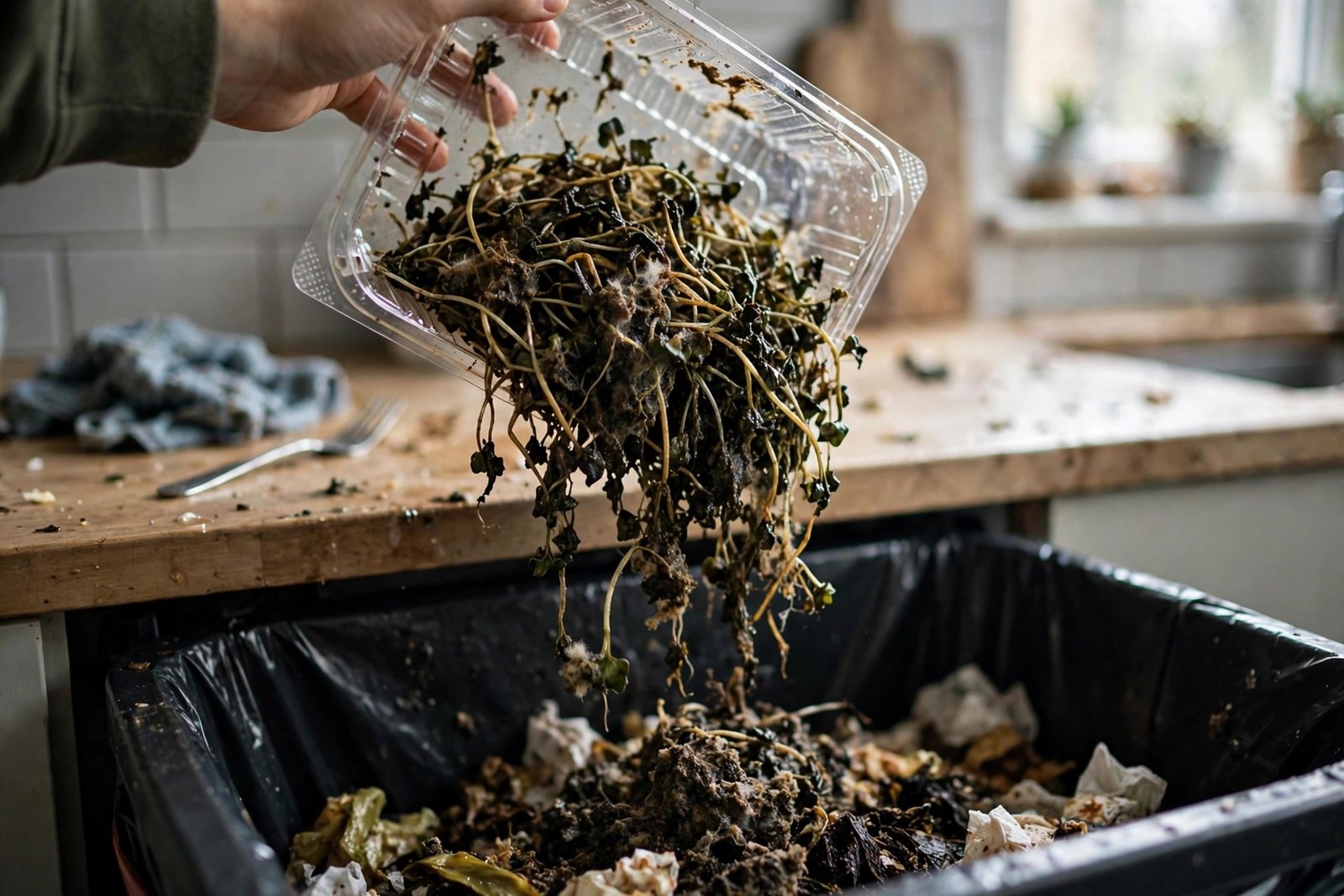
Stored greens tell you when they are done. Trust the signs over the calendar, in both directions. A day 8 batch that looks and smells fresh is fine. A day 3 batch showing these signs is not.
- A slimy or slick feel on the leaves
- Dark, wet looking patches spreading through the container
- A sour or off smell when the lid opens
- Visible fuzzy growth anywhere in the batch
Any one of those means the batch goes out. Washing does not rescue spoiled greens, and picking around the bad leaves does not either. When in doubt, throw it out. The cheap habits around the rule are the usual ones: clean hands and tools at harvest, greens into the fridge promptly, and a rinse under clean running water right before eating.
One boundary worth knowing. Everything above is about greens that are already cut. If the fuzzy growth is on a tray that is still growing, with seedlings collapsing at the soil line, that is a different problem with a different diagnosis. Work through our guide to mold on microgreens before you decide anything about a growing tray.
Can You Freeze Microgreens?
For fresh use, no. Grower consensus is blunt on this one: freezing breaks the cell walls, and thawed microgreens come back limp and wet, with none of the crunch or lift that made them worth growing. No towel system fixes texture that is gone.
Frozen extras are not useless, though. Blended or cooked, nobody notices the texture: smoothies, soups, and pesto all take frozen microgreens fine. So freeze the surplus you cannot eat in time, label it for the blender, and keep your fresh expectations for the fridge container.
The Short Version
Plan on 5 to 7 days. Cut the tray dry with clean scissors, pack the greens loose and unwashed between dry paper towels in a rigid container, and park it mid fridge at 40°F or below. Eat delicate crops first, swap the towel when it goes damp, and let the spoilage signs overrule the calendar every time.
If your trays are still on the growing side of the scissors, our general guide to growing microgreens covers the full run from sowing to harvest. This post picks up exactly where that one ends: at the cut.
Frequently Asked Questions
How long do they keep in the fridge?
Plan on 5 to 7 days for most crops in a home fridge. Done well, with a dry harvest and the towel system, up to 10 days is realistic. The 10 to 14 day figures online come from research storage at a steady 41°F in the dark, not from a home fridge.
Should I wash microgreens before storing them?
No. Store them unwashed and wash them right before eating. Penn State Extension found that washing before storage decreases post-harvest life. If you do rinse a harvest because mix is clinging to it, dry the greens thoroughly before they go in the container.
What is the best container for storing microgreens?
A clean, rigid container lined with a dry paper towel, with a second towel over a big harvest. Growers argue about sealed versus vented lids and no side wins clearly. The rigid walls, the absorbent towel, and steady cold do the real work.
Why did my microgreens go slimy in two days?
Almost always moisture plus warmth. The greens went in wet or washed, the container sat out and gathered condensation, or the fridge is running above 40°F. Cut dry, store unwashed, swap damp towels, and check the fridge temperature.
Can you freeze microgreens?
Only for blended or cooked uses. Freezing breaks the cell walls, so thawed greens come back limp and lose their fresh texture. Freeze surplus for smoothies, soups, or pesto, and keep the greens you plan to eat fresh in the fridge instead.
Are microgreens still safe to eat on day 10?
Day 10 is the top of the home range, and only for greens that were cut dry and stored well. Judge by the signs, not the date: no slime, no dark wet patches, no sour smell, no fuzzy growth. If any of those show up, or you are simply unsure, throw them out.
Sources
Penn State Extension, Growing Microgreens (the 10 to 14 day research figure at 41°F in dark storage, the 2 to 4 day ambient contrast, condensation and temperature swings, washing before storage decreasing post-harvest life, torn tissue reducing longevity). USDA and FDA consumer guidance for the fridge standard of 40°F (4°C) or below. Extension home-grower day ranges as published by the University of Connecticut, University of Massachusetts, Purdue, and University of Maryland extension programs, with New Mexico State University at the conservative end. Crop banding, the stop-watering practice, mid-fridge placement, and the freezing answer come from grower sources including On The Grow and MicrogreensAndSprouts, and are labeled in the text as grower experience rather than extension findings. Where extension sources disagree on the day count, this guide shows the ladder instead of picking one number.


3 Comments