How to Grow Amaranth Microgreens: Red Garnet, Sow Dry, Mind the Water
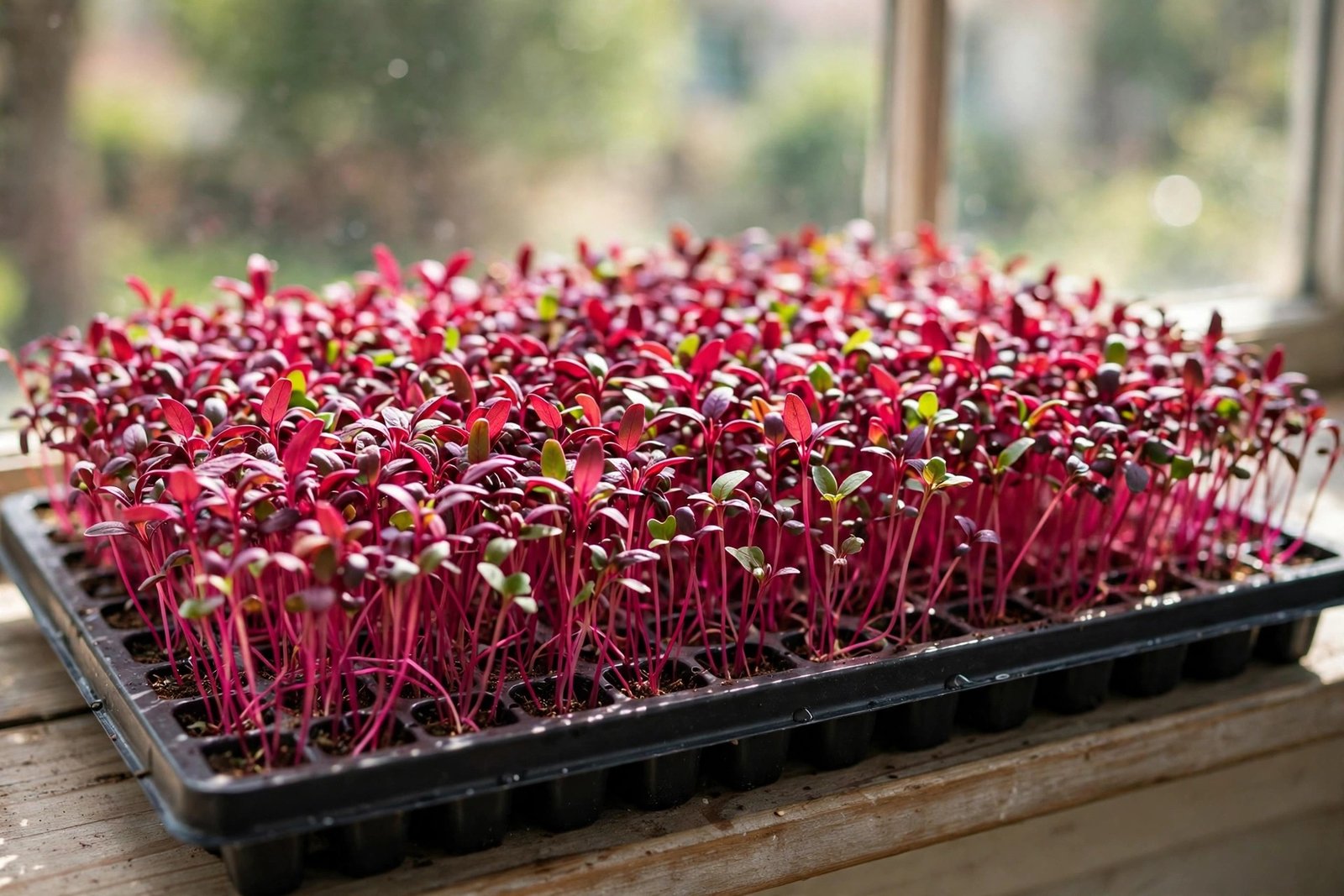
Red Garnet amaranth turns a tray magenta in 10 to 14 days. It is the prettiest microgreen on the shelf and one of the most delicate. Sow the seed dry, keep the water light, and keep the tray clean, and a small pinch of it makes a plain salad look like a restaurant plate. Get any of those three wrong and the tray can fall over in patches before harvest day. This guide starts with the thing that kills amaranth trays, then walks through the seed, the sow and the harvest.
Amaranth is a garnish crop, not a bulk crop. The stems are magenta and fuchsia, the flavor is mild and earthy, close to beet, and a little goes a long way. On The Grow, which has grown it since 2018, calls it the crop that turns a tray into a mass of magenta. That color is the reason to grow it. The care below is the price of it.
If this is your first tray of any microgreen, start with radish and come back to amaranth. Amaranth forgives less than radish does, and steady watering and clean trays are the habits it needs.
Read This First: The Damping-Off Verdict
Damping-off is the main way amaranth trays are lost. It is a group of pathogens that attack seedlings at the roots and stems in warm, wet conditions. It moves fast, makes large patches of die-off, and once it starts it cannot be stopped. Amaranth gets it more than most crops. The table below is the short verdict for each cause. The full check lives in our mold guide, so this guide does not repeat it.
| Cause | Sign | Verdict |
|---|---|---|
| Soggy medium | Seedlings fall in patches, stems thin at the base | Damping-off. Remove the tray and discard it. Water lightly from now on. |
| Big temperature swings | A strong tray stalls, then patches die off fast | Damping-off. Steady the space near 75 to 80F. Do not dry trays outdoors. |
| Dirty trays or reused medium | Problems return on tray after tray | Sanitize every tray between crops. Start clean each time. |
| Seed sown in clumps | Disease starts in one clump and spreads | Sow dry and even. Weigh the seed so you do not oversow. |
| Hulls left to decay on the canopy | Hulls sit on the leaves and rot | Wipe hulls off on day 3 and clear what falls. |
A tray with confirmed mold or damping-off gets discarded, not rescued. Pull it out of your grow space right away so it cannot spread to the next tray. Our mold guide shows how to tell mold from healthy root hairs and what to do next.
Three habits prevent most of it: water lightly, keep the temperature steady, and start every tray clean. Everything in the method below serves those three habits.
Buy Red Garnet, Not Green
Buy seed sold as Red Garnet. Sellers also list it as Red Garnett or Burgundy. Buy seed sold for microgreens or sprouting from a reputable supplier, never bird seed or bulk feed, because those are not handled to food safety standards.
Catalogs also list green-leafed types, and Epic Gardening lists green-leafed varieties among its amaranth seed picks. On The Grow is plain about green amaranth: they never got it to harvest day, so they do not recommend it. This guide sticks to Red Garnet.
If you want to see how amaranth sits among the other crops, our types of microgreens guide compares the full set.
How Much Seed? Three Guides, Three Answers
Ask three guides how much seed a 10×20 tray needs and you get three answers. That is a near twofold spread, and it matters, because a reader who sows 28 grams where 15 grams was right gets a crowded tray, and a crowded tray is a damping-off tray. The honest way to show it is the table below, with each source named.
| Source | Seed per 10×20 tray | Note |
|---|---|---|
| Epic Gardening | 1 ounce, about 28 grams | The heaviest rate, for a standard propagation tray. |
| On The Grow | About 15 grams | About 1 to 1.5 tablespoons. Weigh it if you can. |
| Paperpot Co, Scintilla Farms data | 23 grams | Farm tray data, scaled down for a 10×20 tray. |
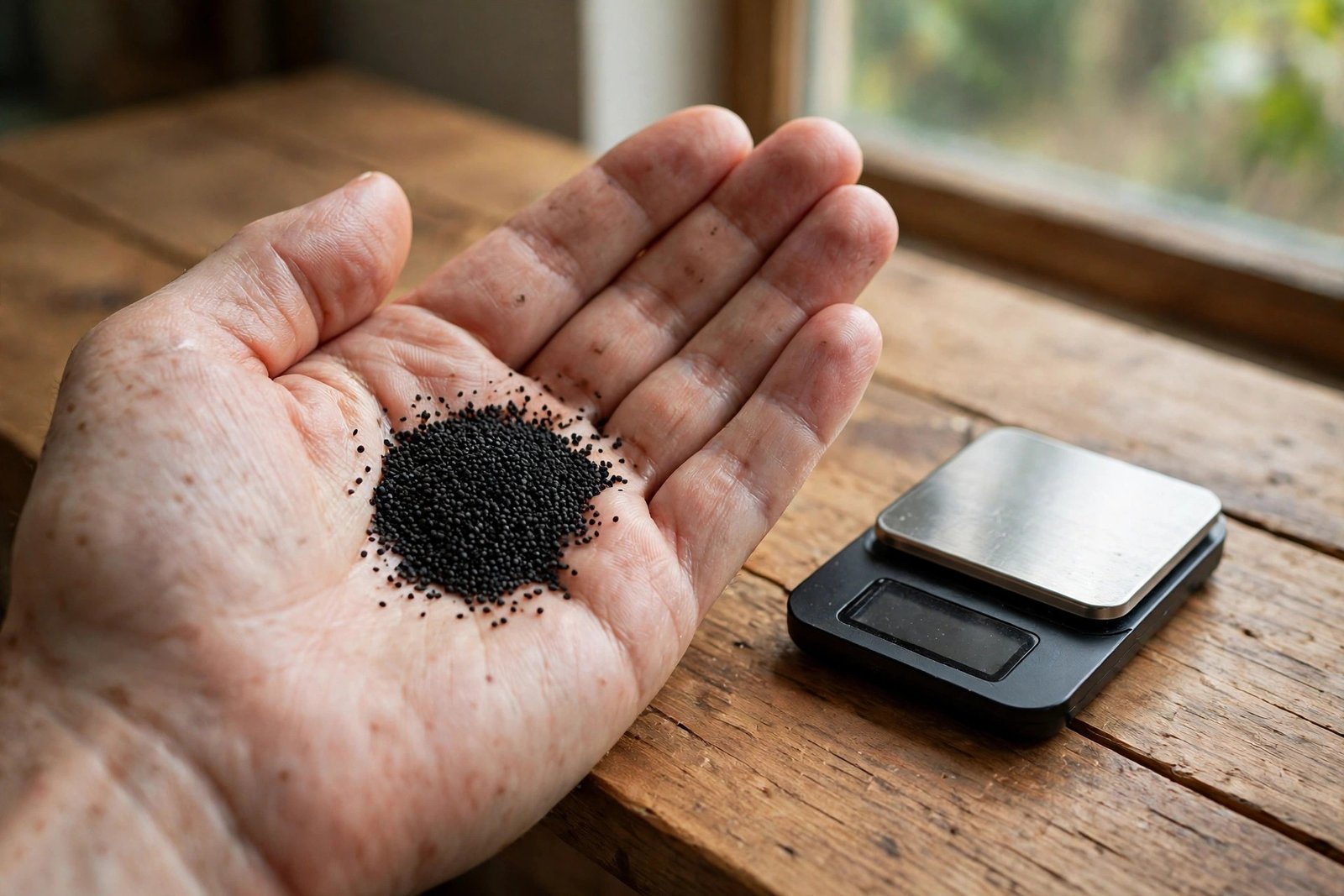
What to sow: start with 15 grams for a 10×20 tray and weigh it on a small digital scale. That is the middle of the spread and the rate On The Grow uses in its own space. Some suppliers list as little as 8 grams, and that can work too. If your first tray comes up thin, sow a little heavier next time. If it comes up crowded and damp, sow lighter.
Smaller trays take less: about 7 to 8 grams for a 10×10 tray, and about 5 to 7 grams for a 7×14 tray.
Do Not Soak the Seed
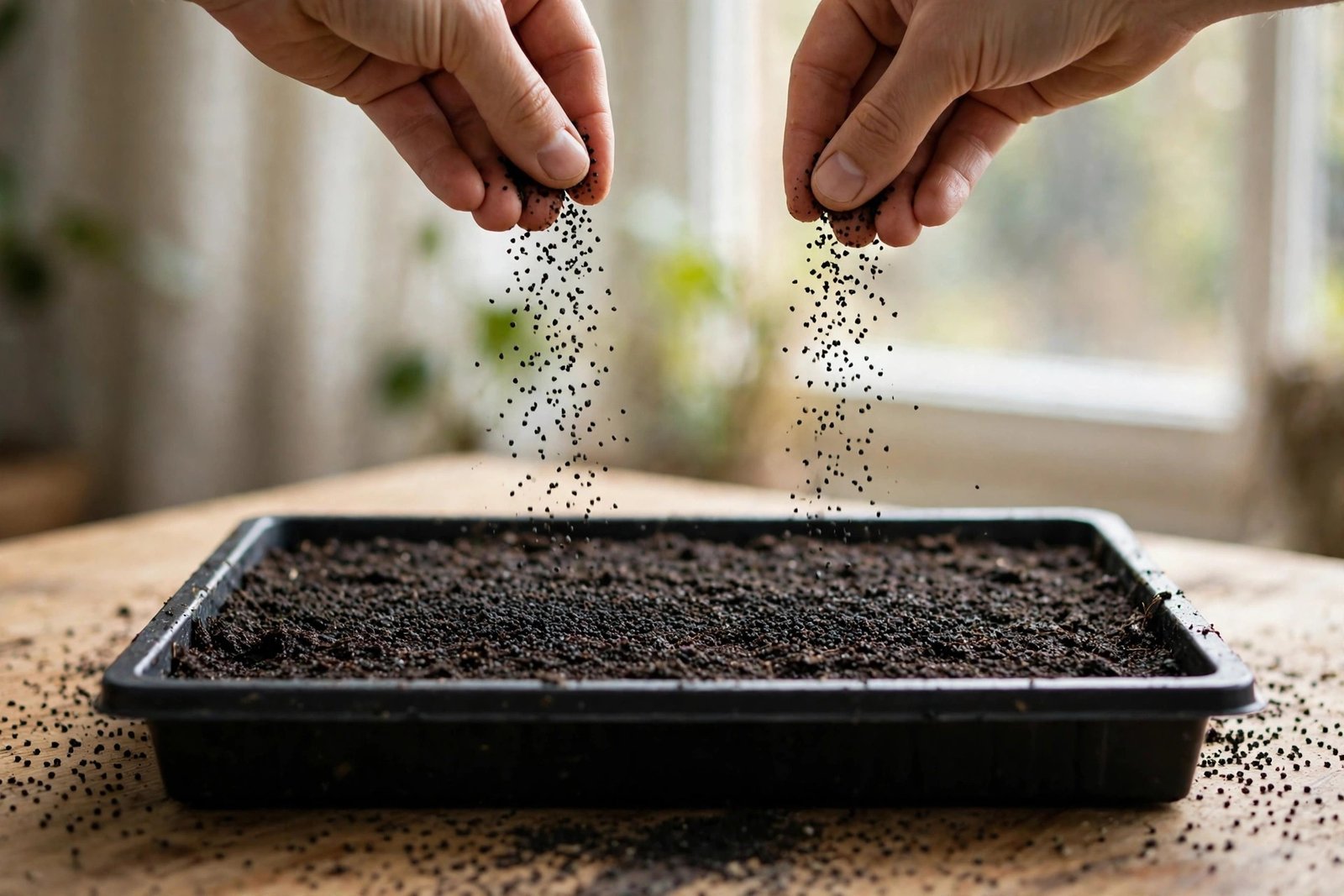
Do not soak amaranth seed. The seed is very small and it clumps when it gets wet, and clumps are hard to spread evenly. Sow it dry, straight from the packet, then mist it gently after sowing. Hold the mister high on the first pass so the water does not scatter the seed, then work closer as the seed settles.
Some guides say otherwise. A Times of India growing guide tells readers to soak amaranth seed for 4 to 6 hours, and the same 4 to 6 hour figure shows up in other seed guides. On The Grow says the opposite, and seed sellers that list a soak time for red amaranth list no soak. This guide follows the no-soak side. If you soak, you will spend the sowing fighting clumps, and clumps are where damping-off starts.
From Seed to Harvest in 10 to 14 Days
The method below is the one On The Grow uses on a 10×20 tray, with the medium and light numbers from the same guide and from Paperpot Co. It works on soil or coco coir. Our general microgreens guide covers the tray setup in full if this is your first tray of any kind.
| Day | What to do |
|---|---|
| Day 0 | Fill a 10×20 tray with fine, damp seed-starting mix or coco coir. Level it and pull out large sticks. Sow 15 grams dry, spread evenly. Mist lightly. |
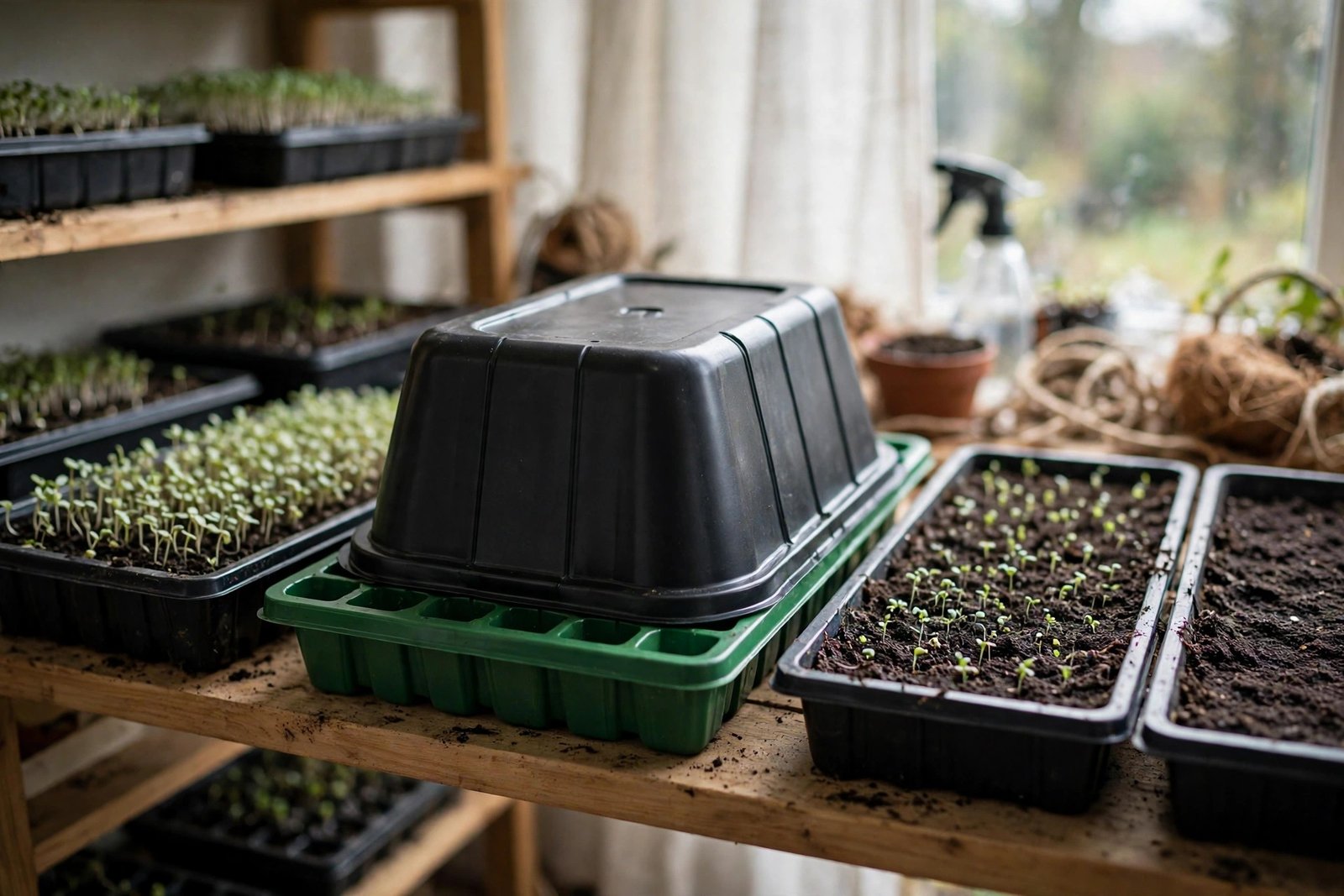
| Days 1 to 3 | Cover with an empty tray. Mist lightly to keep the surface moist, never soggy. Germination takes 3 to 4 days. Wipe stuck hulls off the top tray on day 3. |
| Days 4 to 5 | Flip the top tray into a blackout dome for 1 to 2 days. This stretches the stems a little so the tray is easier to harvest. |
| Day 5 onward | Move the tray into light, 16 to 17 hours a day, lights 8 to 12 inches above the canopy. Bottom water lightly, half a cup to 1 cup at a time, only when the last water is gone. Amaranth likes to dry out a little between waterings. |
| Day 10 to 14 | Harvest. Cut just above the medium with sharp scissors. Use it soon. |
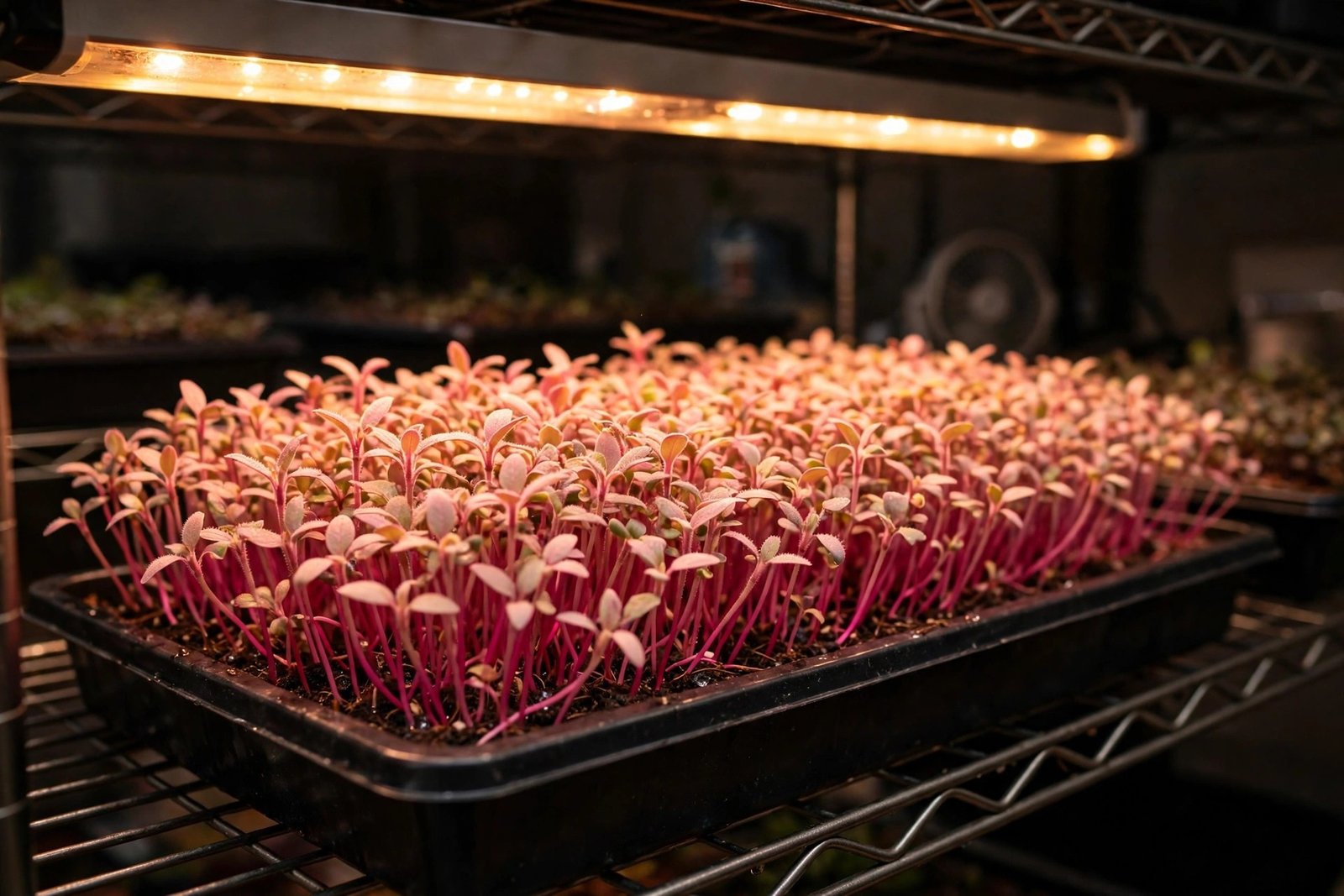
Some growers keep the blackout dome on for up to 4 days for taller stems. That is a choice, not a rule, and a longer dark period means more days of careful watering. Amaranth is a short crop by nature. Blackout helps it stretch a little, but it will not reach radish height.
On feeding: soil needs no fertilizer, because a good seed-starting mix is already nutrient rich. Coco coir carries no nutrients of its own, so feed it through the bottom water once the tray is in light. Wait until the tray is in light before you feed. Reusable silicone mats work too, with a heat mat set to 75F during germination, but soil or coco coir is the easier start.
On temperature: keep the space near 75 to 80F with steady conditions. Amaranth likes warmth but not swings, and a tray that sits wet in a cold snap is the tray damping-off finds first.
Harvest on Day 10 to 14 and Use It Soon
Harvest when the tray has a full canopy. Epic Gardening puts it at about 10 days. On The Grow usually harvests on day 10 to 14, and grows some trays out to day 15 to 20 for fuller true leaves. Paperpot Co lists 12 days. A test tray in the On The Grow space was ready on day 8. Pick the day by the look of your tray, not by the calendar alone.
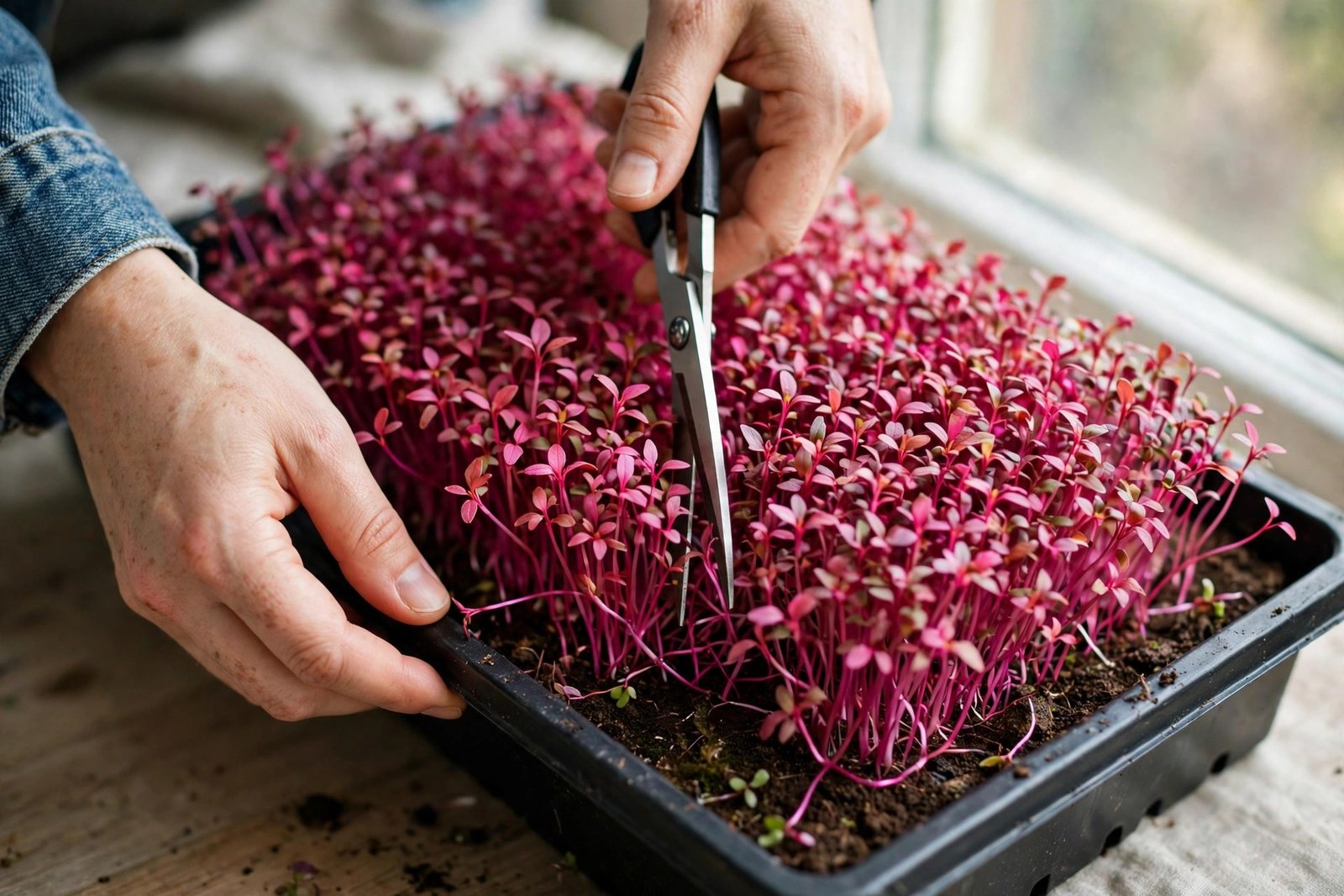
Cut just above the medium with sharp scissors or a clean knife. Cut low enough to get the stems, not so low that you pick up medium. If you do pick up medium, trim the wet bottoms off the bunch. Wipe the blade on a clean towel as you go.
Use the harvest soon. Amaranth is one of the faster crops to perish after harvest, so grow it to order and harvest close to the day you use it. Do not wash it until you are ready to eat it. Pack it loosely and dry, keep it cold, and make sure it is fully dry before it goes into a sealed container in the fridge. Epic Gardening says greens stored that way last at least 7 to 8 days. Our guide to how long microgreens last covers the full storage routine.
Fair warning: amaranth stains. The stems carry a strong pigment, so expect pink fingertips and wear an apron.
When a Tray Goes Wrong
Most amaranth problems trace back to water, light or cleanliness. A few specifics:
- Hulls stuck to the canopy. A few stuck hulls are normal. Wipe them off the underside of the top tray on day 3 and clear what falls. By harvest, very few should still be on the tray.
- Roots look tan or yellow. The medium is holding too much water. Cut back on watering and let the tray dry a little. If it shows up late, the tray usually finishes fine.
- The tray stays short. Amaranth is naturally a short crop. Check the light hours and the temperature before you blame the seed.
- Seedlings fall over in patches. That is usually damping-off. Take the tray out of the space and discard it, then sanitize everything before the next tray. The verdict table above and the mold guide have the full check.
How to Use the Harvest

The flavor is mild and earthy, close to beet, so amaranth works as a garnish more than a base. Use it on salads, pizzas, soups and smoothies, and add it at the end so it keeps its shape. A small pinch does a lot of work. It also pairs well with chocolate. On The Grow has put it on brownies with almond whipped cream and raspberries, and the magenta against the dark chocolate is the point.
That is the whole crop: a tray of color in about two weeks, if you keep the water light and the trays clean.
Frequently Asked Questions
How long do amaranth microgreens take to grow?
Most trays are ready 10 to 14 days after seeding. Epic Gardening puts it at about 10 days, and Paperpot Co lists 12 days. On The Grow usually harvests on day 10 to 14, and grows some trays out to day 15 to 20 for fuller true leaves. A test tray in their space was ready on day 8. Pick the day by the look of your tray, not by the calendar alone.
Do I soak amaranth seeds before sowing?
No. The seed is very small and clumps when it gets wet, so spread it dry and mist it after sowing. On The Grow is direct about this, and seed sellers that list a soak time for red amaranth list no soak. Some guides say to soak for 4 to 6 hours, but a soaked seed is hard to spread evenly, and clumps are where damping-off starts.
How much seed do I need for a 10×20 tray?
The guides disagree. Epic Gardening uses 1 ounce, about 28 grams. On The Grow uses about 15 grams. Paperpot Co lists 23 grams. Start with 15 grams and weigh it. A 10×10 tray takes about 7 to 8 grams, and a 7×14 tray about 5 to 7 grams.
Why are my amaranth microgreens falling over in patches?
That is usually damping-off, and amaranth gets it more than most crops. It follows soggy medium, big temperature swings and dirty trays. Take the tray out of your grow space right away, and do not try to save it. Our mold guide walks through the full check, and a tray with confirmed mold gets discarded, not rescued.
Sources and Further Reading
Epic Gardening, Amaranth Microgreens Growing Guide
On The Grow, Red Garnet Amaranth Microgreens Guide
Paperpot Co, Amaranth Microgreens Growers Notes, with Scintilla Farms crop data
Times of India, Amaranth Microgreens Guide (the 4 to 6 hour soak advice, noted as the disagreement)