
Types of Microgreens: 10 Varieties for Beginners
The best types of microgreens depend on the flavors you enjoy, how quickly you want to harvest, and how much preparation you want to do. Radish adds a peppery bite, pea shoots bring a sweet, fresh taste, and broccoli microgreens offer a milder option for everyday meals.
If you are new to growing microgreens, choosing your first variety can feel confusing. Some crops reach harvest size in about a week, while herbs such as cilantro may take several weeks. Some seeds also benefit from soaking before planting, while others do not need it.
This guide compares 10 popular microgreen varieties by flavor, estimated harvest time, beginner suitability, and seed-soaking needs. You can use these differences to choose a crop that fits your taste and growing experience.
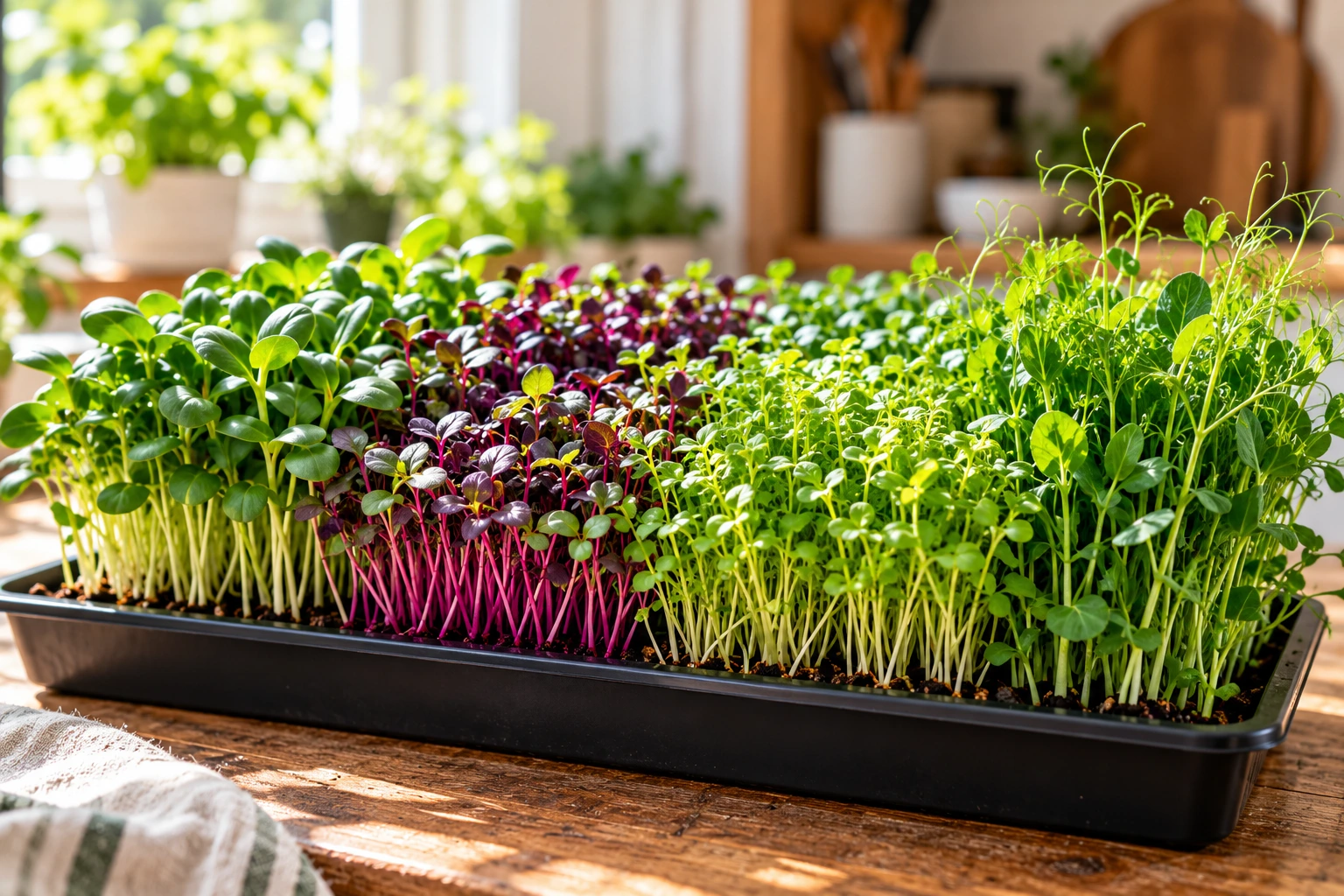
Quick Picks: Which Microgreens Should You Try?
A relatively quick crop with a spicy bite.
A versatile choice for everyday meals.
Tender shoots with a fresh pea flavor.
Substantial shoots with a satisfying texture.
What Are the Main Types of Microgreens?
Microgreens are young edible seedlings that people harvest after the seed leaves open and the first true leaves begin to emerge. Many vegetables, herbs, and legumes can produce microgreens, and each brings its own flavor, appearance, and growing pace.
- Brassicas: Radish, broccoli, kale, and mustard. Many offer relatively quick harvests, with flavors ranging from mild to peppery.
- Legumes: Peas produce tender shoots with a sweet, fresh taste.
- Herbs: Basil and cilantro bring familiar kitchen flavors but often need more time.
- Colorful crops: Beets and Swiss chard can add red, purple, and green tones.
- Large-seed crops: Peas and sunflower may benefit from soaking before sowing.
These groups help you narrow your choices, but plants in the same group do not always share the same harvest time or seed preparation needs.
Compare 10 Types of Microgreens
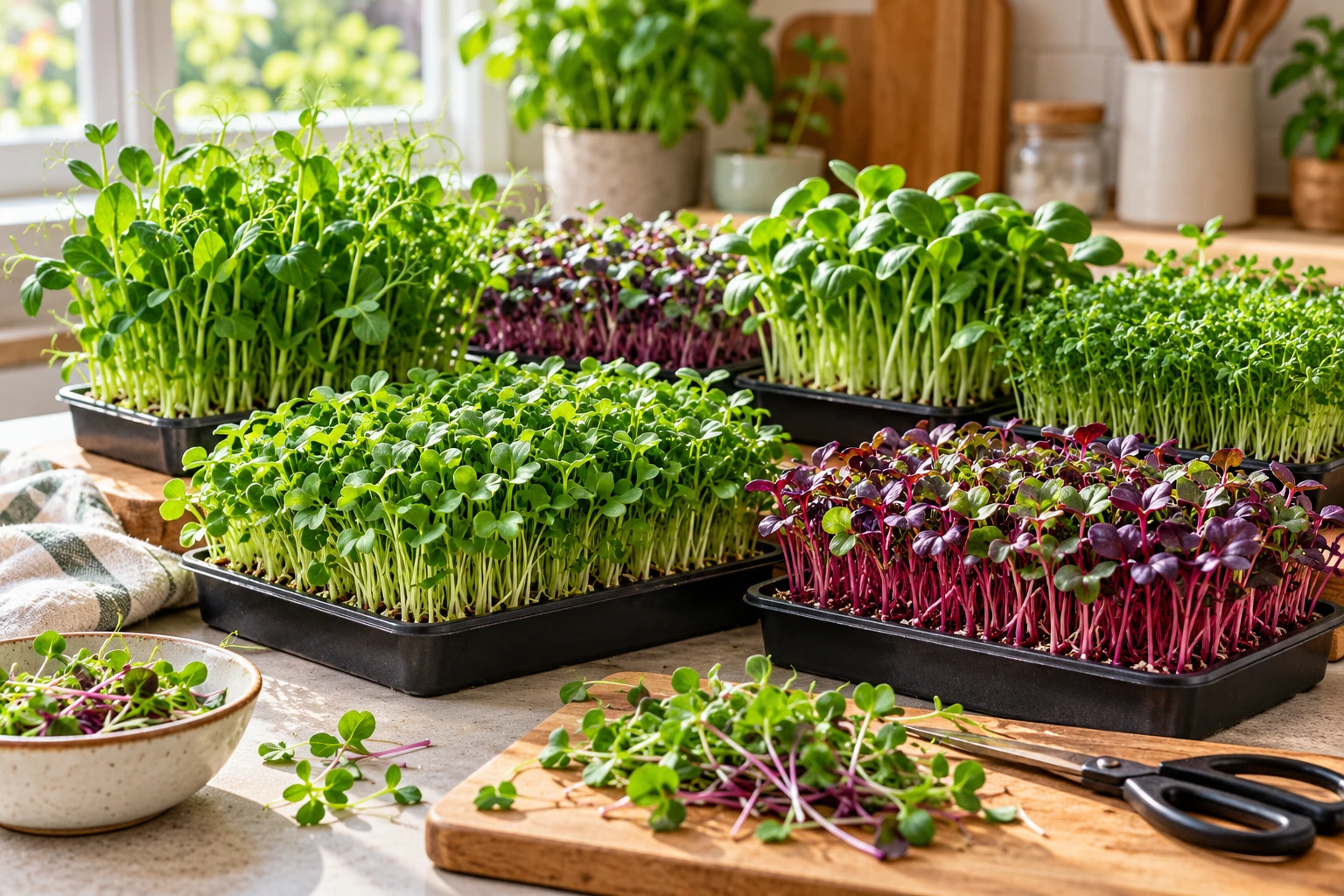
Use this table to compare flavor, harvest timing, and seed preparation before choosing your first tray. Harvest times are estimates under suitable conditions, not fixed deadlines. Cultivar, light, temperature, and growing method can change the result.
| Variety | Flavor | Harvest estimate | Beginner fit | Presoak? |
|---|---|---|---|---|
| Radish | Peppery, spicy | 7-10 days | Excellent | Usually no |
| Broccoli | Mild, fresh | 8–12 days | Excellent | Usually no |
| Kale | Earthy, slightly nutty | 10–14 days | Very good | Usually no |
| Mustard | Peppery, sometimes hot | Varies by cultivar | Good | Usually no |
| Arugula | Peppery | 6–8 days | Good | Usually no |
| Pea shoots | Sweet, fresh | 8–10 days | Very good | Often helpful |
| Sunflower | Nutty, slightly sweet | 9–10 days | Good | Often helpful |
| Basil | Distinctive basil | 12–16 days | Moderate | Usually no |
| Cilantro | Fresh, cilantro-like | 16–28 days | Moderate | Check seed guidance |
| Beet | Mild, earthy | 10–20 days | Moderate | May help |
Timing note: Utah State University Extension lists arugula at 6–8 days, peas at 8–10 days, sunflower at 9–10 days, radish at 7-10 days, broccoli at 8–12 days, basil at 12–16 days, and cilantro at 21–28 days. Other varieties and growing setups may differ.
10 Microgreen Varieties Worth Trying
1. Radish Microgreens
Radish microgreens suit growers who enjoy bold flavors and want a relatively quick harvest. Their peppery taste adds character to salads, sandwiches, tacos, and grain bowls. Some cultivars also produce red or purple stems.
- Flavor: Peppery and spicy
- Harvest estimate: 7-10 days
- Beginner suitability: Excellent
- Seed soaking: Usually unnecessary
Choose radish if: You want a quick crop with a noticeable kick. Start with a small handful if you prefer milder greens.
2. Broccoli Microgreens
Broccoli microgreens have a mild, fresh flavor that works well in salads, wraps, sandwiches, and egg dishes. They make a practical first choice when you want greens that fit everyday meals without overpowering other ingredients.
- Flavor: Mild and fresh
- Harvest estimate: 8–12 days
- Beginner suitability: Excellent
- Seed soaking: Usually unnecessary
Choose broccoli if: You prefer a gentle flavor and a straightforward first crop.
For the full method, follow our step-by-step broccoli microgreens growing guide.
3. Kale Microgreens
Kale microgreens offer a tender, leafy texture with an earthy, slightly nutty flavor. They fit easily into salads, sandwiches, and wraps, especially if you want a milder alternative to strongly peppery greens.
- Flavor: Earthy, slightly nutty
- Harvest estimate: 10–14 days
- Beginner suitability: Very good
- Seed soaking: Usually unnecessary
Choose kale if: You want a leafy green with a familiar, relatively mild taste.
4. Mustard Microgreens
Mustard microgreens bring a sharp, peppery flavor. Some varieties taste pleasantly warm, while others have a stronger bite. They work well in sandwiches and salads when you want extra intensity.
- Flavor: Peppery, sometimes hot
- Harvest estimate: Depends on the cultivar
- Beginner suitability: Good
- Seed soaking: Usually unnecessary
Choose mustard if: You enjoy spicy radishes or mustard greens. Start with a small portion to see how strong the flavor feels.
5. Arugula Microgreens
Arugula microgreens add a peppery note to salads, sandwiches, and savory dishes. Their flavor can feel stronger than broccoli or kale, so a small handful often goes a long way.
- Flavor: Peppery
- Harvest estimate: 6–8 days in suitable conditions
- Beginner suitability: Good
- Seed soaking: Usually unnecessary
Choose arugula if: You want a quick crop and enjoy peppery salad greens.
6. Pea Shoots
Pea shoots have a sweet, fresh flavor and tender stems. Use them in salads, sandwiches, wraps, or cooked dishes. Their larger seeds need more room than tiny brassica seeds, so follow the seed supplier’s sowing guidance.
- Flavor: Sweet, like young peas
- Harvest estimate: 8–10 days in suitable conditions
- Beginner suitability: Very good
- Seed soaking: 8–12 hours (our pea guide’s rule; Utah State lists 6 hours)
Choose pea shoots if: You prefer sweeter greens with substantial stems. Buy seed intended for edible growing, not treated garden seed.
For the full method, see our guide on how to grow pea microgreens, from the soak to the second cut.
7. Sunflower Microgreens
Sunflower microgreens offer a nutty flavor and firm texture. They can add substance to salads, sandwiches, and grain bowls. Their larger seeds often benefit from soaking before planting.
- Flavor: Nutty, slightly sweet
- Harvest estimate: 9–10 days in suitable conditions
- Beginner suitability: Good
- Seed soaking: Around 8–12 hours is common guidance
Choose sunflower if: You enjoy nutty flavors and want a more substantial microgreen. Follow the seed supplier’s directions for soaking and sowing.
8. Basil Microgreens
Basil microgreens offer a recognizable basil aroma and flavor. They pair well with tomatoes, pasta, sandwiches, and fresh salads. Basil usually grows more slowly than radish or broccoli, so it requires extra patience.
- Flavor: Distinctive basil
- Harvest estimate: 12–16 days
- Beginner suitability: Moderate
- Seed soaking: Usually unnecessary
Choose basil if: You enjoy fresh herbs and do not mind waiting longer. For more ideas, explore our guide to herbs to grow on a windowsill.
9. Cilantro Microgreens
Cilantro microgreens bring the familiar taste of cilantro to tacos, rice bowls, salsa, and other dishes. They usually need more time than brassica microgreens, so do not judge their progress by the timeline of radish or broccoli.
- Flavor: Fresh, distinctly cilantro-like
- Harvest estimate: 16–28 days (Utah State Extension guidance lists 21–28 days)
- Beginner suitability: Moderate
- Seed soaking: Guidance varies; check the supplier’s instructions
Choose cilantro if: You cook with cilantro often and are happy to wait for a slower crop.
10. Beet Microgreens
Beet microgreens can add color to a growing tray, with stems and leaves that vary by cultivar. Their flavor tends to be mild and earthy. Check the seed packet for a realistic harvest window.
- Flavor: Mild, earthy
- Harvest estimate: Varies by cultivar and conditions
- Beginner suitability: Moderate
- Seed soaking: May help; follow crop-specific instructions
Choose beet if: You want colorful greens and do not mind a less predictable growing timeline.
For the full method, our guide on how to grow beet microgreens covers the 10 to 20 day run from sowing to harvest.
Which Microgreens Are Best for Beginners?
Your best first crop depends on the flavor you like and how quickly you want to harvest. Start with one or two varieties rather than trying to grow every type at once.
Ranked first-tray picks: 1. Radish, the fastest forgiveness at 7–10 days with no soak and a peppery bite; 2. Broccoli, mild and 8–12 days with no soak, built for everyday meals; 3. Kale (Red Russian), 10–14 days, earthy and the sturdiest tray for a first learner.
For a quick harvest
Try arugula, radish, or broccoli. They have relatively short harvest windows under suitable conditions.
For a mild flavor
Choose broccoli or kale. Both work well in everyday meals without the strong bite of mustard or radish.
For sweet, substantial shoots
Try peas or sunflower. Their larger seeds need different sowing rates and may benefit from soaking.
For fresh herb flavors
Choose basil or cilantro if you enjoy them in meals and do not mind a longer growing period.
If you are new to growing greens indoors, our guide to an indoor herb garden covers ways to make the most of a small growing space. Microgreens have a different growing cycle, so use this article to choose the right variety.
Which Microgreen Seeds Need Soaking?
Some larger seeds benefit from soaking before sowing. Water helps start the germination process, but the right method and duration depend on the crop. Many small-seeded varieties do not need this extra step.
Peas and sunflower
Utah State University Extension lists peas at 6 hours and sunflower at 12 hours.
Beet and cilantro
Some extension guides recommend soaking these seeds, but suggested methods and times differ.
Radish and broccoli
These small-seeded varieties generally do not require a presoak.
Do not assume that every seed in the same plant family needs the same treatment. Check the instructions for your exact variety, soak for the recommended time, and drain thoroughly before sowing.
For tray preparation, sowing, light, watering, and harvesting, follow our complete guide on how to grow microgreens at home.
How to Choose Microgreens by Flavor
- For salads: Try broccoli, kale, arugula, or a mix of mild and peppery greens.
- For sandwiches and wraps: Choose radish, pea shoots, or sunflower for extra flavor and texture.
- For tacos and rice bowls: Cilantro adds a fresh, familiar herb flavor.
- For tomato and pasta dishes: Basil brings a classic herb note.
- For colorful garnishes: Try beet microgreens or colorful radish cultivars.
- For a stronger bite: Add mustard or radish in small amounts and adjust to taste.
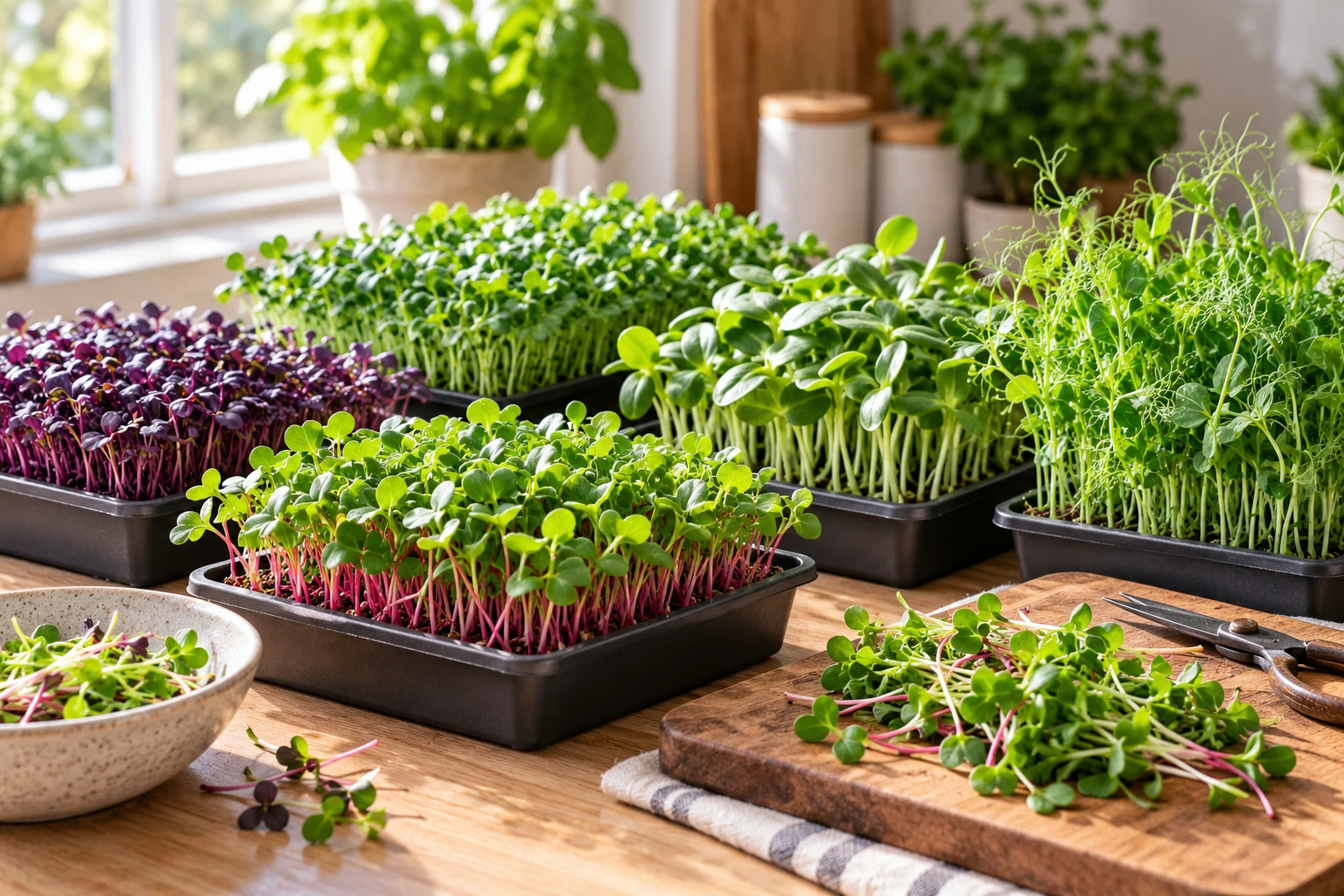
If you are unsure which variety you will enjoy, grow a mild crop and a peppery crop in separate trays. You can compare their flavor without committing to a large harvest of one type.
Can You Grow Different Types of Microgreens Together?
You can mix different microgreens on a plate, but growing several varieties in one tray can make harvest timing harder. Seeds differ in germination speed, moisture needs, and growing pace. Radish may reach harvest size well before cilantro.
For your first few batches, grow one variety per tray. Once you know how each crop behaves, experiment with mixes that have similar growth rates and care needs.
Frequently Asked Questions
Choose a question to see the answer.
How many types of microgreens are there?
There is no single fixed number. Growers use dozens of edible crops and many cultivars, including vegetables, herbs, legumes, and some grains. The total depends on which plants and varieties a source counts.
What are the easiest microgreens to grow?
Radish, broccoli, and kale are useful starting points for many beginners. They usually grow relatively quickly and do not normally need seed soaking. Choose seeds intended for microgreen growing and follow their instructions.
Which microgreens grow the fastest?
Arugula can reach harvest size in about 6–8 days under suitable conditions. Radish and broccoli often take around 8–12 days. Temperature, light, cultivar, and growing method can change these estimates.
Do all microgreen seeds need soaking?
No. Radish and broccoli seeds usually do not need soaking, while peas and sunflower often benefit from it. Some other crops may also benefit, so check the instructions for your exact variety before planting.
Are microgreens the same as sprouts?
No. Sprouts are usually harvested earlier and eaten with their roots. Microgreens grow in a growing medium, and people harvest their stems and leaves after the seed leaves open and the first true leaves begin to emerge.
Can you grow microgreens indoors all year?
Yes. Many varieties grow indoors year-round when you provide suitable light, moisture, temperature, and airflow. A sunny window may work for some crops, while a grow light can provide more consistent conditions.
Choose Your First Microgreen Variety
You do not need to grow every type to enjoy microgreens at home. Start with radish for a peppery taste, broccoli for a mild option, or pea shoots for a sweet, fresh flavor. Once you know how your first crop grows, try slower herbs or colorful varieties.
Choose one variety, follow its seed instructions, and note how long it takes to reach harvest size. A few simple comparisons will help you find the microgreens you enjoy growing and eating most.

6 Comments