
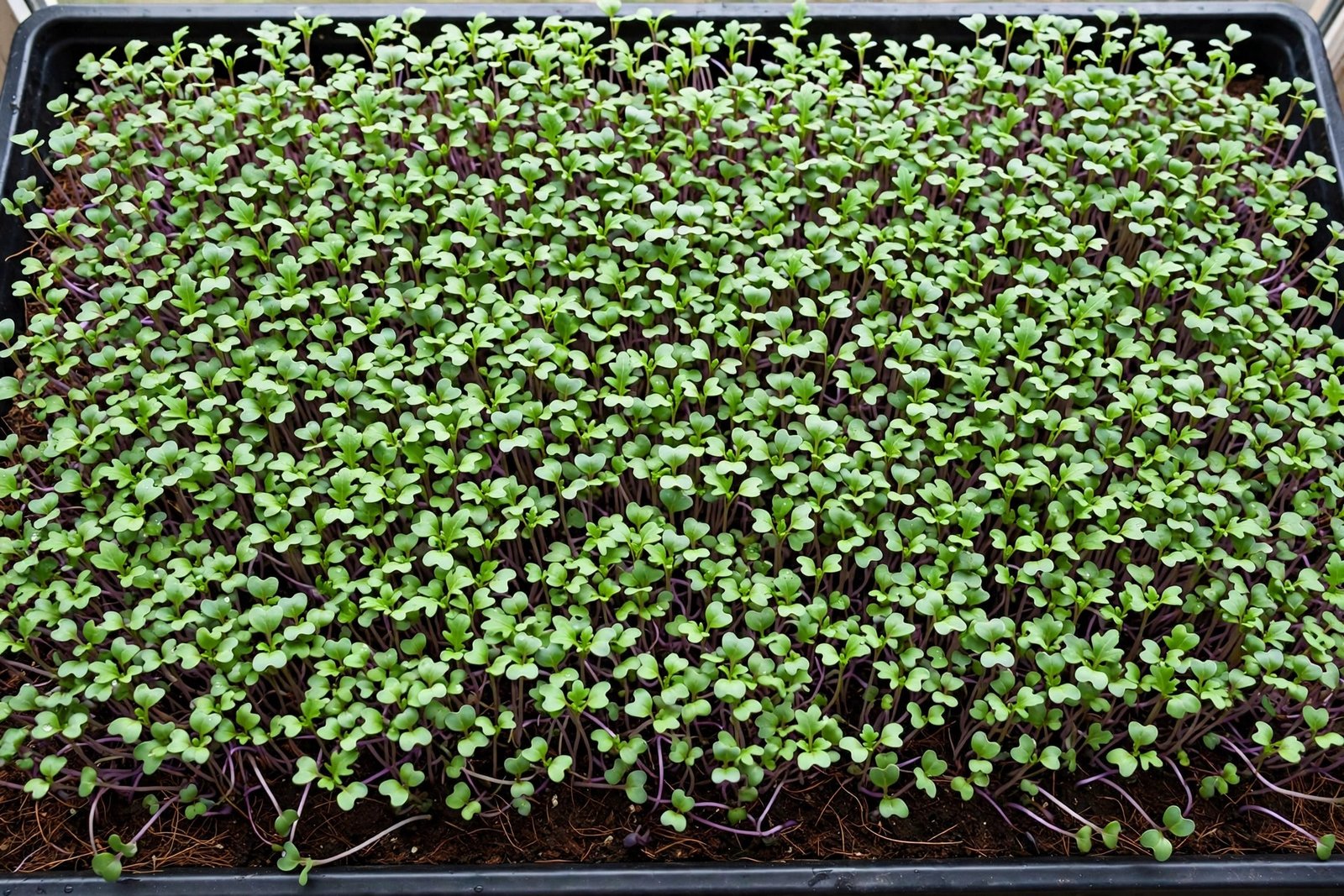
How to Grow Arugula Microgreens
Arugula seed breaks the first rule most microgreen growers learn. Soak the seed and it turns to gel in your hands, clumps into wet mats, and sticks to the cover tray. Sow it dry and it behaves. That one handling difference is the whole reason this guide exists.
Everything else about the tray is fast and simple. This is one of the fastest trays in the cluster: Utah State University Extension lists arugula at 6 to 8 days from sowing to harvest in its published microgreens table, the shortest cycle in that table. Radish microgreens are the closest comparison, another fast peppery brassica, but radish seed is an ordinary dry seed and arugula seed is not. At the other end of the cluster sits cilantro microgreens, the slowest tray here at 16 to 28 days. This guide covers the tray crop only, cut young. Growing arugula on to full salad leaves is a different job on a 25 to 50 day clock, and it is not covered here.
The standard tray method lives in our general guide to growing microgreens, and it is not repeated here. What follows is only what arugula changes: the gel seed, the flavor dial, the numbers with their disagreements printed, and the short timeline from dry seed to cut.
The One Rule: Sow Dry, Never Soak
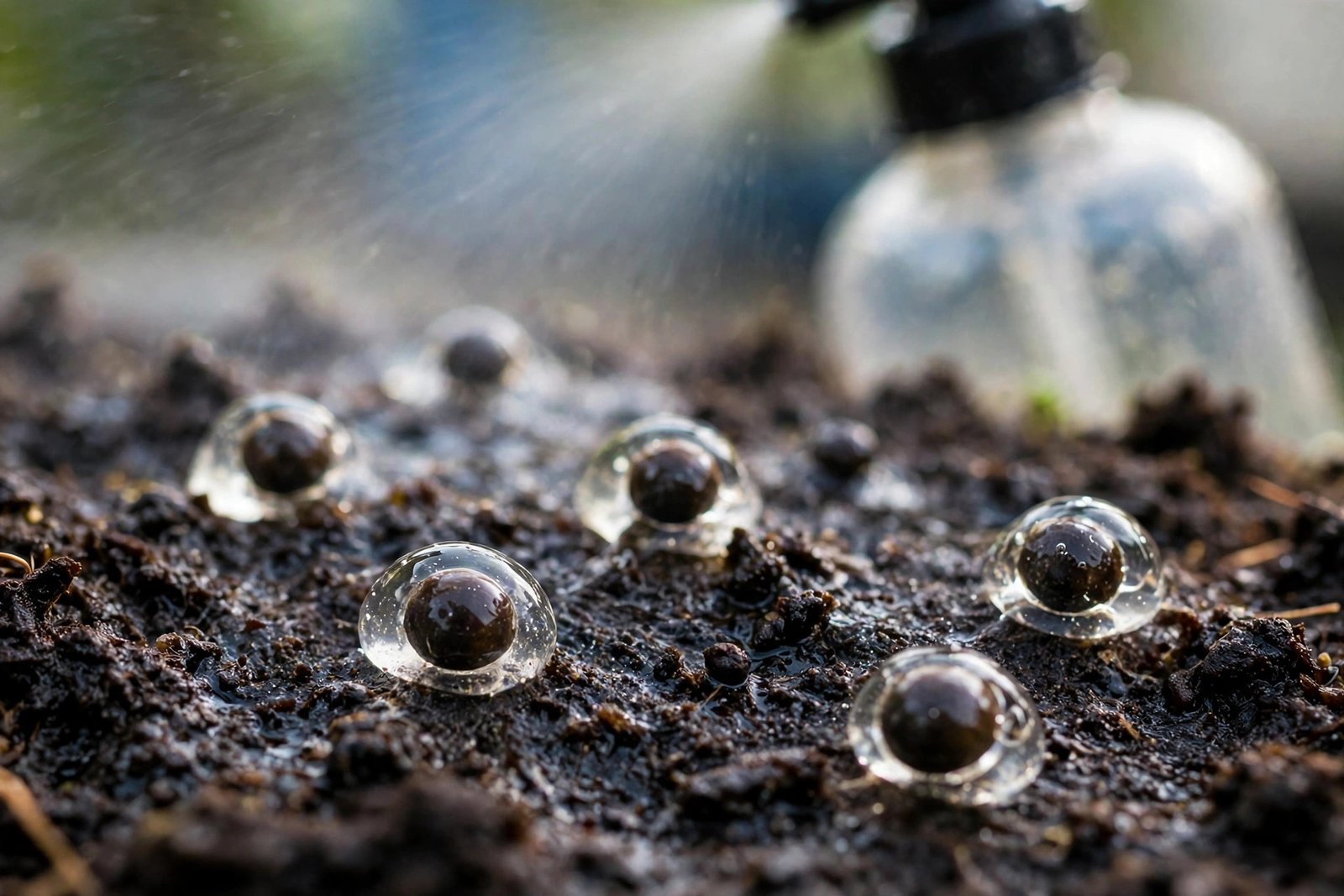
Arugula seed is mucilaginous. The word sounds technical, but the effect is plain to see: the moment the seed gets wet, each seed grows a clear gel coat around itself. GrowLeath, a grow-kit maker that publishes its arugula method in full, calls it a gel sack. The gel holds water against the seed while it germinates, which is useful. It also glues wet seed together, which is not.
That is why soaking fails here. Seed left in water turns into a single gelled mass that cannot be spread evenly, and jar sprouting fails for the same reason: the seed needs a tray surface to sit on, not a jar to swim in. Sow the seed dry onto a moist tray, mist it lightly, and leave it alone. The gel forms in place, on the medium, where it helps instead of hindering.
The gel causes one more surprise in the first days. Seed hulls turn gelatinous as they loosen, and seed sticks to the underside of the cover. GrowLeath calls this normal, and it is: after 2 to 3 days the roots have worked into the medium well enough that the lid comes off cleanly. If you lift the cover to check, lift it a few inches and peek under it rather than pulling it right off. By the third day the tray holds itself together.
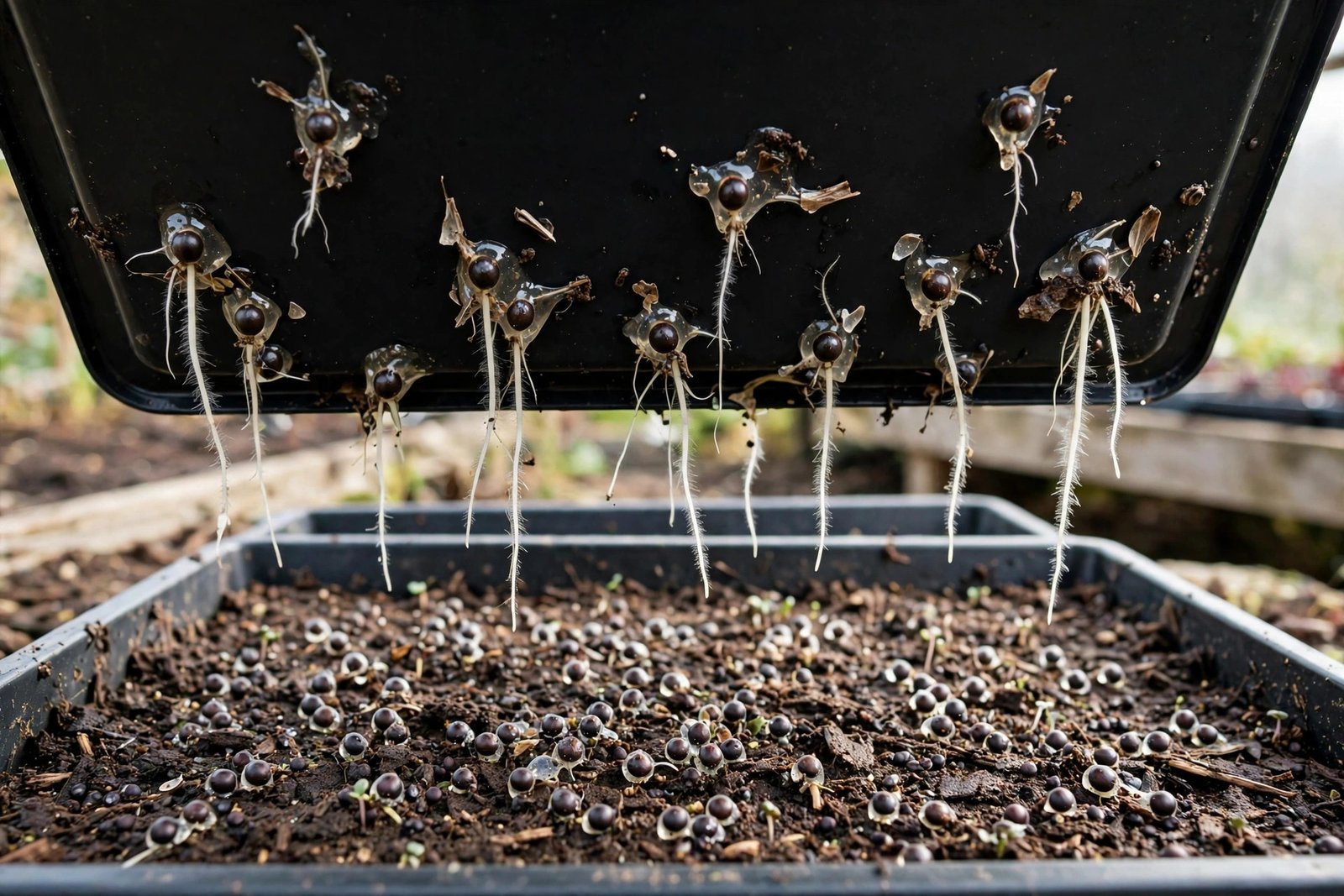
Cover choice follows from the same fact. An inverted tray or a blackout dome that blocks light without pressing on the seed suits this crop best. A weighted tray sitting directly on gel-coated seed will stick, and peeling it up can lift seed with it. Bootstrap Farmer makes the same point for the sticky-seed crops: use a dome for varieties prone to sticking to stacked trays.
The Flavor Dial: Heat, Water, and Cutting Day
Arugula heat is not fixed. The same seed can give mild peppery greens or a tray that bites back, and the difference is mostly the room it grew in. True Leaf Market says it plainly on its arugula pages: leaf flavor gets stronger with warm weather and less irrigation. A cool room and even moisture keep the tray mild. A warm room pushes it hotter and more bitter.
Temperature is the lever you can actually move. Johnny’s Selected Seeds puts the favorable ambient range at 65 to 75°F, with soil at 75°F until germination and then cooler, and warns that temperatures above 75°F raise disease pressure and can hold back germination. Utah State’s table was grown at 74°F for germination, 72°F with the lights on, and 68°F with them off. If your growing spot runs warm, expect a hotter tray and a faster clock, and cut on the early side.
Cutting day is the second lever, and it works in a narrower band. Cut when the seed leaves are fully open and you get the mildest greens. Wait until the first true leaves show and the pepper steps up to full strength. That is the whole reason the published day counts disagree as much as they do: the fast figures are the early cut, and the slow figures are the true-leaf cut. One honest complication: Bootstrap Farmer notes that the peppery taste gets less intense as the plant grows past microgreen size toward a baby leaf. Extra days alone do not add heat. Warmth does.
The Numbers for One Tray
The whole crop on one card, for a standard 1020 tray. The disagreements are printed in the table instead of being smoothed into one tidy figure, because every source below measured something slightly different.
| Arugula, per 1020 tray | The number |
|---|---|
| Seed per tray | Start at 10 g. Utah State University Extension lists 10 g in its microgreens table, and Johnny’s yield trial settled on the same 10 g per tray. Bootstrap Farmer says 12 g. Epic Gardening sows a full ounce, about 28 g, and other grower guides run 15 to 25 g. The heavy rates grow a denser mat, and a dense damp mat is where damping-off starts, so start at 10 g and go heavier only if your tray comes up thin |
| Soak | None. Never soak arugula seed. The gel coat makes soaking unworkable, and no source in this guide’s research soaks it. Utah State lists no presoak, and the seed goes on dry with a mist |
| Covered (blackout) | 1 to 2 days covered in the Utah State table, 2 to 3 days in grower guides, 4 to 6 days in Bootstrap Farmer’s cheat sheet. Uncover on the signal, not the calendar: when most seedlings are up and pushing at the cover |
| Light after uncovering | Bright indirect light, 12 to 16 hours a day. Direct light is the exception for this crop, not the goal. See the light warning in the timeline below |
| Harvest | 6 to 8 days in the Utah State table, cut as the first true leaves show or sooner. 6 to 12 days for Bootstrap Farmer, about 10 days for Epic Gardening, 8 to 14 days for GrowLeath. Johnny’s and Mississippi State group arugula at 10 to 15 days, harvested at the first true leaf. Judge the tray by its leaves, not by the calendar |
| Height at cut | About 2 inches. Johnny’s harvests at one half to 2 inches, GrowLeath at 2 to 3 inches |
The working rule: sow 10 grams dry, cover with an inverted tray, and uncover when the seedlings push at the cover. Give bright indirect light, cut at about 2 inches when the seed leaves are open and the first true leaves just show, and expect the tray to run 6 to 14 days depending on your room and your cut.
Day by Day: Dry Seed to Cut
Not the full tray method, which lives in the general guide. This is the arugula timeline: the signals that tell you when to move.
Day 1: sow dry, mist, cover
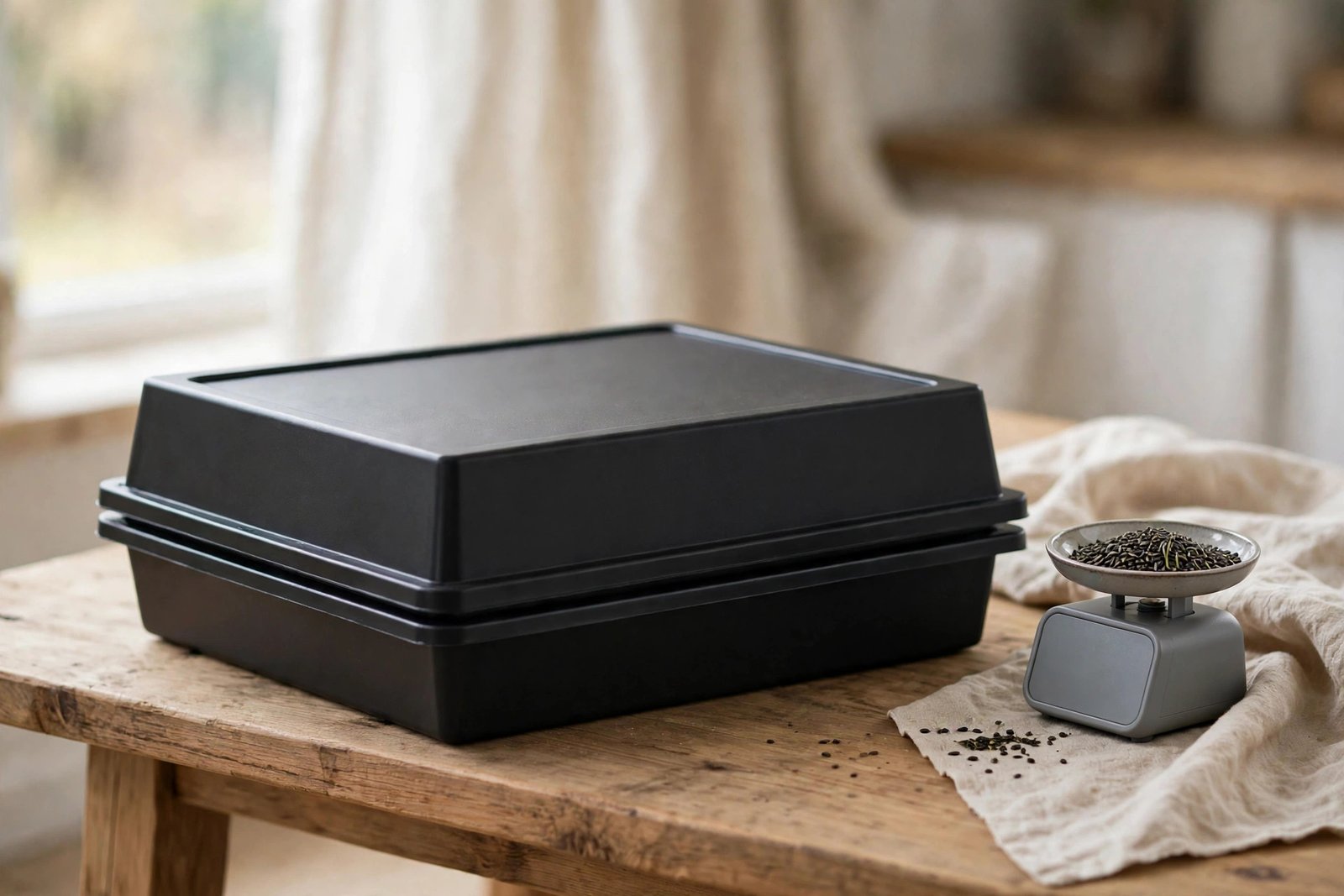
Weigh 10 grams of seed. Broadcast it dry and evenly over a moist tray, in two passes so the coverage stays even. Mist lightly until the seed is visibly damp, then set an inverted tray or dome over the top. Do not press a weighted tray onto the seed. The gel forms on the medium and holds moisture against each seed, which is the whole point of sowing dry.
Days 2 to 3: the gel, the lid, and the first roots
Check once a day by lifting the cover a few inches and peeking under it. Seed sticking to the cover is normal at this stage. The surface should stay damp: mist if it looks pale, and no bottom watering is needed yet. By day 2 or 3 the roots have gripped the medium, germination is mostly done, and the seedlings start pushing at the cover. That push is your uncover signal, whatever the calendar says.
Days 4 to harvest: indirect light and bottom water
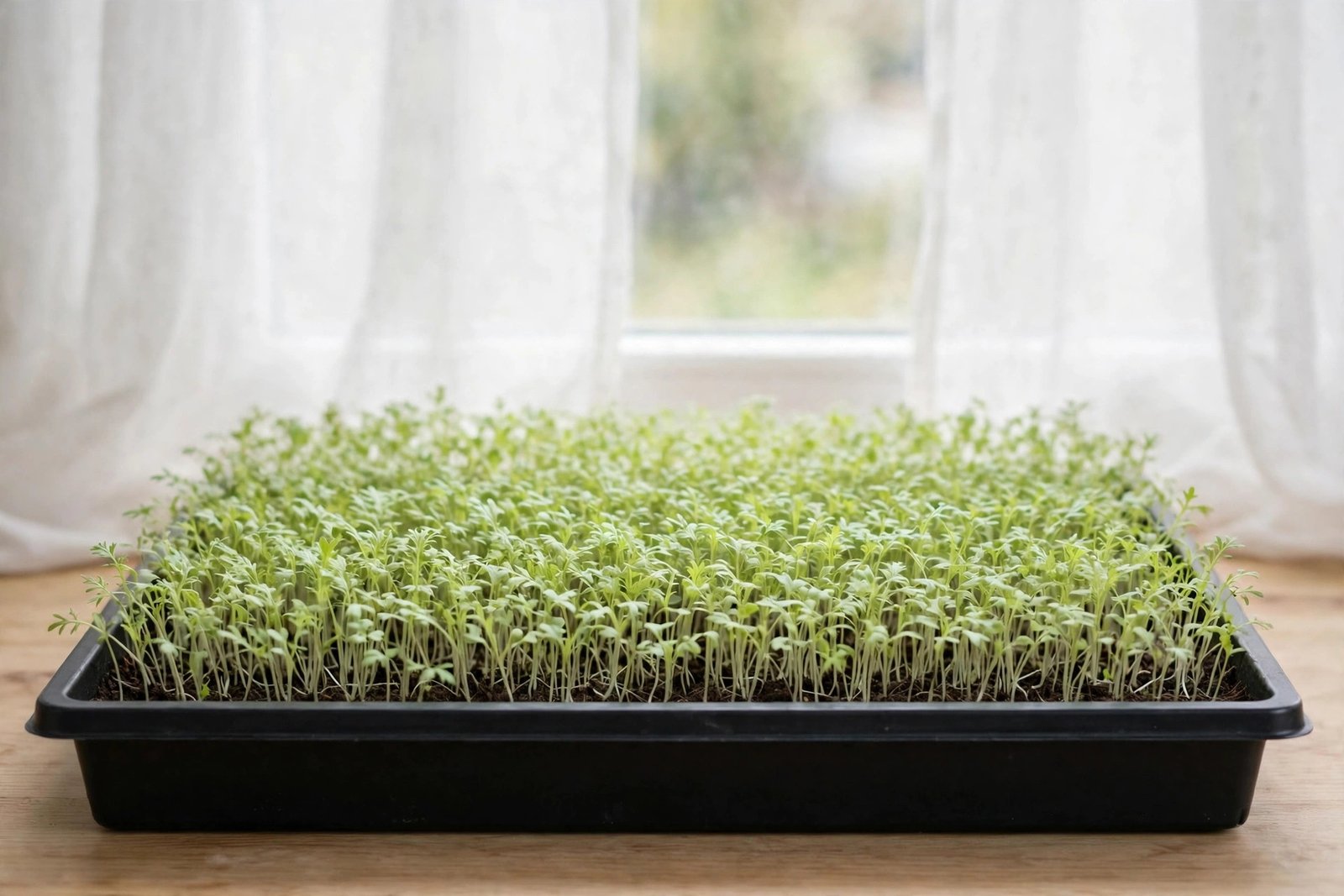
Move the tray into bright indirect light. This is the one crop in the cluster where the brightest spot can be the wrong spot: Bootstrap Farmer’s warning is direct, too much light makes the crop look burnt and unhealthy, and the University of Maryland Extension notes that arugula grows acceptably well in less than ideal light. A bright windowsill out of direct sun, or a grow light set higher than you would for other trays, is right. Water from below from here on, keep air moving, and do not be alarmed by water gathering under the leaf canopy toward the center of the tray. GrowLeath notes that pooling is normal for this crop. Judge watering by the medium, not by the wet leaves.
Cut day: two inches, clean scissors, one cut
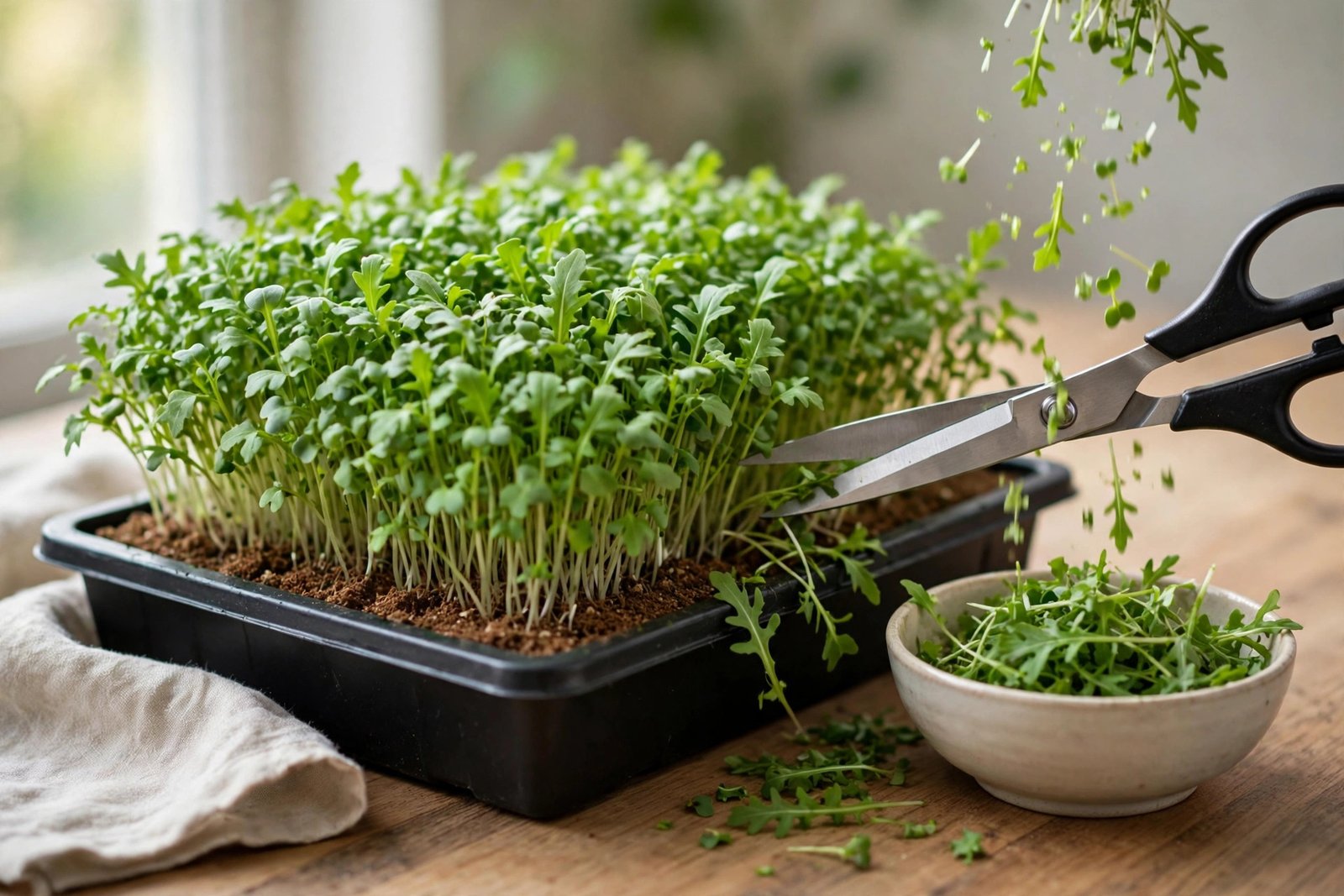
Cut when the tray stands about 2 inches tall with seed leaves fully open and the first true leaves just showing. Use clean scissors just above the medium line. There is no second cut: the growing point comes off with the harvest, and the seedlings will not regrow. Cut only what you will use, or cut the tray and store it the way our guide to how long microgreens last describes, because this article prints no storage day number of its own.
Variety Is a Heat Choice
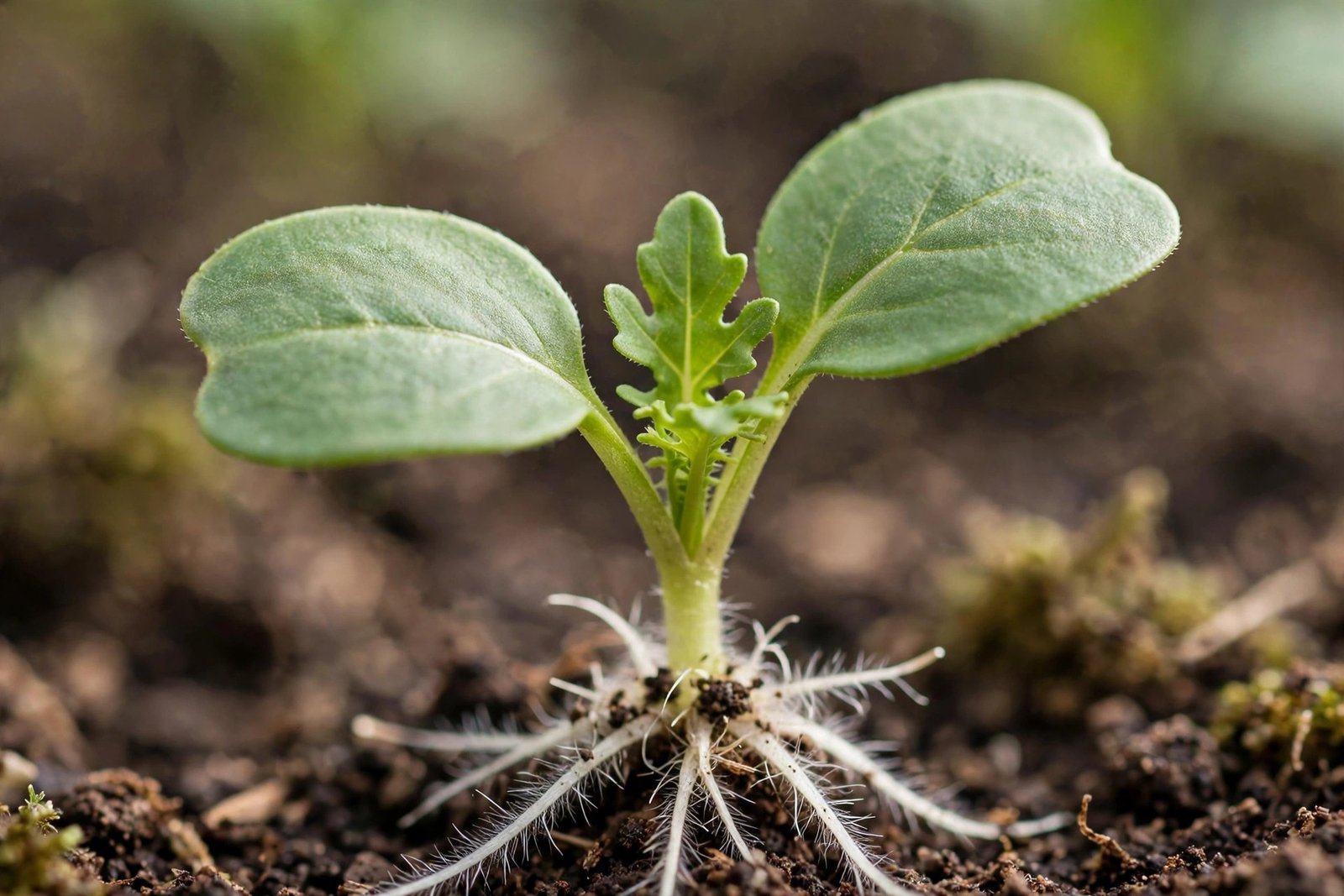
Two different plants are sold as arugula, and the seed packet does not always say which one you are buying. Salad arugula, Eruca vesicaria, also sold as Eruca sativa, is the annual with broad leaves and white flowers. Wild arugula, Diplotaxis tenuifolia, is a different species entirely: a perennial with narrow divided leaves and yellow flowers. Cornell’s growing guide draws the line plainly, and its Sylvetta note is the clearest statement of the difference anywhere in this guide’s sources.
For a tray, the choice is about heat, not habit. Four picks cover the range:
| Variety | What it gives you |
|---|---|
| Rocket / Roquette (standard salad arugula) | The baseline. Mild and peppery when young, sharp at maturity. The seed most packets simply call arugula |
| Astro | A milder strap-leaf selection bred for baby-leaf production, slow to bolt. Johnny’s comparison chart calls its flavor mild, and it is the forgiving pick if you tend to cut late |
| Slow Bolt | A slow-bolting salad type with the standard peppery bite, more tolerant of warm spells than other cultivars. The variety GrowLeath uses for its arugula kits, and a common microgreen pick |
| Sylvetta (wild arugula) | A different species, slower growing and more pungent, with smaller deeply lobed leaves. Pick it on purpose for the strongest tray, and expect a slower run |
Full-plant maturity figures belong to the garden, not the tray: these varieties run 30 to 55 days to mature leaves in the garden, and those numbers say nothing about a tray cut at 2 inches. On the flavor map in our guide to the types of microgreens, arugula sits at the peppery end whatever the variety, and the variety only moves it along that end.
What Goes Wrong
Five arugula-specific failures, in table form. Anything that looks like mold gets one paragraph here and the full diagnosis in the guide that owns it.
| Sign | Likely cause | Fix |
|---|---|---|
| Clear gel on the seed, seed stuck to the cover | The gel coat doing its job | Normal. Lift the cover a few inches to peek, and wait for the roots to grip by day 2 or 3 |
| White fuzz at the stem bases | Root hairs, most often, which look like mold | Do not throw the tray out on a glance. Our guide to mold on microgreens owns the verdict table for telling root hairs from real mold |
| Patchy germination, bare spots beside clumps | Seed sown wet or in one pass, gelled into clumps | Sow dry, weigh the seed, broadcast in two passes. Clumps of seed become clumps of seedlings |
| Scorched, bleached, or burnt-looking leaves | Too much direct light | Move the tray into bright indirect light. This crop greens up without direct sun |
| Greens too hot or bitter to enjoy | A warm room, dry spells, or a late cut in the heat | Grow the next tray cooler, keep the medium evenly moist, and cut on the early side. Heat is the lever, not the variety alone |
One caution that belongs to every tray, not just this one: damping-off favors warm humid conditions and dense wet mats, and arugula’s gel holds moisture close to the seed. Airflow, a 10 gram start, and a medium that stays damp rather than wet are the whole prevention system for this crop.
The Short Version
Sow 10 grams dry on a moist tray, mist, and cover with an inverted tray. Peek under the lid, not through it, for the first 2 to 3 days. Uncover when the seedlings push, give bright indirect light, and cut at about 2 inches when the seed leaves are open. Keep the room cool and the tray makes mild peppery greens. Let it run warm and the same seed bites back. That is the whole crop: one gel seed, one flavor dial, and a tray that is done in about a week to two.
Frequently Asked Questions
Should I soak arugula seeds before sowing?
No, never. Arugula seed is mucilaginous, so soaking turns it into a gelled mass that cannot be spread evenly. Sow the seed dry onto a moist tray and mist it lightly. The gel forms in place on the medium, where it holds moisture against the seed while it germinates.
How long do arugula microgreens take to grow?
It depends on the cut you want. Utah State University Extension lists 6 to 8 days, cut as the first true leaves show or sooner, under its stated growing conditions. Johnny’s Selected Seeds and Mississippi State University Extension group arugula at 10 to 15 days, harvested at the first true leaf. The honest working range is 6 to 14 days: cut at open seed leaves for the mildest greens, or wait for the first true leaves for the full peppery flavor, and judge the tray by its leaves rather than the calendar.
Why are my arugula microgreens so bitter?
Heat is the likeliest cause. Warm growing conditions and dry spells push arugula hotter and more bitter, and a late cut in a warm room stacks both effects. Grow the next tray in a cooler spot, keep the medium evenly moist, and cut on the early side. If you want a milder tray by design, sow Astro, the mildest of the common varieties.
Can I regrow arugula microgreens after cutting?
No. Cutting takes the growing point with it, and the seedlings will not regrow. Harvesting is a one-cut process, so sow a fresh tray for the next batch. With a run as short as this one, a second tray sown on cut day keeps the supply steady without any gap.
Sources
Utah State University Extension, Grow Your Own Microgreens (Stephen Beck, January 2025, updated January 2026): arugula at 10 g per 1020 tray, no presoak, 1 to 2 days covered, 6 to 8 days to harvest, grown at 74°F for germination, 72°F with lights on, 68°F with lights off, 18 hours of light; harvest as soon as the first true leaves show, or sooner. Johnny’s Selected Seeds, arugula microgreen seed page: yield trial seeding 10 g per tray, average 14 days harvested at the first true leaf, 10 to 15 days to maturity, soil 75°F until germination then 60°F, ambient 65 to 75°F, above 75°F disease pressure rises and germination can suffer, harvest at one half to 2 inches. Penn State Extension, Growing Microgreens (Sanchez and Berghage): 7 to 21 days from seeding to harvest, soil 60 to 75°F and air 60 to 70°F for germination, a low-light crop, generic 10 to 15 g per standard tray, lower rates in summer, damping-off favored by warm humid conditions. Penn State Extension, A Step-By-Step Guide for Growing Microgreens at Home (Di Gioia): most seed needs no treatment, mist with a spray bottle, dark for a few days, bottom water. University of Maryland Extension, Growing Microgreens and Baby Greens Indoors (Traunfeld, revised March 2026): microgreens 2 to 3 inches at 7 to 21 days, arugula grows acceptably well in less than ideal light, about 1 tablespoon (10 to 15 g) per flat, seedlings will not regrow. Mississippi State University Extension, Growing Microgreens for the Mississippi Gardener, Publication 2857 (Bachman, 2014): arugula grouped at 10 to 15 days, harvesting is a one-cut process. Cornell Garden-Based Learning, arugula growing guide: Eruca vesicaria, also Roquette and Rocket; Sylvetta is Diplotaxis tenuifolia, slower growing, half as tall, slower to bolt, smaller more deeply lobed leaves, yellow flowers, more pungent taste. Bootstrap Farmer, Ultimate Microgreen Cheat Sheet: 12 g per tray, no presoak, blackout 4 to 6 days, harvest 6 to 12 days, ideal 10 days, indirect light warning, peppery taste less intense as the plant grows bigger. GrowLeath (Leath Guides), arugula guide: mucilaginous gel sack, seed sticking to the lid as normal, peek by lifting a few inches, roots connected by days 2 to 3, harvest at 2 to 3 inches in 8 to 14 days, Slow Bolt seed, water pooling under the canopy as normal. True Leaf Market, Slow Bolt and Rocket arugula seed pages: leaf flavor stronger and more pungent with warm weather and less irrigation, Slow Bolt slower to bolt and more heat tolerant, full-plant maturity 40 to 50 days, seeds mucilaginous and not to be presoaked. Johnny’s Selected Seeds, baby-leaf greens comparison chart: Astro, full strap leaf, mild arugula flavor. Sow True Seed, Astro arugula: mild with a slight peppery kick, slow to bolt. Epic Gardening, arugula growing guide: about 1 ounce of seed per standard tray, germination in about 3 days, light from days 4 to 5, harvest at about 2 inches in around 10 days. Wikifarmer, arugula guide: seeds form a sticky gel-like coating when wet and are unsuited to jar sprouting.

One Comment