
Why Are My Basil Leaves Turning Yellow?
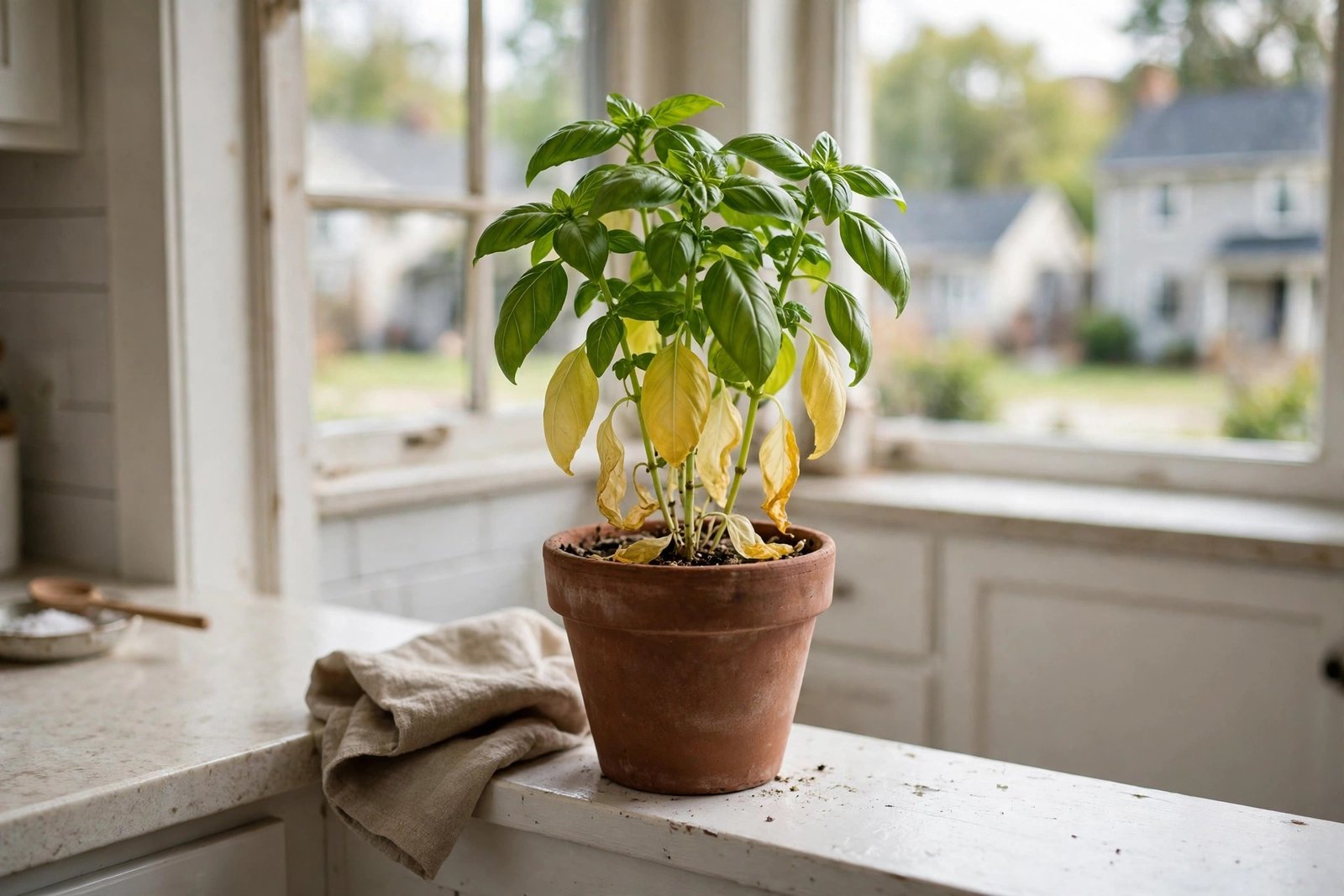
Basil leaves turning yellow is a symptom, not a diagnosis. Too much water is the most common indoor cause, but cold, weak light, disease and plain hunger can paint a leaf the same color, and the wrong fix makes things worse. Feeding a plant with rotten roots, or watering one that is already drowning, pushes it downhill faster.
The plant tells you which problem it has. Where the yellow starts, what pattern it makes, and what changed this week narrow it down in about a minute.
Start With the Pattern: The 60-Second Triage
Answer four questions before you touch the watering can.
- Where did it start? The bottom leaves, the newest growth, scattered patches, or one side of the plant?
- What does the yellow look like? The whole leaf, or yellow between the veins while the veins stay green?
- What does the mix feel like? Push a finger an inch or two down. Wet, evenly moist, or dry?
- What changed this week? A cold night by the window, a move to a new spot, a stretch of missed waterings, a new plant brought home?
The Verdict Table: Match Your Pattern
| Pattern you see | Likely cause | The check that confirms it | First fix |
|---|---|---|---|
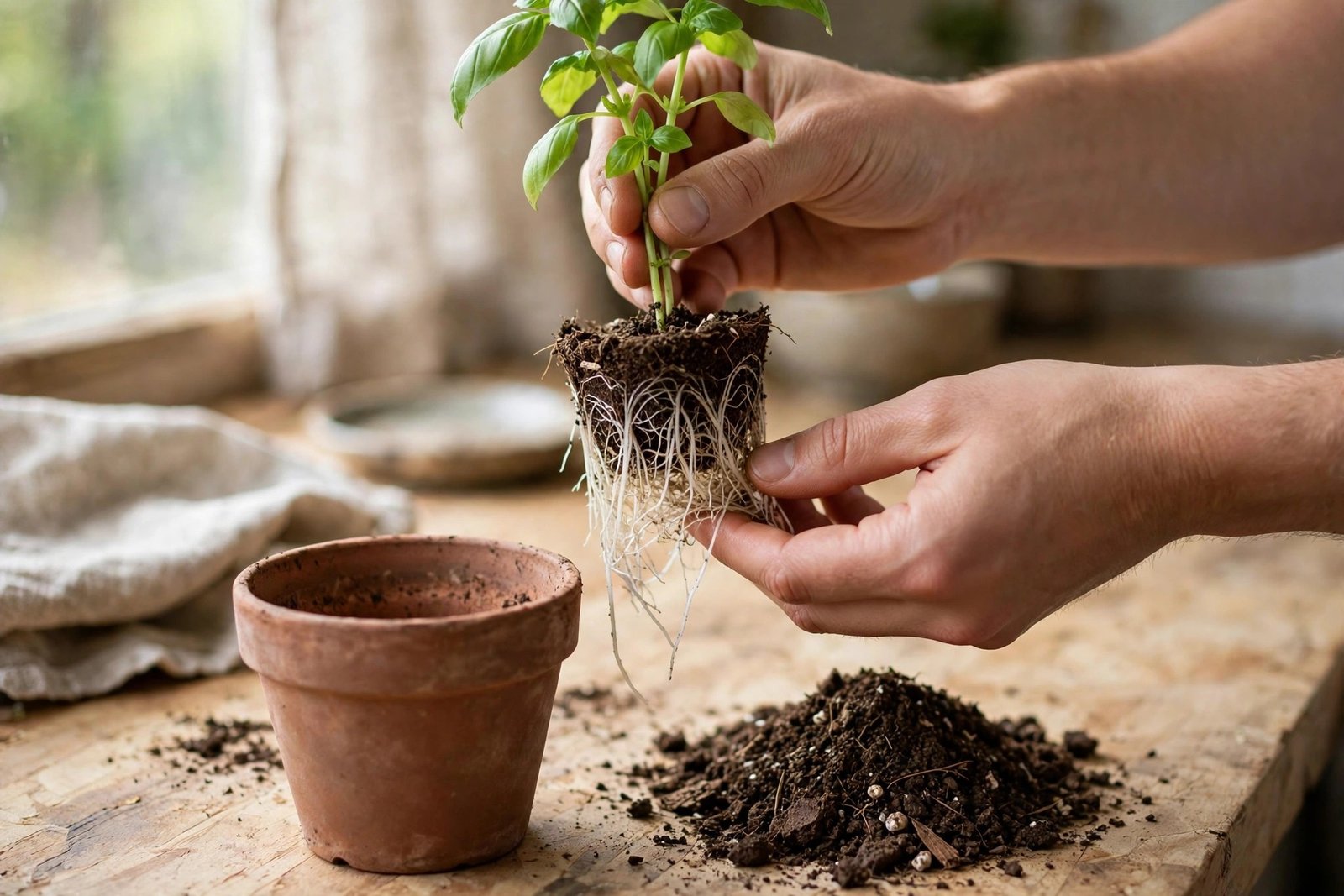
| Yellow starts at the bottom and the mix stays wet | Overwatering or root trouble | Slide the plant out and check the roots. Firm and pale is healthy, dark and soft is rot. | Stop watering, let the top 1 to 2 inches dry, check drainage. |
| Uniform yellow climbing from the bottom, mix and roots fine | Nitrogen shortage, or plain aging | Ask the plant’s age and when it last got fed. | Feed at label strength once watering and roots check out. |
| Yellow between the veins, veins still green | A nutrient pattern | Check the feeding history before treating anything. | Start with a balanced feed. Do not reach for a single-mineral cure. |
| Blocky yellow patches on top, fuzz underneath the leaf | Downy mildew | Flip a leaf over and look at the underside. | No home cure. Bag the plant and throw it out. |
| Yellow after a cold night, worst on the window side | Cold damage | Think back to the coldest recent night and which side faced the glass. | Move the pot off the glass and out of drafts, above 50°F. |
| Pale all over, stems stretching, leaves smaller | Low light | Compare stem spacing and leaf size with last month. | Brightest window you have, or a grow light for 14 to 16 hours. |
| Yellow with a wilt, and the mix is dry deep down | Underwatering | Feel the mix 2 inches down. Still limp in the morning confirms it. | Soak deeply until water runs out of the holes, then drain fully. |
| Tiny pale dots, sticky leaves, or fine webbing | Pests | Tap the leaves over white paper and inspect the undersides. | Isolate, wash pests off, treat per label if needed. |
| Sudden wilt and yellow on one side, water does nothing | Fusarium wilt | Cut a low stem and look for discolored tissue inside. | No cure. Discard the plant and clean the pot before reuse. |
Too Much Water: The Bottom-Up Problem
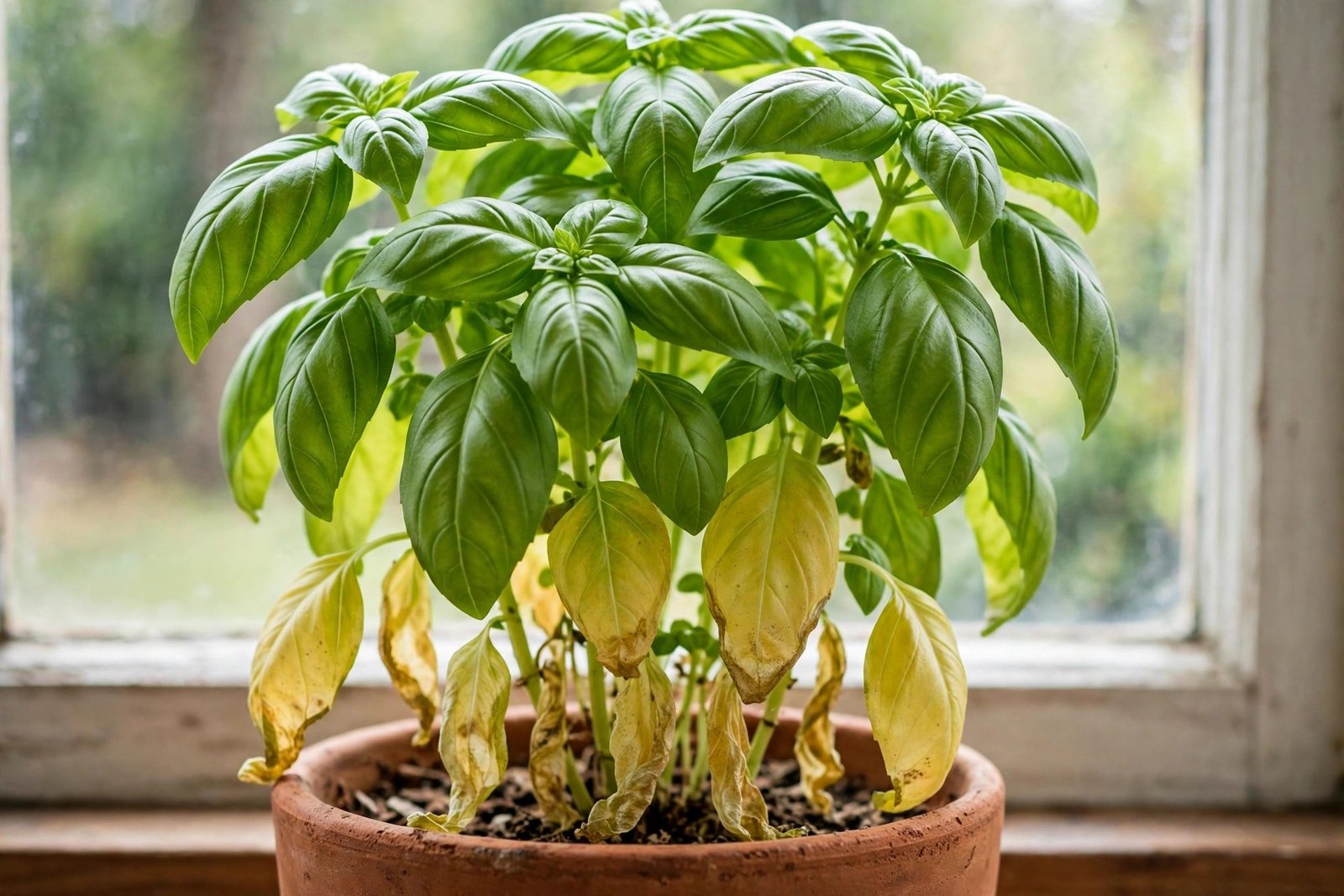
This is the first place to look, because it is the most common indoor cause and the easiest to misread. The plant wilts, so it gets more water, and the roots get worse. The signs are lower leaves yellowing first, a pot that stays heavy for days, and a plant that wilts while the mix is still wet. University of Minnesota Extension ties overwatering to root rot and heavy yellowing in basil. Maryland Extension guidance adds the root test: healthy roots are firm, badly damaged roots dark and soft.
Stop watering and let the top 1 to 2 inches of mix dry. Confirm the drainage holes are open and empty the saucer. If the roots are dark and soft, trim the dead ones with clean scissors and repot into fresh, well-draining mix. Do not fertilize a root-damaged plant first; it cannot use the feed yet. The habit side lives in our indoor herb garden mistakes guide.
A Cold Windowsill: The November Cause
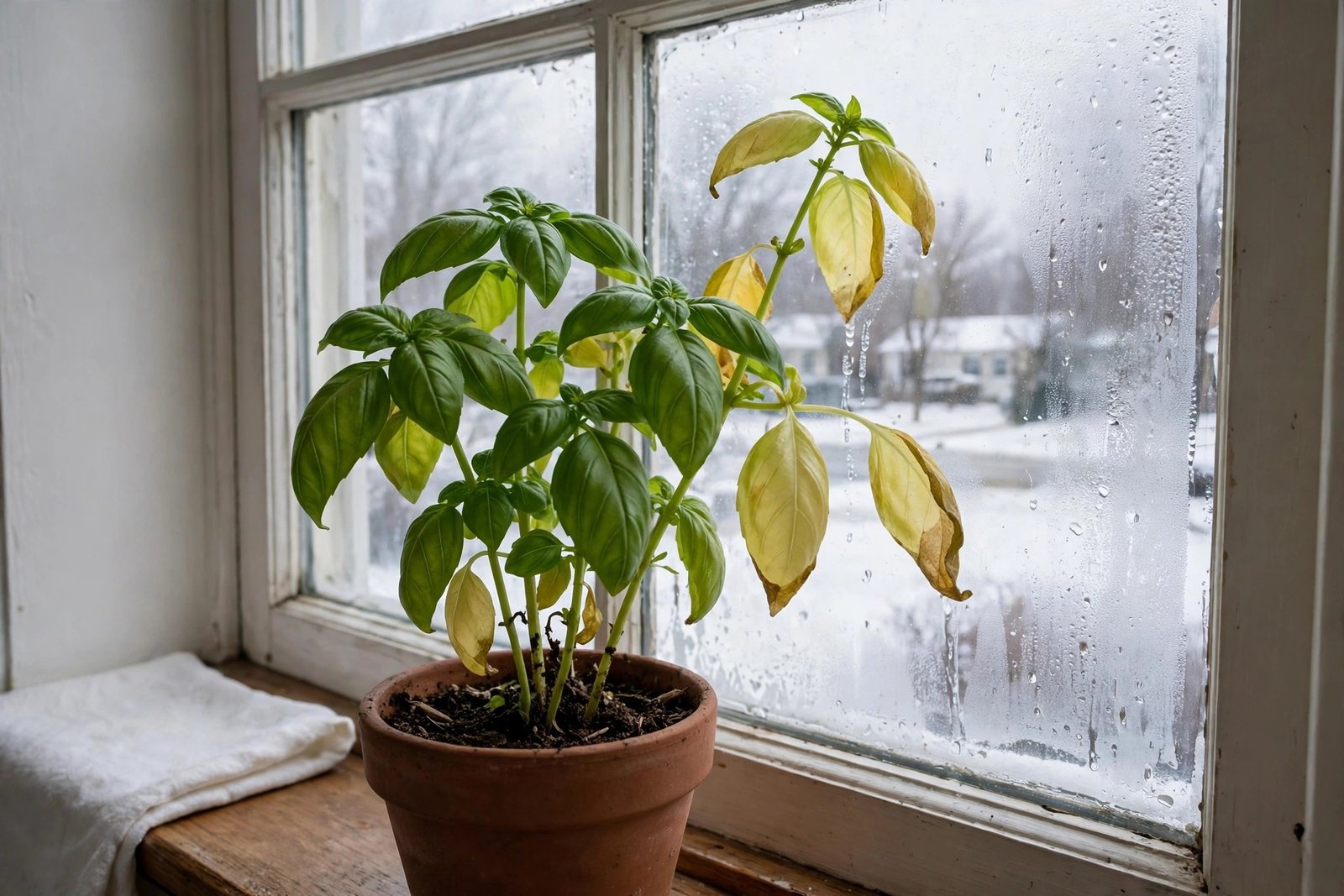
Basil is a warm-weather plant, and indoors in November the enemy is often the window itself. The University of Illinois Extension herb guide states it plainly: basil can show cold damage to the leaves at 50 degrees Fahrenheit. South Dakota State and Tennessee Extension guidance agrees: keep basil above 50°F (10°C).
The pattern gives it away. Yellowing starts after a cold night, or on the leaves closest to the glass, often on one side of the plant. A pot touching cold glass or sitting in a night draft can hit the danger zone while the room feels comfortable. Our list of the best herbs to grow on a windowsill makes the same point about basil and cold glass.
Move the pot off the glass and out of drafts, especially at night. Chilled leaves will not repair themselves, so judge by new growth in a warm spot. Skip fertilizer and heavy pruning until it grows again.
Not Enough Light: Pale All Over
Low light yellowing looks different. The whole plant goes pale and washed out rather than patterned. Stems stretch, leaves stay smaller, and growth slows over weeks. Iowa State Extension describes herbs in weak light as thin and spindly with smaller leaves, and winter makes it worse.
Keep this fix short: the sunniest south-facing window you have, or a grow light running 14 to 16 hours a day in winter, and rotate the pot so all sides get a turn. Our guide to how much sunlight indoor herbs need owns the full window and grow light setup.
Downy Mildew: Flip the Leaf Over
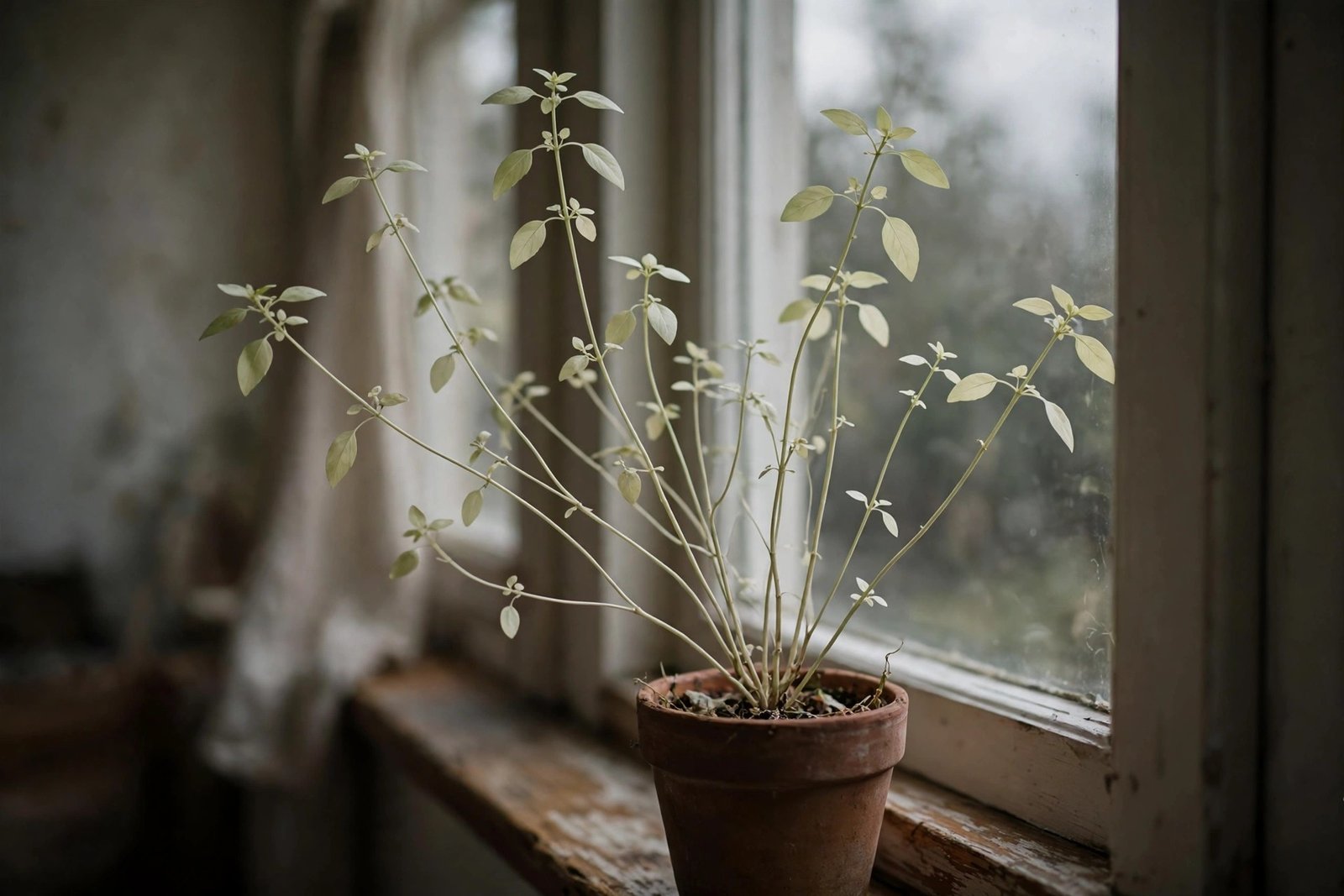
From above, downy mildew starts as yellow patches that stop at the leaf veins, blocky and angular. Flip the leaf. The University of Maryland Extension page on downy mildew on basil names leaf yellowing as the most noticeable symptom, and NC State and Cornell sources agree on the decider: grey to purple-brown fuzzy growth on the underside of the leaf. No fuzz, probably not mildew. Fuzz, settled.
There is no home cure, and NC State notes that no product available to home gardeners controls it. Pull infected plants, bag them, and throw them out. Do not compost them. Maryland Extension notes that leaves from infected plants are safe to eat, so pick the clean leaves promptly and use them. For the next plant, choose a resistant variety such as Obsession, Devotion, Prospera or Amazel, and give plants airflow.
A Hungry Plant: Nitrogen and the Pattern Between the Veins
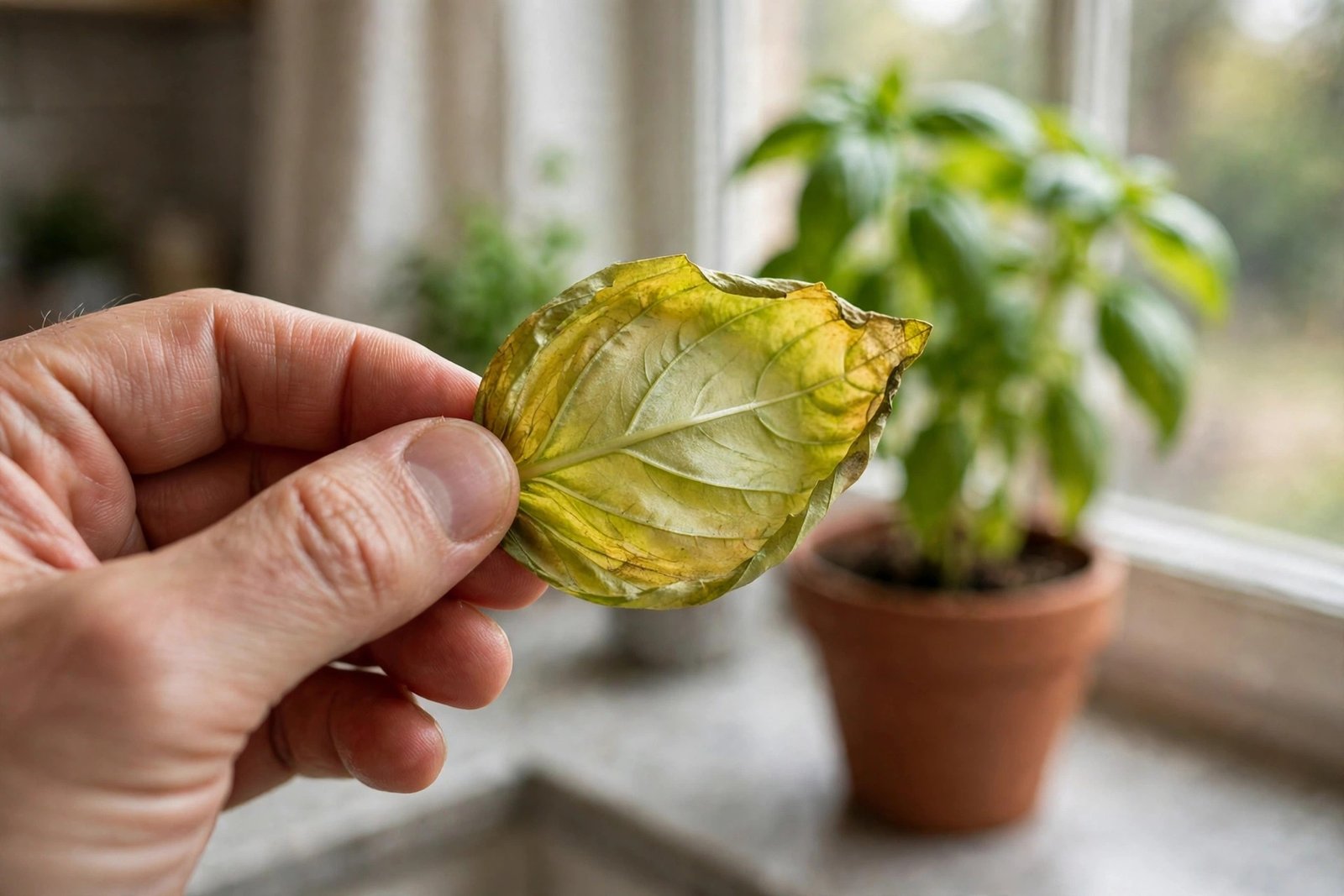
Uniform yellow from the oldest leaves: nitrogen
Nitrogen moves inside the plant. When there is not enough, the plant pulls it out of the oldest leaves to feed new growth, so the yellowing starts low and climbs. The key detail is that the whole leaf yellows, veins included, while the mix is not soggy and the roots look healthy. That is what separates hunger from overwatering.
Once roots and watering check out, feed with a balanced fertilizer at label strength. Expect the new growth to come in green.
Yellow between the veins: read it as a pattern, not a verdict
Sometimes the yellow sits between the veins while the veins stay green. That interveinal pattern points at feeding, but this guide will not name a single mineral as the problem. No extension source we could check makes that specific call for indoor basil, and guessing leads to random dosing. A plant that has not been fed in months needs a balanced feed and a few weeks of observation, not a folk remedy.
Too Little Water: The Wilt That Stays
An afternoon droop that recovers by morning is usually heat. A plant that is still limp the next morning, with mix dry well below the surface and leaf edges turning crisp, is genuinely thirsty. Lower leaves yellow and drop as it gets worse. NC State Extension wilting guidance draws exactly that line.
Water deeply until it runs from the drainage holes, then let the pot drain fully. After that, water when the mix check says so, not by the calendar. Water at the base rather than over the foliage, a habit Clemson Extension recommends for basil.
Pests: Dots, Sticky Leaves and Webbing
Aphids cluster on new growth and under leaves, leave a sticky residue called honeydew, and distort the growth they feed on. Spider mites leave fine pale stippling, tiny yellow dots that merge into a grey or bronze cast, plus fine webbing underneath. They thrive in the hot, dry air of heated winter rooms. Whiteflies rise in a little cloud when the plant is brushed and cause yellowing and leaf drop. Penn State Extension indoor plant guidance describes all three patterns.
Isolate the plant first so the problem does not travel. Wash the pests off with a firm stream of water. If they return, use an insecticidal soap exactly as its label directs. For mites, also tackle the dry heated air.
Fusarium Wilt: The One You Cannot Save
A plant wilts suddenly, often on one side first, and watering does nothing. New growth may twist as it comes in. Cornell University’s e-GRO alert on basil fusarium wilt describes sudden wilting with yellow leaves, and the inside check settles it: cut the stem and the water-carrying tissue is discolored, because the fungus plugs it.
There is no cure and no registered fungicide for home control. Discard the plant. Clean the pot before you reuse it and start the next basil in fresh mix. Resistant Genovese types such as Nufar, Aroma 1 and Aroma 2 are the smarter replant.
Just Getting Old: Aging and Flowering
One or two of the very lowest, oldest leaves yellow and drop while the rest of the plant stays green and growing. That is a plant shedding its oldest tissue, and it needs nothing from you.
The other version is flowering. Basil is an annual, and once flower buds form at the stem tips, the plant shifts energy toward seed and the lower leaves fade. Flavor declines after bloom as well. Pinch the buds off as they appear to keep the plant leafy longer. An old plant at the end of its run is simply a signal to start a fresh one.
Can This Plant Still Be Saved?
Match your diagnosis to a band to see how much effort the plant deserves.
| Band | What lands here | What to do |
|---|---|---|
| Worth saving | Water, light, cold and feeding causes caught early, with healthy roots and new growth coming. | Fix the one cause and judge by new growth over the next two weeks. |
| A race | Root damage awaiting a repot verdict. Downy mildew, a plant on borrowed time. | For roots, repot and watch. For mildew, harvest the clean leaves promptly and use them, then remove the plant. |
| Start over | Fusarium wilt. A stem that is soft or black at the base. A plant that has fully collapsed. | Discard the plant, clean the pot, fresh mix, and pick a resistant variety where one exists. |
Keep It From Happening Again
Prevention is a short list. Keep the plant above 50°F and off cold glass. Give it the brightest light you have. Water on the mix check, with drainage, never on a fixed schedule. Leave space around the plant so air can move. And if downy mildew has visited before, start with a resistant variety. Our indoor herb garden guide covers the wider setup behind these habits. For the full winter routine that keeps leaves green in the first place, see our guide to growing basil indoors in winter.
Basil Yellowing FAQs
Why are only the bottom leaves of my basil turning yellow?
Three usual reasons: soggy mix rotting the roots, hunger making the plant pull nitrogen from its oldest leaves, or plain aging shedding the lowest leaves one at a time. Check the mix and the roots first. If both are fine and the rest of the plant is green, it is age or feeding.
Should I cut off the yellow leaves? Will they turn green again?
Remove leaves that are fully yellow. They are spent, and taking them off improves airflow. Judge recovery by the new growth at the stem tips, not by old leaves changing back. Fresh green growth after the fix means the plant is recovering.
My basil turned yellow right after I brought it indoors. Why?
The move itself is the usual suspect. Basil is chilling sensitive, and a cold car ride, a drafty doorway or one night against cold glass can damage leaves at around 50 degrees Fahrenheit. The drop in light from outdoors to a windowsill adds stress. Set it somewhere warm and bright and judge it by new growth.
Is yellow basil safe to eat?
Yellowing from water, light or feeding problems is a quality issue, not a safety one. Wash the leaves and use them soon, because flavor fades. The University of Maryland Extension notes that leaves from plants with downy mildew are safe to eat, so harvest the clean ones promptly. If a plant is rotting or you cannot tell what is wrong with it, compost it instead.
How do I know if it is downy mildew and not a nutrient problem?
Flip the leaf over. Downy mildew leaves grey to purple-brown fuzzy growth on the underside. A nutrient problem never grows fuzz. The underside check takes ten seconds and settles the question.
Can an overwatered basil plant recover?
Yes, if part of the root system is still firm and pale. Trim the dark, soft roots, repot into fresh mix, and hold off on fertilizer until new growth appears. If the stem base is soft or black, start over.
Sources and Further Reading
- University of Illinois Extension, Good Growing herb guide: cold damage to basil leaves at 50 degrees Fahrenheit.
- South Dakota State University Extension and University of Tennessee Extension (W 1225 B): basil suffers below 50 degrees Fahrenheit, and prolonged cold below that line causes damage.
- University of Maryland Extension, Downy Mildew on Basil in the Home Garden: yellowing, grey fuzz underneath, and leaves from infected plants are safe to eat.
- NC State Extension, basil downy mildew notes: purple-brown spores underneath are a sure sign, and no home garden product controls it.
- Cornell University e-GRO Alert, basil fusarium wilt: sudden wilt, yellow leaves, discolored stem tissue, no registered fungicide control.
- Penn State Extension, Pest and Disease Problems of Indoor Plants: aphid, whitefly and spider mite signs.
- University of Minnesota Extension and Clemson HGIC: overwatering, root rot and basil watering practice.

3 Comments