
10 Best Herbs to Grow on a Windowsill for Beginners
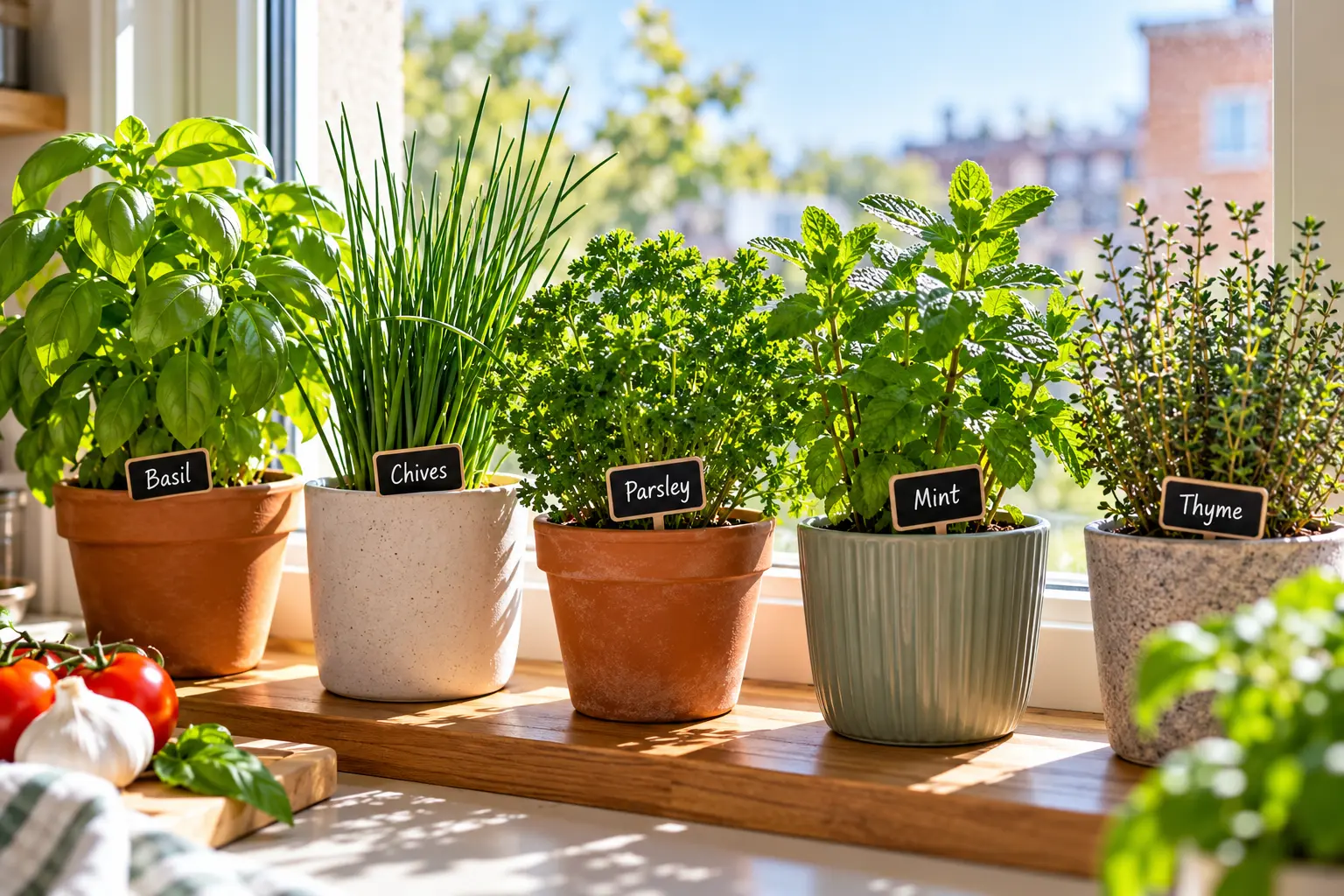
A sunny windowsill can support a useful kitchen herb garden, but each herb has different light needs. Basil, thyme, and rosemary generally need strong sunlight, while chives, cilantro, and lemon balm can tolerate lower light. Start with your brightest window, choose pots with drainage holes, and match your herbs to the conditions you can provide.
Growing herbs on a windowsill is a simple way to keep fresh flavor close to your kitchen, even if you do not have a backyard or balcony. A few well-chosen pots can supply leaves for pasta, soups, salads, tea, and everyday meals.
The key is matching herbs to your window’s light. Some thrive in small containers with regular trimming, while others need stronger sun than beginners expect. Here are 10 herbs to consider, along with their light needs and care tips.
Check Your Window Before You Buy Plants
A window can look bright to your eyes but still give too little light for sun-loving herbs. Watch the sill through the day before shopping. South- and west-facing windows give the strongest light in the northern hemisphere, though buildings, trees, and curtains change what actually reaches the pots.
Check sill width and temperature too. You need about 4 inches of depth for a stable pot, and 6 is better. Glass turns cold on winter nights, so slide pots a few inches back from the pane when frost threatens. Pick the brightest practical spot first, then choose herbs that suit it.
For the full basics on light, pots, and watering, read our beginner’s guide to growing herbs indoors.
10 Best Herbs for a Windowsill Garden
1 Basil
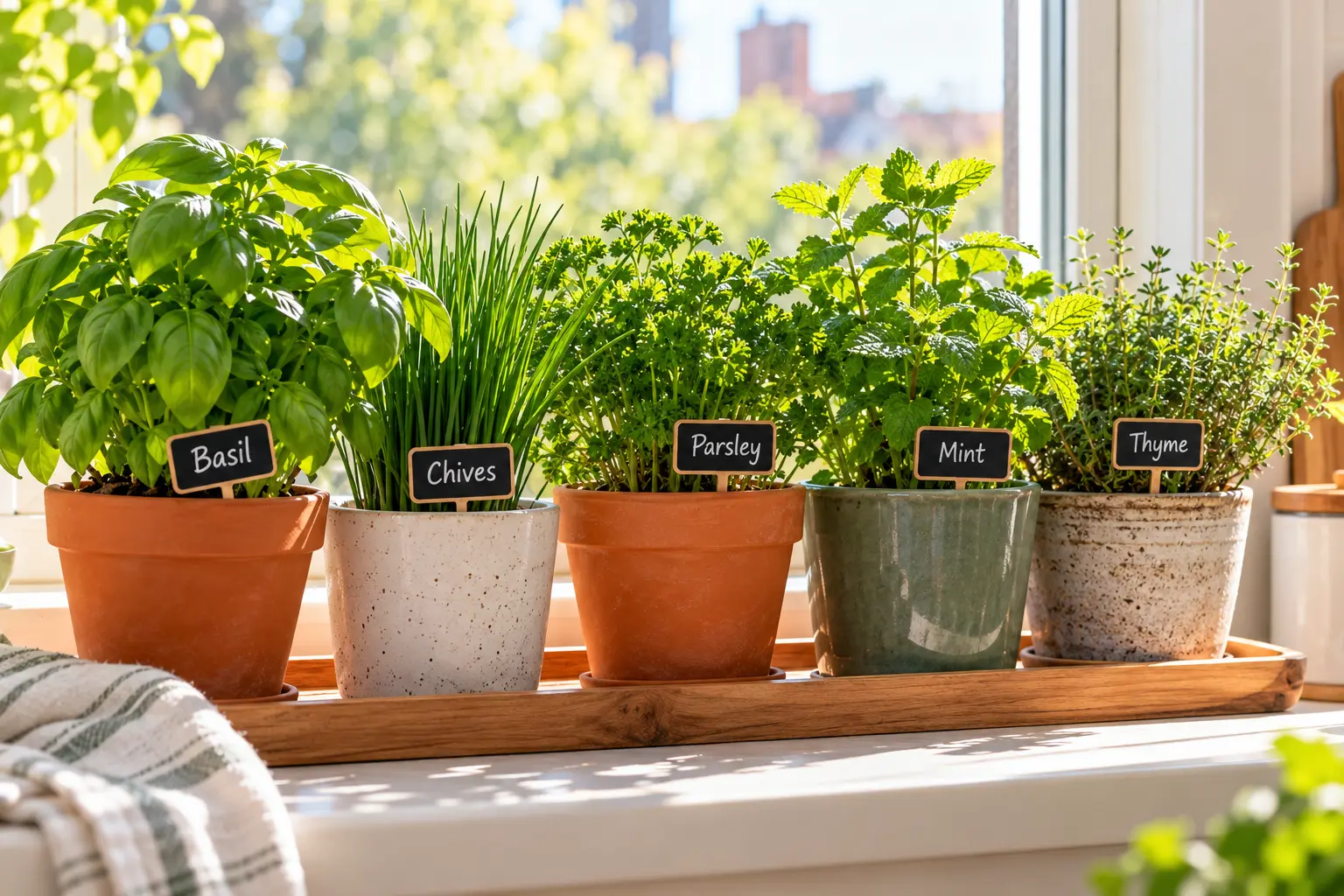
Basil is a useful choice for a sunny kitchen windowsill. It loves warmth and wants around 6 hours of direct sun, so give it your brightest sill. A 6-inch pot makes a good starting home for one plant. Pinch the growing tips above a pair of leaves to keep it bushy, and snip off flower buds so the plant keeps making leaves instead of seeds. Keep the pot back from cold glass at night.
2 Chives
Chives grow in a compact clump, making them useful for narrow windowsills. Chives tolerate lower light than many culinary herbs, although stronger light generally supports better growth. They regrow fast after cutting. A 4-inch pot works as a starting size. Snip the outer blades with clean scissors and leave about 2 inches so the clump recovers. Their mild onion flavor lifts eggs, soups, and baked potatoes.
3 Parsley
Parsley is more than a garnish. Flat-leaf types flavor sauces and salads, while curly types finish dishes. Seeds can take weeks to sprout, so beginners should buy a starter plant. Give it a bright spot and a pot with some depth for its roots. Harvest the outer stems first and leave the center growing point alone.
4 Mint
Mint rewards beginners because it grows vigorously, but it still needs proper care. It prefers consistently moist, well-drained potting mix and a bright location. Always give mint its own pot, since its roots spread fast and crowd out neighbors. Trim long stems regularly to keep it compact. A 6-inch pot with drainage holes is a good start.
5 Thyme
Thyme fits small pots and sunny sills. It wants your brightest window. Allow the potting mix to dry somewhat between waterings, but check it regularly. A 4-inch pot is enough to start. Snip small sprigs for roasted vegetables and soups rather than cutting large sections at once.
6 Oregano
Fresh oregano works well in pizza toppings and pasta sauces, so even a small harvest earns its space. Like thyme, it wants strong light and a well-drained pot. Let the mix dry somewhat between waterings. Pinch the stems lightly to keep the plant compact, and remove flower buds to protect the flavor.
7 Cilantro
Cilantro, called coriander leaf in some countries, suits cooks who use it fresh in salsa, curries, and chutneys. It prefers cooler conditions and bolts fast in heat, so keep it away from hot radiators under the window. Sow seeds directly in the final pot, about 6 inches wide, and sow a fresh batch every few weeks for a steady supply.
8 Lemon Balm
Lemon balm has a fresh, lemony scent that suits tea and infused water. Penn State Extension lists it among herbs that tolerate lower light, which makes it a smart pick for less-than-perfect windows. Like mint, it spreads vigorously, so give it its own pot. Trim the tips to encourage bushy growth and harvest leaves as needed.
9 Sage
Sage offers an earthy flavor for roasted vegetables and stuffing, and its soft gray-green leaves look good on a sill. It needs strong light and hates wet roots, so use a gritty, free-draining mix and a pot with generous drainage holes. A 6-inch terracotta pot works well because the clay breathes. Water only when the mix feels dry an inch down, and harvest a few leaves at a time.
10 Rosemary
Rosemary is best for a bright, sunny windowsill with enough room for a stable pot. It needs 6 or more hours of direct sun, sharp drainage, and good airflow. In winter, move it back from cold glass and water less. Start with a compact nursery plant rather than a tired supermarket pot. If your sill is narrow or dim, skip rosemary and grow thyme instead.
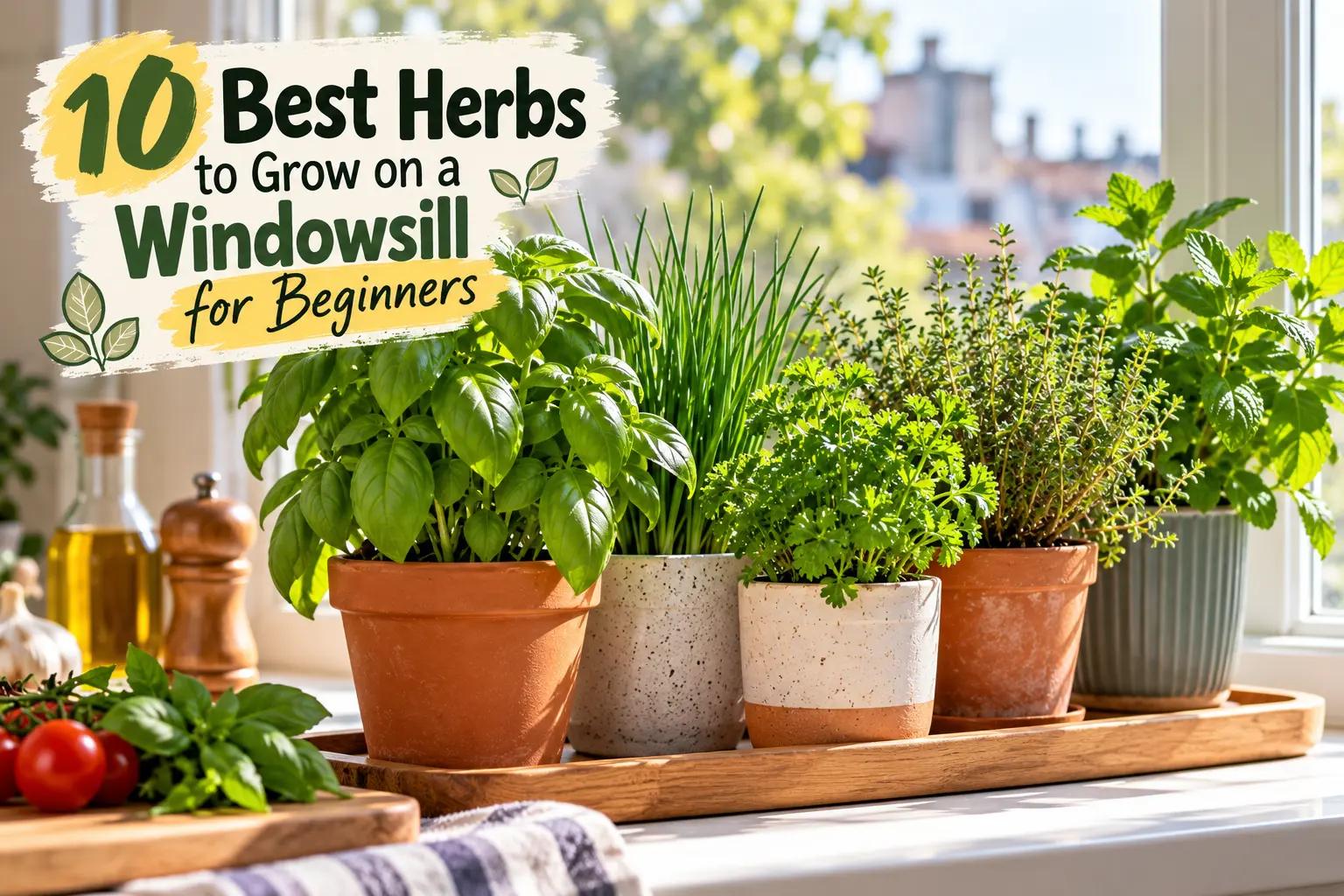
Which Herbs Fit Your Windowsill?
| Your situation | Herbs to consider | What to keep in mind |
|---|---|---|
| Bright, sunny windowsill | Basil, thyme, oregano, rosemary | These herbs need strong light and well-drained potting mix. |
| Narrow sill with moderate light | Chives, lemon balm, parsley | Growth depends on available light; a grow light may help. |
| Herbs for everyday cooking | Basil, parsley, cilantro | Cilantro may need repeat sowings. |
| Tea and drinks | Mint, lemon balm | Grow them in separate pots to manage their spread. |
| You sometimes forget to water | Thyme, oregano, sage | These prefer the mix to dry somewhat between waterings. |
Start with two or three herbs and add more once you know how much light your window gets.
Setting Up Your Sill Garden
Line up the pots with space between them so air moves and you can lift each one. Set everything on a waterproof tray to protect paint and wood, and empty the tray after watering.
Use a lightweight potting mix made for containers, not garden soil. Turn each pot a quarter turn every few days so growth stays even, since plants lean toward the light.
Want ideas beyond a simple row of pots? Browse our herb garden ideas for small spaces.
Mistakes That Kill Windowsill Herbs
- Skipping the light check. Match the herb to the window, not the other way around.
- Pots without drainage. Trapped water can rot roots.
- Watering on a calendar. Sills above radiators dry fast in winter and stay damp in cool spring. Check the potting mix, not the calendar.
- Crowding. Three healthy herbs beat six weak ones.
- One routine for every plant. Mint wants steady moisture; rosemary wants the mix to dry somewhat between waterings. Treat them differently.
- Harvesting too hard. Never strip a small plant bare. Take a little, let it recover.
For more on indoor conditions and routines, see our indoor gardening guides.
Frequently Asked Questions
What is the easiest herb to grow on a windowsill?
Chives, mint, and lemon balm can be beginner-friendly choices. Chives suit small pots, mint grows vigorously with steady moisture, and lemon balm tolerates lower light than many herbs.
Can herbs grow on a windowsill without direct sunlight?
Most culinary herbs grow best with plenty of light. Chives, cilantro, and lemon balm tolerate lower light better than many herbs, but growth may still be limited. On a truly dim sill, a small grow light can help.
Can I grow herbs on a north-facing windowsill?
It can be difficult. North-facing glass often gives indirect light, and many herbs may grow slowly or develop thin, leggy stems. Mint and chives may manage better than sun-loving herbs, but a compact LED grow light can help. Follow the manufacturer’s guidance for the light’s distance and duration.
How often should I water windowsill herbs?
Check the potting mix before watering. Water when needed, and let excess water drain away. Mint and basil generally prefer more consistent moisture, while thyme, oregano, and sage benefit from drying somewhat between waterings. Rosemary also needs well-drained mix and careful watering.
Should each herb have its own pot?
In most cases, separate pots make care easier because you can adjust watering and placement for each plant. Mint and lemon balm especially benefit from their own pots because they spread vigorously.
Can I grow herbs from seed on a windowsill?
Yes. Basil and cilantro are practical choices from seed. Parsley can take longer to germinate, so a starter plant may save time. Rosemary and sage can be slower to grow from seed, so beginners may prefer nursery plants.
How many herbs should a beginner start with?
Start with two or three herbs you actually cook with. Learn how your window’s light, your pots, and your watering habits work together before adding more.
Final Thoughts
Choose herbs that match your window’s light and your watering routine. Start small, use pots with drainage, and check the mix before you water. Once you know which herbs thrive on your sill, adding more is easy.

8 Comments