
How to Grow Beet Microgreens
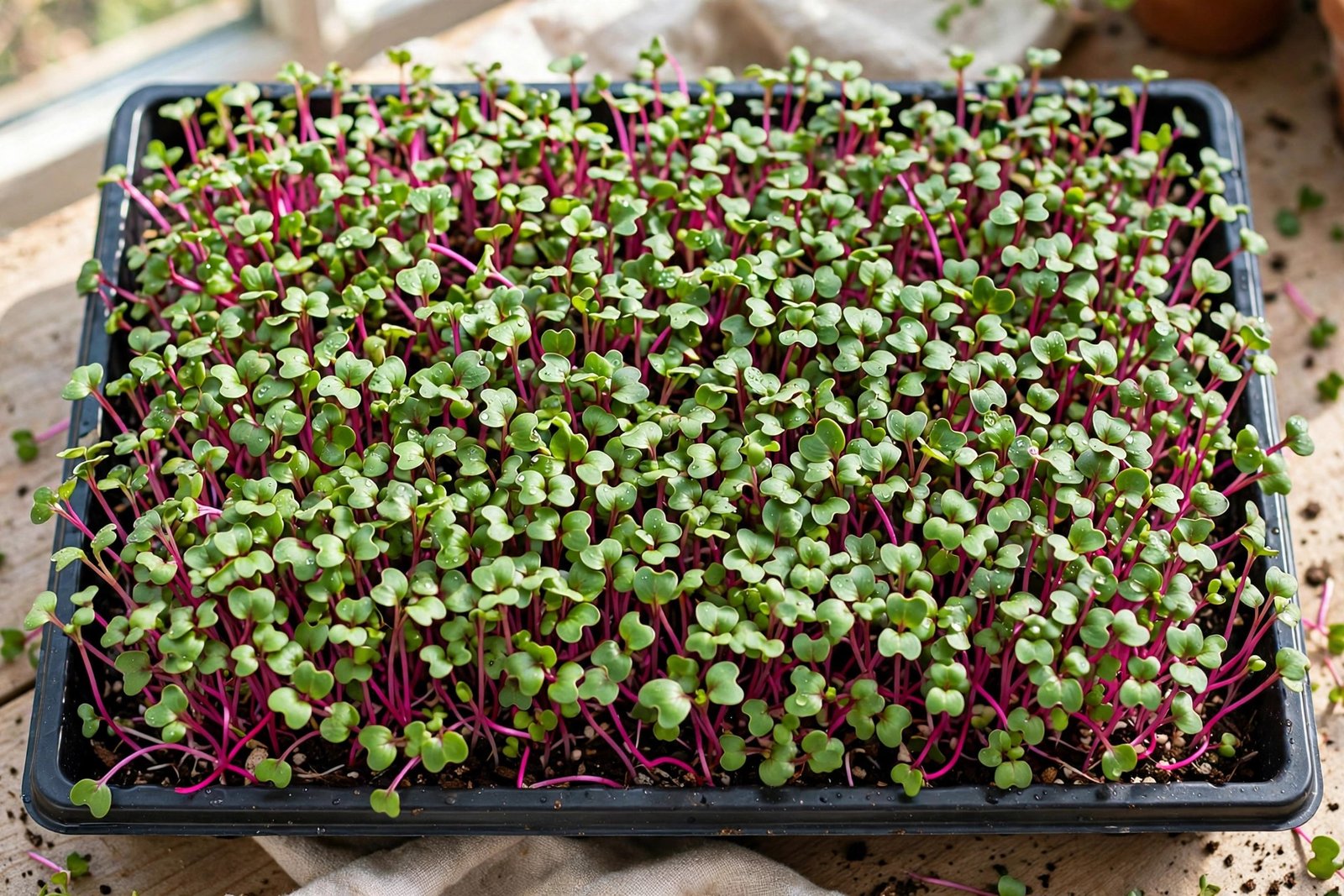
Almost every beet tray looks wrong in the first week. One corner sprouts early. Another corner sits bare. A few seeds clump together and push up as a crowd. Most growers assume they made a mistake.
Usually they did not. Beet seed itself causes the patchiness, and once you understand why, the fix is simple. This guide starts with that problem, then covers the variety, the honest answer on soaking, and the seed rate that keeps a tray full without wasting seed.
Plan on 10 to 20 days from sowing to harvest. Beet is the slow crop in the microgreens family. It is also the most colorful one on the tray.
Beet Microgreens at a Glance
- Variety: Bull’s Blood first, for magenta stems and green cotyledons
- Soak: optional. If you soak, 4 to 8 hours, then drain well. Dry sowing also works
- Seed per 10×20 tray: 23 to 25 grams (sources converge here, details below)
- Germination: 3 to 5 days
- Blackout: 4 to 6 days
- Growing mix: fine seed-starting mix, seed lightly covered
- Water: from below once the tray is growing
- Harvest: day 10 to 20, before the true leaves toughen the stems
Why Beet Trays Come Up Uneven
This is the section most beet guides skip, and it is the one that matters most. The uneven start is built into the seed.
One beet “seed” is actually a cluster
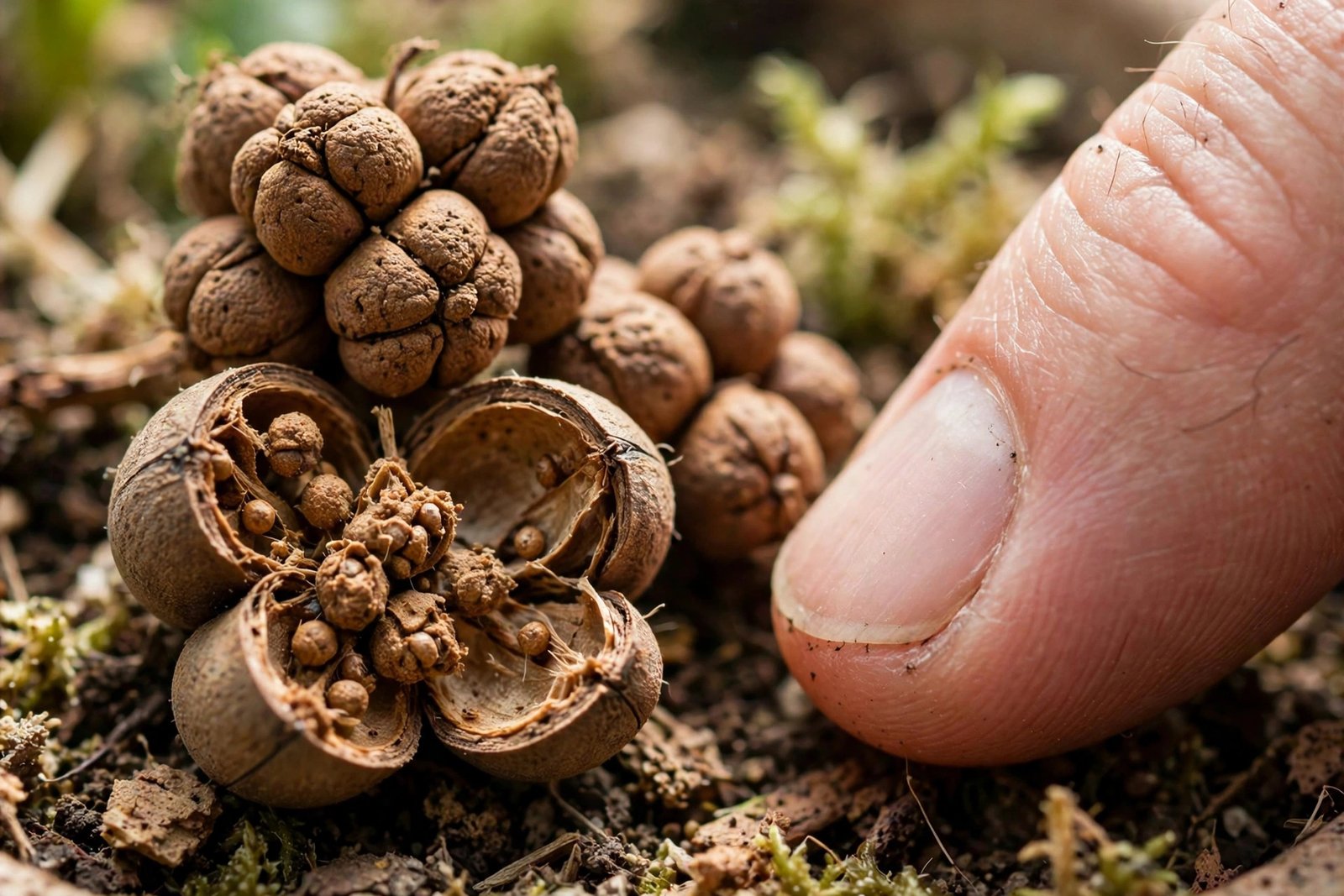
Hold a beet seed up close. It looks like a rough little cork ball. That ball is not a single seed. It is a dried fruit cluster that holds several embryos inside, a trait growers call multigerm seed.
So one spot on your tray can sprout two or three seedlings at once. The spot next to it can sprout one. A third spot can wake up two days later than the rest. Nothing is broken. The cluster decides the timing, not you.
What normal unevenness looks like
Expect three things in the first days. Small crowds where a cluster held extra embryos. Single seedlings where a cluster held one. And late sprouts that appear a day or two behind their neighbors.
All three are normal. They do not mean the tray failed. The gaps matter less than they look, because beet seedlings grow broad green cotyledons that fill space as the tray matures. Judge the tray at day 8 or 9, not at day 4.
Slow is also normal here
Germination takes 3 to 5 days, and the blackout period runs 4 to 6 days. Radish this is not. Epic Gardening’s beet guide puts the full run at 10 to 20 days to harvest, and that slower clock shapes everything below. Do not uncover the tray early just because another crop would be up by now.
Start with Bull’s Blood
Grow Bull’s Blood for your first trays. It is the variety the microgreens sources name again and again, and it earns that spot on looks alone. The stems come up a deep magenta. The cotyledons open green. That two-tone contrast is the whole reason many people grow this crop.
Buy untreated seed sold for sprouting or microgreens, never treated farm seed. Any beet variety grown for its roots can technically be cut young, but stem color varies a lot by variety. If the magenta stems are the point, the packet needs to say Bull’s Blood.
Beet sits in the earthy, slower corner of the flavor map in our guide to the types of microgreens. It is a good rotation partner for the fast brassicas, because a beet tray started the same day finishes about a week later.
The Soak Question, Answered Honestly
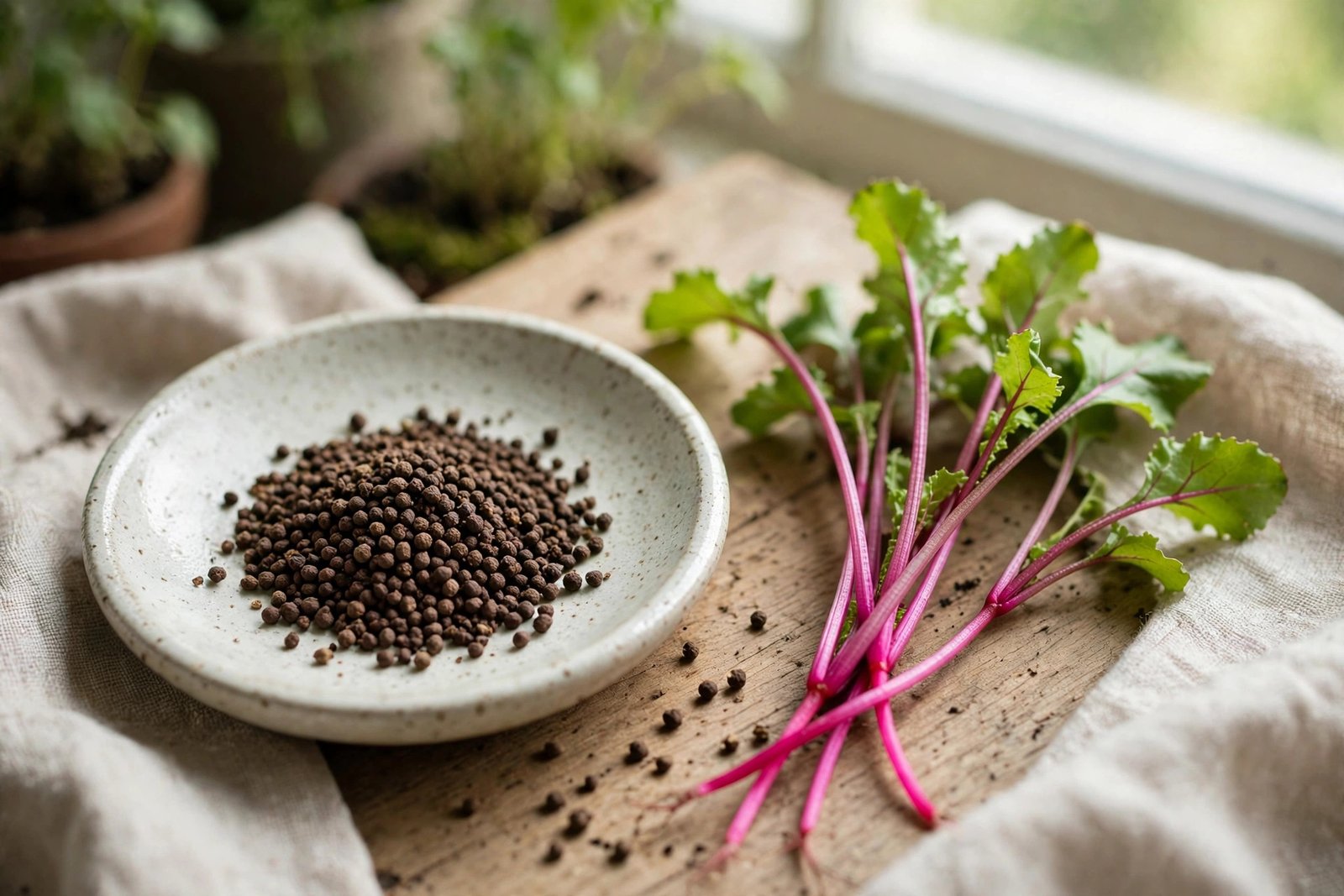
Ask five beet sources about soaking and you will get two answers. Both camps have real producers in them, so this guide shows the disagreement instead of picking a winner.
| Source | Their line on soaking beet seed |
|---|---|
| Epic Gardening | No soak needed. The hull is thin. A soak of about 8 hours is optional for those who want one. |
| Mumm’s Sprouting Seeds (producer) | Soak 4 to 6 hours for their beet seed. |
| Bootstrap Farmer | Beets benefit from a soak, and as little as 4 hours gives good results. |
| MicrogreensGuru (Bull’s Blood page) | Do not soak. Soaking makes the irregular fruits clump, and this variety is sown dry. |
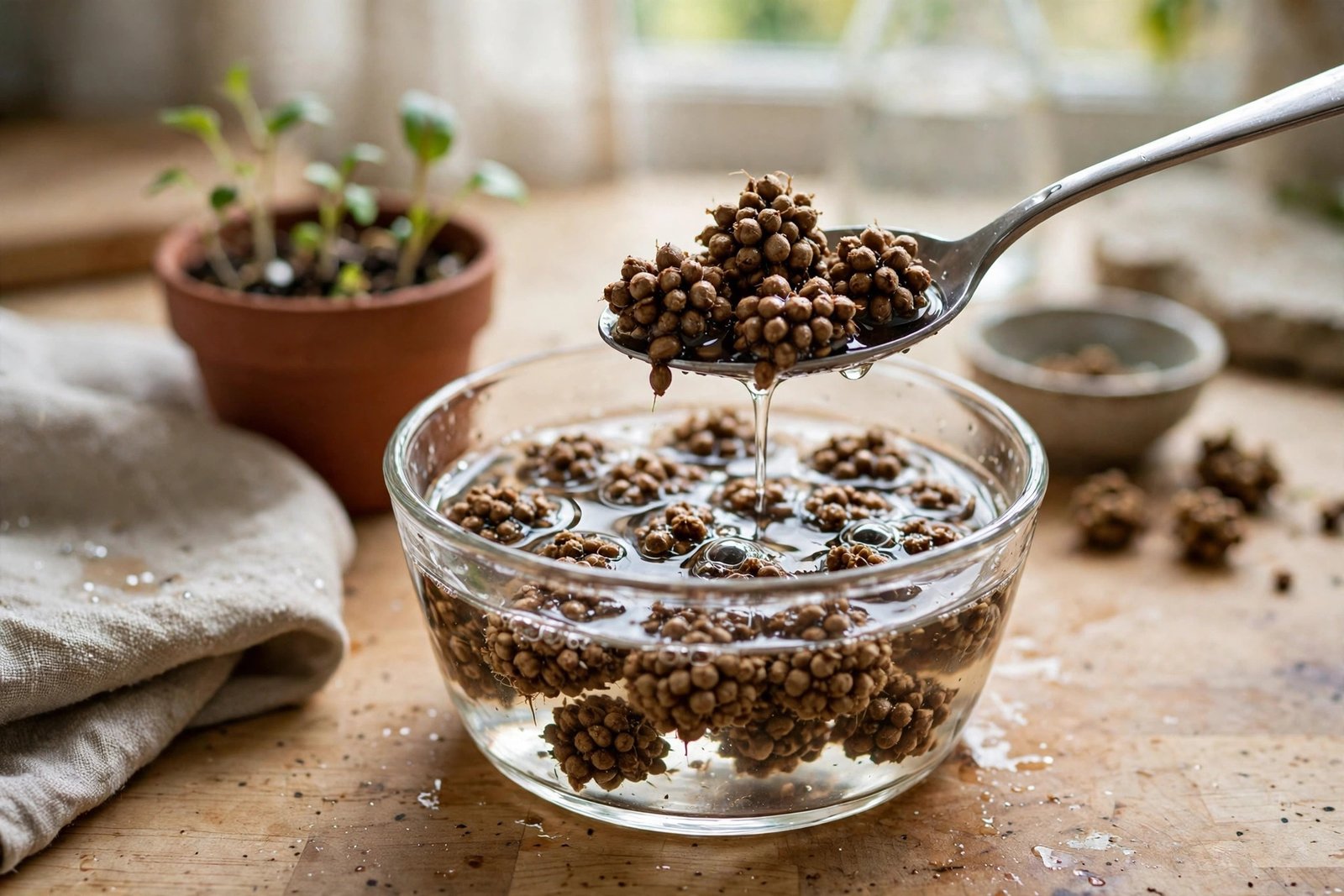
Notice the pattern. Nobody credible calls a long soak essential, and one Bull’s Blood source warns that wet clusters stick together and worsen the clumping this crop is already prone to. Bootstrap Farmer’s soaking guide is worth a read if you want the wider seed-by-seed picture.
The working rule: soaking is optional, not required. If you soak, keep it to 4 to 8 hours and drain the seed well before sowing. Dry sowing also works, and it spreads more evenly for many growers. Pick one method per tray and stay consistent.
Sow for Evenness: Rate, Mix and Cover
You cannot change the multigerm cluster. You can change how evenly those clusters land on the tray. Sowing is where the patchiness battle is won or lost.
The seed rate: 23 to 25 grams per tray
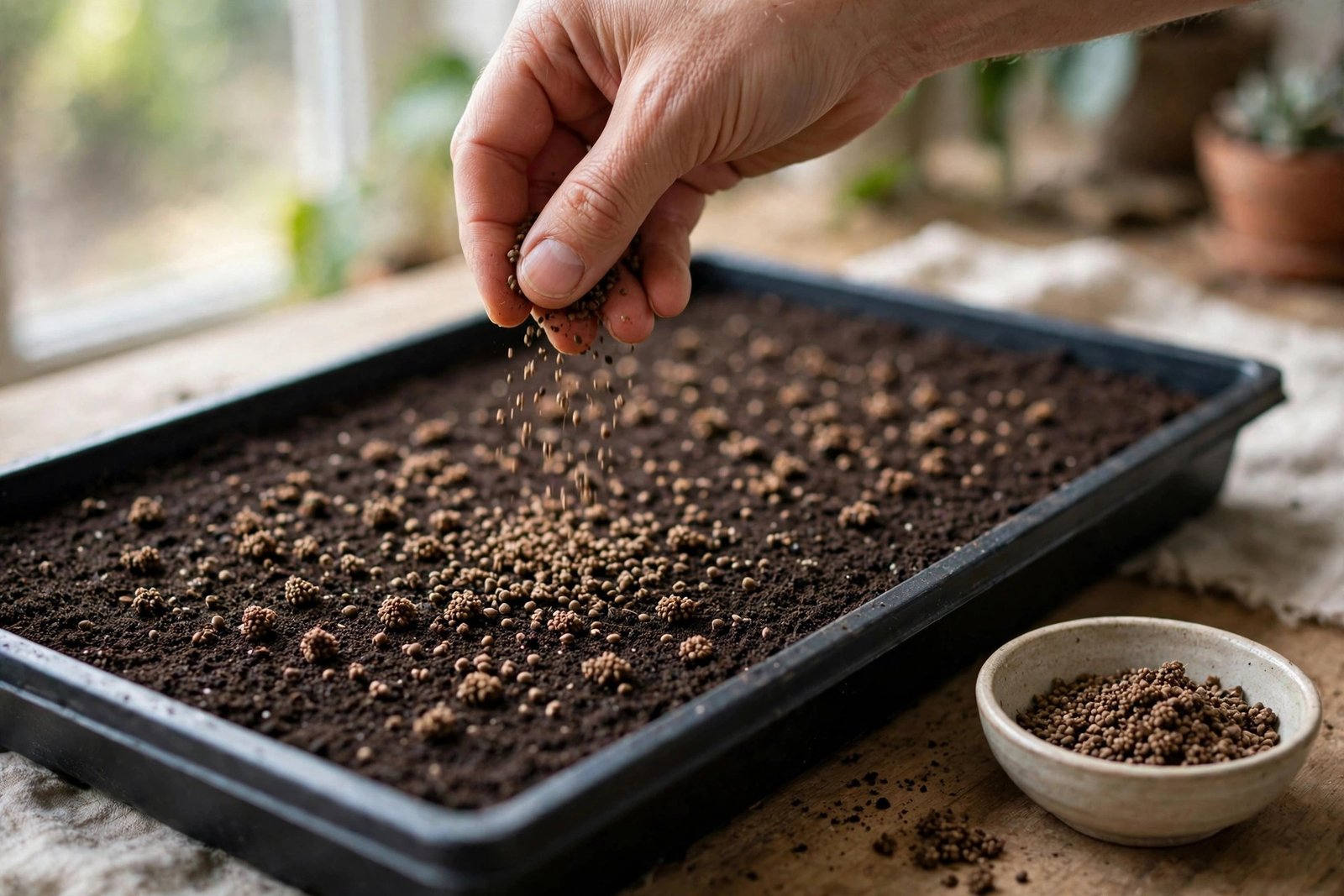
Producer and trial rates for Bull’s Blood land close together. Johnny’s Selected Seeds and a Colorado State University trial both sit at 23 grams per 10×20 tray. MicrogreensCorner uses 25 grams. SeedMart gives a band of 22 to 26 grams. Sources differ slightly, but they converge, so sow 23 to 25 grams and weigh it. With seed this chunky, eyeballing the amount leads straight to crowded clumps and bare corners.
Fine mix, spread thin, cover lightly
Use a fine seed-starting mix, leveled and firmed. Coarse potting mix leaves big air gaps, and chunky seed bridges over them instead of settling in.
Scatter the weighed seed as evenly as you can. Then do the step that actually fixes clumps. Go back with dry fingers and separate any clusters that landed in a pile. Thirty seconds of spreading beats a week of staring at a crowded corner.
Cover the seed lightly with a thin layer of the same mix. Beet seed germinates better tucked in than left exposed on the surface, and the light cover also holds moisture around the rough hulls.
Blackout, Days 1 to 6: The Waiting Game
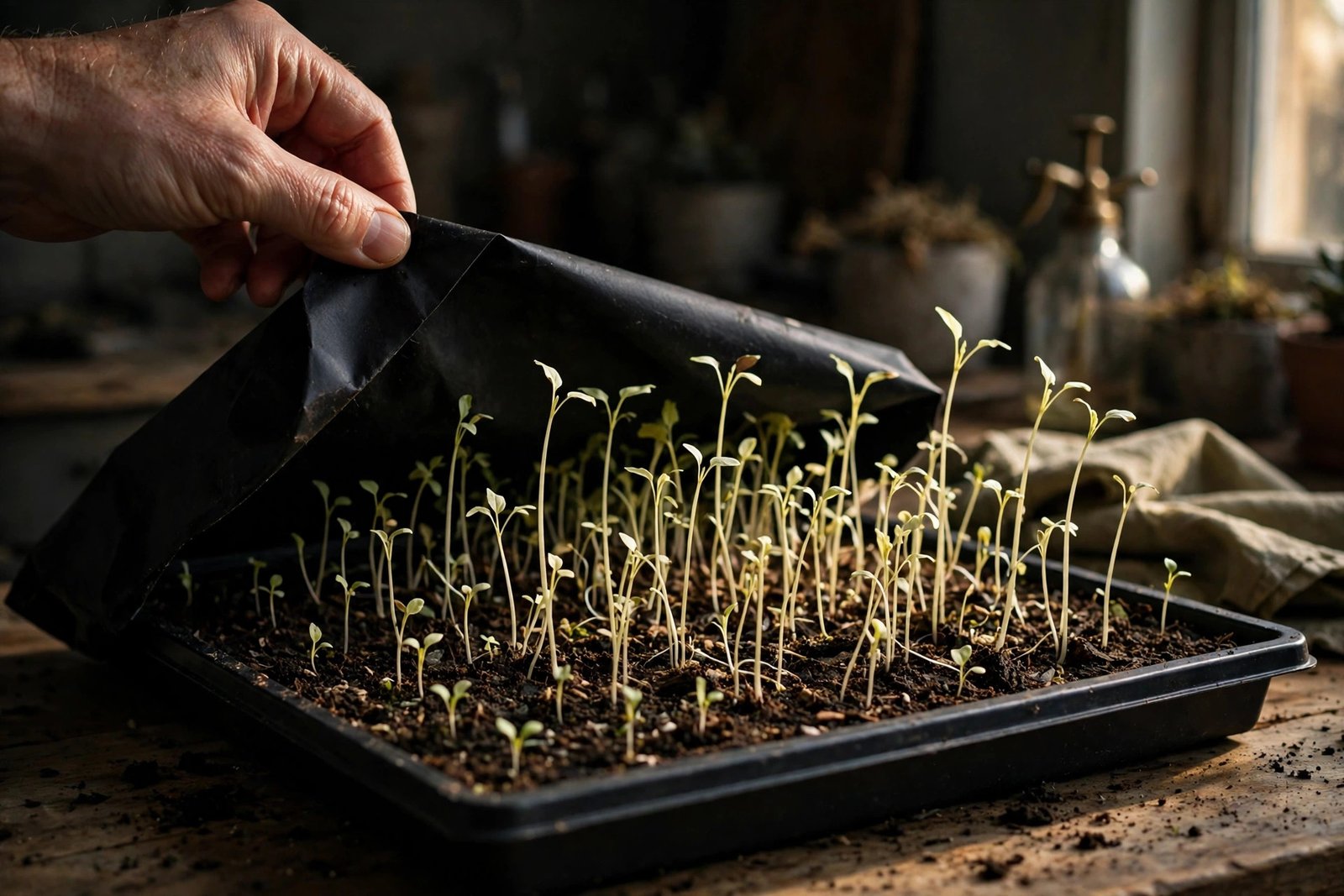
Cover the tray and keep it in blackout for 4 to 6 days. A second tray nested on top works well. The covered period does two jobs. It holds moisture around the seed, and it lets the slow clusters catch up in the dark.
Check once a day. Mist the surface if it looks dry, then cover the tray again. Germination starts around day 3 to 5 for most of the tray, but late clusters are still waking up at day 5. A tray that looks half empty on day 4 is often a normal beet tray.
Here is the discipline this crop teaches. Do not sow extra seed into the bare patches mid-blackout. Those patches usually fill in, and late-added seed just creates a second, younger crowd that matures out of step with the rest.
Uncover the tray when most seedlings have pushed up and look sturdy, usually around day 5 or 6. Then move it into light and switch to the routine in our general guide to growing microgreens, which covers tray setup and light placement in full.
Light and Water After Blackout
Once the tray is uncovered, water from below. Fill the bottom tray, let the mix drink, then pour off what is left. Bottom watering keeps the magenta stems dry and clean, and it avoids flattening young seedlings the way overhead watering can.
Water when the mix surface starts to look dry, not on a fixed schedule. Beet grows slowly, so it drinks slowly too. A tray that stays soggy for days invites the problems in the next section.
Give the tray bright light and decent air movement. Slow crops sit in their trays longer than fast ones, so air and light matter more here, not less. Rotate the tray if one side leans harder toward the window than the other.
Harvest Before the Stems Toughen
The harvest window opens around day 10 and can run to day 20. Judge by the plant, not the calendar. The tray is ready when the cotyledons are fully open, stems stand firm and deeply colored, and the first true leaves are only just starting to form between them.
Do not wait for a bigger harvest. Once true leaves grow out, the stems toughen, and the texture that makes this crop worth growing goes downhill. Epic Gardening makes the same point: cut before the true leaves develop, while the stems are still tender.
Cut with clean scissors just above the soil line, a small handful at a time. Work across the tray evenly rather than clearing one corner first. Rinse only if mix clings to the stems, then dry the cut greens well before they go in the fridge.< After the cut, keep them dry and cold; our guide to how long microgreens last has the day ranges and the mistakes that halve them.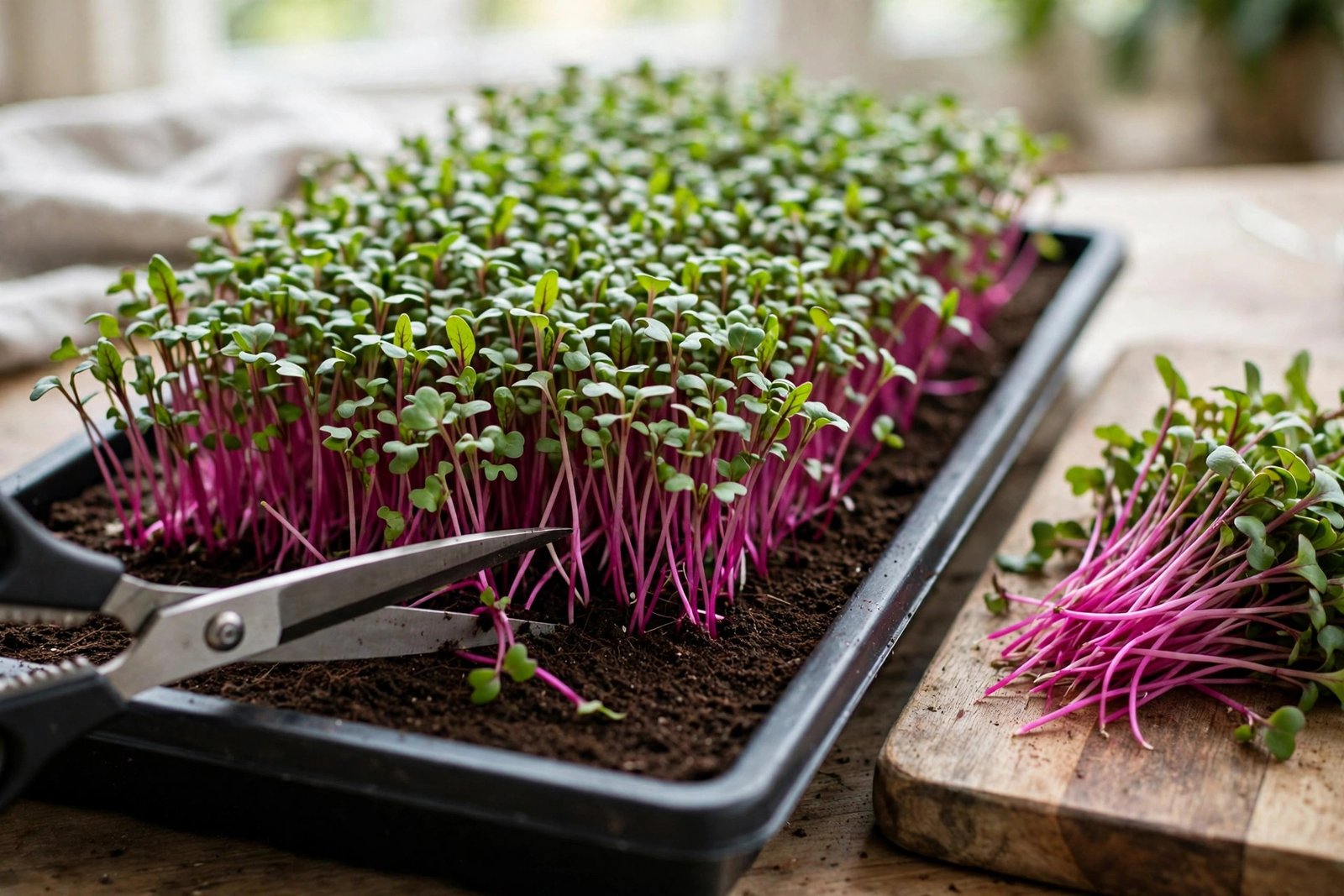
When a Tray Goes Wrong
Most beet problems trace back to the seed cluster or to timing. Use this table before you blame the seed packet.
| What you see | Likely cause | The fix |
|---|---|---|
| Crowds in one spot, bare mix beside them | Multigerm clusters landed in piles at sowing | Next tray, separate piled clusters with dry fingers before covering |
| Whole tray still bare at day 4 | Normal slow germination, or a dry surface | Mist, re-cover, and wait. Judge at day 8 or 9, not day 4 |
| Pale, stretched seedlings at uncovering | Blackout ran long after most seed was up | Uncover on time next tray and move straight into bright light |
| Chewy, tough stems at harvest | True leaves grew out before cutting | Harvest inside the day 10 to 20 window, before true leaves form |
One problem this guide will not diagnose for you: mold. Fuzzy growth and seedlings collapsing at the base need a proper check, because harmless root hairs and real mold look alike in photos. Work through the diagnosis in our guide to mold on microgreens before you decide whether a tray is safe or should be discarded. That guide owns the full diagnostic. This one just sends you there.
The Short Version
Beet rewards the grower who slows down. Weigh out 23 to 25 grams of Bull’s Blood. Spread the clusters instead of dumping them. Cover the seed lightly, give it 4 to 6 patient days in blackout, water from below, and cut before the true leaves toughen the stems. The tray will still come up a little uneven. Now you know that is the seed talking, not your skill.
Frequently Asked Questions
Do beet microgreens need to be soaked before sowing?
No. Soaking is optional for beet, not required. The hull is thin, and dry sowing works. If you prefer to soak, keep it to 4 to 8 hours and drain the seed well. One Bull’s Blood source advises against soaking because wet clusters clump.
Why do beet microgreens germinate unevenly?
Beet seed is multigerm. Each rough ball is a fruit cluster holding several embryos, so one spot can sprout a crowd while the next sprouts a single seedling, and some clusters wake up days later than others. The uneven start is normal for this crop.
How much beet seed do I need for a 10×20 tray?
Weigh out 23 to 25 grams. Johnny’s Selected Seeds and a Colorado State University trial both use 23 grams, MicrogreensCorner uses 25 grams, and SeedMart gives 22 to 26 grams. The sources differ slightly but converge on that band.
How long do beet microgreens take to grow?
Plan on 10 to 20 days from sowing to harvest. Germination takes 3 to 5 days, and the tray stays in blackout for 4 to 6 days before it goes into light.
Which beet variety is best for a first tray?
Grow Bull’s Blood first. It is the variety microgreens sources recommend most, and it gives the deep magenta stems with green cotyledons that make this crop worth growing.
When should I harvest beet microgreens?
Cut when the cotyledons are fully open and the first true leaves are only just starting to form, usually somewhere between day 10 and day 20. Do not wait longer. Once true leaves grow out, the stems toughen.
What should I do if I see mold in my beet tray?
Do not guess from a photo. Root hairs and real mold look similar, and collapsing seedlings can signal damping off. Use a step by step mold diagnosis before eating anything from the tray, and discard the tray if the mold is confirmed.
Sources
Epic Gardening beet microgreens guide (timings, blackout, harvest before true leaves). Johnny’s Selected Seeds Bull’s Blood rate and Colorado State University coir trial rate, both 23 g per tray. MicrogreensCorner beet guide (25 g, 5 hour presoak). SeedMart beetroot guide (22 to 26 g, 4 to 8 hour optional soak). Mumm’s Sprouting Seeds beet pages (4 to 6 hour soak). Bootstrap Farmer seed soaking guide (beets benefit, 4 hours can work). MicrogreensGuru Bull’s Blood page (sow dry, soaking clumps the fruit). Where these sources disagree on soaking, this guide shows the disagreement rather than hiding it.


2 Comments