
How to Grow Kale Microgreens

Kale microgreens do not need a whole new method. They need the standard tray, run with five kale specific changes: the variety, the seed rate, a temperature drop after germination, an early cut, and no second harvest. Get those five right and kale is one of the easiest trays on the bench.
This guide covers only what differs from the standard method, and it builds everything on Red Russian. It is the one kale with published trial numbers behind it, so the figures below are measured, not rounded guesses.
Start With the Variety: Red Russian
Kale microgreens start with a choice most guides skip. The variety decides the look of the tray, and for one variety it also decides what you can actually measure.
Grow Red Russian first. Johnny’s Selected Seeds sells it as their kale microgreen seed, and their trial work gives it the numbers this guide runs on: 10 grams of seed per tray, 13.5 days on average to the first true leaf, and 11 ounces of yield per tray. No other kale variety comes with a set of figures like that.
One naming detail, stated once and left alone: Johnny’s labels Red Russian Brassica napus, not the Brassica oleracea most people expect from kale. The label is theirs. The seed grows the same either way, and nothing in the method below changes because of it.
Red Russian looks the part, too. The leaves come up medium green and serrated, over bright purple stems with purple leaf margins. The flavour is mild kale, gentle enough to pile onto eggs and salads without cooking. On the flavour map in our guide to the types of microgreens, kale sits in the mild, leafy corner rather than with the sharp brassicas.
Buy untreated seed sold for sprouting or microgreens, never treated farm seed. Microgreen seed is sold by the ounce and goes a long way at the rates below, so a small packet covers several trays.
Other kales work, without the numbers
Curly kale and Toscano kale both grow as microgreens. What changes is the leaf: curly types come up frilled and paler stemmed, Toscano narrower and darker, and neither gives you the purple stem show Red Russian does. What does not change is the handling. Sow them dry, run the same temperatures, and cut at the first true leaf. Just know you are borrowing Red Russian’s method without its measurements, so judge those trays by eye.
The Numbers for One Tray
The whole crop on one card. These are Red Russian figures for a standard 1020 tray, the 10 by 20 inch tray the rates below are written for.
| Red Russian, per 1020 tray | The number |
|---|---|
| Seed per tray | 10 g, Johnny’s trial rate for Red Russian (about 3 flats per ounce of seed) |
| Covered after sowing | 1 to 2 days (Utah State University Extension, kale row of its microgreens table) |
| Days to first true leaf | 13.5 days on average (Johnny’s trial) |
| Days to maturity | 10 to 15 days (Johnny’s) |
| Height at cut | 1.5 to 2.5 inches, at the first true leaf |
| Average yield | 11 oz per tray (Johnny’s trial) |
The seed rate needs one honest paragraph, because the two best sources disagree and this guide will not average them. Johnny’s 10 grams is a measured trial rate for this one cultivar. Utah State University Extension publishes 28 grams per 1020 tray as its general kale guideline, written for kale as a crop, not for Red Russian alone. Both numbers are real. They are just answering different questions.
The working rule: sow Red Russian at Johnny’s 10 grams on your first trays. A heavier sowing buys a denser stand, and the cost is airflow. In a dense, still tray, that trade shows up as damping off and weak stems. If a tray at 10 grams looks thin to you, step up a little on the next tray and watch the stand, rather than jumping straight to 28.
Sow Dry, Press, Cover
Kale seed goes in dry. No soak, no pre-sprouting. The culture notes on Johnny’s Red Russian page call for a dry broadcast, and Utah State’s table agrees in its own way: it soaks only the big seed, pea and sunflower, and sows kale dry.
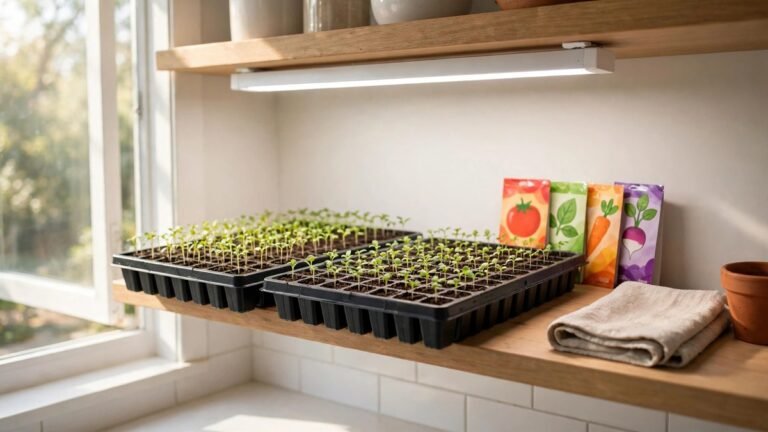
Three steps differ from the standard sow. First, broadcast the weighed seed thickly and evenly, aiming for seeds about 1/8 to 1/4 inch apart. Second, press the seed firmly into the surface with the flat of your hand or a second tray. Firm contact with the medium is what gets small brassica seed germinating evenly. Third, cover the seed lightly, with a dusting of the same mix or vermiculite, or set a second tray or a humidity dome over it.

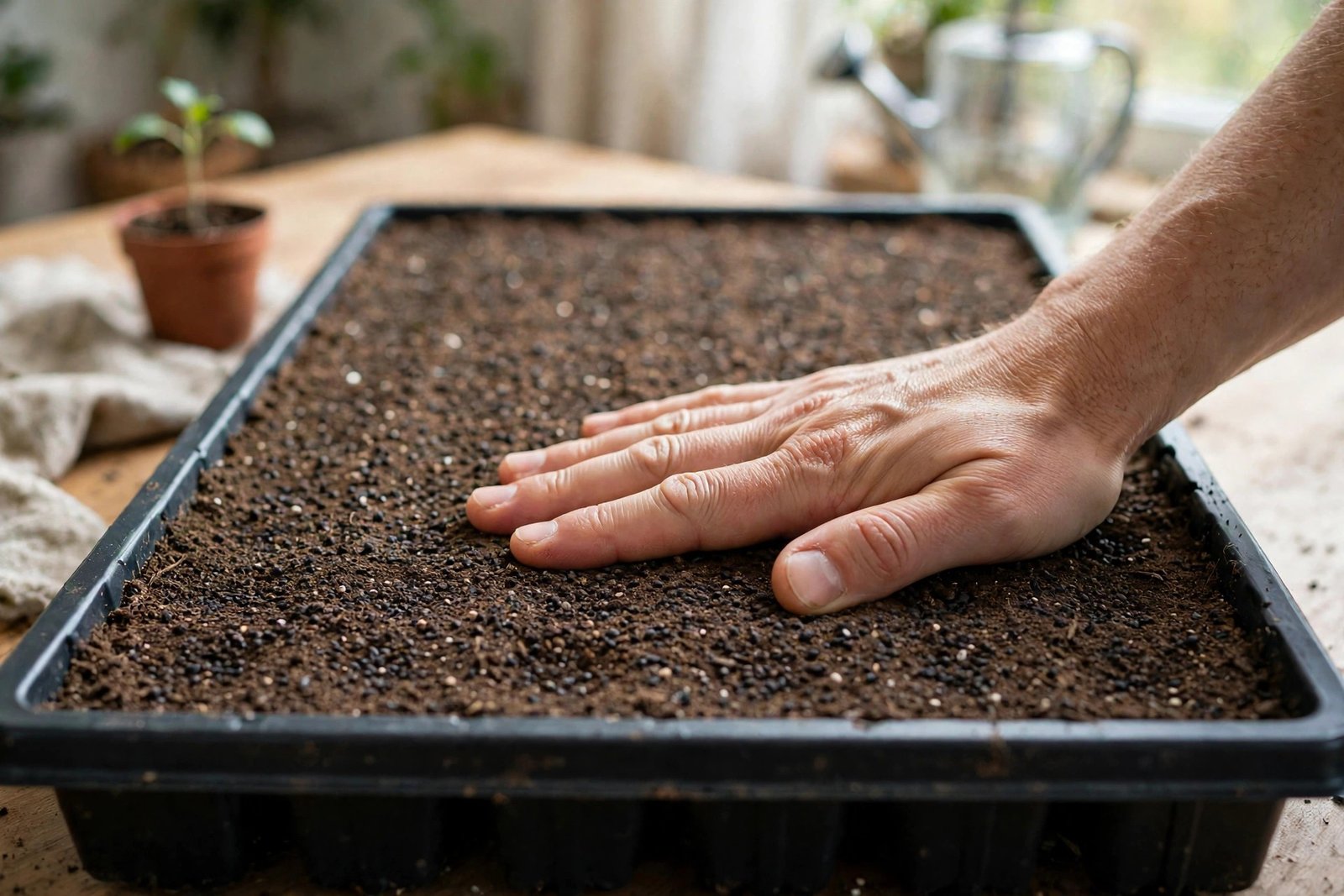
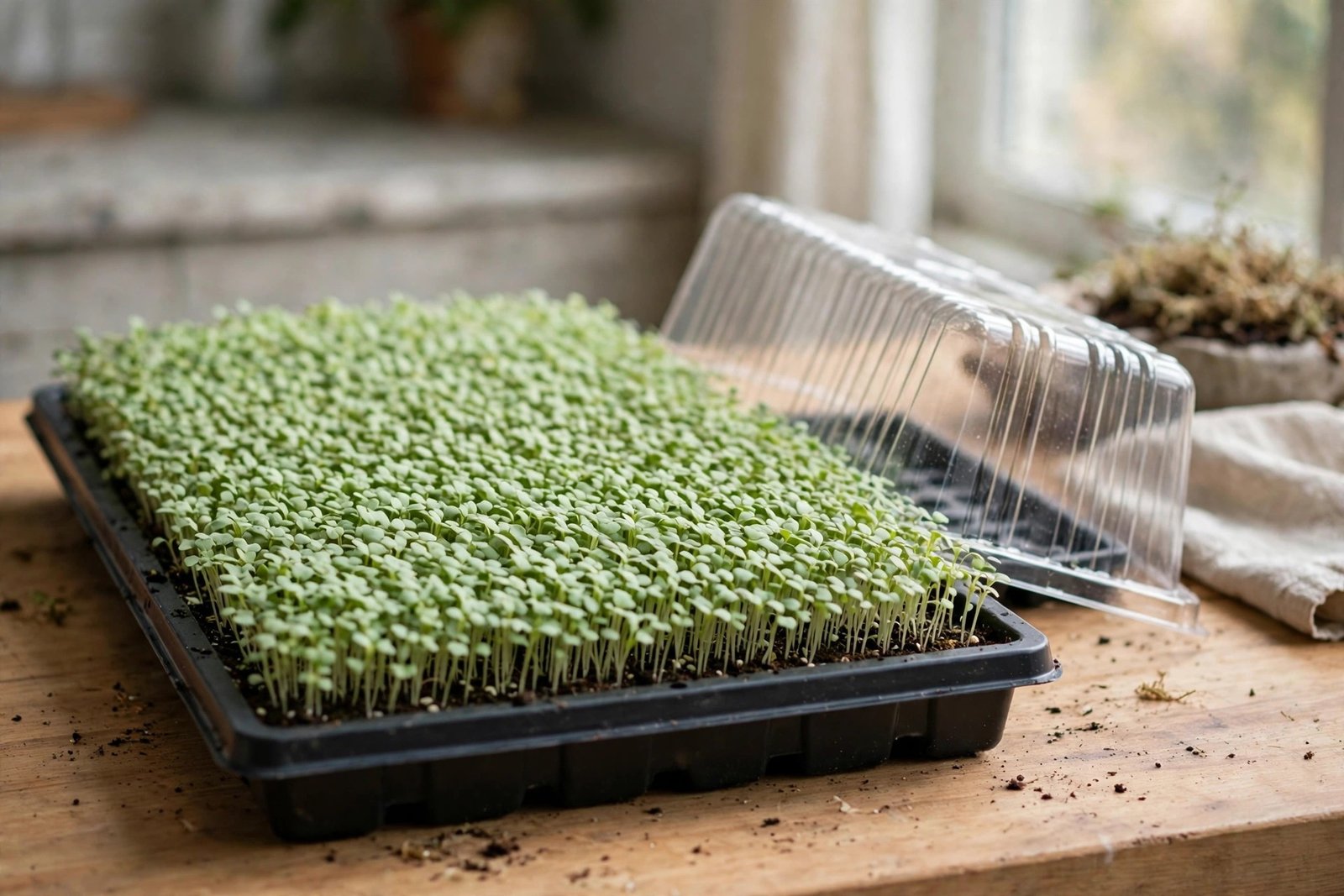
Then keep the tray covered for the covered window in the table above, 1 to 2 days by Utah State’s kale row. Kale germinates fast for a microgreen. Check once a day, and uncover the tray once most seedlings are up and pushing against the cover. Move it straight into bright light.
Everything else about the tray, filling it, firming the medium, bottom watering and light placement, is the standard method, and it already lives in our general guide to growing microgreens. This guide does not re-teach it.
Warm to Germinate, Then Cool It Down
This is the one temperature move that sets kale apart, and it comes straight from Johnny’s culture notes for the variety. Hold the medium at about 75°F until the seed germinates. A heat mat under the tray does this well. Once germination happens, drop the temperature to about 60°F, with normal room air somewhere between 65 and 75°F.
The drop is not fussiness. Johnny’s warns that temperatures above 75°F raise disease pressure and can inhibit germination in microgreens. Warmth is a germination tool here, not a growing condition. Sprouted kale is a cool season brassica at heart, and it grows stockier and cleaner a little cool than it does hot. Turn the heat mat off when the tray comes out of its cover, and let the room do the rest.
Cut at the First True Leaf
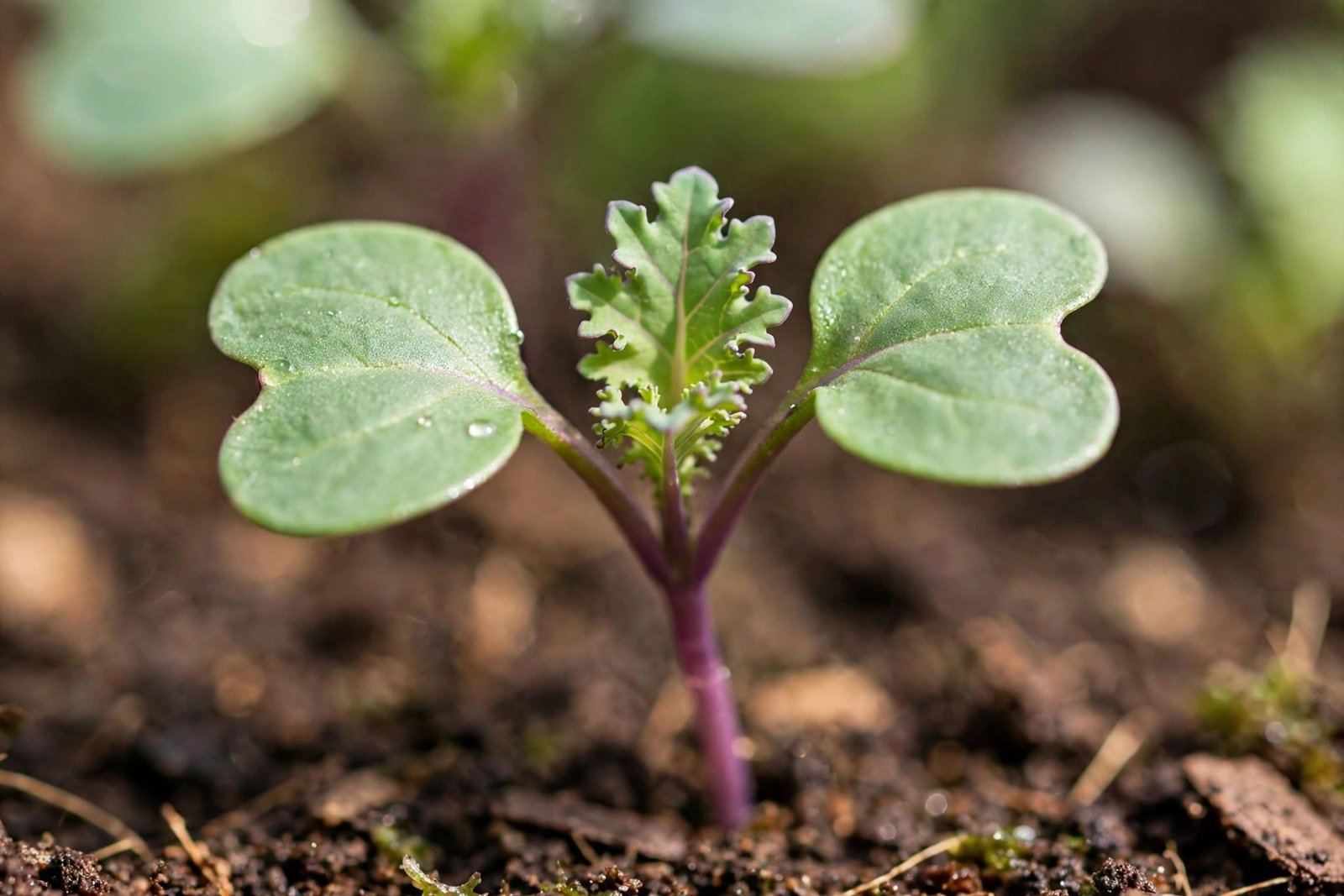
Kale is not cut at the seed leaf stage the way fast brassicas often are. Johnny’s harvested their trial trays at the first true leaf, and the plant tells you when: the first serrated true leaf opens between the two round seed leaves. That averaged 13.5 days in the trial, inside a 10 to 15 day run to maturity.
Cut when the stand is 1.5 to 2.5 inches tall, with clean scissors just above the soil line, a small handful at a time. Do not let the tray run long hoping for more weight. Past about 3 inches the stems toughen, and the tender bite that makes this crop worth growing is gone. A late tray is still fine cooked or blended, but it is no longer the garnish you sowed it for.
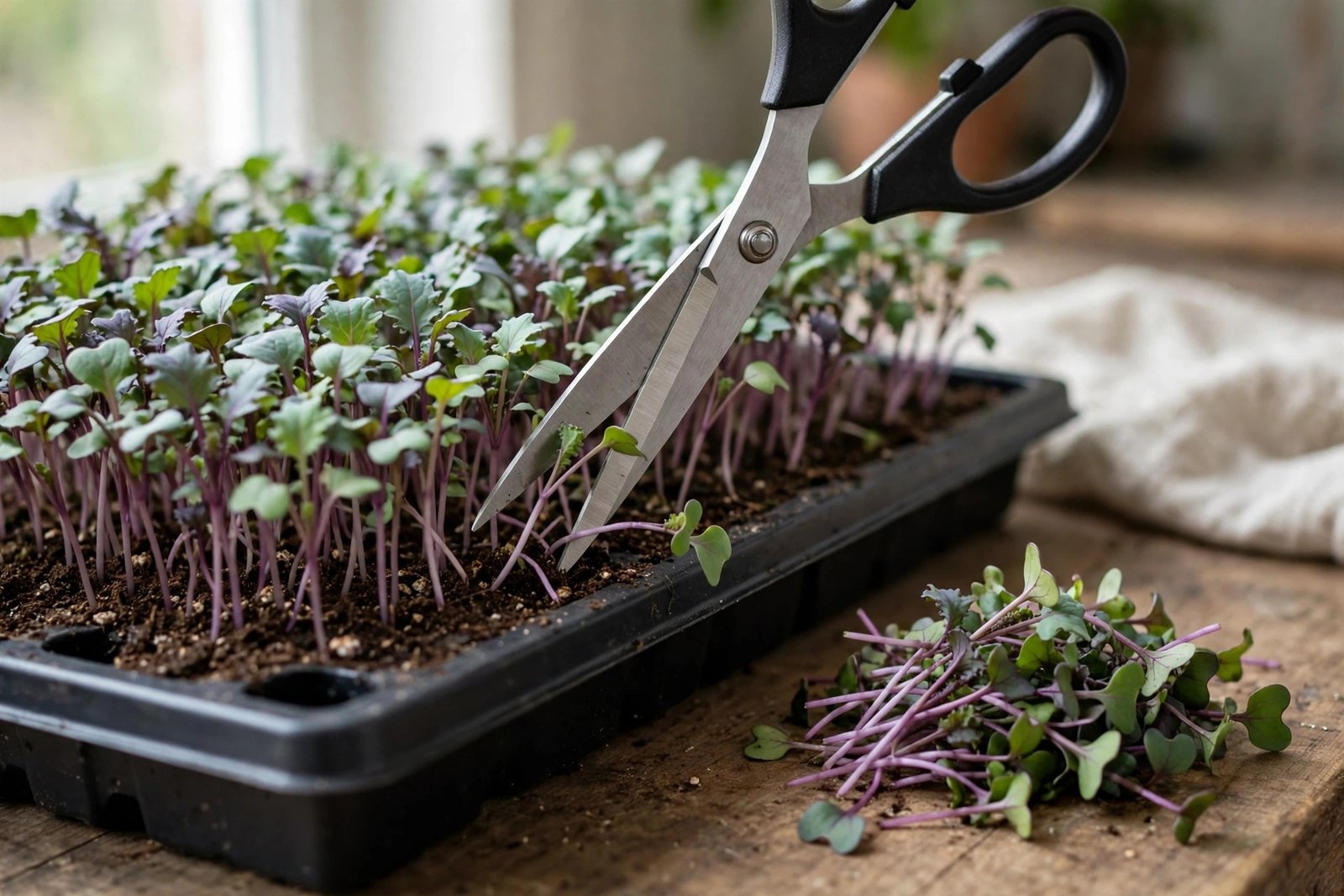
There is no second cut. The growing point comes off with the harvest, and kale does not regrow a cut worth taking. If you want kale on the counter every week, sow a fresh tray every 1 to 2 weeks and let the trays overlap. Succession is the regrow strategy for this crop.
What Goes Wrong
Mold and seedlings falling over
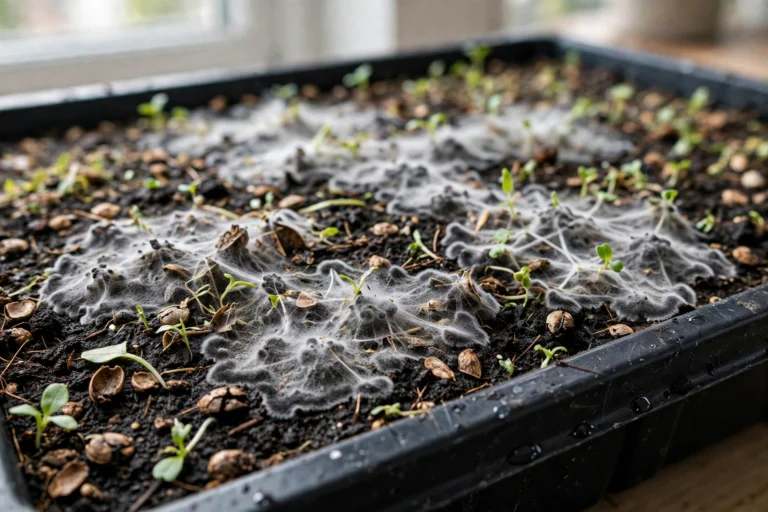
Fuzzy patches and seedlings collapsing at the soil line are the serious end of kale problems, and they are the problems this guide will not diagnose from a description. Root hairs and real mold look alike, and the wrong call wastes a tray or worse. Work through the diagnosis in our guide to mold on microgreens and decide there. What this guide will say: crowded sowing, a soggy medium and still air are the conditions that invite it, which is one more reason the 10 gram rate earns its place.
A pale, leggy stand
Kale that comes up pale and stretched is short on light, plain and simple. The tray sat covered too long, or the light is too weak or too far from the plants. Move uncovered trays into the brightest light you have, close to the stand, and uncover on time on the next tray. Seedlings green up and steady once the light is right, though the stretched ones never fully catch up.
An uneven stand
Gaps and crowds in the same tray are a sowing problem, not a germination problem. Seed that landed in piles grows in piles. Weigh the seed, broadcast it in two passes over the tray instead of one line, press it in, and the tray evens out. An even 1/8 to 1/4 inch spacing at sowing is an even tray at harvest.
The Short Version
Sow Red Russian dry at 10 grams per 1020 tray. Press it in, cover it lightly, and give it a day or two covered. Germinate it warm at about 75°F, then grow it cool. Cut at the first serrated true leaf, around 2 inches and roughly two weeks in, and do not wait for a second cut that is not coming. Sow the next tray a week later and the supply never stops.

Frequently Asked Questions
Do I need to soak kale microgreen seed before sowing?
No. Sow kale seed dry. Johnny’s Selected Seeds gives a dry sow for Red Russian, and Utah State University Extension’s table soaks only large seed like pea and sunflower. Kale goes in dry, pressed into the medium, and covered.
How can I tell kale microgreens from broccoli microgreens?
At the seed leaf stage, honestly, you almost cannot. Young kale and broccoli trays look alike. Red Russian gives itself away as it grows: bright purple stems and leaf margins, then serrated first true leaves. Broccoli stays green stemmed, with smoother first leaves. Our guide to broccoli microgreens grows that crop on its own terms.
How long do cut kale microgreens keep in the fridge?
Cut kale keeps like other sturdy microgreens when it goes in dry and cold, but the honest day ranges by crop and condition live in one place on this site. See our guide to how long microgreens last for the storage ladder and the paper towel method.
Can I take a second cut from a kale tray?
No. Kale microgreens are a one cut crop. The stem is cut below the growing point, so nothing regrows worth harvesting. For a steady supply, sow a fresh tray every 1 to 2 weeks instead of waiting on the old one.
My kale tray is past day 15 and still small. What happened?
Usually temperature or light. Red Russian averaged 13.5 days to the first true leaf in Johnny’s trial, at warm germination temperatures and bright growing light. A cool room, weak light, or a medium that dried out will all stretch the run. Give it a few more days under bright light before you judge it, and cut when the first true leaves show, even if the tray runs late.
Sources
Johnny’s Selected Seeds, Kale Red Russian microgreen seed page and yield trial (Brassica napus label, 10 g per 1020 tray, about 3 flats per ounce, 13.5 days average to first true leaf, 11 oz average yield, 10 to 15 days to maturity, dry broadcast with seeds 1/8 to 1/4 inch apart, press for contact, 75°F at the medium until germination then 60°F, ambient 65 to 75°F). Utah State University Extension, Grow Your Own Microgreens (general kale guideline of 28 g per 1020 tray, kale covered time of 1 to 2 days, soak listed only for pea and sunflower). Where the two disagree on seed rate, this guide shows both numbers instead of merging them.
3 Comments