
How to Grow Peppers Indoors
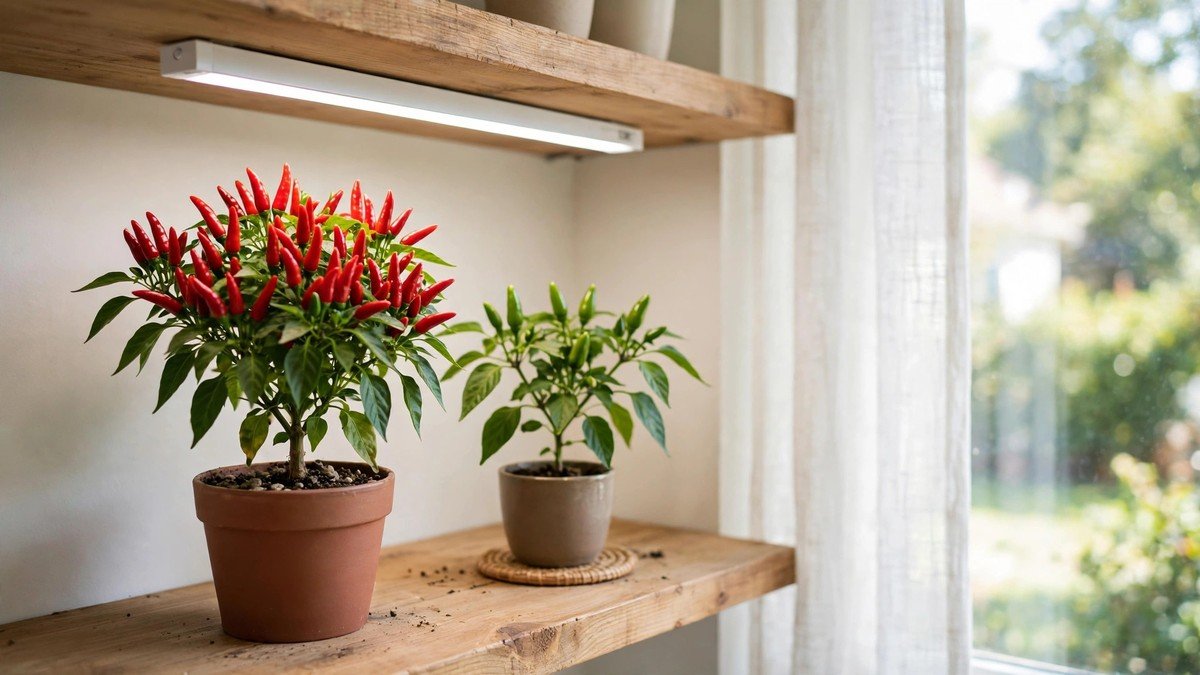
Yes, a pepper plant can grow indoors and ripen real fruit in the room. It asks for more than most indoor crops, though. Peppers want strong light for long hours, genuine warmth, a proper pot, and a hand with pollination. Give a compact plant all four and it fruits. Miss one and you get a handsome green plant that drops its flowers and keeps its promises to itself.
This guide is the environment contract, part by part: the heat the seed and the fruit both demand, the light hours that separate fruiting from surviving, the pot that fits a lamp’s footprint, and the pollination help that decides the harvest. Winter gets its own section, because a pepper is a perennial, and carrying one through the cold months is half the fun of growing it indoors.
The Honest Deal: Slow Plant, Small Fruit
Set the expectation first, because peppers punish impatient growers. This is a slow crop. Seed takes about a week to sprout in warm soil and can take far longer in cool soil. The young plant then needs about 8 to 10 weeks from sowing before it is big enough to pot on into its final home. Flowers come after that, and fruit colors up weeks after it sets.
Add the stages together and about 100 days from seed to the first ripe fruit is a fair expectation for a compact variety under strong light. Treat that number as an expectation built from the stages, not a promise printed on a packet. The seed houses point the same way, only slower. Johnny’s Selected Seeds lists its Early Jalapeño at 60 days from transplanting to green fruit and 80 days to red ripe, and transplanting happens about 8 weeks after sowing. Plan on four months for ripe fruit and you will read the plant correctly. Anything faster is a good run.
The second honesty point is size. Small-fruited peppers are the indoor crop: Thai chilies, jalapeños, ornamental types, and small sweets. They set fruit readily under a lamp and ripen it in a reasonable span. A full-size bell pepper is the hardest version of this plant. It wants the strongest light you have, the biggest pot, and the longest wait. Grow one if you enjoy the challenge. Do not judge the whole idea by it.
The third point is the window. A bright windowsill alone keeps a pepper plant alive, and in a mild season it may even set a little fruit. In winter it grows the plant, not the harvest. Fruiting indoors is a lamp project. That is the contract, stated up front.
Heat Is the Whole Personality
Peppers are tropical plants, and every stage of their life indoors is a temperature story. Start with the seed, because the guides openly disagree about it, and the disagreement is a measurement problem, not an error.
Iowa State University’s germination table puts the ideal for pepper seed at 70 to 75°F. That figure is an air temperature, the warmth of the room around the tray, and the same table gives 7 to 10 days to germinate at that warmth. The soil tables tell a hotter story. Oregon State University’s soil temperature table puts pepper seed at a 60°F soil minimum, an optimum of 85°F, and a ceiling of 95°F. Penn State’s soil table, read for this guide, lands on the same numbers. Both sides are right. They measure different things, and the soil figure is the one the seed actually feels.
The warm-mix rule: warm the mix, not just the room. Oregon State’s timing rows show pepper seedlings taking about 25 days to appear in 59°F soil, 12 days at 68°F, and about 8 days at 77°F. A heat mat under the tray is the lever. Johnny’s tells its own growers to hold pepper soil at 80 to 90°F for germination, then grow the plants on at about 70°F days and 60°F nights.
The contrast with the site’s leafy greens is worth one line. That same Oregon State table gives spinach seed a germination minimum of 35°F. Pepper seed barely wakes below 60°F soil. The cool-room rule that runs our spinach indoors guide is exactly backwards for this crop. Same shelf, opposite plant.
Heat matters again at flowering, and this is where indoor plants quietly fail. Fruit sets best in a working band of about 65 to 80°F. Nights that fall below about 60°F stall fruit set, and days above about 90°F make the plant drop blossoms instead of setting them. A pepper on a cold windowsill in January can look perfectly healthy and set nothing. The plant is not broken. The room is below its contract.
The Four-Part Contract
Everything above condenses into one table. This is the setup to build before the plant asks for it, with the two failure edges left visible instead of smoothed away.
| Part of the contract | What a fruiting indoor pepper needs |
|---|---|
| Light | 14 to 16 hours of strong light a day. That is the figure the indoor pepper guides agree on for fruiting. A window alone is survival light, not fruiting light, especially in winter. |
| Warmth | Fruit set is best at about 65 to 80°F. The edges fail first: nights below about 60°F stall set, and days above about 90°F drop blossoms. |
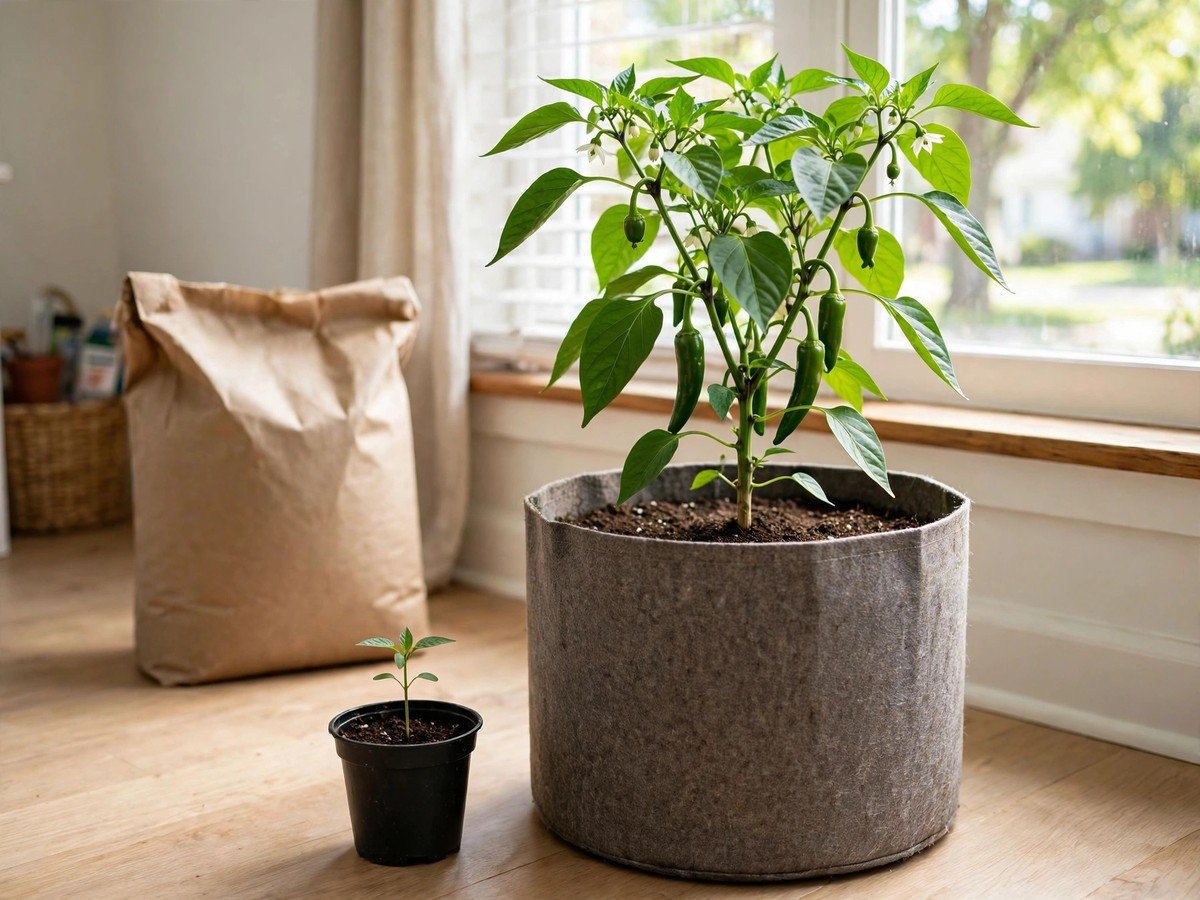
| Pot | 3 to 5 gallons for a mature compact plant. Small chilies and ornamentals sit at the low end. A full-size bell wants 5 gallons or more, plus the lamp space to match. |
| Pollination | The flowers pollinate themselves, but the pollen has to move. Indoors there is no wind and no insect traffic, so the grower moves it: tap, brush, or fan, every 2 to 3 days while the plant flowers. |
| Time | About 100 days from seed to first ripe fruit on a compact variety, as an expectation built from the stages. Four months is a good run. Bells and super-hot types take longer. |
One link instead of a repeat lesson: the lamp itself, which fixture and which tier of brightness, belongs to the site’s hub. Our guide to growing vegetables indoors owns the light tiers for crops as a class. This post only claims the pepper’s hours, because hours are a crop requirement. Keep the lamp close over the plant and raise it as the plant grows. Light left a foot too high gives you the windowsill result at electricity prices.
Varieties That Fit a Lamp
Choose for the space the lamp actually covers. Compact plants with small fruit are the reliable indoor peppers, because the plant stays inside the light’s footprint and the fruit ripens in weeks rather than months.
- Thai chilies: small fruit, heavy setting, and a plant that stays modest. The classic indoor recommendation for a reason.
- Jalapeños: a step bigger, still compact, and forgiving about being picked green while the rest ripen.
- Ornamental peppers: bred small for pots. Many are hot and all are edible unless the tag says otherwise, but check the tag.
- Small sweets: snacking types in the Lunchbox style give sweet flavor without the bell pepper’s size and wait.
- Full-size bells: the stretch goal. Strongest light, biggest pot, longest timeline. A fine second-year project.
Hot types have one more indoor advantage: the plants tend to be compact and the fruit small, so more of them finish the job under a lamp. If the same plant were going outside into a big container instead, that is a different guide. Our eggplant in containers post covers the outdoor sibling crop in this family, and peppers in outdoor pots get their own treatment elsewhere on the site.
Start Warm, Then Pot On Once
The starting method itself lives in one place on this site, and this post does not repeat it. Our seed starting guide covers trays, mix, and the count-back from your last frost date, and its chart carries peppers at 8 to 10 weeks before the frost date. Follow it, then add only the pepper-specific notes below.
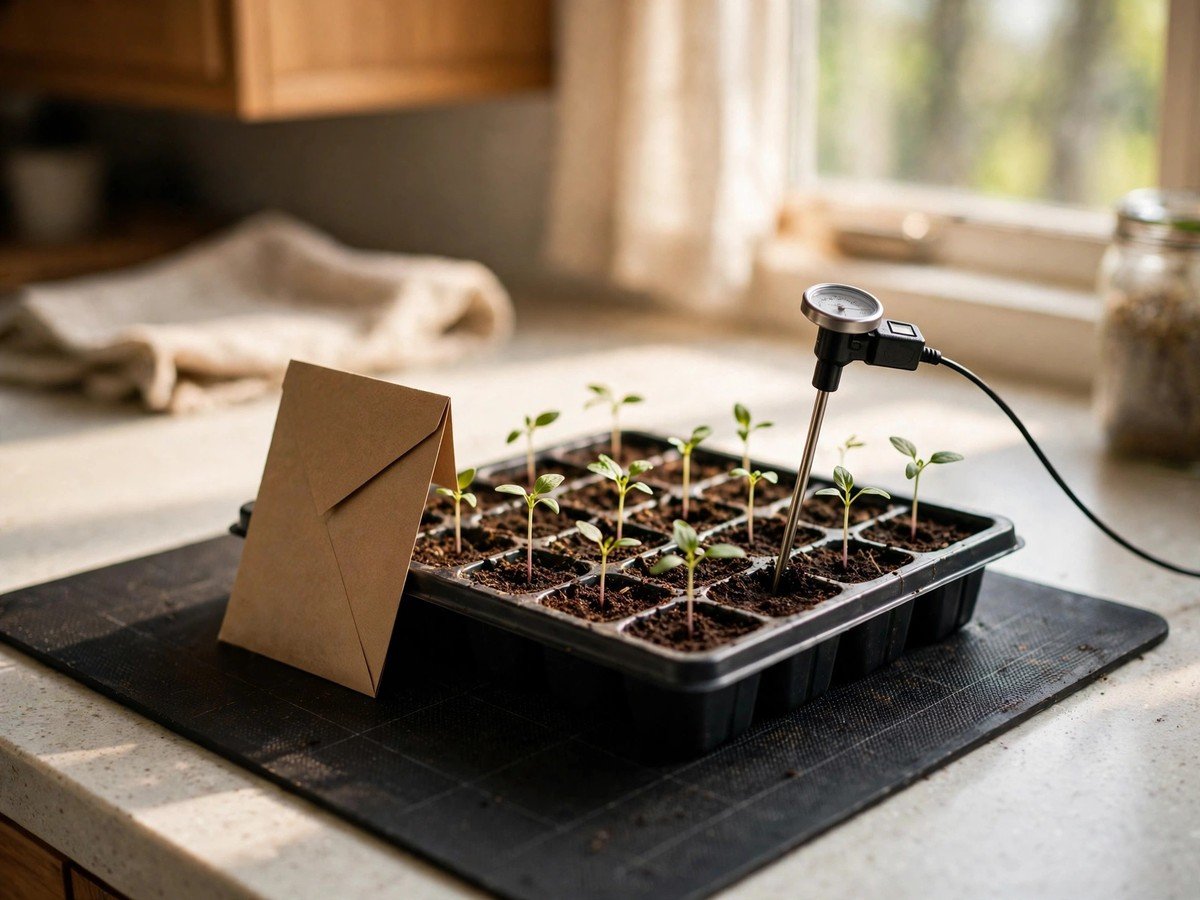
First, slow is normal. Pepper seed sprouts in about 7 to 10 days in properly warm conditions, and Penn State’s tables show the other end of it: germination in 8 days at 86°F soil, but more than 13 days at 58°F. In cool mix the wait stretches toward the 25 days Oregon State records. Do not dig seeds up to check on them at day ten. Warm the tray and wait.
Second, pot on once, into the final pot. A pepper started in a small cell gets one real move: into the 3 to 5 gallon pot where it will flower and fruit. Repeated moves cost this slow plant weeks it does not have. Penn State’s transplant table grows peppers on at 65 to 75°F days and 60 to 65°F nights across 6 to 8 weeks of production. Indoors, read that as the growing-on band for a young plant under lights, and keep the 8 to 10 week figure from the seed guide as your sowing-to-potting timeline. The two numbers have different anchors and both can be true.
Hand Pollination: The Help That Decides the Harvest
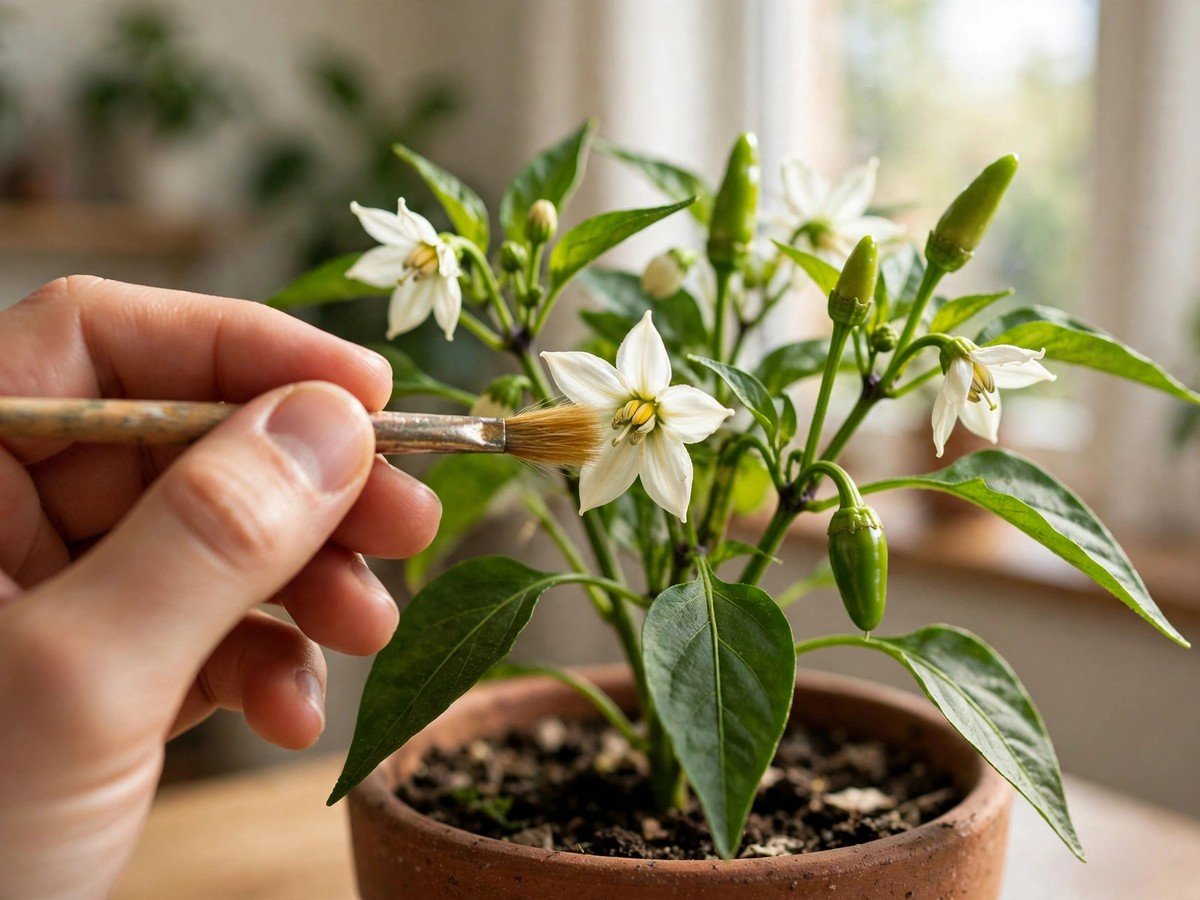
Here is the section no neighboring post owns, and it is the one that decides whether the contract pays out. Pepper flowers carry both pollen and the surface that receives it, all in one small white flower. Outdoors, wind shakes the plant and insects brush past, and the pollen moves the tiny distance it needs to travel. Indoors, the air is still and the insects are absent. The flowers open, nothing touches them, and they drop. A flowering pepper with no fruit is usually an unpollinated pepper, not a sick one.
The fix takes two minutes, every 2 to 3 days while the plant is in flower. Pick one method, or rotate all three:
- Tap or shake: flick the flowering branches with a finger, or gently shake the main stem, so the flowers nod. Pollen falls where it needs to land.
- Brush or swab: touch a small soft brush or a cotton swab into each open flower and move to the next. The brush carries pollen flower to flower.
- Fan: run a small fan near the plant for part of the day. Moving air does the tapping for you and firms the stems as a bonus.
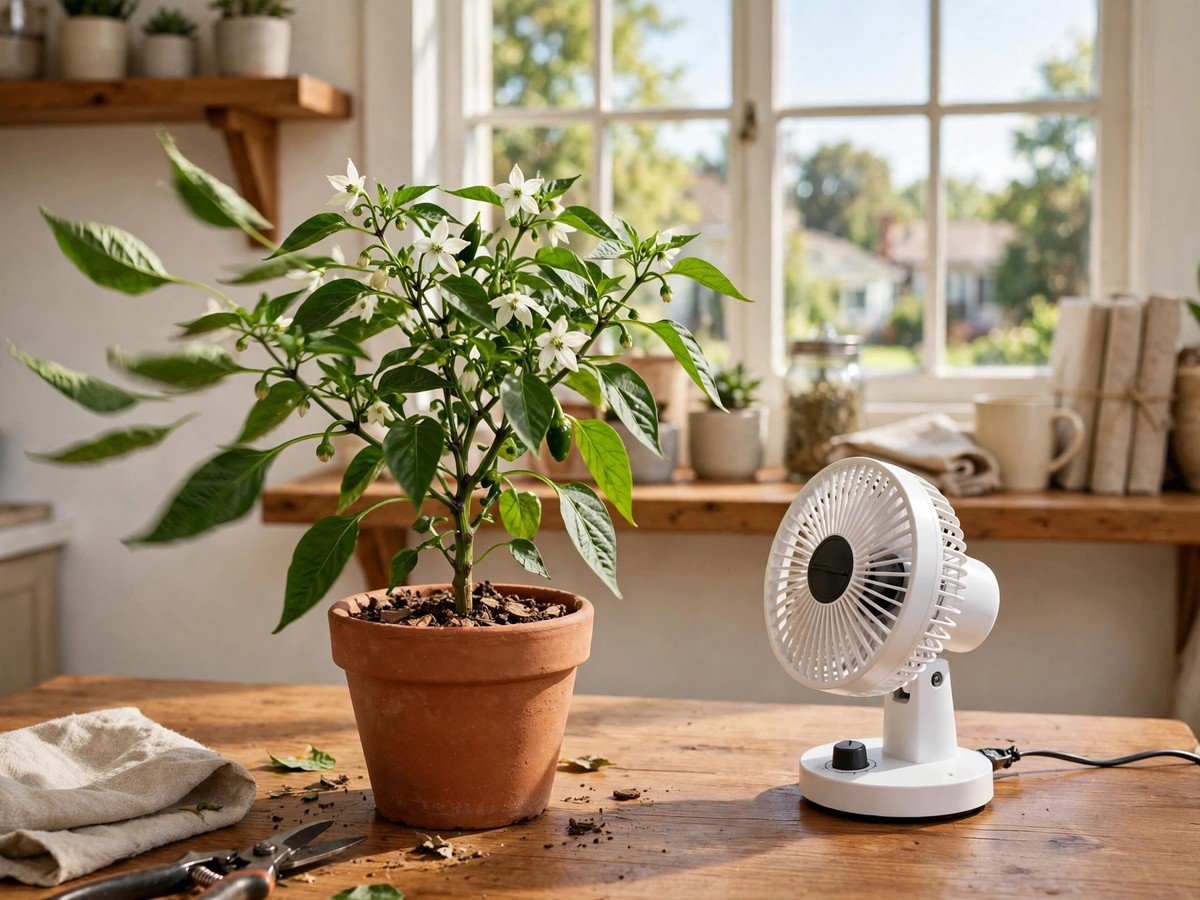
Then read the plant’s answer honestly. Fruit that swells at the base of a flower means the system works. Continued blossom drop, with pollination handled, is the plant reporting on the other parts of the contract: nights too cool, light too weak, or a pot allowed to swing bone dry at flowering. Fix the report, not just the flowers.
Water and Feed at Fruiting Size
A fruiting pepper in a 3 to 5 gallon pot drinks steadily, and the rule is even moisture. Water when the top inch of mix feels dry, then water deeply enough that the pot feels heavy again. The swing to avoid is drought at flowering, which joins the list of blossom drop causes. Let the pot drain and never leave it standing in a saucer of water.
Feeding stays lighter than an outdoor plant in summer sun would get. A balanced liquid feed at half strength every couple of weeks through flowering and fruiting is plenty for most indoor plants. The blend itself matters more than the bottle: a free-draining mix that still holds moisture is the target, and our guide to the best soil mix for vegetables in pots covers blends in detail rather than this post repeating them.
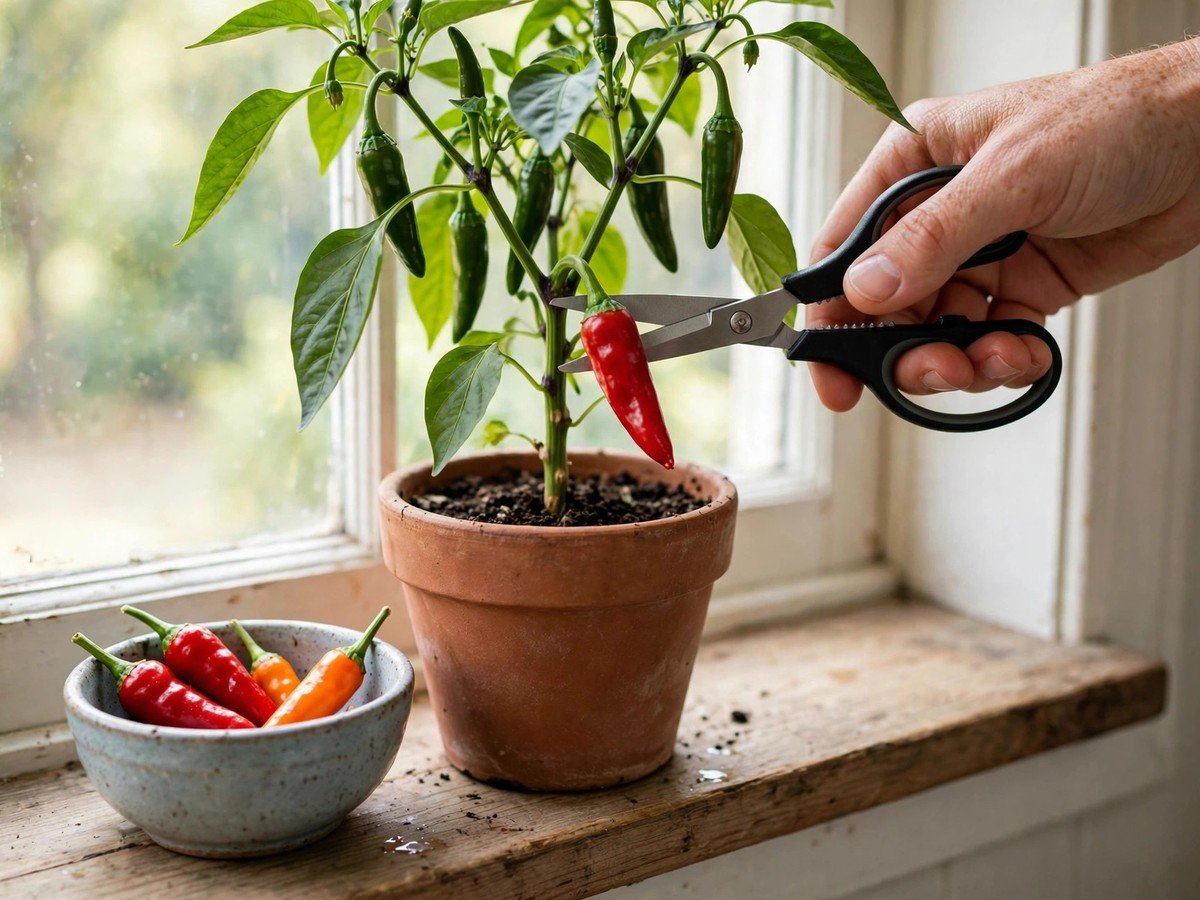
Pick fruit as it colors up. Johnny’s gives its growers the same advice for a practical reason: picking the first peppers promptly, once they reach full size, encourages the plant to set more. An indoor plant carrying ripe fruit it does not need to carry slows down. Harvest is feeding, in that sense.
Winter: Two Honest Choices
A pepper is a tender perennial. Frost is what kills it outdoors, not age. That single fact gives an indoor plant three possible winters, and they are genuinely different plans. Do not blend them.
Choice one: keep it fruiting
Hold the plant in a warm room at about 65 to 70°F and keep the light long, 12 to 16 hours a day, and the plant keeps flowering and setting fruit through winter. This is the active mode: same contract, same pollination routine, slower pace. It suits a plant already fruiting well under a good lamp, in a room that stays warm anyway.
Choice two: park it dormant
The second mode rests the plant instead of growing it. Cut it back, keep it cool and bright, and water it barely enough to keep the stems alive. The method, step by step:
- Bring the plant in before the first frost, and check it hard for aphids before it joins the houseplants.
- Cut it back so the frame is compact. A plant that already lives in a pot needs less cutting than one lifted from the ground. Overwintering guides put the cut at about 6 to 8 inches of stem on a hard-pruned plant.
- Hold it at 40 to 60°F with the brightest light you have. Extension figures collected by overwintering guides put the coolest storage at 40 to 55°F, so treat the cooler end of the range as the safer end.
- Water only when the top inch of mix is dry. In practice that is a small drink every 3 to 4 weeks. No fertilizer at all while it rests.
- Expect the leaves to drop. That is normal in this mode. Scrape a stem lightly with a thumbnail: green underneath means the plant is alive and waiting.
- When spring days are reliably above 60°F, bring it back into warmth and light gradually, over 2 to 3 weeks, keeping nights above 50°F. Then pot on, feed, and let it restart.
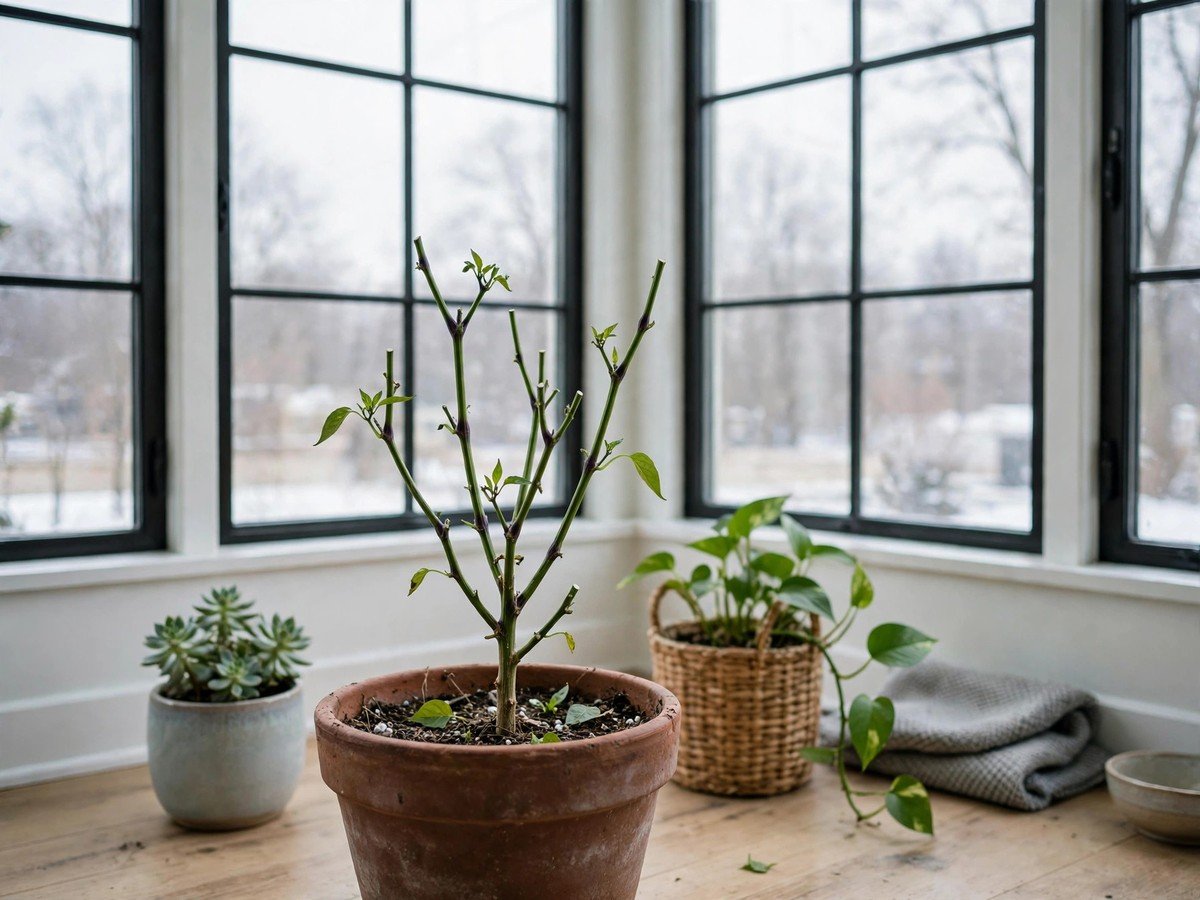
One honesty note about the dormant method: it comes from University of Illinois Extension guidance on overwintering tender perennials, and the plants that guidance names are sage, rosemary, and bay. Peppers are not named in it. Peppers are tender perennials too, and growers transfer the method to them with good results, but you should know it is a transfer, not pepper-specific extension advice.
Choice three: start fresh
The third option is the honest one nobody lists: let the plant go and sow fresh seed in late winter. Overwintering suits a plant you love, a variety you cannot easily replace, or a head start you want on spring. It is not the default, and a dormant plant that comes back slowly has not beaten a vigorous new seedling by much. Choose it on purpose, not out of guilt.
What Goes Wrong
Blossom drop. Flowers open and fall without setting. Work the contract in order: nights below about 60°F, days above about 90°F, a pot that swung dry at flowering, and no pollination help. One of those four is almost always the answer.
Leggy, pale growth. Long gaps between leaves and a lean toward the window mean the light is too weak or hung too far away. Fruiting peppers need the lamp close and the hours long. A stretched pepper rarely becomes a compact fruiting plant, so fix the light for the next plant rather than nursing this one.
Aphids indoors. The classic indoor pepper pest, clustered on new growth and under leaves. Check the undersides weekly, because a small colony becomes a sticky mess fast. Rinse the plant firmly in a sink or shower, then use an insecticidal soap labelled for houseplants if they return. Catching them before a dormant plant goes into winter storage matters twice as much, since the plant cannot fight back while it rests.
Flowers but no fruit. Pollination first, light second, temperature third. If the brush routine is running and the lamp hours are honest, check the night temperature before blaming the plant.
The short version: a pepper fruits indoors when four things hold at once. Strong light for 14 to 16 hours, warmth inside 65 to 80°F, a 3 to 5 gallon pot, and pollination help every few days. Keep all four and the plant does the rest, slowly, the way peppers do everything.
Growing Peppers Indoors FAQs
Can I grow peppers on a windowsill with no grow light?
You can grow the plant, but fruit is unlikely in winter. A bright sill keeps a pepper alive and green, and in a mild season it may set a little fruit. Fruiting needs 14 to 16 hours of strong light a day, and a winter window does not deliver that. Add a lamp over the plant and the same windowsill setup starts to work.
How long does it take from seed to the first ripe pepper indoors?
Plan on about 100 days at the earliest for a compact variety under strong light, and treat four months as a good run. The stages are slow: about a week to sprout in warm soil, 8 to 10 weeks to a plant worth potting on, then weeks more for fruit to set and color. Johnny’s Selected Seeds lists an early jalapeño at 80 days from transplanting to red ripe fruit, which is the same patience told from the other end.
Why are my pepper flowers falling off?
Work the short list in order. Nights below about 60°F stall fruit set. Days above about 90°F drop blossoms. A pot that dried out hard at flowering does the same. And indoors, unpollinated flowers simply fall, because no wind or insect moved the pollen. Tap the branches or brush the flowers every 2 to 3 days, then check the temperatures.
Can I keep a pepper plant over winter and fruit it again next year?
Yes. Peppers are tender perennials, and frost is the only thing that truly ends them. You can keep a plant fruiting all winter in a warm room at 65 to 70°F under 12 to 16 hours of light, or park it dormant at 40 to 60°F, cut back and barely watered, and restart it in spring. Hot peppers generally overwinter more reliably than big sweet bells.
How big a pot does an indoor pepper plant need?
Plan on 3 to 5 gallons for a mature compact plant. Small chilies and ornamentals fruit happily at the 3 gallon end. A full-size bell pepper wants 5 gallons or more, plus a lamp wide enough to cover it. A small pot is the quietest yield killer in indoor pepper growing, because the plant runs out of root room just as it starts to fruit.
Do hot peppers or sweet peppers fruit better indoors?
Small-fruited hot peppers fruit better indoors, and it is mostly about size. Thai chilies, jalapeños, and ornamentals stay compact, set readily, and ripen small fruit in weeks. Small sweet snacking peppers are a reasonable middle ground. Full-size bells are the hardest indoor pepper: the plant is bigger, the fruit is heavier, and the wait is longest.
Sources and Further Reading
- Oregon State University Extension, Soil Temperature Conditions for Vegetable Seed Germination (read directly during research for this guide): pepper seed in soil has a 60°F minimum, an optimum of 85°F, and a maximum of 95°F; seedlings appear in about 25 days at 59°F soil, 12 days at 68°F, and about 8 days at 77°F; the same table gives spinach a 35°F minimum.
- Penn State Extension, Seed and Seedling Biology (read directly for this guide): its soil table matches Oregon State’s pepper figures; peppers germinate in 8 days at 86°F but take more than 13 days at 58°F; pepper transplants grow on at 65 to 75°F days and 60 to 65°F nights over 6 to 8 weeks.
- Iowa State University Extension, Germination Requirements for Annuals and Vegetables (read directly for this guide): pepper’s ideal germination temperature of 70 to 75°F is defined on the page as an air temperature; 7 to 10 days to germinate.
- Johnny’s Selected Seeds, Early Jalapeño (read directly for this guide): 60 days from transplanting to green fruit and 80 days to red ripe; sow about 8 weeks before transplanting; hold germination soil at 80 to 90°F; pick the first full-size peppers promptly to encourage further set.
- University of Illinois Extension tender-perennial overwintering method, as set out by UrbanHarvestLab (read directly during research): bring plants in before frost, hold dormant plants at 40 to 60°F in bright light, water only when the top inch is dry, no fertilizer while dormant, leaf drop is normal, and a scratch test showing green means the plant is alive. The method names sage, rosemary, and bay; its use for peppers is a transfer, flagged in the article.
- Guide consensus, stated as consensus rather than a single source: 14 to 16 hours of strong light for fruiting; a 3 to 5 gallon pot for a mature compact plant; fruit set best at about 65 to 80°F with blossom drop above about 90°F; pollination help every 2 to 3 days while flowering; dormant plants cut back to about 6 to 8 inches of stem and watered about every 3 to 4 weeks; dormant storage of 40 to 55°F in extension figures collected by overwintering guides, including Oregon State’s.

4 Comments