
How to Grow Cherry Tomatoes Indoors (Step-by-Step, With Realistic Yields)
Growing cherry tomatoes indoors is very doable in a small space, and cherry types are the easiest tomatoes to try it with. They stay smaller than full-size varieties, ripen faster, and the compact dwarf types bred for pots can fruit on a shelf or a bright windowsill. Two honest points before you start. First, light decides almost everything: a fruiting tomato needs far more light than a houseplant, and most homes need a grow light to supply it. Second, one small indoor plant gives you regular snacking, not bulk harvests. Go in expecting a handful of ripe fruit at a time and you will not be disappointed.
This guide walks through the whole process for apartment and small-space growers, from variety and pot choice to light, feeding, pollination, and troubleshooting.
For the broader indoor picture beyond tomatoes, see our guide to growing vegetables indoors.
Quick answer: To grow cherry tomatoes indoors, pick a micro-dwarf or dwarf variety, give it the right pot for its size, and run a grow light 14 to 16 hours a day.
- Variety: micro-dwarf for a windowsill, small dwarf for a bigger harvest
- Pot: 1 gallon for micros (Utah State Extension’s minimum for the smallest varieties), 1–3 gallons for dwarfs, 3–5 gallons for compact types
- Light: 14–16 hours a day on a timer, plus a real dark period
- Pollination: shake the plant or buzz each flower cluster daily
- First fruit: roughly 70–100 days from seed for dwarf types
Can You Grow Cherry Tomatoes Indoors? What to Expect
Why cherry tomatoes are the easiest tomatoes to grow indoors
Cherry tomatoes suit indoor growing better than any other tomato type for three practical reasons. The plants come in genuinely small sizes: micro-dwarf varieties mature at 6 to 12 inches tall, and small dwarfs at 1 to 2 feet, . The small fruit also ripens sooner and sets in clusters, so a plant does not need the long, hot season a big slicing tomato demands. And most compact varieties are determinate, meaning they grow to a set size and fruit over a defined window instead of vining indefinitely. That makes them far easier to light, support, and keep tidy in an apartment.
How much one plant really produces
Most indoor growing guides either skip yields or promise too much, so here is the honest version up front. Utah State University Extension’s advice on growing tomatoes in winter puts it plainly: the smaller indoor varieties will likely only produce enough fruit for an occasional salad or sandwich, while a larger, well-cared-for plant produces more but needs more maintenance. With no reliable per-cultivar yield trials for home indoor plants, the table below uses plain harvest expectations instead of precise weights — a realistic guide, not a promise.
| Plant type | Example varieties | Realistic expectation |
|---|---|---|
| Micro-dwarf in a 1-gallon pot | Micro Tom, Orange Hat, Red Robin | Small pickings across the main flush — a handful at a time, a few times a week at its peak. That is the “occasional salad or sandwich” scale Utah State Extension describes; Baker Creek puts Micro Tom at up to a few dozen fruit per plant. |
| Small dwarf in a 1–3 gallon pot | Tiny Tim, Red Robin | A clear step up: steady snacking through the harvest window, and with two plants, an occasional small salad. |
| Compact cherry in a 3–5 gallon pot under a strong light | Terenzo, Lizzano | The most productive indoor setup here: regular pickings over a longer window, as long as the light is genuinely strong. Still a supplement to bought tomatoes, not a replacement. |
What drives the size of the harvest, in order, is total daily light, the match between variety and pot size, pollination help during flowering, steady watering and feeding, and temperatures inside the fruit-set range.
Be skeptical of big yield claims. Some pages promise 5 to 20 pounds of fruit from a single indoor plant. We could not find a university extension source behind numbers like that; figures that large usually trace back to outdoor or commercial greenhouse growing. If a guide’s yield claim has no source, plan around the expectations above instead.
What you need before you start
- Seeds of a compact, dwarf, or micro-dwarf cherry variety (most indoor varieties are sold as seed)
- A pot with drainage holes, sized to the variety, plus a saucer
- Peat- or coir-based potting mix, and a fine seed-starting mix for sowing
- A full-spectrum LED or fluorescent grow light on a plug-in timer
- A balanced fertilizer, plus a lower-nitrogen bloom feed for later
- A small fan for airflow and pollination help
- Labels, so you remember which variety is which
If summer later gives you a sunny balcony, these same compact plants are easy to move outside and keep producing. Our balcony vegetable garden guide shows how to plan that space.
Best Cherry Tomato Varieties to Grow Indoors
The best cherry tomatoes to grow indoors are micro-dwarf and dwarf varieties bred to stay small — under about 2 feet tall. Utah State University Extension’s indoor tomato guidance recommends smaller varieties for growing inside, typically 1 to 2 feet tall, and names Tiny Tim, Micro Tom, Terenzo, and Lizzano among its suggestions. Match the variety to the space and light you actually have, using the three groups below.
Micro-dwarf varieties for windowsills
Micro Tom is the true windowsill tomato. Bred at the University of Florida and billed as the world’s smallest tomato plant, it matures at just 6 to 8 inches tall with red cherry fruit of about 1 ounce. Baker Creek’s Micro Tom listing notes it can grow in a pot only 4 to 6 inches across and produce up to a few dozen tomatoes over its short season. Orange Hat is a similar micro-dwarf with small, sweet orange fruit: Victory Seeds lists it at about 60 days, never reaching 12 inches tall, and growing well indoors under grow lights, while other sellers put it anywhere from about 55 to 75 days — a good reminder to check your own packet. Red Robin is slightly larger at 8 to 12 inches, with sweet-tart red fruit about 1 inch across; Hoss lists it at 55 days to maturity and describes it as a determinate dwarf suited to pots and indoor growing. Any of the three fits on a sunny sill or a small shelf under a light bar.
Small dwarf varieties for bigger harvests
Tiny Tim is the classic indoor recommendation, but sellers disagree on its size: Hudson Valley Seed Co. lists it at 18 to 24 inches tall and 45 days from transplant, while many guides put it nearer 12 to 18 inches. Either way, it needs a bigger pot and a stronger light position than the micros, and in return it carries noticeably more fruit, about an inch wide. Florida Petite is another small dwarf in the same size class and a reasonable alternative if Tiny Tim seed is out of stock.
Compact container hybrids
Terenzo and Lizzano are compact trailing cherry hybrids bred for baskets and containers, generally 12 to 20 inches and spreading rather than climbing. They want a 3 to 5 gallon container and a small support, and they produce over a longer window than the determinate micros. Choose them when you have a larger light and floor or stand space, not for a narrow windowsill.
Varieties to avoid indoors
Tall indeterminate cherry types such as Sweet 100 and Sun Gold are the varieties to skip for a first indoor plant. They can pass 6 feet, need staking and regular pruning, want a 5 to 10 gallon pot, and demand strong light over a large area. As Gardening Know How’s indoor cherry tomato guide explains, indeterminate varieties are vinier and keep growing, while determinate types stay bushier with a more limited production window. Indoors, that trade-off usually favors the compact determinate plant.
| Variety | Class | Mature height | Days to maturity | Pot size | Fruit |
|---|---|---|---|---|---|
| Micro Tom | Micro-dwarf, determinate | 6–8 in | 50–60 days | 1 gallon | Red cherry, about 1 oz |
| Orange Hat | Micro-dwarf, determinate | 6–12 in | About 55–75 days (sellers vary) | 1 gallon | Small orange cherry, sweet |
| Red Robin | Micro/dwarf, determinate | 8–12 in | About 55 days | 1 gallon | Red cherry, about 1 in |
| Tiny Tim | Dwarf, determinate | 12–24 in (sellers vary) | 45 days from transplant | 1–3 gallons | Red cherry, about 1 in |
| Terenzo / Lizzano | Compact trailing hybrids | 12–20 in, trailing | About 55–65 days | 3–5 gallons | Red cherry clusters |
One caution on the days column: tomato packets usually count days to maturity from transplant, not from sowing, and seller specs vary. Use the figures to compare varieties, then check your seed packet for the numbers that apply to your seeds.
What Size Pot Do Cherry Tomatoes Need Indoors?
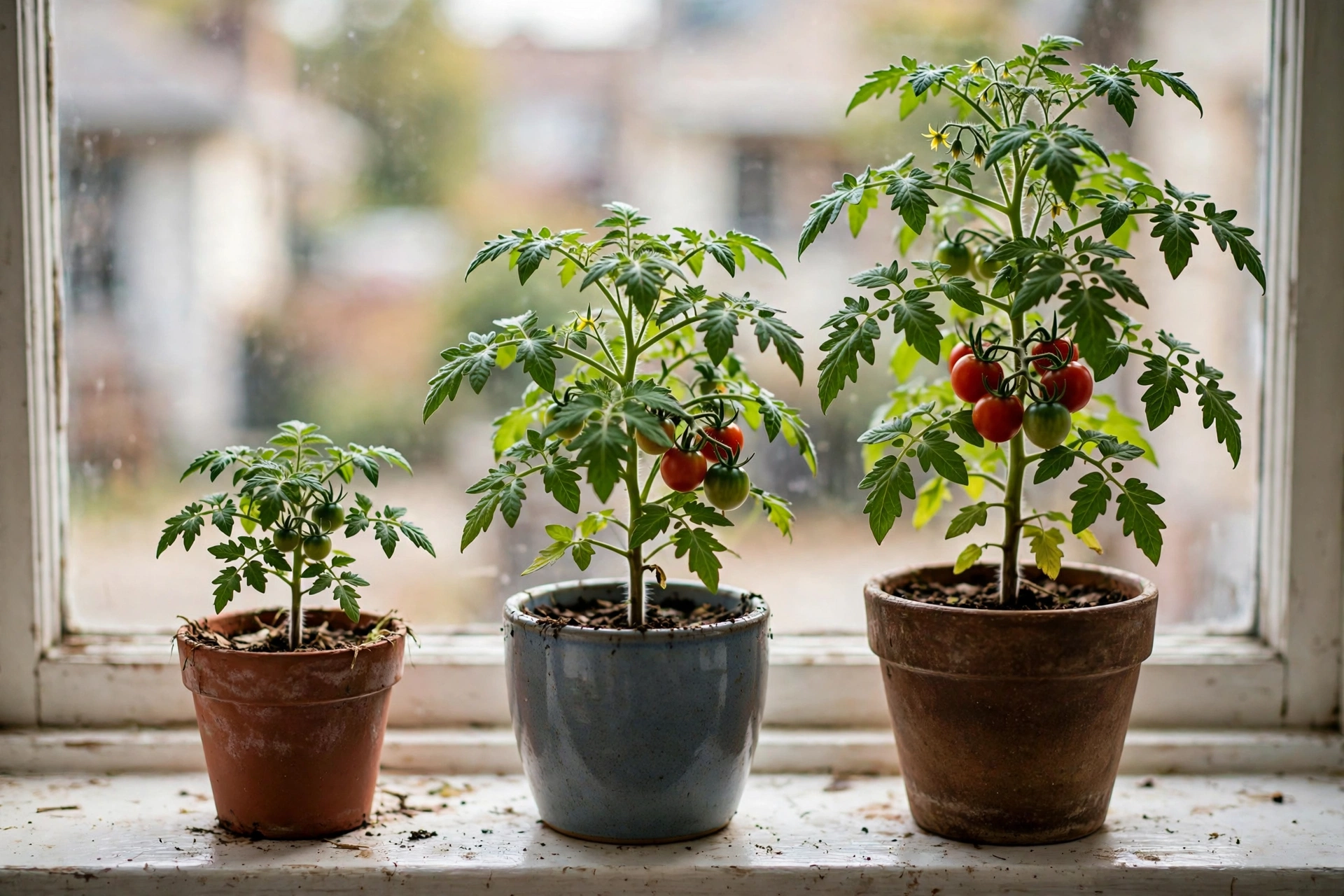
Match the pot to the mature plant: 1 gallon for micro-dwarfs, 1 to 3 gallons for small dwarfs, 3 to 5 gallons for compact types, and 5 to 10 gallons for tall indeterminate cherries. Indoor tomato guides can seem to contradict each other here — some insist every tomato needs at least 5 gallons, then recommend a variety that tops out at 8 inches — but both numbers come from real guidance, applied to different plant sizes. Colorado State University Extension’s container garden guide sets a minimum of five gallons for tomatoes, which is right for full-size plants. Utah State University Extension’s indoor tomato guidance is talking about small indoor varieties when it says a 1-gallon pot is sufficient for the smallest types and 2 to 3 gallons suits larger ones.
| Plant class | Examples | Pot volume | Approximate pot size | Why this size |
|---|---|---|---|---|
| Micro-dwarf (under 12 in) | Micro Tom, Orange Hat, Red Robin | 1 gallon (about 4 L) recommended | About 8 in across, 6–8 in deep | Utah State Extension’s minimum for the smallest varieties — a pot slightly too large beats one that is too small. A half-gallon pot can work for the very tiniest plants (Baker Creek grows Micro Tom in a 4–6 inch pot) but holds little water, dries out fast under lights, and usually means a smaller harvest; 1 gallon is the forgiving choice. |
| Small dwarf (12–24 in) | Tiny Tim, Florida Petite | 1–3 gallons (4–11 L) | 8–10 in across, 8–12 in deep | Matches extension guidance of 1 gallon minimum and 2–3 gallons for larger dwarfs. |
| Compact determinate cherry (2–3 ft) | Terenzo, Lizzano | 3–5 gallons (11–19 L) | 10–12 in or more across, about 12 in deep | Close to general tomato needs. Stability and a water buffer matter at this size. |
| Indeterminate cherry (advanced) | Sweet 100, Sun Gold | 5–10 gallons (19–38 L) | 12–14 in or more across, 12 in or more deep | This is where the 5-gallon minimum applies, plus support and headroom. |
A few rules hold at every size. Drainage holes are mandatory; a pot without them will keep roots wet and invite rot. Grow one plant per pot, which keeps watering predictable and air moving. Empty standing water out of the saucer after watering. Depth matters too: for all but the micros, a deeper pot beats a shallow, wide one of the same volume, because tomatoes root along a buried stem. Leave roughly 6 to 12 inches of air space around dwarf plants so canopies do not touch, and rotate window pots a quarter turn every few days.
Pot material matters less than size and drainage — Utah State Extension makes the same point. Terracotta dries fastest, fabric breathes and air-prunes roots, and plastic holds moisture longest, which matters most for the 3 to 5 gallon compact types in a warm room. Our comparison of grow bags vs. pots for vegetables walks through the trade-offs in detail.
The Best Potting Mix for Indoor Cherry Tomatoes
Start with a quality peat- or coir-based potting mix — never soil from the yard or garden. Colorado State University Extension’s container gardening guidance likewise recommends a purchased soilless mix and warns against native soil and reusing old mix from diseased plants. If a bagged mix feels dense, blend in extra perlite, around 20 to 30 percent, so water drains freely while the mix still holds moisture. Sow seeds in a fine seed-starting mix, and save the full mix for the final pot. For recipes and ingredient detail, see our guide to the best soil mix for vegetables in pots.
Light for Indoor Cherry Tomatoes: Grow Lights Explained Simply
Why a windowsill usually is not enough
A south- or west-facing window is the best natural spot in the house, and at a bright south window in summer a micro-dwarf plant can sometimes fruit on window light alone. For most homes and most of the year, though, a windowsill is unreliable for a fruiting tomato. Light intensity falls off quickly as you move away from the glass, and winter days are short and weak at most US latitudes. Before you rule your window in or out, it helps to measure what it really delivers across a day, and here is how to check the sunlight a windowsill really gets. The method there was written for herbs, though: a fruiting tomato needs far more light than any herb, so a window that keeps basil happy can still starve a tomato.
How many hours of light per day
Run fruiting cherry tomatoes under lights for 14 to 16 hours a day, on a timer so the schedule never drifts. Plants also need a real dark period of at least about 6 hours, so do not run the light around the clock expecting faster growth. Seedlings are commonly given a slightly longer day, around 16 to 18 hours, while they are young.
How strong the light needs to be
Three numbers describe a grow light, and they are not interchangeable: PPFD is intensity — the usable light landing on the leaves right now; hours are how long the light runs each day; and DLI (daily light integral) is the total light collected across the whole day, the figure that best predicts growth. Virginia Tech Extension’s guide to calculating and using daily light integral lists a recommended DLI of 20 to 30 mol/m²/day for tomato, with the connecting math: DLI = PPFD × hours × 0.0036. So the intensity you need depends on the schedule. Over a 16-hour day, that DLI takes an average PPFD of roughly 345 to 520 across the canopy. Over only 14 hours, the same total takes roughly 400 to 595 PPFD — a shorter day demands a stronger light, and a dim light left on longer may still not add up. Treat the low end of the DLI range as a target for strong fruiting at home, not a pass-or-fail line: plants can fruit below it, just less.
Judge a light by its PPFD map, not its watts. A small full-spectrum LED panel or bar with a published PPFD map, run 14 to 16 hours close to the canopy, can reach the low end of that range for one or two small plants. A thin decorative light bar sold for houseplants usually cannot.
How far to hang the light
Follow the fixture’s PPFD map first, because output varies too much between lights for one universal distance. For cool-white fluorescent tubes, Utah State University Extension says to keep the tops of the plants within 3 to 6 inches of the bulbs. Compact LED panels typically work 6 to 12 inches above the canopy, with stronger panels hung higher. Keep the distance constant as the plant grows, by raising the light or lowering the pot. Two signs tell you the distance or strength is wrong: leggy, pale, stretched growth means too little light, while bleached or scorched upper leaves mean the light is too close or too strong, so raise or dim it.
Step-by-Step: Growing Cherry Tomatoes Indoors From Seed
Step 1 — Sow the seeds
Fill small cells or pots with moist seed-starting mix and sow seeds about ¼ inch deep. Keep them warm, around 70 to 85°F, and consistently moist. At those temperatures most of the varieties above germinate in about 5 to 14 days, and warmth matters more than light until sprouts appear.
Step 2 — Give seedlings strong light immediately
Move seedlings under your grow light the day they emerge. This is the step beginners most often miss: a seedling on a windowsill stretches toward the glass within days, and a stretched, leggy seedling rarely grows into a sturdy plant. Strong light from day one produces the short, stocky, dark-green seedling you want. Keep the light a few inches above the tops and raise it as they grow.
Step 3 — Pot up into the final container
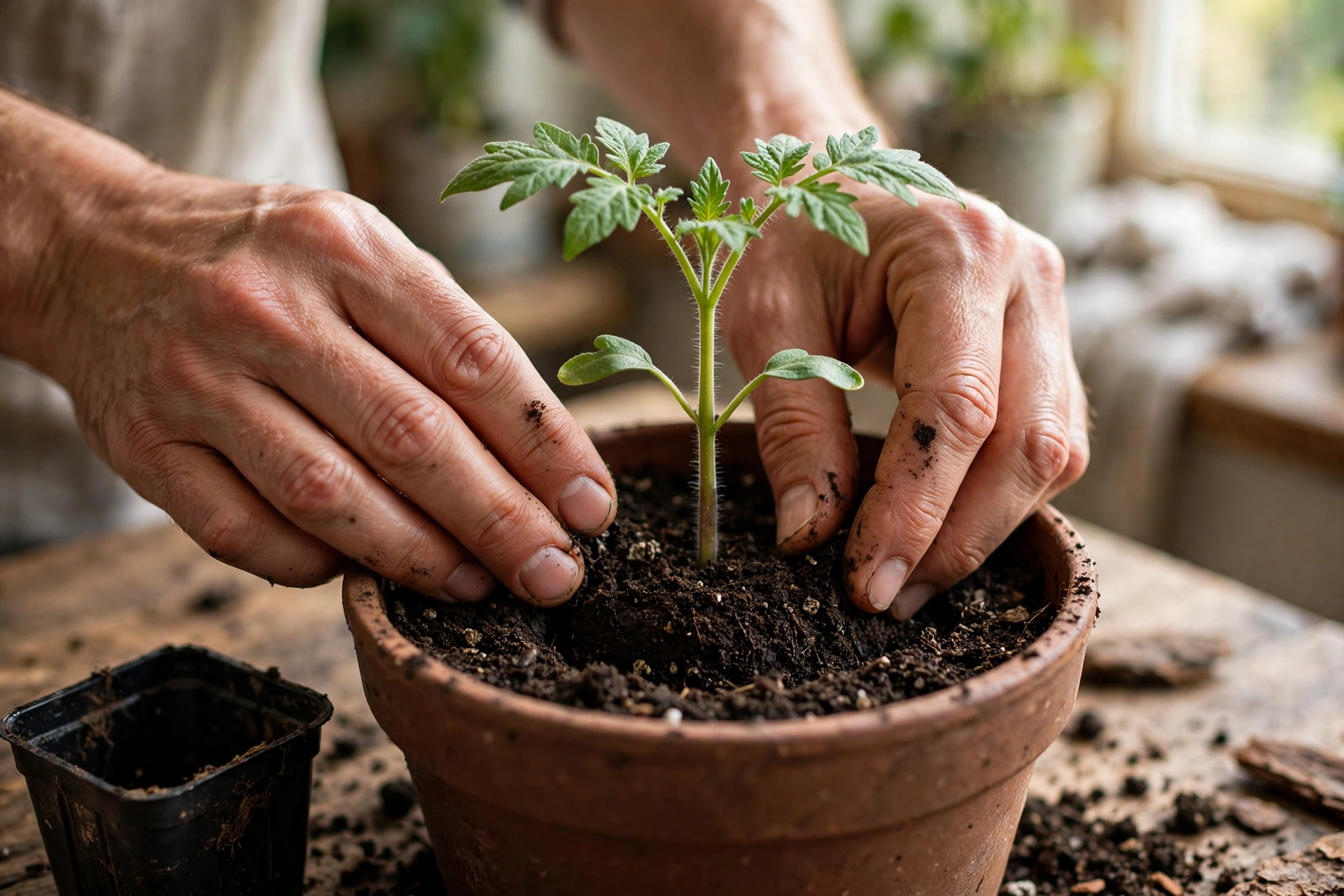
After about 3 to 5 weeks, when the seedling has several true leaves and looks stocky, move it into its final pot from the container table above. Plant it deeper than it was growing, burying part of the stem: tomatoes form roots along buried stem, which gives the plant a stronger base. Micro-dwarfs are the exception to repeated potting up. Sow them in, or move them once into, their final small pot, since disturbing a tiny plant repeatedly gains nothing.
Step 4 — Watering routine
Keep the mix consistently moist, never soggy and never bone dry. The reliable routine is to check with a finger: when the top inch feels dry, water thoroughly until some runs out of the drainage holes, then empty the saucer so the pot never sits in water. Check small pots under lights daily, because even a 1-gallon pot can dry out fast; a plant in 5 gallons may only need water every two or three days. Wild swings between dry and soaked are the main home-grower trigger for blossom end rot and cracked fruit.
Step 5 — Feeding
Tomatoes are heavy feeders, and a small pot holds very little reserve, so plan on feeding rather than hoping the mix carries the plant. Use a well-balanced fertilizer and follow the package instructions. Colorado State University Extension gives similar guidance for containers: soluble fertilizer diluted with every watering, or at full strength every one to two weeks, because nutrients wash out of pots quickly. A workable program is a balanced liquid feed at label or half-label strength every one to two weeks, then a switch once flowering starts to a lower-nitrogen, higher-potassium formula (a 5-10-10 type, for example) to support fruit instead of leaves. Too much nitrogen gives you a lush, leafy plant with few flowers. Every so often, water generously enough that extra solution drains through, which leaches accumulated fertilizer salts out of small pots.
Step 6 — Temperature, humidity and airflow
Aim for daytime temperatures around 65 to 85°F, with nights cooler but above about 50 to 55°F. The limits matter for fruit set: temperatures below 50°F can harm tomatoes, and sustained heat above 90°F may stop fruit from setting at all, so keep plants away from heat vents and from cold, drafty glass. Ordinary room humidity, roughly 40 to 60 percent, suits the plants. Do not mist the foliage to raise humidity; wet leaves in still indoor air invite disease. A small fan on low is the better tool: it moves air through the canopy, discourages fungal problems, strengthens stems, and helps pollination too.
Step 7 — Support and pruning
Micro-dwarf and dwarf determinate plants need almost no support or pruning, which is much of their appeal. Let them grow, and remove only leaves that are yellowing or touching the mix. Compact types in the 2 to 3 foot range benefit from one small stake or a short cage before they get top-heavy with fruit. If you do try a larger plant, learn the basics of removing suckers, the shoots that grow in the joint between a leaf and the main stem, but for the varieties recommended here, a tidy, unpruned bush is the goal.
How to Pollinate Cherry Tomatoes Indoors
Tomatoes are self-fertile — they need shaking, not bees
One point is worth stating plainly. A tomato flower contains both male and female parts, so it can pollinate itself. No second plant is needed, and there is no need to carry pollen from flower to flower the way a bee visiting different blossoms would. What is missing indoors is movement. As University of Minnesota Extension’s guide to plants that need pollination explains, for tomatoes the parts of the flower sit close together, so wind moving the flower allows pollination, and the buzzing of bumblebees is also effective. Outdoors, breeze and bees supply that vibration for free. Indoors, you supply it.
Three methods compared
- Shake or tap the plant. Gently shake the plant or tap each open flower cluster for a few seconds, once a day while flowers are open. Late morning or midday works best, when pollen is drier and sheds more easily. That is enough for most small plants.
- Use a small fan. A fan on low, aimed near rather than blasting the plants for a few hours a day, vibrates the flowers while it runs. Because the same fan also improves airflow, this is the lowest-effort option for two or more plants.
- Use an electric toothbrush. Touch the vibrating handle to the stem behind a flower cluster for 2 to 3 seconds per cluster. It looks odd, but it is the closest home mimic of a bumblebee’s buzz pollination, and it works well on a shelf of micros.
A soft brush or cotton swab also appears in many guides. It works mainly because it disturbs and vibrates the flower, not because the tomato needs pollen delivered from another flower. The three methods above are simpler and more reliable.
Why flowers still drop
If you are shaking daily and flowers still fall without setting fruit, look at conditions before blaming your technique. Sustained daytime heat above about 90°F, nights that are too warm or too cold, and humidity at either extreme all reduce pollen performance and cause blossom drop. Low light can do it too, since a plant short on energy sheds fruit it cannot support. The sign that pollination has worked is a tiny green fruit swelling behind a faded, withered flower, usually within about a week.
Growing eggplant in a pot? It uses the same shake-to-pollinate trick — see our guide to growing eggplant in containers.
Growing peppers indoors takes the same pollination help, with a soft brush for flowers a shake cannot reach. Our guide to growing peppers indoors covers the full routine.
Indoor Cherry Tomato Timeline: From Seed to Harvest
| Stage | Typical timing | Notes |
|---|---|---|
| Sowing to germination | 5–14 days | Fastest at 70–85°F |
| Germination to transplant-ready seedling | About 3–5 weeks | Several true leaves, stocky from close light |
| Transplant to first ripe fruit (micro/dwarf) | About 45–60 days | Per seller figures: Tiny Tim about 45 days, Red Robin about 55, Micro Tom 50–60 |
| Seed to first ripe fruit, total | About 70–100 days | Roughly 10–14 weeks for dwarf types |
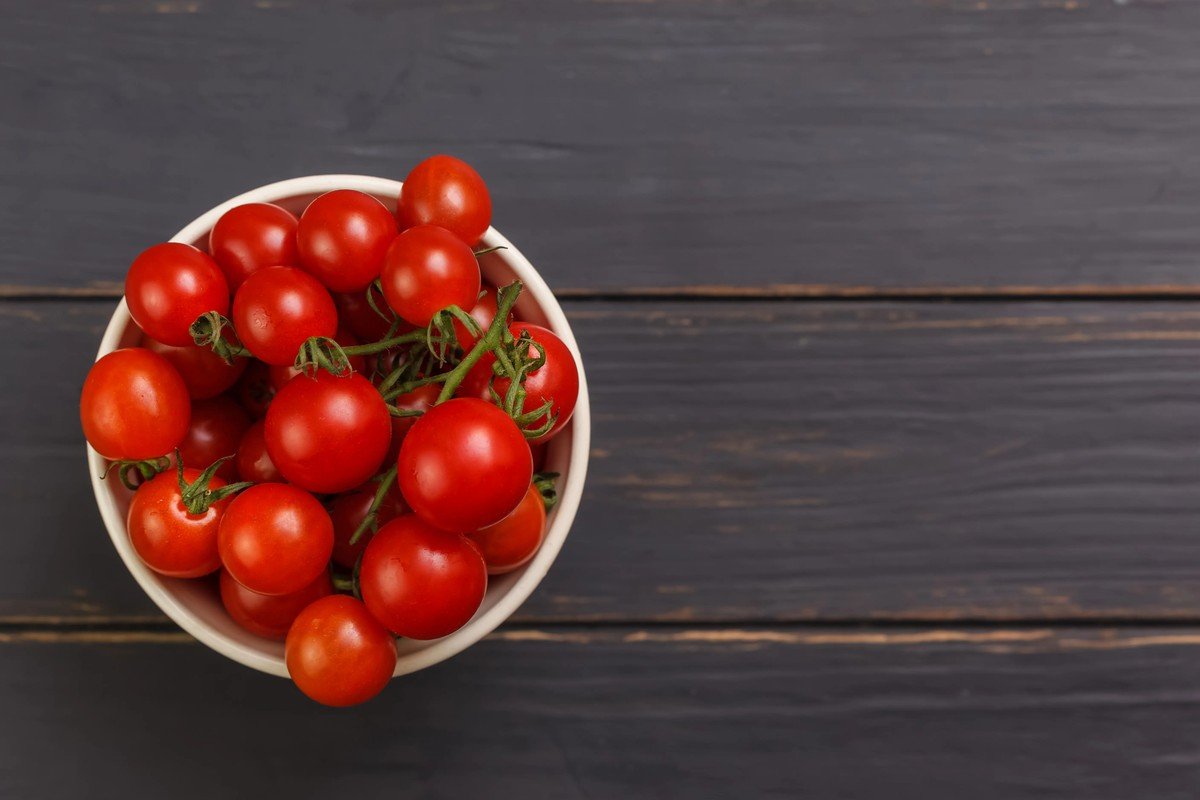
Fruit is ready to pick when it is fully colored for the variety and gives slightly when squeezed. Pick ripe fruit promptly; it encourages the plant to keep ripening the rest, and cherry tomatoes left too long on the vine are the ones that split. Expect determinate micros and dwarfs to deliver their main flush over about 3 to 6 weeks and then decline. That is normal behavior, not a failure. To keep harvests coming, sow a new plant every 4 to 6 weeks so staggered plants take over from each other.
Cherry Tomatoes in Winter: Succession, Not Overwintering
A determinate cherry tomato is a succession plant, not an overwintering plant. When the main flush ends, the plant declines and the next staggered plant takes over. Do not cut it back and try to rest it through winter. Peppers work differently. A pepper is a tender perennial with a dormant mode, and our guide to overwintering peppers indoors covers that routine. A determinate tomato has no dormant mode to fall back on, so a finished plant is replaced, not rested.
Light is the first thing winter takes away. As the light section above explains, winter days are short and weak, and a window that carried a plant through summer will not carry it through midwinter. Keep the lamp on its existing schedule and keep adjusting the distance as the plant grows. A plant that stops setting fruit in midwinter is usually reporting a light problem first, so check the lamp position before changing anything else.
Placement matters more in winter, within the temperature limits set in Step 6. Keep the pot off cold glass at night and away from heat vents and radiators. Dry heated air dries a small pot fast, and a pot near a heat source dries faster still. Judge watering with the top-inch test from the watering routine, not with a fixed winter schedule.
Before a plant brought in from a balcony joins the indoor shelf for winter, check it for aphids and whitefly, and use the problems table below if you find either pest.
When the flush is done and no new flowers are setting, replace the plant rather than nursing it through the darkest weeks. The timeline above sets out the staggered sowing plan that keeps the supply going. The pot and the light position serve a fresh plant better than a finished one.
Common Indoor Cherry Tomato Problems
Most indoor tomato problems trace back to light, water, or temperature, and most are fixable if you catch them early.
| Symptom | Likely cause | Fix |
|---|---|---|
| Leggy, pale seedlings | Light too weak or too far away from the day the seeds sprouted | Move seedlings close under a strong light now. When potting up a dwarf seedling, bury part of the stretched stem; it will root along the stem. |
| Flowers but no fruit | No vibration to release pollen, temperatures out of range, or light too low | Shake or buzz the clusters daily, check that days stay below 90°F and nights above 50–55°F, and increase light if the plant looks thin. |
| Blossom drop | Temperature or humidity stress | Keep conditions steadier: cooler days if the room overheats, warmer nights if the plant sits by cold glass, and ordinary room humidity. |
| Blossom end rot (dark, sunken patch on the bottom of the fruit) | Inconsistent watering disrupting calcium transport inside the fruit | Keep moisture even; mulch or a self-watering setup helps in larger pots. Affected fruit will not recover — remove it. Eggshell remedies rarely help; the problem is usually water delivery, not a lack of calcium in the mix. |
| Cracked fruit | A surge of water after a dry spell, or fruit left ripening too long | Water more evenly and pick fruit as soon as it is fully colored. |
| Yellow leaves | Overwatering, poor drainage, or underfeeding | Check drainage and the top-inch moisture test first. If the mix is not staying wet and the plant has not been fed, feed at label strength. |
| Fungus gnats, aphids, or whitefly | Gnats breed in a constantly wet mix surface; aphids and whitefly move in from other houseplants | Let the surface dry between waterings and use sticky traps for gnats. Wash aphids and whitefly off with a strong spray of water, or use insecticidal soap as directed. |
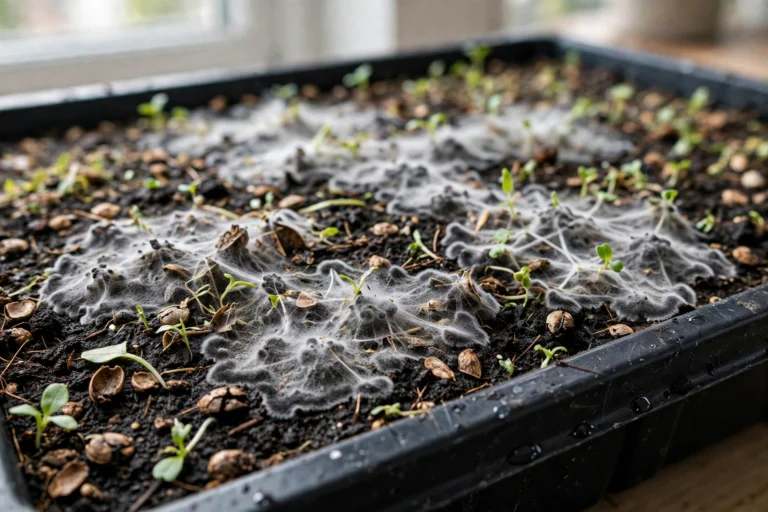
| Powdery mildew or mould | Still, humid air and crowded plants | Space the pots so canopies do not touch, run a fan for airflow, and avoid wetting the foliage. |
Tips for a Bigger Indoor Harvest
- Match the pot to the variety. A bigger pot does not help a micro-dwarf, and a small pot caps what a dwarf can produce. Use the container table, not a guess.
- Maximize light before adding plants. One plant at the right light level out-yields three plants sharing a weak light. Upgrade light first, plant count second.
- Pollinate daily during peak bloom. The weeks when the most flowers are open are when a few seconds of shaking pays back the most fruit.
- Pick ripe fruit promptly. It keeps quality up, prevents splitting, and signals the plant to keep ripening more.
- Run two or three staggered plants. Plants started 4 to 6 weeks apart cover each other’s decline, which beats betting everything on one hero plant.
FAQs About Growing Cherry Tomatoes Indoors
Can you really grow cherry tomatoes indoors all year round?
Yes, because indoors you control the season. The limits are light and the plant’s lifespan, not the calendar. In winter a window will not be enough, so plan on a grow light, and keep in mind that determinate micro and dwarf plants fruit for a few months and then decline. Sowing a new plant every 4 to 6 weeks keeps the supply going year-round. The winter section above explains why a determinate tomato is replaced rather than rested, unlike a pepper plant with its dormant mode.
How long does it take to grow cherry tomatoes indoors from seed?
About 70 to 100 days from sowing to the first ripe fruit for dwarf types. Germination takes roughly 5 to 14 days, the seedling stage about 3 to 5 weeks, and then 45 to 60 days from transplant to ripe fruit. Seed packets usually count their days to maturity from transplant, not from sowing, so a 55-day variety is not 55 days from seed.
How many hours of light do indoor cherry tomatoes need?
Run grow lights for 14 to 16 hours a day, with a dark period of at least about 6 hours. Hours alone are not the whole story, though: what counts is DLI, the total light collected across the day, and Virginia Tech Extension’s guidance for tomato aims at a DLI of 20 to 30. Reaching that over 16 hours takes an average intensity of roughly 345 to 520 PPFD; a shorter day needs a stronger light to collect the same total.
Can cherry tomatoes grow indoors on a windowsill without grow lights?
Sometimes. A micro-dwarf plant at a bright south-facing window in summer can fruit on window light alone. For most homes and most of the year it is unreliable, because window light weakens quickly away from the glass and winter days are short. If you try it, start with the smallest variety and be ready to add a small LED if growth stretches or flowers fail to set.
What size pot do cherry tomatoes need indoors?
Match the pot to the plant’s mature size, starting at 1 gallon for the smallest varieties. Utah State University Extension says a 1-gallon pot is sufficient for the smallest tomato varieties, and that a pot slightly too large beats one that is too small. Small dwarfs do well in 1 to 3 gallons, compact types need 3 to 5 gallons, and tall indeterminate cherries need 5 to 10 gallons. Whatever the size, use one plant per pot and make sure the pot has drainage holes.
Do indoor cherry tomatoes need to be pollinated by hand?
They do not need a bee or pollen carried between flowers, because tomato flowers are self-fertile. What they need indoors is vibration to release the pollen inside each flower. Shake the plant or tap the flower clusters daily, run a small fan nearby, or touch an electric toothbrush to the stem behind a cluster for 2 to 3 seconds.
How much will one indoor cherry tomato plant actually produce?
Expect snacking, not bulk harvests. Utah State University Extension says the smaller indoor varieties will likely produce only enough fruit for an occasional salad or sandwich, and Baker Creek puts even Micro Tom at up to a few dozen fruit per plant over its short season. A larger dwarf or compact plant in a 3 to 5 gallon pot under a strong light produces noticeably more, over a longer window — still a supplement to bought tomatoes, not a replacement. Light is the deciding factor.
Final Thoughts
Growing cherry tomatoes indoors comes down to four things: choose a variety sized for your space, match the pot to that variety, give the plant far more light than feels reasonable for a houseplant, and shake the flowers every day once they open. Get those four right and the rest is routine watering and feeding. Start with a single micro-dwarf or dwarf plant, learn its rhythm over one cycle of about three months, and only then add staggered plants for a steadier supply. When you are ready to branch out beyond tomatoes, browse the best vegetables to grow in pots for your next container crop.
While tomatoes take their time, growing lettuce indoors pays you back in about 30 days on the same shelf.
Sources and Further Reading
- Utah State University Extension — Can You Grow Tomatoes in the Winter? Indoor variety choice, pot sizes, light placement, temperature limits, and realistic harvests.
- Colorado State University Extension — Container Gardens Five-gallon minimum for full-size tomatoes, soilless mix, drainage, and salt leaching in containers.
- University of Minnesota Extension — Fruits and Vegetables That Require Pollination Why self-fertile tomato flowers set fruit with wind movement or buzz pollination.
- Virginia Tech Extension — Calculating and Using Daily Light Integral The DLI target of 20 to 30 for tomato and how to calculate it from light intensity and hours.
- Gardening Know How — Cherry Tomatoes Grown Indoors Indoor care overview, determinate vs. indeterminate trade-offs, and pest control.
- Baker Creek — Micro Tom, Victory Seeds — Orange Hat, Hoss — Red Robin, Hudson Valley Seed Co. — Tiny Tim Seed-producer specifications for variety heights, days to maturity, fruit size, and Micro Tom’s per-plant fruit count.
4 Comments