
How to Grow Spinach Indoors
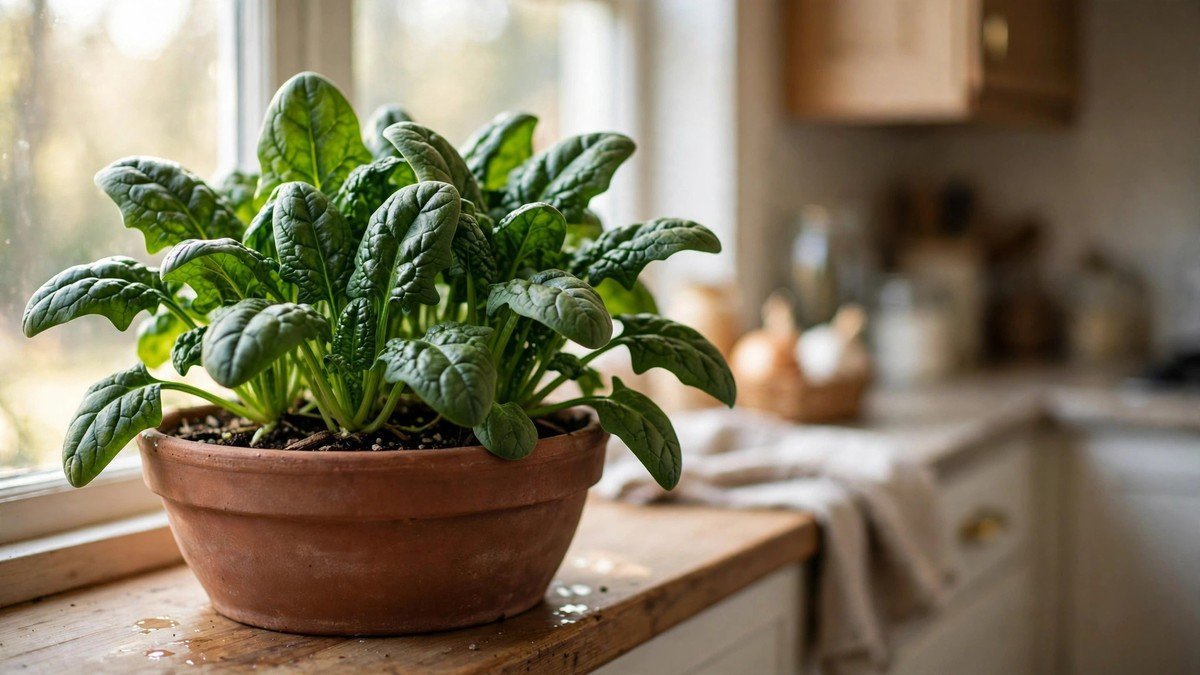
Yes, spinach grows indoors, and it grows fast. What it will not do is forgive a warm room. Spinach is a cool-weather crop that reads heat as a signal to stop making leaves and start making seeds, so the whole indoor game comes down to one thing: keep the pot cool, pick the leaves young, and always have a younger pot coming up behind the one you are picking.
Get the temperature right and the rest is simple. A wide pot, ordinary potting mix, seed sown where the plant will live, and steady moisture. Spinach sits in the leafy corner of growing vegetables indoors, alongside lettuce, but it is the fussier of the two, and this guide treats it that way from the first line.
The Honest Deal: A Baby-Leaf Crop, Not a Houseplant
Set the expectation before you sow, because most indoor spinach disappointment is really an expectation problem. Indoors, spinach is a baby-leaf crop. You sow a pot, pick tender young leaves from it for a few weeks, and then that pot is done. It is not a big, long-lived plant that feeds you all winter from one sowing, and no variety or gadget makes it one.
The Royal Horticultural Society says baby leaves can be picked in as little as a month after sowing, and that small regular sowings harvested as cut-and-come-again give several pickings each. That is the realistic indoor shape of this crop: first pickings at about 4 to 6 weeks, a few good weeks of picking, then a fresh pot takes over. A full-size plant needs 40 to 60 days and more root room and light than a windowsill usually offers, so plan around baby leaves and you will not be disappointed.
Why Spinach Quits: Heat, Then Bolting
Bolting is the failure that ends this crop, and it deserves its own section because almost everything else in this guide exists to delay it. A spinach plant that bolts sends up a tall central stalk, the leaves shrink and turn bitter, and picking is over. There is no pruning it back into usefulness. Once the stalk rises, pull the plant and eat what is still mild that day.
The trigger is warmth, especially warmth with dry soil. The RHS puts spinach at its best in milder temperatures, ideally 15 to 20°C, which is 60 to 70°F, and warns that hot and dry conditions make it start flowering early. Read that as a working rule: a room that sits in the 60 to 70°F range grows spinach, a room pushing past 75°F is asking it to bolt, and a pot parked above a radiator or beside a heating vent is in the danger zone even in January.
The cool-spot rule: give spinach your coolest bright spot, not your warmest one. A bright sill in a cool room beats a sunny sill over a radiator every time. If the leaves ever feel warm to the touch at midday, the plant is already deciding to bolt.

Drought pulls the same trigger. The RHS is blunt about it: lack of water interrupts growth and leads to early flowering, and container plants are the most vulnerable because a pot dries out fast. Heat and dryness together are the worst combination, which is why the watering advice further down is not decoration. It is bolt prevention.
The Setup, With the Conflicts Shown
Spinach advice online disagrees with itself in two places, light and pot size, so this table shows both versions instead of quietly picking one. The disagreements are real, and each side is measuring something slightly different.
| Part of the setup | What spinach wants |
|---|---|
| Pot | 6 to 8 inches deep is the standard most guides settle on for full plants, with drainage holes. For baby leaves only, 4 to 6 inches deep is enough. The RHS suggests a larger pot, at least 30 cm (about 12 inches) wide and deep, for one practical reason: a bigger volume of mix dries out more slowly, and dry mix is a bolting trigger. |
| Mix | Ordinary potting mix, not garden soil. Spinach likes it fertile and moisture-holding, around pH 6.0 to 7.0. Our guide to the best soil mix for vegetables in pots covers blends in detail. |
| Light | Two numbers, two different things. Guides give 4 to 6 hours of direct sun through a window, or 12 to 14 hours under an LED. An hour of real sun is far stronger than an hour of lamp light, so the figures are not interchangeable. In winter, when a window may only give 3 to 4 hours of direct sun, the practical setup is the brightest sill you have plus an LED top-up to reach the longer day. |
| Temperature | 60 to 70°F in the room, per the RHS range above. Cooler is safer than warmer. Above about 75°F, expect bolting to start. |
| Sowing | Seed 1/2 inch deep, 2 to 3 inches apart, in the final pot. Thin to about 3 inches apart for baby leaves, or 6 inches if you are growing a plant on to full size. |
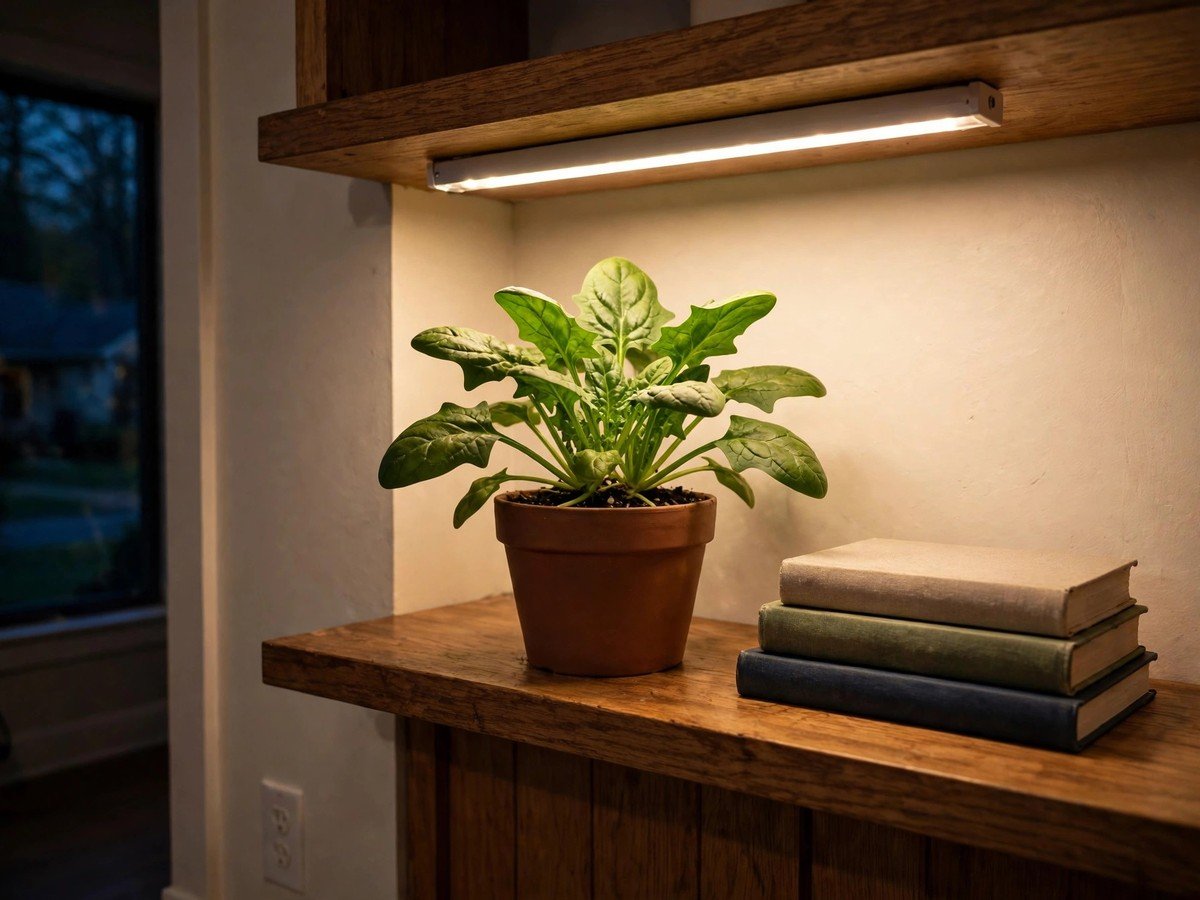
One word on variety, because it changes how long a pot lasts. Baby’s Leaf is bred for baby-leaf picking in small containers and is ready fastest. Space is the dependable all-rounder most guides list. Bloomsdale and Tyee are the names that come up when bolting is the main worry, since both hold longer before flowering. If your room runs warm, slow-bolt on the packet is the phrase to shop for.
Sow in the Final Pot and Thin in Place
Spinach grows a taproot, a single main root that runs straight down, and it resents being moved. The RHS says spinach is usually best sown direct, because the disruption of transplanting makes it more prone to bolting. Indoors that translates to a simple rule: sow the seed in the pot the plant will live and die in. There is no cell tray stage and no potting on. Crops like tomatoes and peppers are the opposite and transplant happily, but spinach is not one of them.
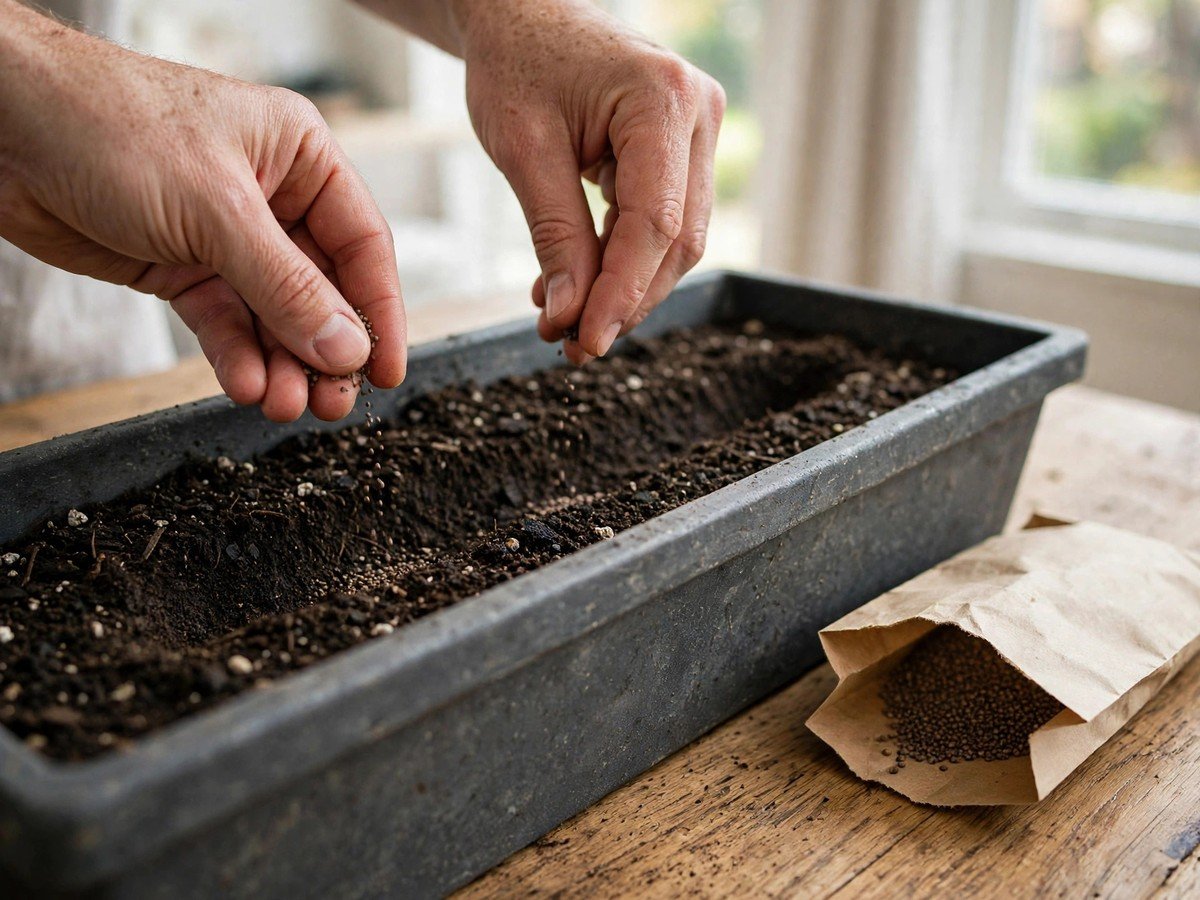
Press a shallow furrow into moist mix, drop the seeds 2 to 3 inches apart, and cover them with about 1/2 inch of mix. Water gently so the seeds stay put, then keep the surface moist. Germination takes 5 to 14 days, and the spread is mostly about soil temperature. The UC Master Gardener Program’s germination chart puts spinach seed at its best in soil of 65 to 75°F, with 75°F also the maximum, and its timing table shows the same seed taking about 6 days to emerge at 68°F but closer to 12 days at 50°F. Cool soil is not failed seed. It is just slow seed, so wait the full two weeks before you resow.
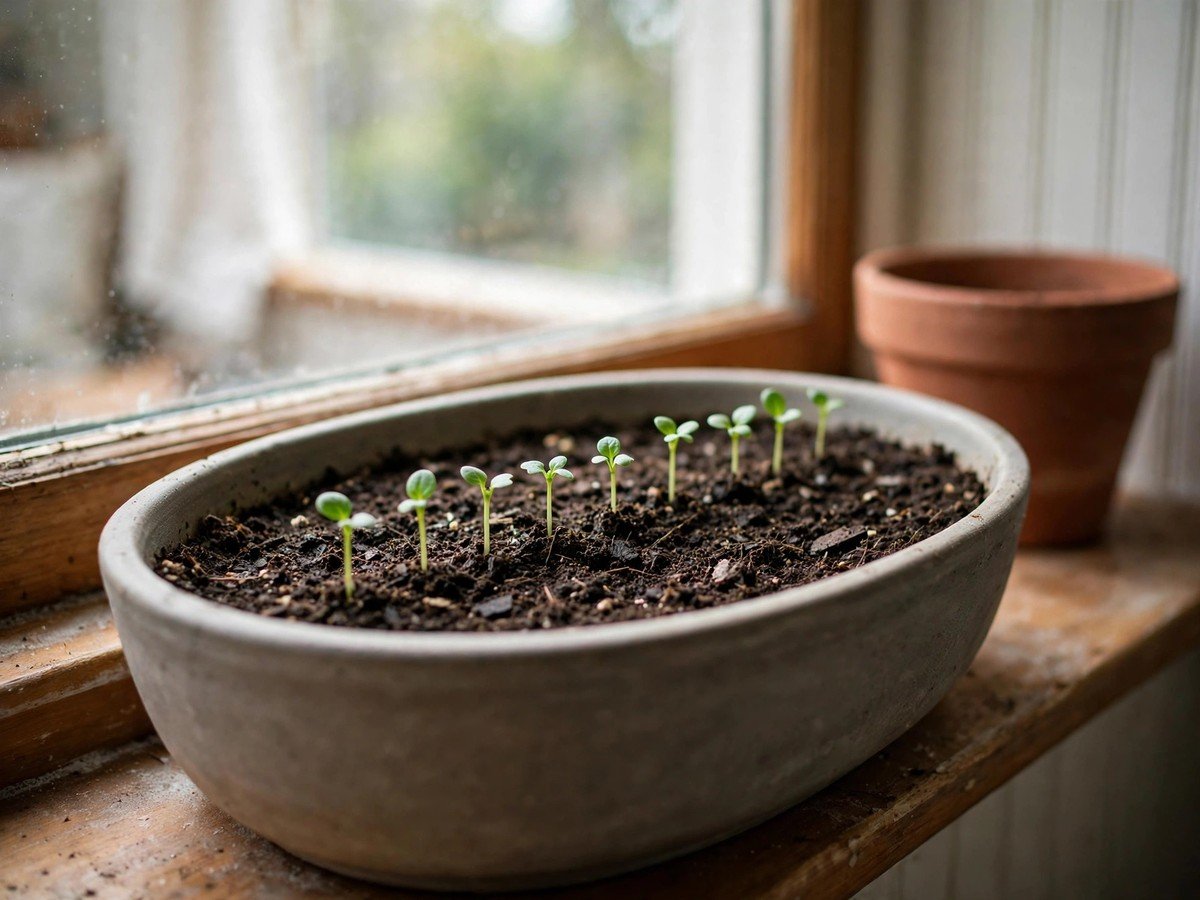
When the seedlings are big enough to handle, thin them to about 3 inches apart, the spacing the RHS gives, and eat the thinnings in a salad rather than binning them. Snip the extras at the base instead of pulling, so the roots of the keepers stay undisturbed. For baby-leaf picking, 3 inches is the final spacing. Only thin wider, to about 6 inches, if you are growing a plant on toward full size.
Water and Feed: Moist Is the Whole Job
Spinach is a thirsty, shallow-rooted crop in a pot that dries from the top down, so the routine is frequent small checks rather than a weekly soak. Push a finger into the mix: if the top inch feels dry, water. The aim is mix that stays evenly moist and never swings between soggy and parched, because the dry end of that swing is what nudges the plant toward bolting. Water at the base where you can, and empty any saucer so the pot never stands in water.

Feeding is a light touch. A half-strength liquid feed every couple of weeks once the true leaves are in is plenty for a short baby-leaf crop. If leaves look pale, check the light before you reach for the bottle: indoors, pale spinach is far more often a light problem than a food problem, and extra feed on a light-starved plant just makes soft, weak growth.
Pick the Outside, Leave the Middle, Sow the Next Pot
Harvest is where the baby-leaf plan pays off. Start picking when the outer leaves reach about 3 to 4 inches, taking the largest outer leaves first and always leaving the center of the plant alone. That center is the growing point. As long as it stays intact, the plant keeps pushing new leaves out to replace the ones you took, which is the whole cut-and-come-again idea. Take a few leaves from each plant rather than stripping one plant bare.
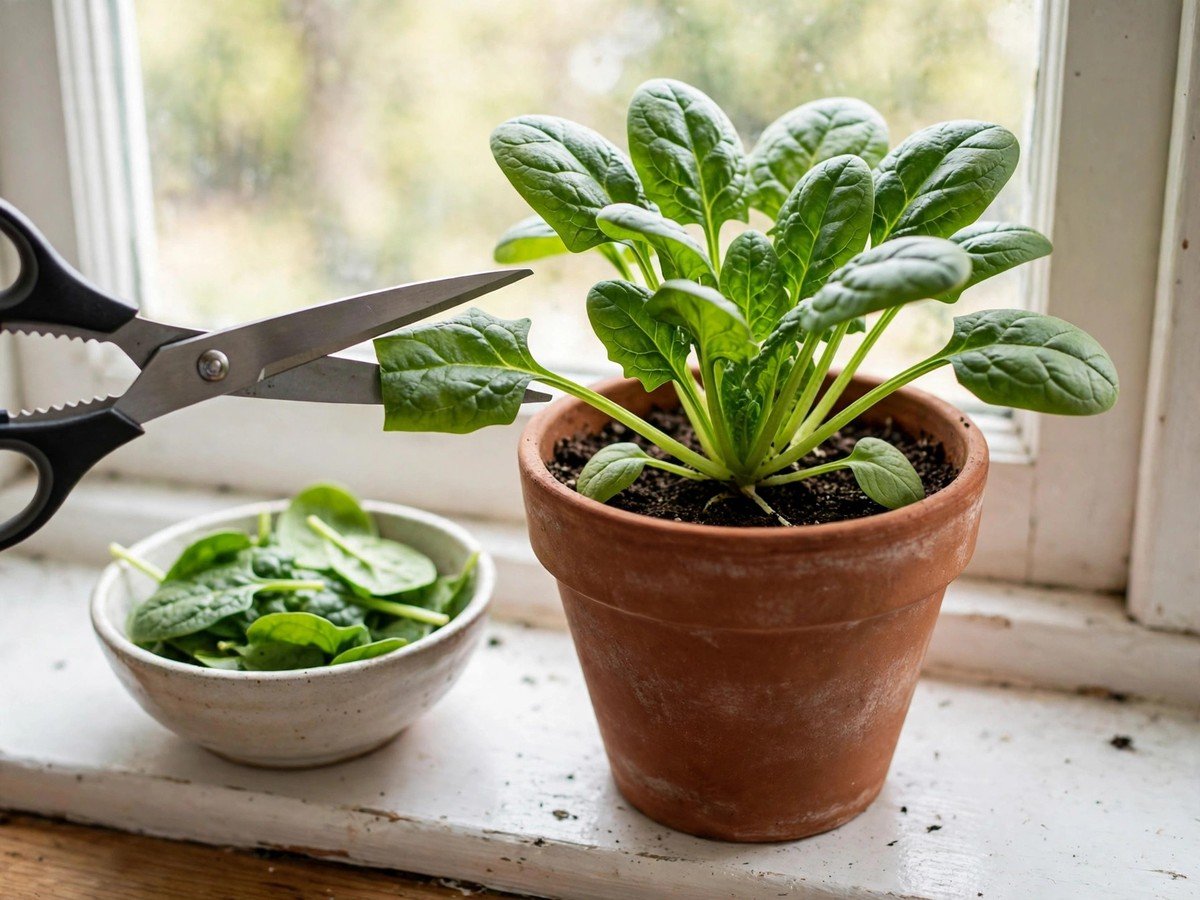
Then work the succession, because no single pot picks for long. Sow a small fresh pot every 2 to 3 weeks and the relay never stops: one pot being picked, one pot coming up, one pot just sown. A packet holds plenty of seed for repeated sowings, so the habit costs almost nothing. When a picked-out pot starts pushing a center stalk, it is finished. Pull it, and its replacement is already on the sill.
What Goes Wrong
Bolting. A tall stalk rises from the center and the leaves turn bitter. This is heat, drought, or both, and it cannot be reversed. Prevention is the cool spot, steady moisture, and a slow-bolt variety. Once it happens, pull the plant and lean on the next pot in the relay.
Leggy, pale seedlings. Thin stretched stems leaning hard toward the glass mean the light is too weak or too far away. Move the pot to your brightest sill or get it under an LED for the longer lamp day, and sow the next pot where the light is better rather than trying to rescue badly stretched seedlings.
Damping off. Seedlings keel over at the base and die in a soggy pot. It is a fungal problem that loves wet, still air and old mix. Use fresh mix, do not overwater, and let air move around the pot. The same soggy conditions sit behind mold on microgreens, and the fixes rhyme: less water sitting around, more air.
Bitter leaves on a healthy-looking plant. Bitterness arriving before any stalk shows is usually the early warning of bolting, often after a warm spell or a missed watering. Pick what you can the same day, move the pot somewhere cooler, and water it back to even moisture.
The short version: sow spinach in its final pot in your coolest bright spot, keep the mix moist, pick the outer leaves young, and sow the next pot every 2 to 3 weeks. Temperature decides how long each pot lasts. Everything else is details.
Growing Spinach Indoors FAQs
Can I grow spinach on a windowsill with no grow light?
Yes, if the sill is bright and cool. A south or west window that gives 4 to 6 hours of direct sun grows good baby leaves in spring and fall. In midwinter the same window may only deliver 3 to 4 hours, and growth slows to a crawl. That is when a small LED run for 12 to 14 hours earns its place. Keep the pot away from the radiator under the sill either way, because warm dry air is what ends the crop.
Why did my indoor spinach bolt so fast?
Heat is the usual reason, and dry soil is the second. Spinach reads a warm room and drought as a signal to flower, and once the center stalk starts rising the leaves turn bitter and picking is over. The RHS puts the happy range at 60 to 70°F and warns that hot, dry conditions trigger early flowering. Move the pot to your coolest bright spot, keep the mix evenly moist, and sow the replacement pot somewhere cooler.
Is spinach indoors different from lettuce indoors?
They share a shelf but not a temperament. Lettuce tolerates a normally heated room and keeps cutting for weeks. Spinach is fussier about heat, bolts sooner, and gives you a shorter run of pickings per pot, which is why succession sowing matters more with spinach. Our guide to growing lettuce indoors covers that crop’s routine. Grow both the same way and the spinach will quit first.
Can I start spinach in a small pot and transplant it later?
You can, but it usually backfires. Spinach grows a taproot and dislikes being moved, and the RHS notes that the disruption of transplanting makes it more prone to bolting. Sow the seed in the pot the plant will live in and thin in place instead. Crops like tomatoes and peppers are the opposite: they transplant happily and get their own starting routine.
Which spinach variety is best for indoors?
For baby leaves in small pots, Baby’s Leaf is bred for exactly this job and is ready fastest. Space is the reliable all-rounder, and Bloomsdale and Tyee are the picks when bolting is your main worry, because both were bred to hold longer before flowering. Check the packet for slow-bolt or bolt-resistant on the label if your room runs warm.
How long until I can pick, and how long does one pot last?
Baby leaves are ready to pick about 4 to 6 weeks after sowing, and the RHS says pickings can start in as little as a month in good conditions. Expect a few weeks of cut-and-come-again picking from one pot before the plant tires or bolts. A full-size plant takes 40 to 60 days and is not realistic on most windowsills, so plan on baby leaves and a fresh sowing every 2 to 3 weeks.
Sources and Further Reading
- Royal Horticultural Society, How to Grow Spinach (read directly for this guide): spinach does best in milder temperatures, ideally 15 to 20°C (60 to 70°F), and hot, dry conditions cause early bolting; lack of water also leads to premature flowering; spinach is usually best sown direct because transplanting makes it more prone to bolting; thin to 7.5 cm (3 inches); baby leaves can be picked in as little as a month; a container of at least 30 cm wide and deep keeps the mix from drying out too quickly.
- UC Master Gardener Program, UC ANR, Seed Germination Temperature and Timing (read directly for this guide): spinach seed germinates at soil temperatures from 32°F, with an optimum range of 65 to 75°F and a maximum of 75°F; emergence takes about 6 days at 68°F and about 12 days at 50°F, which is why cool soil stretches the germination window.
- Guide consensus, stated as consensus rather than a single source: a standard pot depth of 6 to 8 inches for full plants and 4 to 6 inches for baby leaves only; 4 to 6 hours of direct sun or 12 to 14 hours under LED as the two light measures guides use; sowing 1/2 inch deep; a germination window of 5 to 14 days; mix around pH 6.0 to 7.0; and the container varieties Baby’s Leaf, Space, Bloomsdale and Tyee.


3 Comments