
How to Grow Basil Indoors in Winter

Basil is a tropical plant that happens to live in a pot. That one fact explains almost every winter failure. The plant does not struggle because indoor growing is hard. It struggles because a heated house in November is cold at the glass, dark by late afternoon, and dry everywhere else. Fix those three things in the right order and the plant carries on.
The short answer for winter basil indoors is warm first, bright second, and pinch often. Get those right and you pick fresh leaves from November to spring. Expect a first small harvest about 2 weeks after a rooted cutting settles in, and 4 to 5 weeks from seed.
The winter numbers, at a glance:
- Temperature: above 50°F at all costs; 65 to 80°F is the happy range
- Light: 6 to 8 hours of direct sun, or an LED on for 12 to 14 hours a day
- Water: when the top inch of mix feels dry
- First pinch: at about 6 inches tall, with 2 to 3 sets of true leaves
- Feed: liquid feed at half label strength every 4 to 6 weeks
The Winter Deal: Warmth First, Light Second, Water Third
Most indoor herb advice starts with light. For basil in winter, that order is backwards. Basil comes from warm climates, and cold hurts it before darkness does. University of Illinois Extension notes that basil leaves can turn black when temperatures dip into the 40s, and leaf damage starts at about 50°F. A pot pressed against window glass on a January night can sit in that danger zone while the room thermostat reads a comfortable 70°F.
So warmth comes first. Aim for a room that stays between 65 and 80°F, and pull the pot a few inches back from cold glass at night. The plant can sit near the window all day and still spend the night somewhere safer.
Light comes second. Winter days are short and the sun sits low, so a plant that did fine on the same sill in August now gets a fraction of the light. Water comes third, because a slow plant in cool mix drinks slowly. Most winter basil deaths are really a cold sill plus a watering can that never got the memo.
Bring It In the Smart Way: Cuttings Beat the Whole Plant
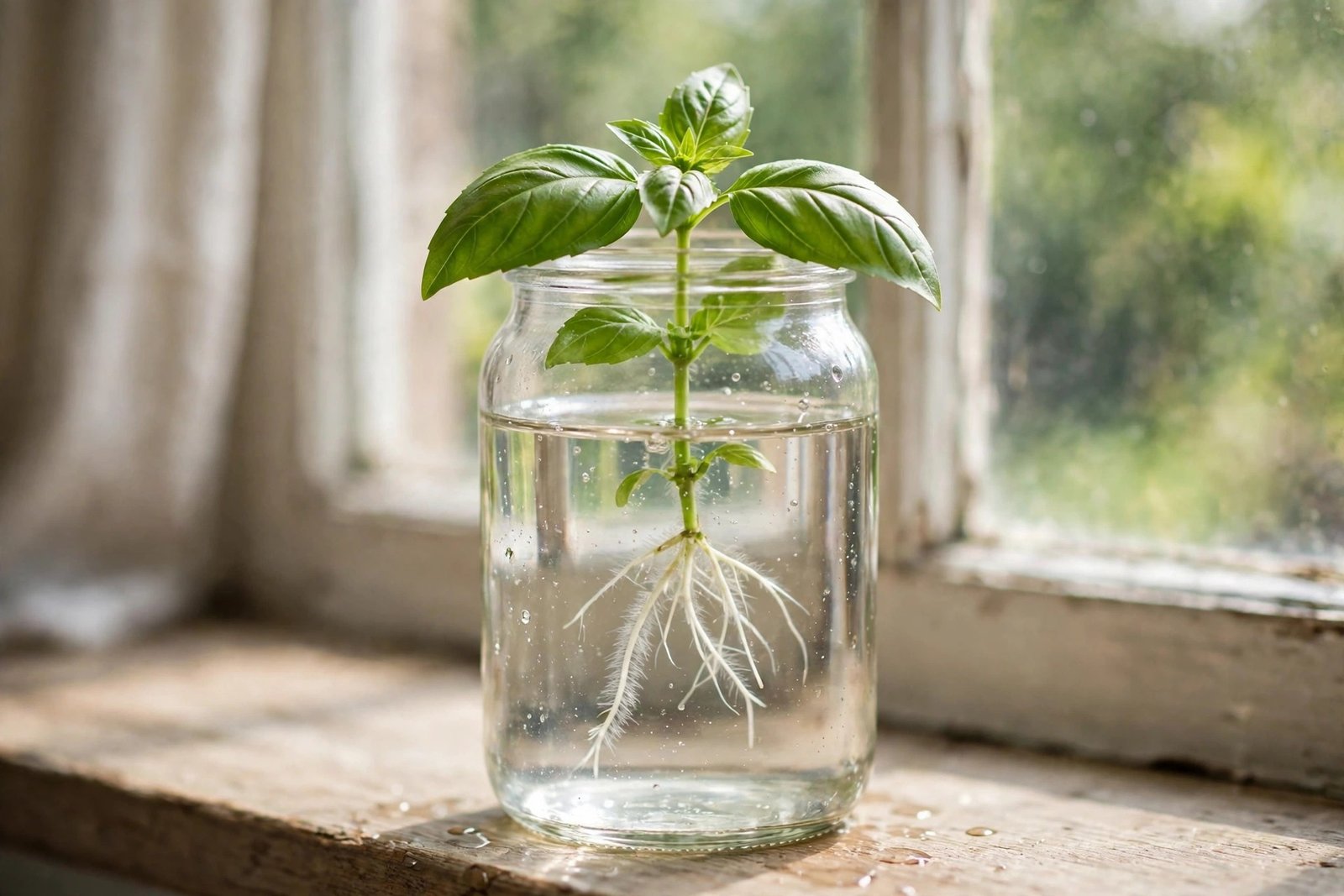
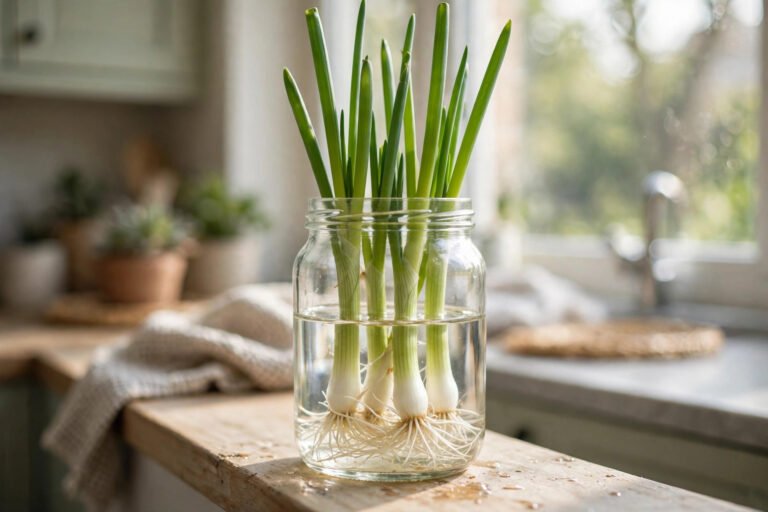
If you still have a healthy outdoor or store-bought plant, do not haul the whole thing inside. A mature plant brings in hitchhiking pests, tired roots, and a root ball that resents the move. Take cuttings instead. Snip a tip about 4 inches long from a healthy stem, just below a leaf pair. Strip the leaves from the lower half of the stem and set it in a jar of clean water on a warm, bright sill.
Softwood cuttings like this root in water in about 7 to 14 days. Once the roots look sturdy, pot the cutting into fresh mix and treat it like any young plant. You get a vigorous plant that is the same variety as the parent, and the pests and worn-out roots stay outside where they belong.
Before any plant material crosses the door, give it a wash. A Castile soap wash, followed by a neem spray, knocks off aphids and other passengers while they are still easy to deal with. Check the undersides of the leaves too. Ten minutes of washing at the door saves a winter of pest patrol.
The cutting route also wins on speed. Figure on a first light harvest about 2 weeks after a rooted cutting settles into its pot. Seed works fine, and it is the only route when no parent plant exists, but it is slower: 4 to 5 weeks to the same first small harvest.
The Setup: One Pot, Warm Air, Real Light
Basil indoors needs no special gear. It needs a decent pot, fresh mix, and a spot that is both warm and bright. Choosing the spot is the real decision. Our list of the best herbs to grow on a windowsill covers which sills suit which herbs, and basil wants the sunniest one you have.
| Part of the setup | What works in winter |
|---|---|
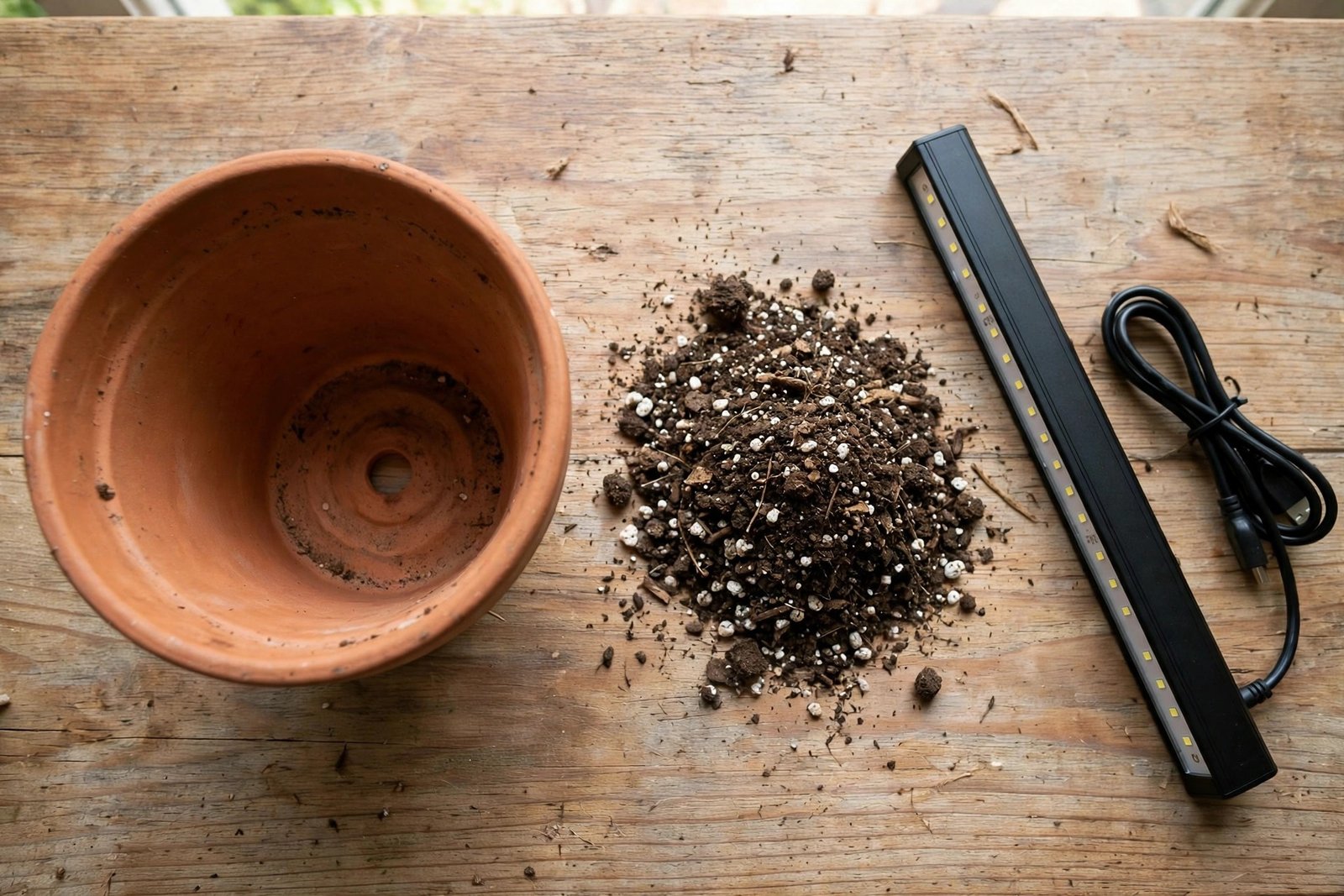
| Pot | A 6 to 8 inch pot with drainage holes. Terracotta is a good winter choice because it breathes and lets the mix dry evenly. |
| Soil mix | Fresh, fast-draining potting mix. Old garden soil stays soggy indoors and invites root trouble. |
| Light | A south-facing window giving 6 to 8 hours of direct sun, or an LED light run 12 to 14 hours a day. |
| Temperature | 65 to 80°F in the room, and never below 50°F at the glass. Move the pot back from the glass on cold nights. |
| Humidity | Basil is comfortable around 40 to 60 percent humidity, and heated winter air often drops below that. Grouping pots together helps hold moisture in the air around the leaves. |
Two habits keep the setup working. Rotate the pot weekly so every side of the plant takes a turn in the light, or one side stretches while the other sulks. And keep the light honest: our guide to how much sunlight indoor herbs need covers windows and grow lights in full, so this guide will not repeat its tiers here.
Watering in Winter: Less Than Summer
Basil still wants evenly moist mix in winter. It just wants it less often. Growth slows, the light is weak, and the mix stays wet far longer than it did in July. The reliable test is a finger: water when the top inch of mix feels dry to the touch. Watering on a fixed schedule, whatever the mix says, is one of the indoor herb garden mistakes that kills more plants than any pest.
Water at the base of the plant, never over the foliage. Clemson Extension’s basil guidance is direct on this point: wet leaves invite disease. Let the pot drain fully after watering, and never let it stand in a saucer of water. Drainage holes are not optional on an indoor pot.
This is where terracotta earns its keep. The porous clay lets the mix dry evenly between waterings, which makes winter overwatering much harder to do by accident. Plastic holds moisture longer, and in a cool room that can tip a pot from moist to soggy without any help from you.

Feed lightly while you are at it. University of Minnesota Extension suggests a liquid feed at half the label strength every 4 to 6 weeks for indoor basil. Ease off in the darkest weeks, when growth nearly stops. Feeding a stalled plant does it no favours.
Pinching Is the Harvest
Here is the heart of the whole guide. With basil, harvesting and pruning are the same act, and the act is a pinch. The University of Minnesota Extension basil guide gives the basic move: pinch or cut the stem tip just above a pair of leaves. Every picking you ever take from this plant should follow that one rule.
Start early. When the plant stands about 6 inches tall and carries 2 to 3 sets of true leaves, take the first pinch. Find the top of the main stem. Count down to the first strong pair of leaves below the tip. Snip the stem just above that pair and use the tip in the kitchen.
Now the good part. At the base of each leaf in that pair sits a tiny side bud. While the main tip was alive, those buds stayed asleep. Remove the tip and both buds wake up. Each one grows into a new branch, and each new branch ends in a tip you can pinch again. One stem becomes two, two become four. That is how a basil plant turns bushy instead of tall and bare.
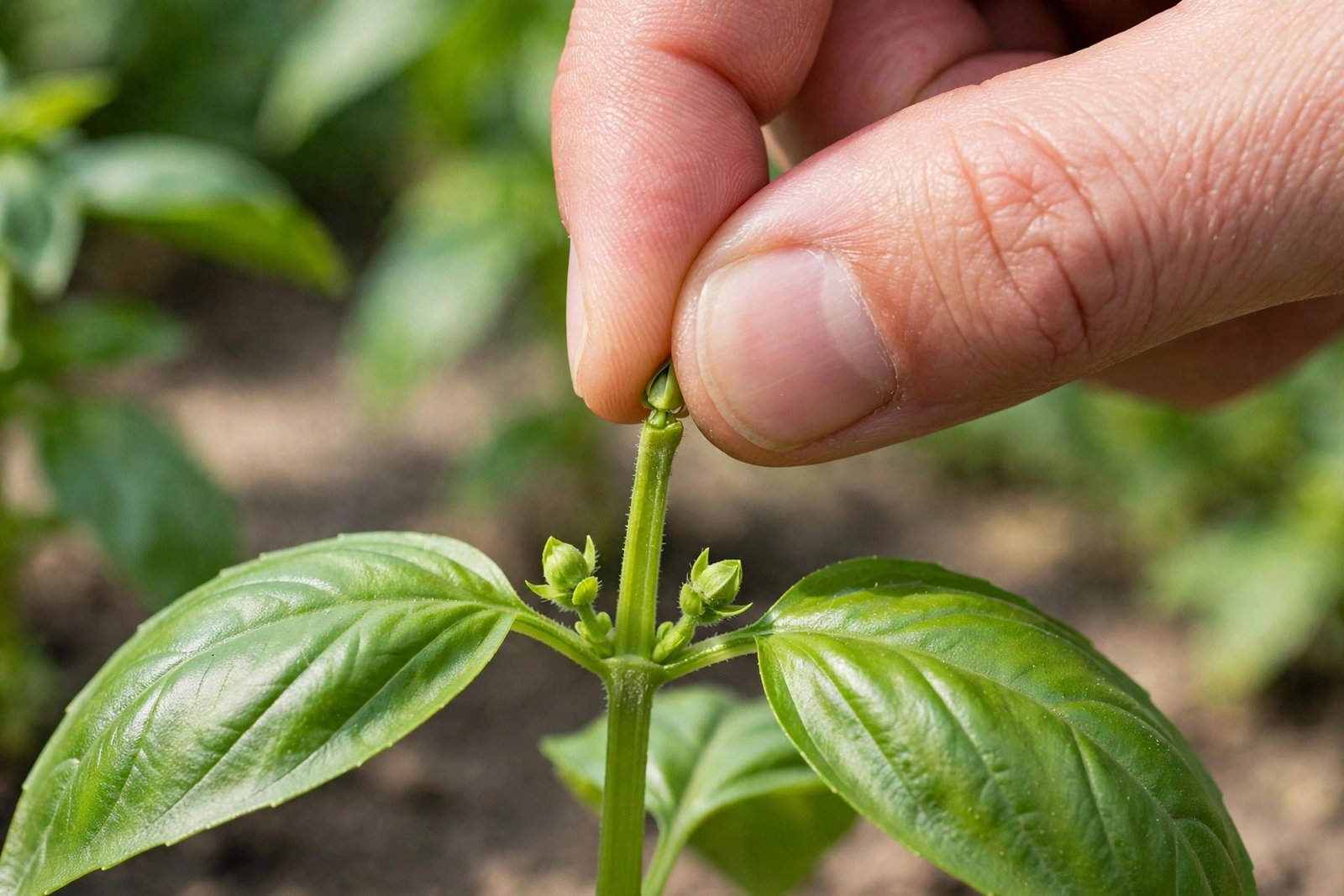
From then on, every harvest is a pinch. Take stems from the top and outside of the plant, always cutting just above a leaf pair. Repeat every 2 to 3 weeks while the plant is growing. Never take more than about one third of the plant at once, and always leave enough leafy stem behind for it to regrow. A plant picked this way stays compact and gives you small harvests all winter long.
Flower Buds: Pinch Them the Moment They Appear
Sooner or later the plant tries to flower. You will see a tight cluster of small buds forming at a stem tip, shaped differently from the flat leaf pairs below it. Pinch that cluster off the moment you spot it. Do not leave it for the weekend.
Penn State Extension explains why this matters so much: once basil flowers, the leaves turn bitter and the plant stops putting its energy into new leaves. Flowering is the plant finishing its life cycle. Every bud you remove buys more weeks of leaf production. If a stem gets away from you and blooms anyway, cut that stem back to a leaf pair below the flowers. Better still, take a cutting from a tip that has not flowered and start a fresh plant.

If It Turns Yellow Anyway
Even a well-run plant can shed a leaf or yellow a stem. Before anything else, check the two winter basics: is the pot touching cold glass at night, and is the mix staying wet for a week at a time? Those two causes cover most winter cases, and both are fixed by setup, not by treatment. If the pattern on your plant matches neither, work through our full guide to why basil leaves turn yellow, which matches the pattern to the cause and the fix. This guide grows the plant; that one troubleshoots it.
The short version of everything above: keep the plant warm, give it real light, water on the finger test, and pinch every time you pick. Basil rewards that small routine with fresh leaves all winter. Our indoor herb garden guide covers the rest of the herb shelf once this one pot is settled.
Growing Basil Indoors FAQs
Can basil live all winter indoors?
Yes, if it stays warm and bright. Basil is an annual, so no plant lives forever, but one kept above 50°F with strong light and regular pinching can produce from autumn into spring. Growth slows in the darkest weeks and picks up again as the days lengthen. When an old plant finally tires, root a fresh cutting from a healthy tip and carry on.
Why is my indoor basil leggy?
Legginess is the plant reaching for light it is not getting. Winter days are short, and a dim window rarely gives basil the hours of direct sun it wants. Move it to your brightest window or add an LED for 12 to 14 hours a day, then pinch the tips back. Pinching forces the side buds to grow, which fills the plant out again instead of letting it stretch.
How much basil can I pick at once?
About one third of the plant is the safe limit at any one picking. Always cut just above a leaf pair, so two new branches grow back from that point. Frequent light pickings beat one heavy harvest: the plant stays compact, and the leaves stay ahead of the flowers.
Should I start basil from seed or a cutting?
A cutting is faster, and it copies a plant you already like. Rooted and potted, it can give a first small harvest in about 2 weeks. Seed takes 4 to 5 weeks to reach the same point, but it is the only option when no parent plant exists, and it lets you run several pots at once. In midwinter, a cutting from a healthy plant is the surer bet.
Sources and Further Reading
- University of Minnesota Extension, Growing Basil in Home Gardens: 6 to 8 hours of bright light, indoor liquid feed at half label strength every 4 to 6 weeks, drainage holes required, and the pinch just above a leaf pair.
- Clemson Extension (HGIC), Basil factsheet: water at the base of the plant, never wet the foliage, and do not let pots stand in saucer water.
- University of Maryland Extension, Growing Kitchen Herbs Indoors: water when the surface to about an inch below is dry, and cut just above a leaf or pair of leaves.
- University of Illinois Extension: basil leaves suffer cold damage at about 50°F, with blackening as temperatures fall into the 40s.
- Penn State Extension: leaf flavour turns bitter once the plant flowers, and flowering stops new leaf production, so buds are pinched as they appear.


6 Comments