
How to Grow Cilantro Microgreens
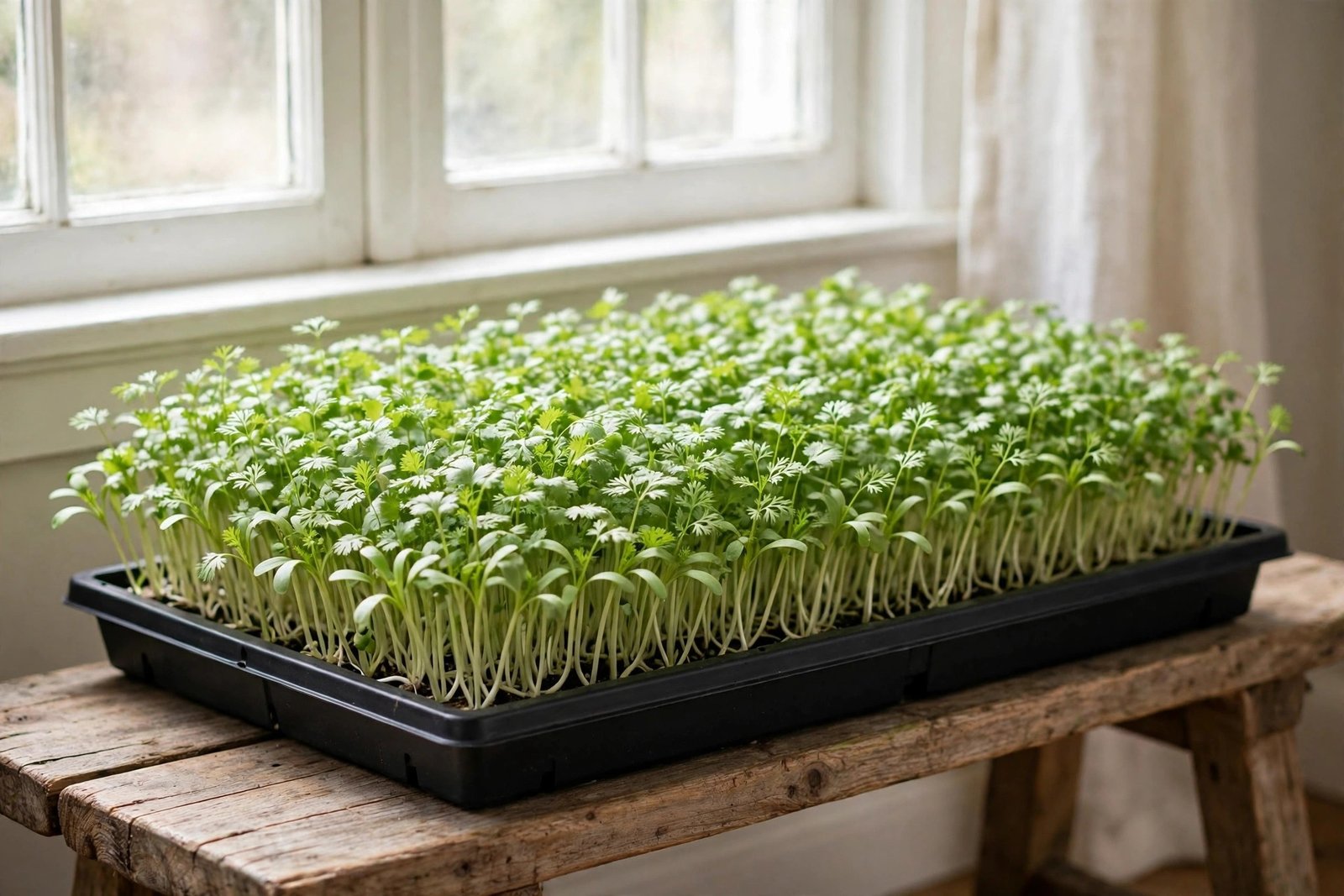
Cilantro microgreens are the slowest tray in this cluster, and it is better to know that on day one than on day ten. Where a radish tray is cut and done in 7 to 10 days, a cilantro tray runs 16 to 28 days. If you want fast, sow radish. This tray is the one you start for the flavour at the end of the wait.
One thing in plain words before anything else: this guide is about tray grown cilantro microgreens only. Growing cilantro as a full size potted herb is a different job, and it gets its own separate guide. Everything below is only what differs from the standard tray method. Even kale microgreens, the cluster’s other patient crop, finish a week or more before a cilantro tray gets going.
Split Seed Is the Whole Trick
Almost everything unusual about this crop traces back to the seed. What you buy as cilantro seed is coriander seed, and one whole seed is not one seed at all: the round husk is a little ball holding two seeds inside it. Sow it whole and the pair germinate on their own schedules, so the stand comes up uneven, and the empty husks cling to the leaves and have to be picked off by hand.
Split seed solves most of that before you sow. The husk is cracked open into its two halves, each half carrying one seed, so the seed goes down evenly, germinates evenly, and the hull problem largely disappears. The easiest route is to buy seed sold as split. If all you can find is whole seed, split it yourself: spread it on a board and roll a rolling pin or press a second board over it, just firmly enough to crack the husks. Gentle is the word. You are opening the ball, not grinding it.
In a split versus whole test run by Home Microgreens, the split tray had germinated well by day 4 under a weighted cover, while the whole seed tray lagged behind. Same seed, same tray. The only change was the split.
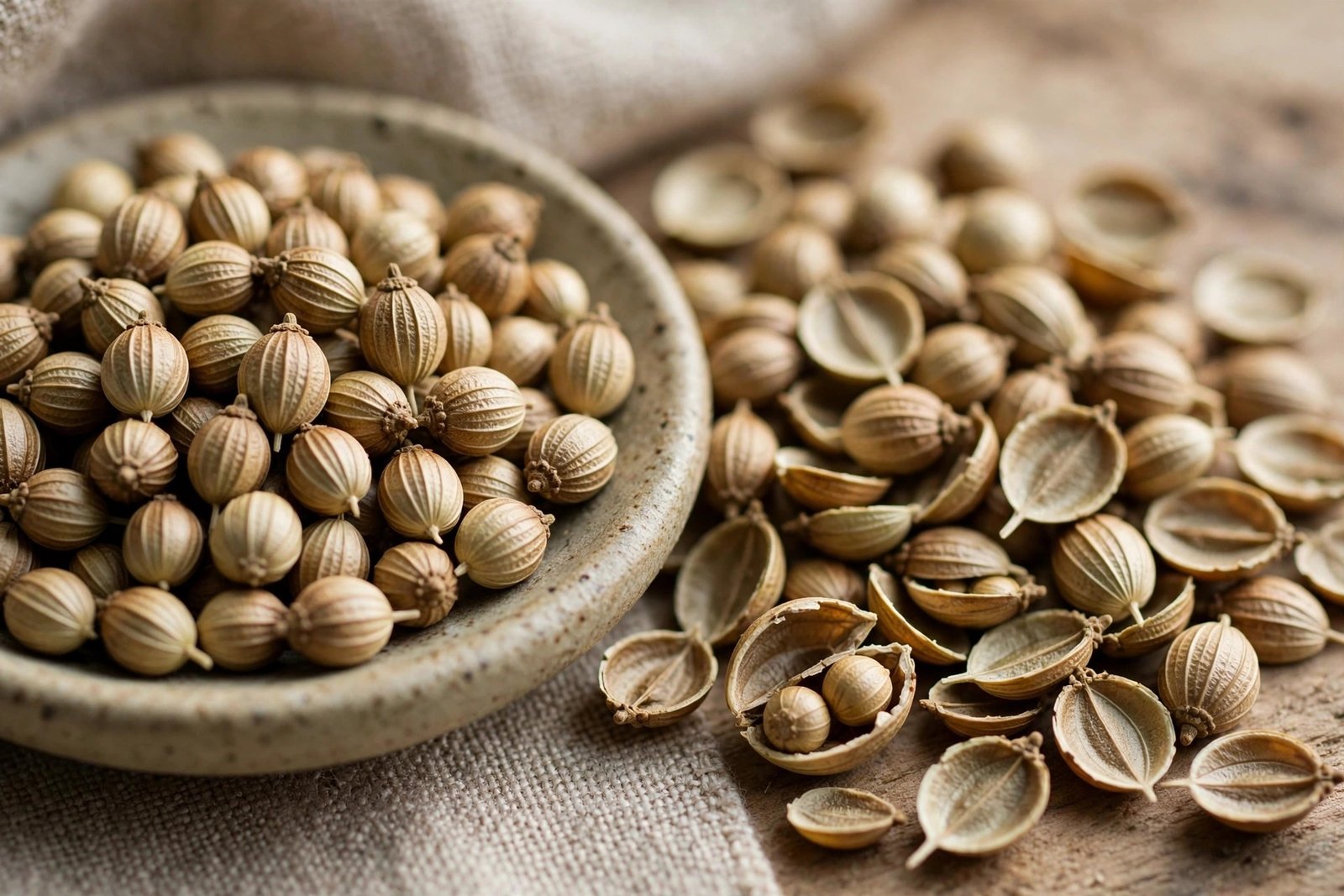
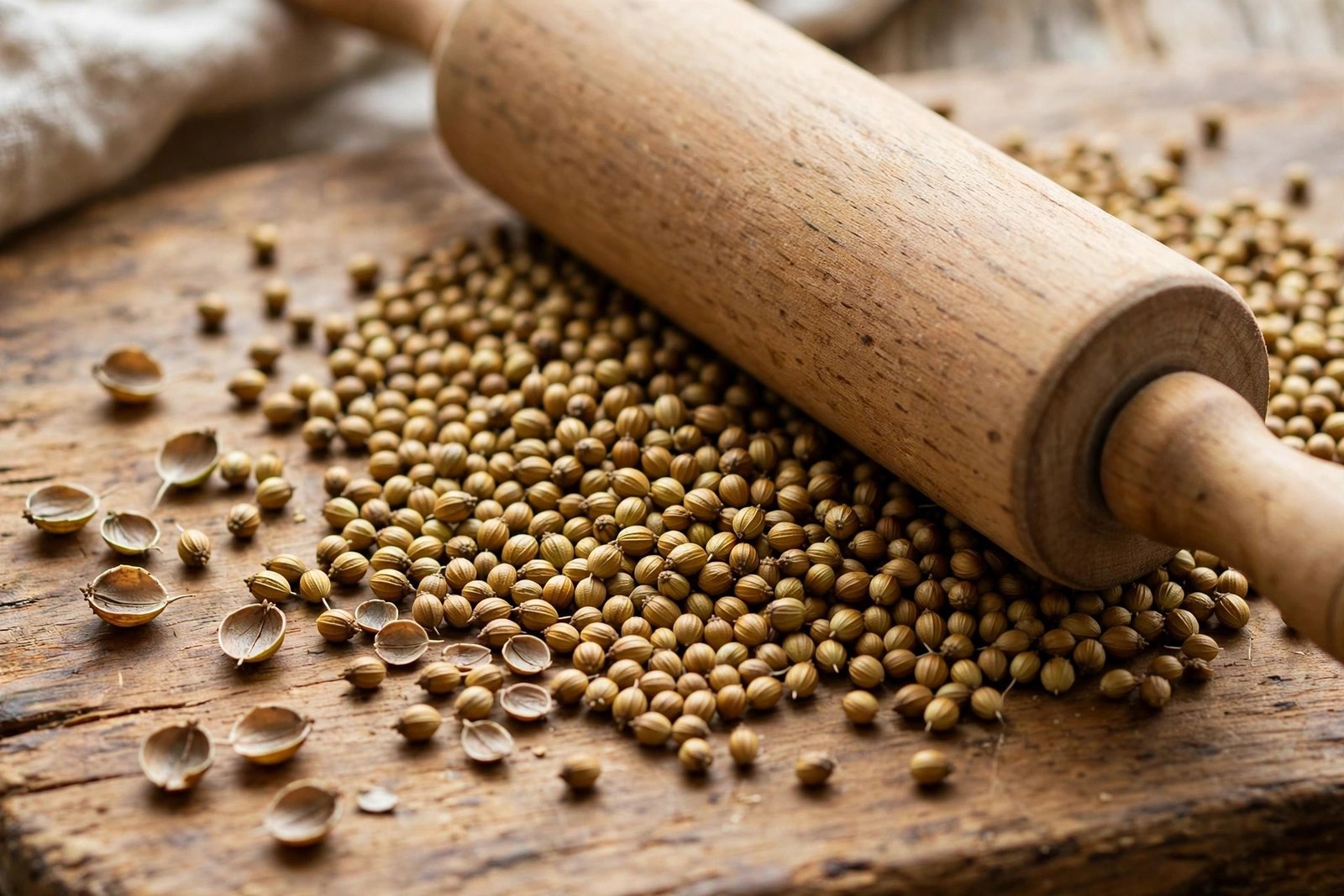
Soaking is where the guides part company a little, so here it is plainly. Microgreens & Sprouts, the anchor guide for this crop, soaks split seed for 8 to 12 hours and calls the soak optional. Microgreens Corner soaks whole seed for 4 to 8 hours and skips the soak for split seed entirely. Both routes grow the crop. If you soak, use those windows. If your seed is split, sowing it dry is a supported choice too, not a shortcut.
The Numbers for One Tray
The whole crop on one card, for a standard 1020 tray. Good sources disagree on this crop’s numbers more than on most, so the disagreements are printed in the table instead of being smoothed into one tidy figure.
| Cilantro, per 1020 tray | The number |
|---|---|
| Seed per tray | Start at 28 g (Utah State University Extension, via its published microgreens table). Grower guides cluster at 25 to 35 g, with 25 to 40 g at the heavy end |
| Soak | Optional. Split seed 8 to 12 hours, whole seed 4 to 8 hours, or sow split seed dry |
| Covered (blackout) | 5 to 7 days dark in the cilantro guides. Utah State’s table lists 7 to 14 days covered |
| Light after uncovering | Bright light, 12 to 16 hours a day |
| Harvest | 16 to 28 days. The early end is a seed leaf cut, the late end waits for true leaves |
The working rule: sow split seed at 28 grams, and keep the tray covered until most seed has sprouted, checking every day. The covered window and the harvest window both flex with the seed and the room, so judge the crop by what the tray shows you, not by the calendar alone.
Sow on the Standard Tray
Filling the tray, firming the medium and bottom watering all follow the standard method, which lives in our general guide to growing microgreens. Three things differ here.
First, the seed going down is split seed, weighed at the rate in the table. Second, broadcast it evenly, because clumps of seed become clumps of seedlings. Third, a thin cover of fine mix over the seed helps the last husks drop away as the seedlings push up. Then the cover goes on, and the long wait starts.
The Long Blackout: Where Most Trays Fail
After sowing, the tray sits covered and dark. The cilantro guides put the dark period at 5 to 7 days, and Utah State University Extension lists 7 to 14 days covered in its microgreens table. Part of that gap is definition: a weighted cover, a cover tray and a soil cover are not the same darkness. One instruction covers all of it. Keep the tray covered until most seed has visibly sprouted, and expect that to take the better part of a week, sometimes longer.
This is the step where most cilantro trays are lost, and the killer is rarely dramatic. The seed simply dries out. A week or more under a cover is a long time, and a tray that starts damp can be dry at the surface by day four. Check the tray every day. When the surface of the medium looks pale, mist it. Damp is the target, never waterlogged: a soaked tray trades the drying problem for a worse one.
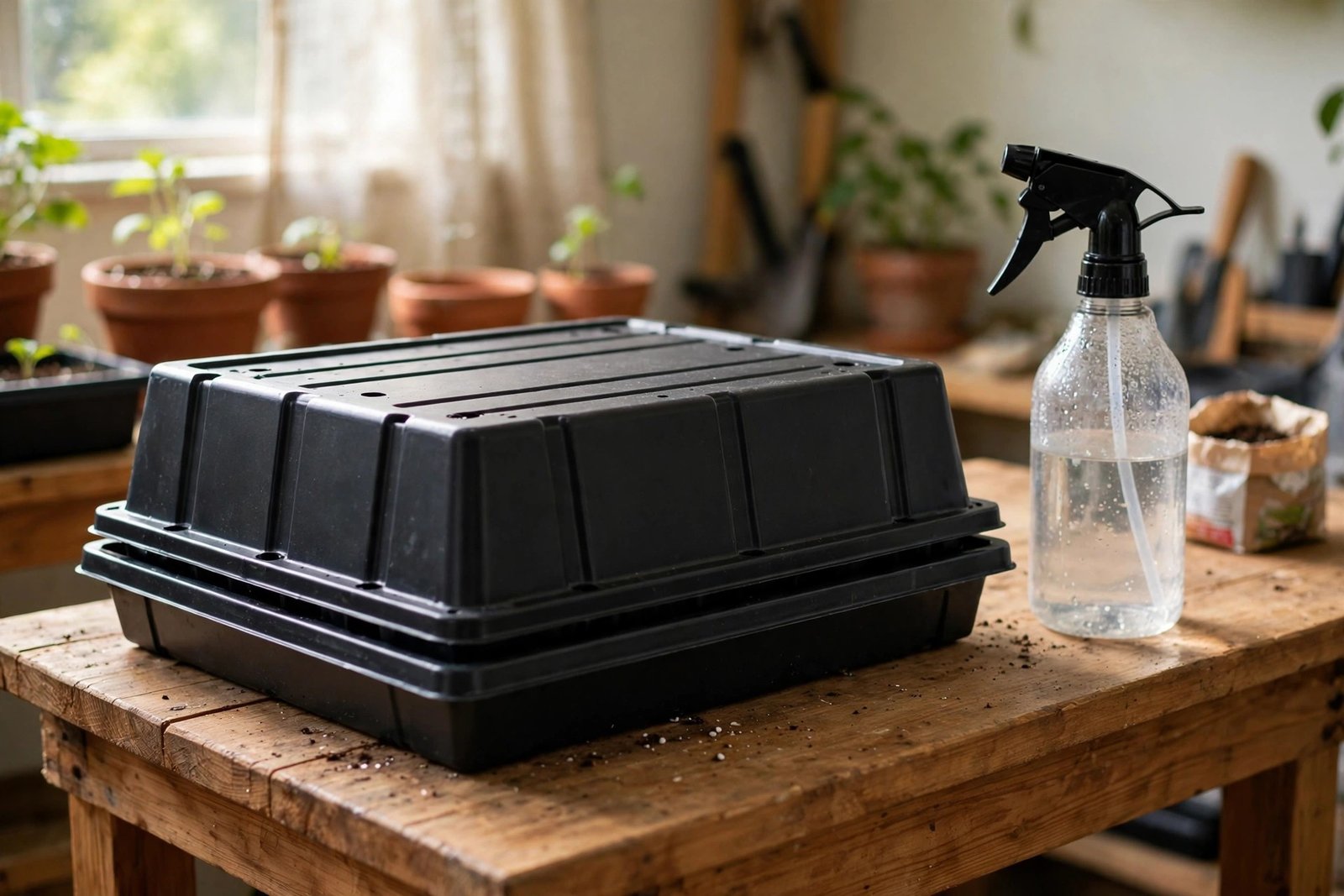
The worse one is mold, and cilantro invites it more than most crops in this cluster. A long, dark, damp period is exactly what mold likes too, which is why this crop wants airflow around the tray and a cover that keeps the dark in without sealing the tray airtight.
Light and Bottom Water After Uncovering
Once most seedlings are pushing at the cover, uncover the tray and move it straight into bright light, 12 to 16 hours a day. The seedlings will be pale from their week in the dark. That is normal, and they green up over the next few days. Weak light at this stage gives you the stretched, floppy version of an already slow crop, so the brightest spot you have is the right spot.
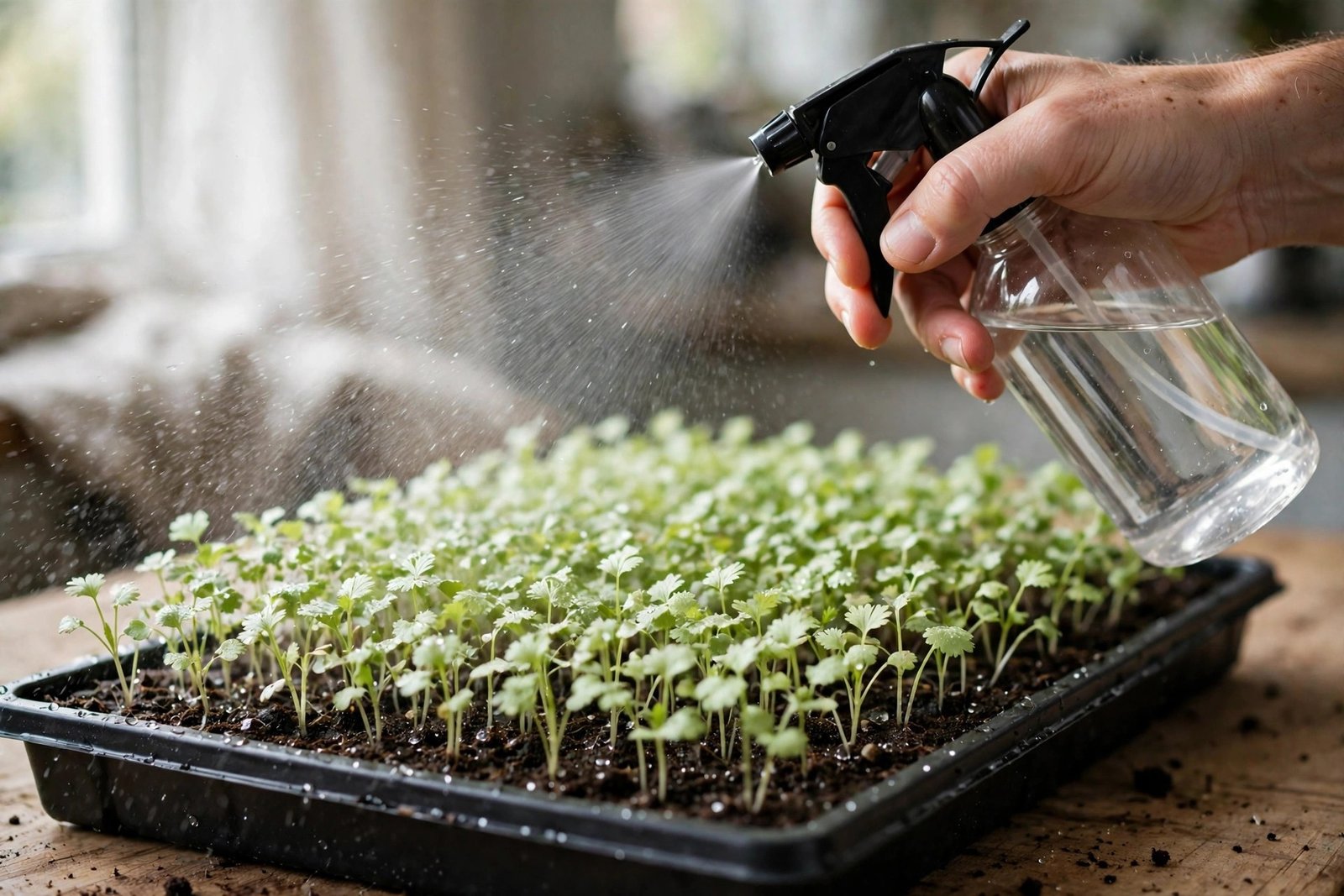
Water from below from here on, the standard bottom watering from the general guide. Top watering a tray this dense knocks seedlings flat and wets the leaves, and wet leaves in a slow, crowded tray invite trouble. Keep some air moving in the room as well: cilantro sits in its tray longer than any other crop here, and still, damp air runs through most of its failures.
The Cut: Pick Your Harvest
Cilantro gives you two harvests to choose from, and the disagreement about its timing is really these two harvests wearing one label. Cut early, as soon as the long seed leaves are fully open, and you get mild, gentle greens. The fast figures you will see quoted for this crop, 12 to 15 days and up, are that cut. Wait a few days longer, until the first feathery true leaves open, and the flavour becomes the classic cilantro taste most people grow it for. Utah State’s 21 to 28 day window is that true leaf harvest, and the 16 to 28 day range in the table runs from one end of the choice to the other.
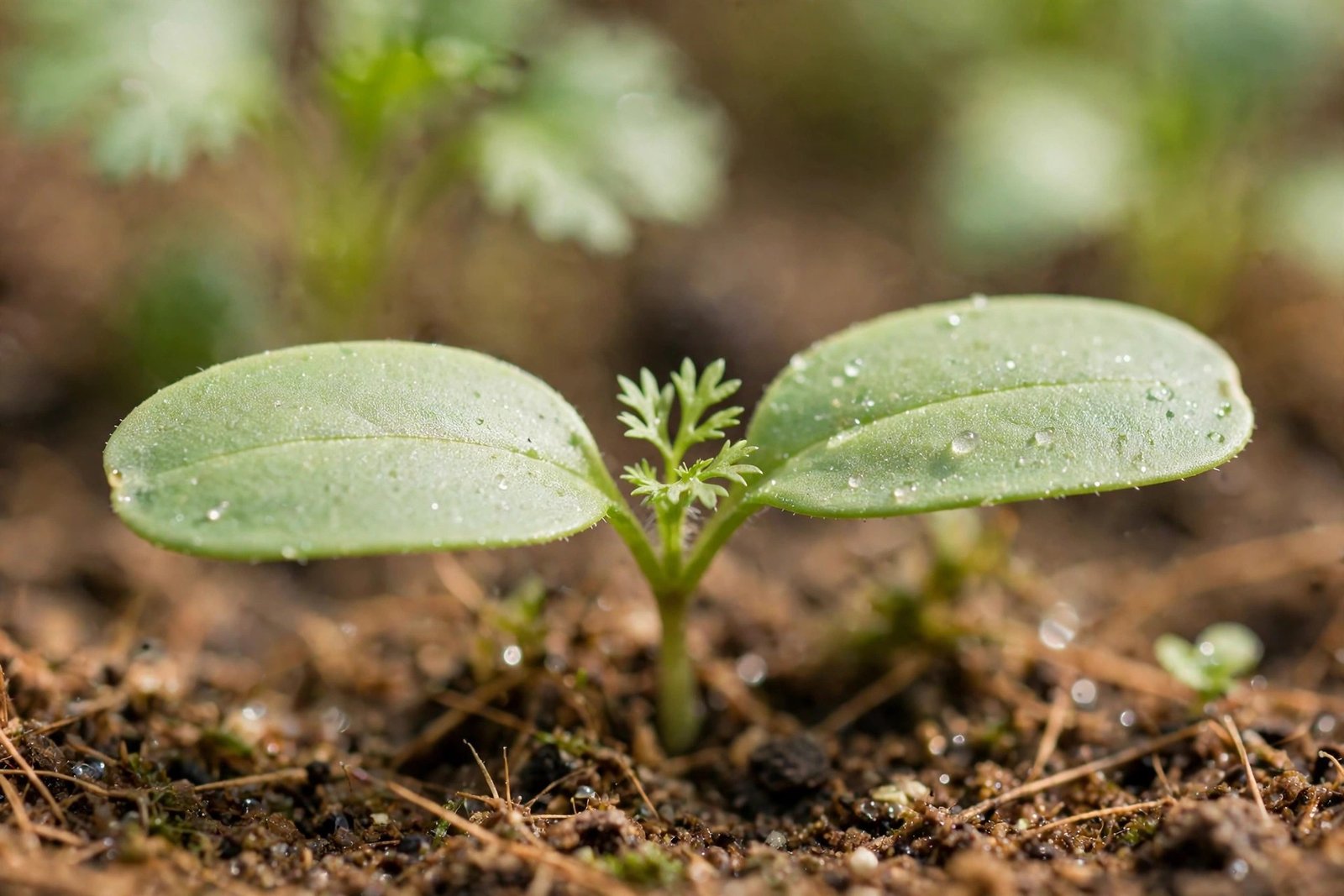
On the flavour map in our guide to the types of microgreens, cilantro sits at the strong, distinctive end, and that strength only arrives with the true leaves. Neither cut is wrong. Mild greens for eggs and salads, or the real cilantro hit for tacos and salsa, is a kitchen decision. Just make it on purpose.
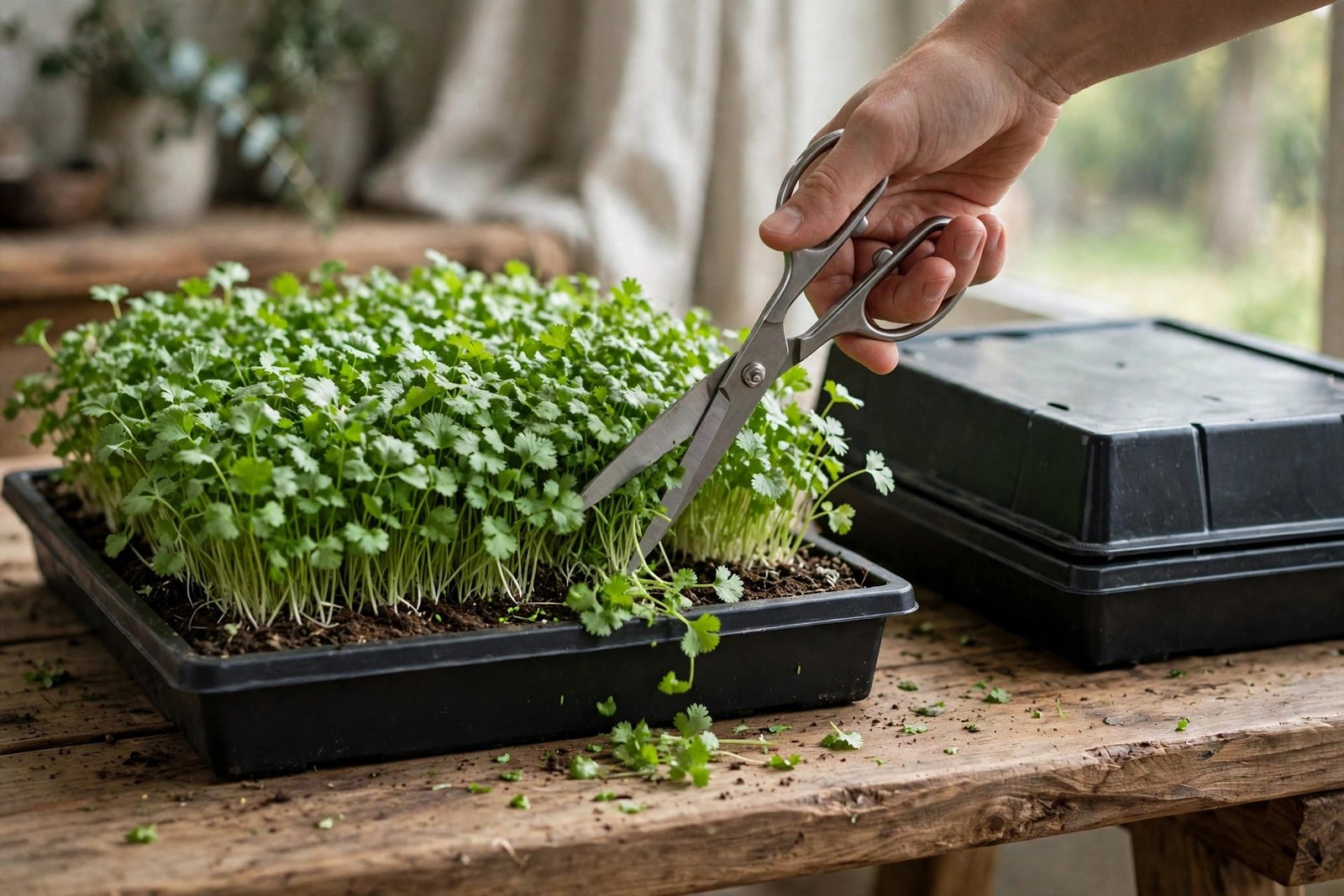
Cut with clean scissors just above the soil line. There is no regrowth and no second cut from a cilantro tray, because the growing point comes off with the harvest. One mercy: left growing, a tray stays usable well past its prime window, so a harvest that slips a few days is not a lost tray. For a steady supply, sow the next tray as the current one comes out of its blackout, and the trays overlap into a rotation.
What Goes Wrong
Mold
Cilantro’s long damp blackout makes it the mold watch crop of this cluster, and fuzzy growth is a diagnosis this guide will not make from a description, because root hairs and real mold look alike and the wrong call wastes the tray. Our guide to mold on microgreens owns that diagnosis, with the verdict table for telling the two apart. What this guide will say is only this: damp rather than wet, air moving, and a cover that is not sealed airtight are the conditions that keep the problem away in the first place.
Seed drying out in the blackout
The quiet failure. The tray looks fine from the outside while the surface of the medium dries under the cover, and seed that dries mid germination does not restart. The daily check exists for exactly this reason. If the surface looks pale, mist it that day, not tomorrow.
An uneven stand
Patches and crowds in the same tray usually trace back to the seed, not the sowing hand. Whole seed germinates in pairs on two schedules, and any seed broadcast in clumps grows in clumps. Split seed fixes the first cause. Weighing the seed and broadcasting it in two passes over the tray fixes the second.
The Short Version
Split the seed, or buy it split. Sow 28 grams on a standard tray, cover it, and keep it dark and damp, checking daily, until most seed has sprouted. Then bright light, bottom water, and patience. Cut at the open seed leaves for mild greens, or wait for the feathery true leaves for real cilantro flavour, in the 16 to 28 day window. Sow the next tray as this one leaves its blackout, and the slow crop stops feeling slow.
Frequently Asked Questions
Should I use split or whole cilantro seed?
Split, whenever you can get it. A whole coriander husk holds two seeds that germinate on different schedules, so whole seed gives an uneven stand and leaves husks clinging to the leaves. Split seed sows and sprouts evenly, and most of the hull problem goes away. If only whole seed is available, crack it gently yourself with a rolling pin or a flat board.
Do I have to soak cilantro seed before sowing?
No. Soaking is optional for this crop. If you soak, give split seed 8 to 12 hours or whole seed 4 to 8 hours. Split seed can also go in dry. What the seed cannot survive is drying out later, during the long covered period, so the daily check under the cover matters more than the soak.
Why are my cilantro microgreens so slow?
Because the crop is slow, most likely. Cilantro is the slowest tray in this cluster, running 16 to 28 days where radish finishes in 7 to 10. Whole seed, a cool room, and seed that dried out during the blackout all stretch the run further. If most of the tray sprouted and the seedlings look healthy, give it time and judge it by the true leaves, not by the calendar.
How long do cut cilantro microgreens keep in the fridge?
Cut cilantro keeps the way other delicate microgreens do when it goes in dry and cold, but the honest day ranges by crop and condition live in one place on this site. See our guide to how long microgreens last for the storage ladder and the paper towel method.
Is this the same as growing cilantro as a potted herb?
No, and the difference matters. This guide grows cilantro as a tray microgreen, cut young at the seed leaf or first true leaf stage. A potted cilantro plant is a full size herb with its own needs, including its habit of bolting, and it is a separate guide on this site. If you want leaves from a plant over weeks, that is the guide you want. If you want a tray of young greens in about a month, you are in the right place.
Sources
Microgreens & Sprouts, Cilantro Microgreens: How to Grow Them (split seed, optional 8 to 12 hour soak, 25 to 35 g per tray, dark and damp 5 to 7 days, light 12 to 16 hours a day, 16 to 28 days). Microgreens Corner, Cilantro Microgreens (two seeds in one husk, crush gently between two surfaces, whole seed soak 4 to 8 hours, no soak for split, mold caution). Utah State University Extension, Grow Your Own Microgreens, via its published microgreens table (28 g of cilantro seed per 1020 tray, 7 to 14 days covered, 21 to 28 days to harvest). Mars Vertical Farm microgreens guide, citing Mississippi State University Extension (cilantro grouped at about 16 to 25 days to harvest; split seed at 25 to 40 g per tray). Home Microgreens, Episode 002 split seed test (split seed germinated by day 4 under a weighted cover and was ready around day 15 to 18; whole seed lagged; a long usable window if left growing).

4 Comments