How to Grow Potatoes in Containers
You don’t need a vegetable garden to grow your own potatoes. A large pot, bucket, or grow bag can work well on a sunny patio or balcony. The key is giving each plant enough room, using a loose growing mix, and keeping the soil evenly moist.
This guide walks you through choosing a container, planting seed potatoes, hilling the stems, caring for the plants, and knowing when to harvest.
1. Choose the Right Container for Potatoes
Potato roots and developing tubers need room to grow. Choose a container based on its usable soil volume, depth, and drainage rather than its label alone. A purpose-made potato grow bag is convenient, but a suitable plastic pot or bucket can work too.
Large pots and buckets
Choose a sturdy, opaque container with generous drainage holes. A bucket is useful if you can move it safely when needed. Never use a container that traps water at the bottom.
Potato grow bags
Fabric bags allow excess water to drain and are easy to empty at harvest. They can also dry out faster than rigid pots, so check moisture regularly during warm or windy weather.
How big should a potato container be?
A practical starting point is a container holding 10–15 gallons, with a depth of at least about 14 inches. Plan on roughly 5 gallons of growing mix per plant. This gives you a simple way to decide how many seed potatoes to plant without overcrowding them. If you are planning a mixed container garden, our guide to vegetables that grow well in pots can help you compare other options for the same space.
| Container capacity | Suggested number of plants | What to check |
|---|---|---|
| 5 gallons | 1 plant | Use a deep container with good drainage. |
| 10 gallons | About 2 plants | Leave enough space between seed pieces. |
| 15 gallons | About 3 plants | Check the container’s shape and usable soil volume. |
These are practical starting estimates, not strict limits. A narrow or unusually shaped container may need fewer plants. A deeper container also gives you more room to add growing mix as the stems develop.
Before planting, make sure excess water can escape through holes in the bottom. If you use a bucket, drill drainage holes before filling it. Keep the container raised slightly if its base sits flat against a surface that could block those holes.
For more container-growing advice, see our guide to the best vegetables to grow in pots.
2. Choose and Prepare Seed Potatoes
Use certified seed potatoes from a reputable garden center or seed supplier. Despite the name, seed potatoes are small tubers used to grow new plants, not botanical seeds.
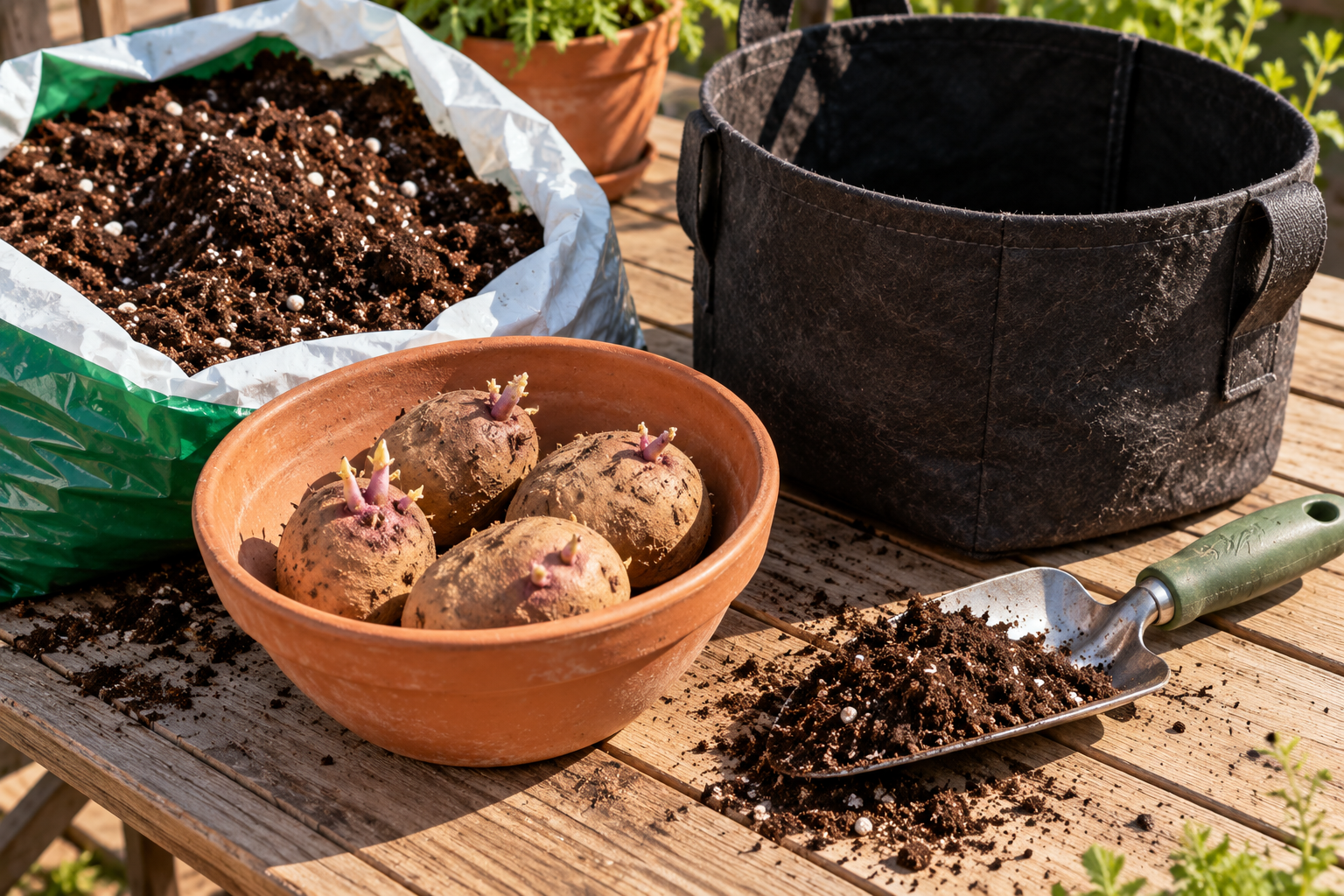
Choose a variety suited to your climate and the kind of harvest you want. Early varieties can provide new potatoes sooner, while mid- or late-season varieties may keep developing tubers for longer. Container space, sunlight, and growing-season length still affect the final harvest.
Can you plant potatoes from the grocery store?
It’s possible for a grocery-store potato to sprout and grow, but it may not be certified disease-free, and some potatoes are treated to slow sprouting. Certified seed potatoes offer a more reliable starting point for a planned crop.
Should you sprout seed potatoes before planting?
Pre-sprouting, often called chitting, is optional. Place seed potatoes in a cool, bright, frost-free spot until short, sturdy shoots appear. Avoid letting the shoots become long and fragile because they can break during planting.
If a seed potato is large, you can cut it into pieces, leaving at least one healthy eye on each piece. Let the cut surfaces dry for a day or two before planting. Small seed potatoes can usually be planted whole. Follow the supplier’s instructions for your variety.
3. Prepare a Loose, Well-Draining Growing Mix
Ordinary garden soil often becomes dense in containers. That can restrict root growth and make it harder for excess water to drain. Instead, use a quality potting mix designed for containers. The mix matters for other edible plants, too, so you can use the same principles when choosing a potting mix for vegetables in containers.
A practical starting blend is roughly equal parts potting mix and mature, well-rotted compost. This follows guidance from the University of New Hampshire Extension and The Old Farmer’s Almanac. Adjust if your potting mix already contains substantial compost or fertilizer.
- Don’t fill the container with heavy garden soil alone.
- Don’t use fresh manure, which can damage plants and create other growing problems.
- Don’t pack the mix down hard. Keep it loose enough for roots and water to move through it.
If you’re unsure how to choose ingredients, read our guide to the best soil mix for vegetables in pots. Use a mix that drains freely but still holds enough moisture for growing roots and tubers.
4. How to Plant Potatoes in a Container
Plant after the soil and weather suit your potato variety. In cold-winter areas, wait until the danger of hard frost has passed before keeping young plants outdoors. Your local planting calendar is more useful than a single nationwide date.
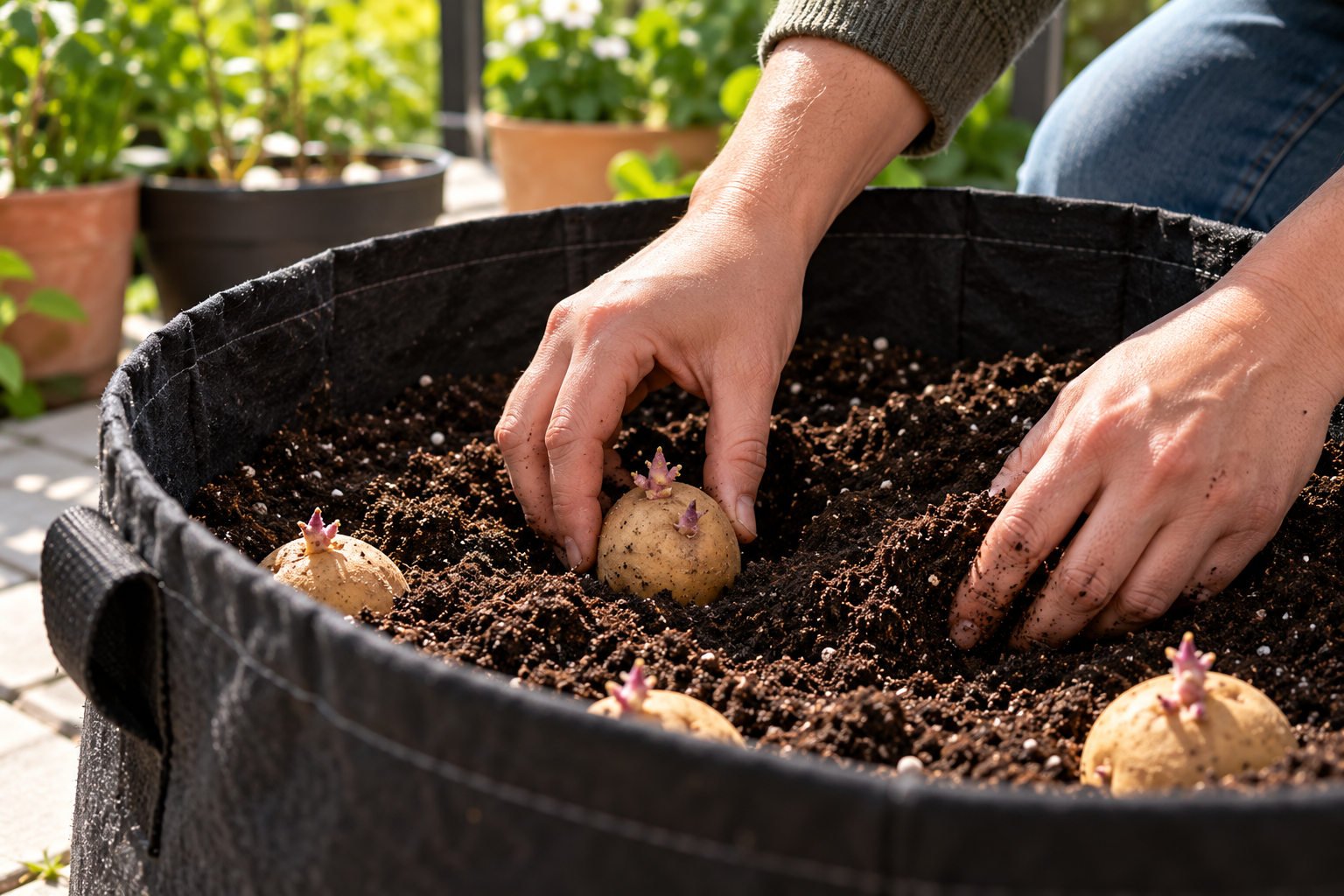
Step 1
Add the first layer of mix
Cover the bottom of the container with about 4–6 inches of prepared growing mix. Make sure the drainage holes remain clear.
Step 2
Position the seed potatoes
Place the seed potatoes or prepared pieces on the mix with their strongest shoots or eyes facing upward. Space them apart rather than clustering them together. Follow the capacity guide above and leave room around each plant.
Step 3
Cover and water
Add about 3–4 inches of mix over the seed potatoes, adjusting to keep them covered. Water gently until the mix is evenly moist. Let excess water drain away.
Step 4
Put the container in a sunny location
Choose a spot that receives around 6–8 hours of direct sunlight daily. A sunny patio can work well, but remember that a container on a hot surface may need more frequent watering.
Mark the planting date on a plant label. This simple habit helps you track growth and estimate when to begin checking for new potatoes or a mature crop.
5. How to Hill Potatoes in Containers
Hilling means adding more growing mix around the lower stems as the potato plants grow. In a container, you can do this gradually instead of building a large mound in a garden bed.
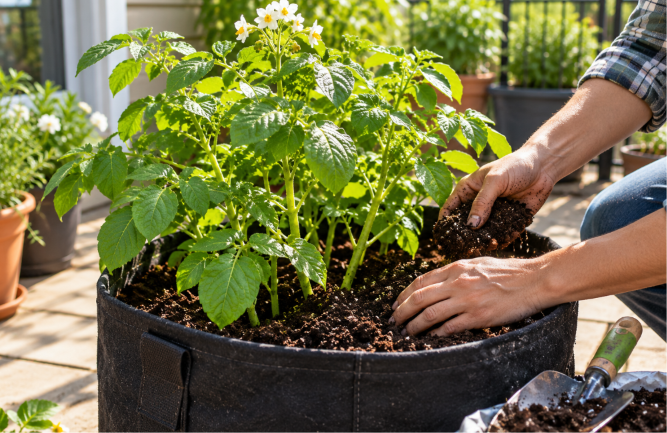
- Wait until the green shoots have grown several inches above the surface.
- Add a few inches of mix around the base of the stems.
- Keep the upper leaves exposed so the plant can continue receiving light.
- Repeat as the stems grow, stopping when the container is nearly full and the foliage remains above the mix.
Don’t bury the entire plant at once. Leave a healthy portion of leafy growth exposed at each stage. The goal is to keep developing tubers covered and provide enough growing medium around the underground stems.
Keep the mix below the rim so watering doesn’t wash it out. If you use a fabric grow bag, gradually unroll its sides as the plant grows, where the bag design allows it.
6. Watering, Sunlight, and Fertilizer
How often should you water container potatoes?
Check the growing mix regularly rather than watering on a rigid schedule. When the top 1–2 inches feel dry, water thoroughly until a little water drains from the bottom. Then let excess water escape.
Potatoes need steady moisture while tubers develop, but waterlogged mix can damage roots and encourage rot. Containers may dry quickly in hot, sunny, or windy conditions, so check them more often during those periods. If you grow several edible plants in pots, use the same habit of checking the top layer of mix rather than watering every container on an inflexible schedule.
How much sunlight do potatoes need?
Aim for about 6–8 hours of direct sunlight each day. Plants growing in insufficient light may become weak and produce a smaller crop. If you have only a partly sunny balcony, consider whether another location receives more direct sun before planting.
When should you fertilize potatoes?
Start with a suitable potting mix and follow its label to understand whether it already contains fertilizer. Once plants are established, use a balanced fertilizer intended for edible container crops, following the product’s application rate.
Avoid overfeeding, especially with high-nitrogen fertilizer. Too much nitrogen can encourage leafy growth at the expense of tuber development. More fertilizer is not automatically better.
Keep the container healthy
- Check drainage holes after heavy watering.
- Inspect leaves regularly for yellowing, spots, or insect damage.
- Keep developing tubers covered with mix.
- Water the growing medium rather than repeatedly soaking the foliage.
7. When and How to Harvest Container Potatoes
Harvest timing depends on the variety and whether you want small, tender new potatoes or a mature crop for storage. The plant’s growth stage is a better guide than an exact number of days.

For new potatoes
Some early varieties can provide small potatoes while the plant is still growing. Gently check the mix near the edge of the container and remove a few only if the plant is established enough to tolerate it.
For a mature harvest
Wait until the foliage yellows and dies back naturally, following the variety’s maturity guidance. This is a common sign that the main crop is ready to harvest.
How to empty a potato grow bag or pot
- Choose a shaded spot and spread out a tarp or large tray.
- Tip the container carefully onto the tarp, or remove the mix by hand if the container is heavy.
- Search through the mix gently and collect the tubers without cutting or bruising them.
- Brush off loose, dry soil. Avoid washing potatoes until you’re ready to use them.
- Keep harvested potatoes away from light while preparing them for storage.
Handle the harvest gently. Store sound, mature potatoes in a cool, dark, well-ventilated location appropriate for the variety. Keep damaged or green potatoes separate; don’t eat potatoes that are extensively green or taste bitter.
8. Common Problems When Growing Potatoes in Containers
| Problem | Possible cause | What to do |
|---|---|---|
| Yellow or wilting leaves | Water stress, disease, or natural maturity | Check moisture, drainage, and the plant’s stage before changing care. |
| Very leafy growth but few potatoes | Excess nitrogen, limited light, or unsuitable conditions | Review fertilizer use, sunlight, variety, and watering consistency. |
| Soft or rotting tubers | Waterlogged mix or disease | Check drainage and avoid keeping the container saturated. |
| Green patches on potatoes | Tubers exposed to light | Keep developing potatoes covered. Discard potatoes that are extensively green or bitter. |
| Small harvest | Crowding, short growing season, poor light, or inconsistent care | Give each plant enough growing mix and review the variety’s growing requirements. |
If a plant develops spreading dark lesions, severe wilting, or unusual decay, don’t assume watering is the only issue. Compare the symptoms with a trusted local extension service before treating the plant.
Frequently Asked Questions
Can you grow potatoes in a 5-gallon bucket?
Yes, provided the bucket is deep enough and has good drainage. A 5-gallon bucket is best treated as a starting point for one potato plant rather than several crowded plants. A larger container offers more room for growing mix.
How deep should a container be for potatoes?
A container at least about 14 inches deep is a practical starting point, with 10–15 gallons of capacity commonly recommended. The container must also have sufficient width, drainage, and room for additional mix as the plant grows.
How many potatoes can you plant in a 10-gallon container?
Start with about two seed potatoes in a 10-gallon container, using roughly 5 gallons of growing mix per plant. Adjust for the container’s shape, the variety, and the available growing depth.
Do potatoes need to be hilled in grow bags?
Adding mix around the lower stems as they grow helps keep developing tubers covered. In a grow bag, add mix gradually and leave the upper leaves exposed rather than burying the whole plant.
Can you use regular garden soil in a potato container?
It’s usually better to use a quality container potting mix. Garden soil can compact in a pot and may drain poorly. Mixing potting medium with mature compost can provide both drainage and nutrients.
How long does it take to grow potatoes in containers?
It depends on the variety and conditions. Some early varieties produce new potatoes sooner, while mature crops may take several months. Watch the plant’s development and check the seed supplier’s maturity guidance rather than relying on one fixed timeline.
Why are my container-grown potatoes small?
Possible causes include overcrowding, inadequate sunlight, inconsistent moisture, unsuitable fertilizer use, or harvesting too early. Review each factor before assuming the container itself is the problem.
Can you grow potatoes in containers on a balcony?
Yes, if the balcony gets enough direct sunlight and can safely support the weight of the container and wet growing mix. Use a container with drainage and protect the surface below from excess water.
Your Container Potato Checklist
- Choose an opaque container with drainage holes.
- Allow about 5 gallons of growing mix per seed potato.
- Use certified seed potatoes from a reputable supplier.
- Fill the container with a loose, well-draining potting mix.
- Provide around 6–8 hours of direct sunlight.
- Add mix gradually as the stems grow.
- Keep the soil moist without leaving it waterlogged.
- Harvest according to the variety and the plant’s maturity.
With the right container and steady care, you can grow potatoes in a small outdoor space without needing a traditional garden bed.
Related Container Gardening Guides
- Best Vegetables to Grow in Pots — compare edible crops for patios, balconies, and other small spaces.
- Best Soil Mix for Vegetables in Pots — learn how to choose a suitable growing medium for container vegetables.
Further Reading and Gardening References
These university extension and gardening references provide additional guidance on container selection, seed potatoes, growing mix, hilling, watering, and harvesting.
- University of New Hampshire Extension: What is the best way to grow potatoes in containers?
- The Old Farmer’s Almanac: Growing Potatoes in Containers
- University of Maryland Extension: Growing Potatoes in a Home Garden
Growing recommendations can vary by variety, climate, container shape, and growing conditions. Follow the seed supplier’s instructions and local gardening guidance where they differ.