How to Grow Strawberries in Containers for a Better Harvest
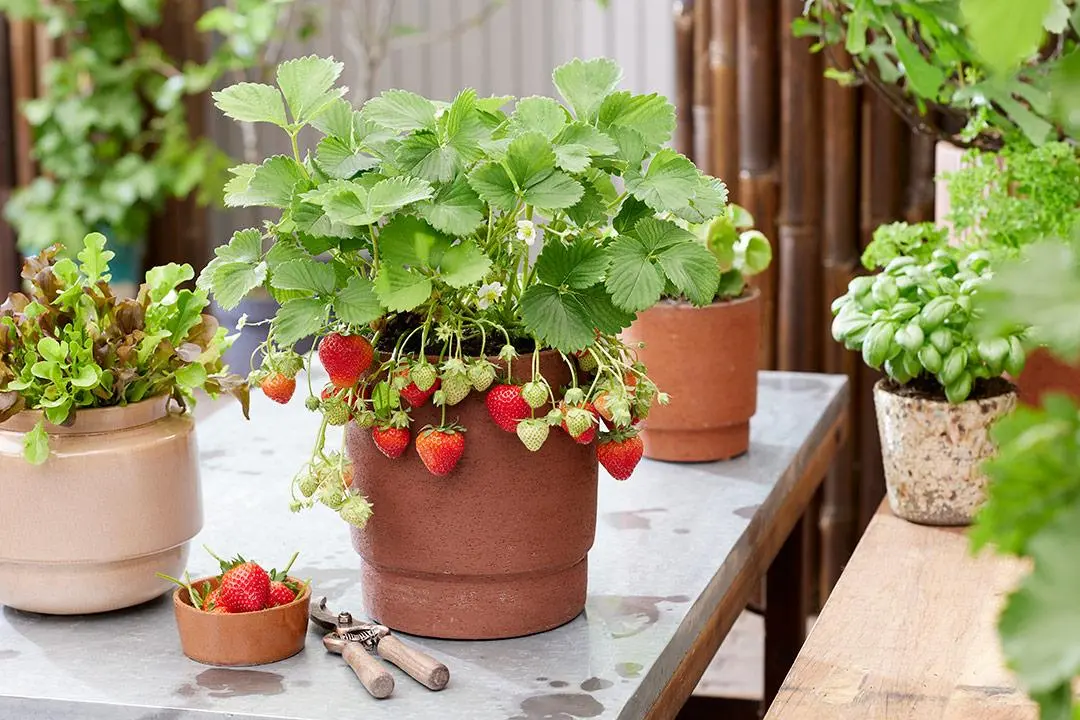
You don’t need a backyard to grow fresh strawberries. A sunny balcony, patio, porch, or small outdoor space can work if you choose the right plants and give their roots enough room. If you’re planning a compact growing area, our guide to balcony vegetable gardening in an apartment has more ideas for using limited space.
This guide walks you through choosing strawberry plants, selecting a pot, planting at the correct depth, and caring for your crop. You’ll also learn why strawberry plants sometimes produce lots of leaves but very few berries—and what you can do about it.
Quick answer: What do strawberries need to grow in pots?
Start with a container that has drainage holes and is roughly 12 inches wide or larger for a small group of plants. Use a quality potting mix, place the container where the plants receive at least six hours of direct sunlight, and keep the root zone consistently moist without leaving it waterlogged. Set each plant’s crown at the soil surface, not underneath it. Day-neutral strawberries are often a practical choice for containers because they can produce fruit over a longer season when conditions suit them.
1. Choose the Right Strawberry Variety
Strawberries fall into three common groups: day-neutral, everbearing, and June-bearing. They can all grow in containers, but they don’t produce fruit in the same way. Choose according to how you want to harvest and how much room you have for runners.
| Strawberry type | Typical fruiting pattern | Best fit |
|---|---|---|
| Day-neutral | Can flower and fruit repeatedly through much of the growing season when temperatures are suitable. | A strong starting choice for pots, patios, and small-space gardens. |
| Everbearing | Often produces two main crops, commonly one earlier and another later in the season. | Growers who prefer more than one harvest period. |
| June-bearing | Usually produces one concentrated crop over a relatively short period. | Gardeners who want a larger seasonal harvest and can manage the variety’s runners. |
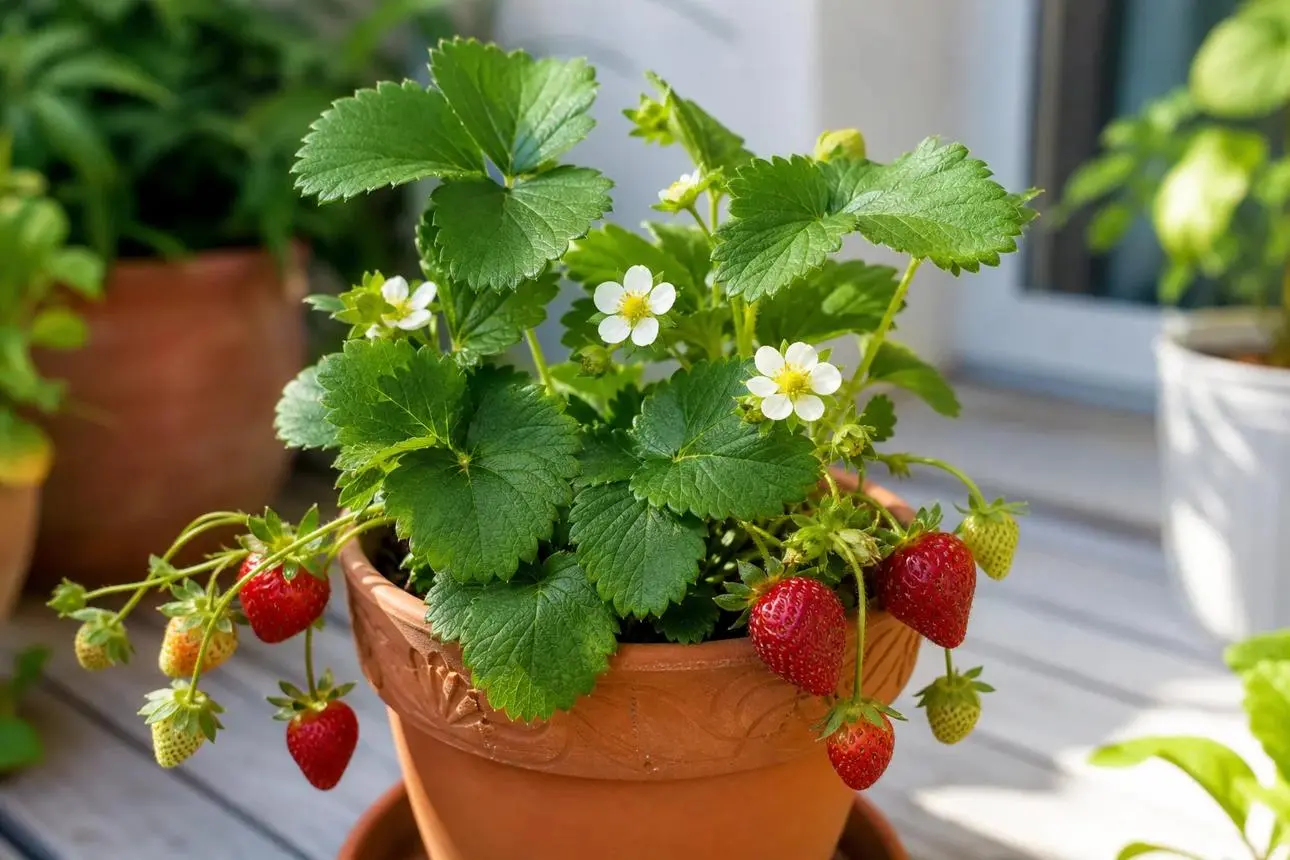
For a first container garden, look for a day-neutral cultivar recommended for your region. Varieties such as ‘Albion’ and ‘Seascape’ are examples to research, but availability, hardiness, flavor, and performance vary by climate. Ask a reputable nursery or your local university extension service which cultivars perform well where you live.
One naming detail can cause confusion: some sellers use the term “everbearing” loosely for day-neutral plants. Check the cultivar name and its growing description instead of relying on the label alone. The Oregon State University Extension strawberry guide explains the differences between these groups.
2. Pick a Container With Enough Room
Strawberry roots need space, air, and steady moisture. A container that is too small can dry out quickly, leaving you with more watering work and plants that struggle during hot weather.
- Round pots: A container around 12 inches in diameter is a useful starting point for a small group of strawberry plants.
- Rectangular planters: A long planter gives you room to space plants apart. Wisconsin Extension recommends a minimum length of 24 inches for rectangular containers.
- Grow bags: These can work well when they drain freely and are large enough for the number of plants you want to grow.
- Hanging baskets: These are useful when floor space is limited, but they often dry out faster. Check moisture frequently and trim runners that hang over the sides.
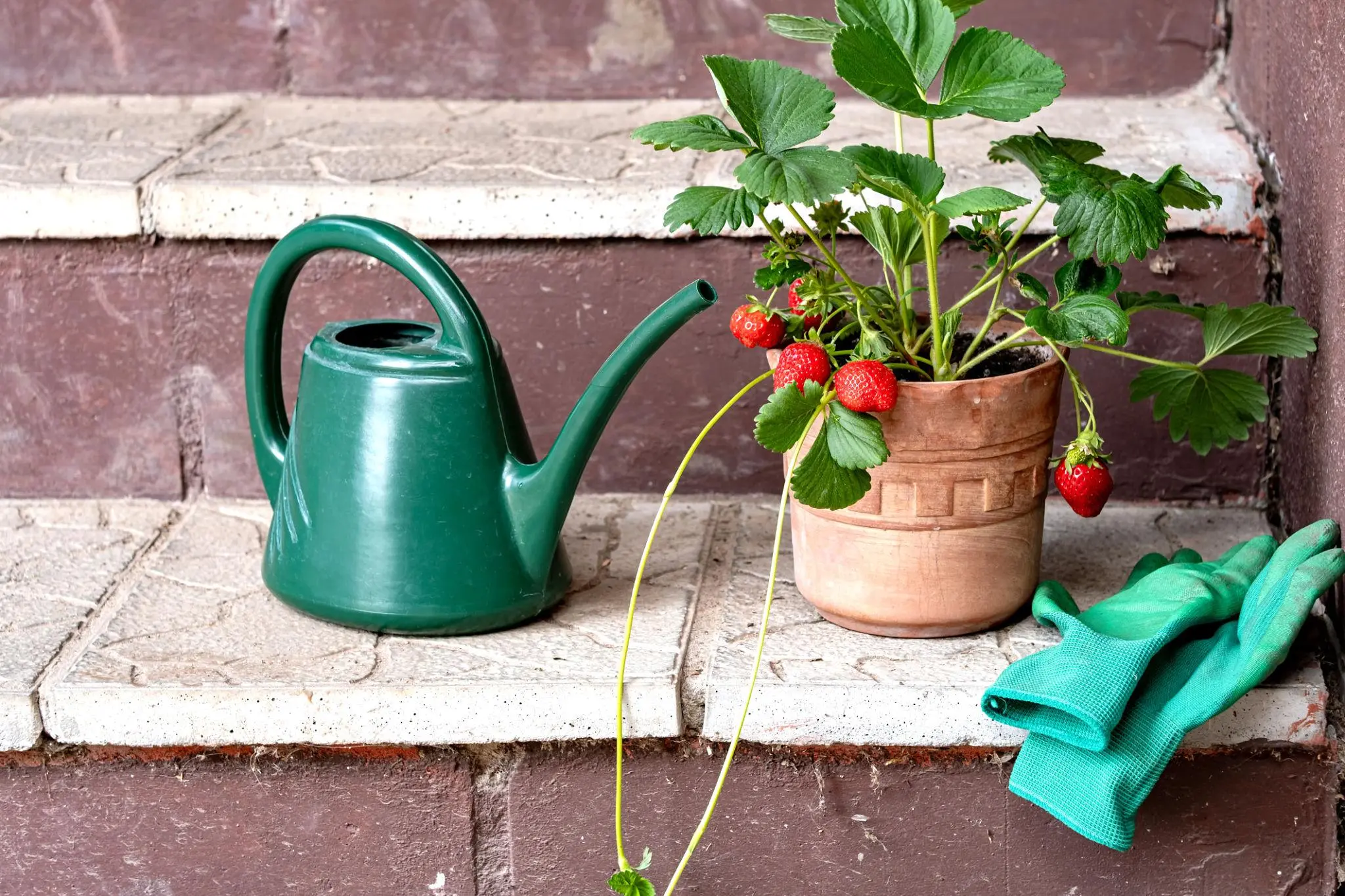
Always check for drainage holes before planting. If excess water cannot escape, the potting mix can stay too wet and damage the roots. Don’t add a layer of gravel to the bottom as a substitute for drainage holes.
Container tip: Don’t choose a pot based on plant count alone. A 12-inch pot may accommodate around three or four plants under suitable conditions, but the final spacing depends on the variety, its growth habit, and the container’s actual dimensions. If the foliage becomes crowded, use fewer plants.
If you’re deciding between fabric grow bags and rigid pots for your other crops too, see our guide to grow bags vs. pots for vegetables. You can also compare other suitable crops in our list of vegetables that grow well in pots.
3. Use a Suitable Potting Mix
Fill your container with a quality potting mix made for containers. Garden soil dug from the ground can become compacted in a pot, reducing the air spaces roots need. A good container mix should hold some moisture while allowing excess water to drain away.
Look for a mix that feels loose and crumbly rather than dense or muddy. Follow the mix’s instructions, especially if it already contains fertilizer. Adding extra feed at planting can be unnecessary when the product includes a starter charge.
Strawberries generally prefer slightly acidic soil, but you don’t need to chase a precise pH number for an ordinary home container unless a specific problem or soil test calls for it. Start with a suitable commercial potting mix and pay attention to drainage and plant health.
For more help choosing ingredients and understanding drainage, read our guide to the best soil mix for vegetables in pots.
4. How to Plant Strawberries in a Container
You can start with nursery-grown plants or dormant bare-root plants. Nursery plants are often easier for beginners because the leaves and crown are visible. Bare-root plants can also establish well when planted correctly and kept moist.
Step 1: Prepare the pot
Check the drainage holes, then fill the container with potting mix. Leave enough room near the top to water without washing soil over the rim.
Step 2: Set the plants at the right depth
Make a planting hole large enough to spread the roots naturally. The crown—the short, thick part where the leaves meet the roots—should sit level with the soil surface. Keep the roots covered, but don’t bury the crown. A crown planted too deeply may rot; one left with exposed roots can dry out.
Step 3: Give each plant room
Space plants about 8 inches apart as a starting guide, adjusting to the cultivar and planter size. Avoid squeezing extra plants into the container. Crowded leaves restrict airflow and make watering and harvesting more difficult.
Step 4: Water the pot thoroughly
Water slowly until the potting mix is moist throughout and a little excess water drains from the bottom. If the soil settles, add a little more mix while keeping every crown visible at the surface.
Step 5: Place the container in a sunny spot
Choose the sunniest suitable location you have, ideally one that receives at least six hours of direct sunlight. If your area gets very hot afternoons, monitor the pot closely; root-zone temperatures and moisture can become a problem even when the plant receives plenty of light.
5. Give Strawberries Enough Sunlight and Water
How much sunlight do strawberries need?
Strawberries generally grow and fruit best in full sun. Aim for at least six hours of direct sunlight each day, with more light often helping productivity when temperatures remain suitable. A bright-looking balcony can still receive less direct sun than you expect, so observe the space at different times of day.
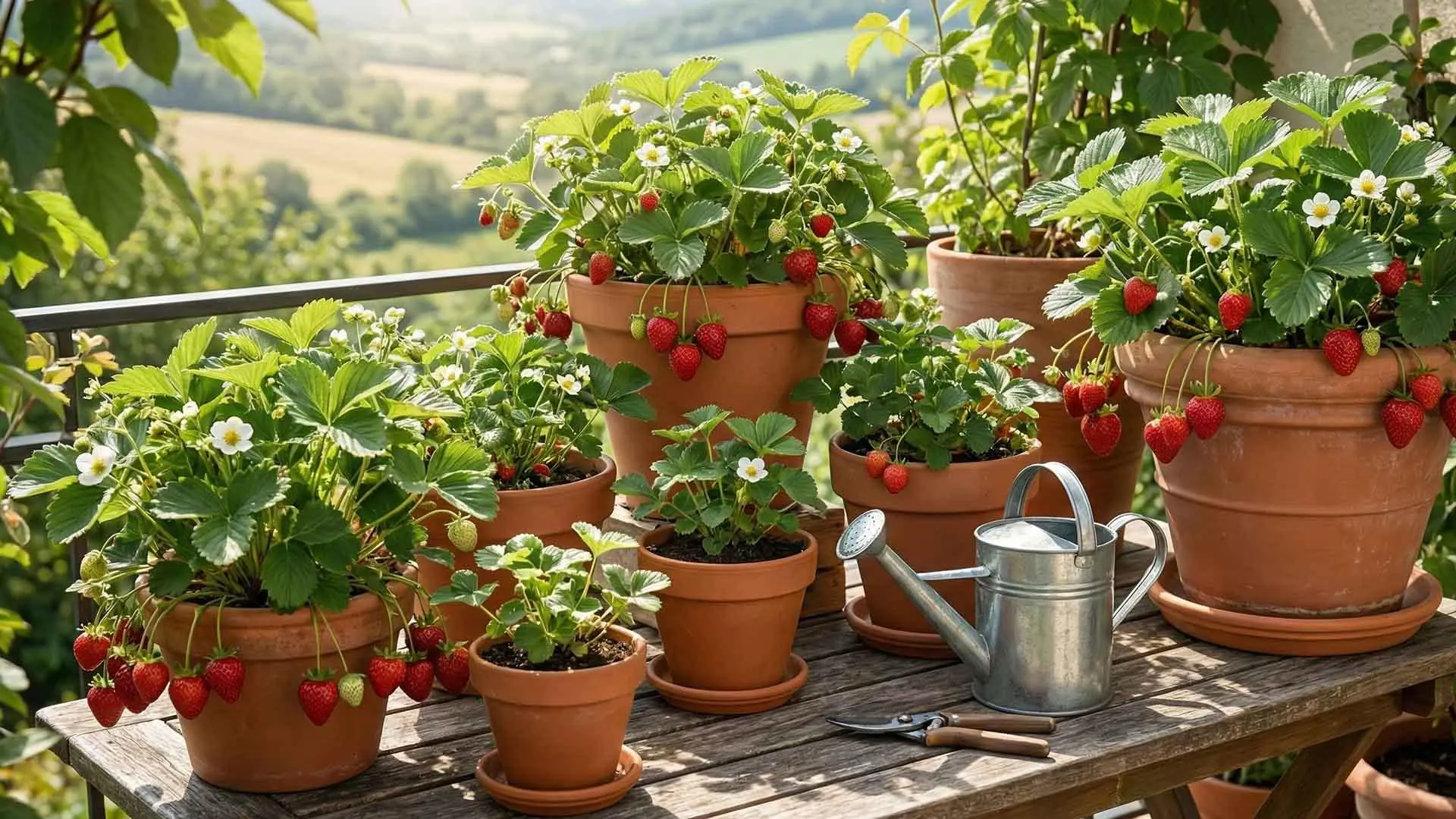
Heat matters too. Some day-neutral varieties slow down or stop flowering when temperatures become too high. In hot weather, a little afternoon protection may help reduce stress, especially if the container sits against a hot wall or on sun-heated paving. Don’t move the plant into deep shade and expect the same fruit production.
How often should you water potted strawberries?
Don’t follow a rigid daily watering schedule. The right frequency depends on the weather, container material, pot size, plant growth, and potting mix. A small fabric bag in warm, windy weather may dry much faster than a large plastic pot in mild conditions.
- Check the potting mix with your finger, especially a short distance below the surface.
- Water when the mix begins to dry, before the root zone becomes completely dry.
- Water near the soil rather than repeatedly soaking the leaves and fruit.
- Let excess water drain away, and never leave the container sitting in a tray of stagnant water.
If you’re arranging several containers in a compact outdoor area, our small patio vegetable garden ideas can help you plan the layout without crowding your plants.
During flowering and fruit development, try to keep moisture consistent. Repeated drying followed by heavy watering can stress plants and affect fruit quality. At the same time, permanently soggy soil can damage roots. The goal is moist, well-drained soil—not a swamp and not a bone-dry pot.
6. Feed Your Strawberry Plants Carefully
Strawberries growing in containers rely on a limited amount of potting mix, so nutrients can run low over time. But more fertilizer doesn’t automatically mean more berries. Too much nitrogen can encourage leafy growth at the expense of a balanced crop.
- Check whether your potting mix already contains fertilizer before adding more.
- Choose a fertilizer labeled for edible plants or strawberries, and follow the product’s rate and timing.
- Account for the fertilizer type: slow-release products and liquid feeds have different application schedules.
- Apply fertilizer to the mix as directed, avoiding concentrated product on leaves, crowns, or exposed roots.
- If a plant has plenty of leaves but few flowers, check light, temperature, variety, and watering before assuming it needs extra feed.
Don’t overfeed: There isn’t one fertilizer schedule that suits every potting mix and product. Follow the label rather than automatically feeding every two weeks. If the mix contains a starter fertilizer, extra feeding at planting may be unnecessary.
7. Should You Remove Strawberry Runners?
Runners are long stems that grow out from a strawberry plant and can form new daughter plants where they root. They are useful when you want to propagate strawberries, but they also use some of the plant’s energy and can quickly crowd a small pot.
If your main goal is to harvest fruit from a compact container, remove most runners while they are still small. Use clean scissors and cut the runner without damaging the crown or nearby leaves.
If you want extra plants, let a selected runner root in a separate small pot placed beside the main container, where it can make contact with the potting mix. Once the new plant has rooted and established, you can separate it carefully if the growing conditions and variety are suitable.
For hanging baskets, remove runners that trail over the edge unless you can give the daughter plants somewhere to root. Otherwise, they may never establish properly and can drain resources from the original plant.
8. When Will Container Strawberries Produce Fruit?
The timing depends on the type of strawberry, the age of the plant, planting date, and local weather. Day-neutral plants may flower and fruit in the same growing season. June-bearing plants commonly produce their main crop in the following season, while everbearing plants often produce more than one crop period.
Don’t judge a new plant by its first few weeks. It needs to establish roots and healthy leaves before it can support a good harvest. If a nursery plant arrives with flowers, follow the supplier’s guidance for that plant’s stage and variety rather than assuming every flower should be removed.
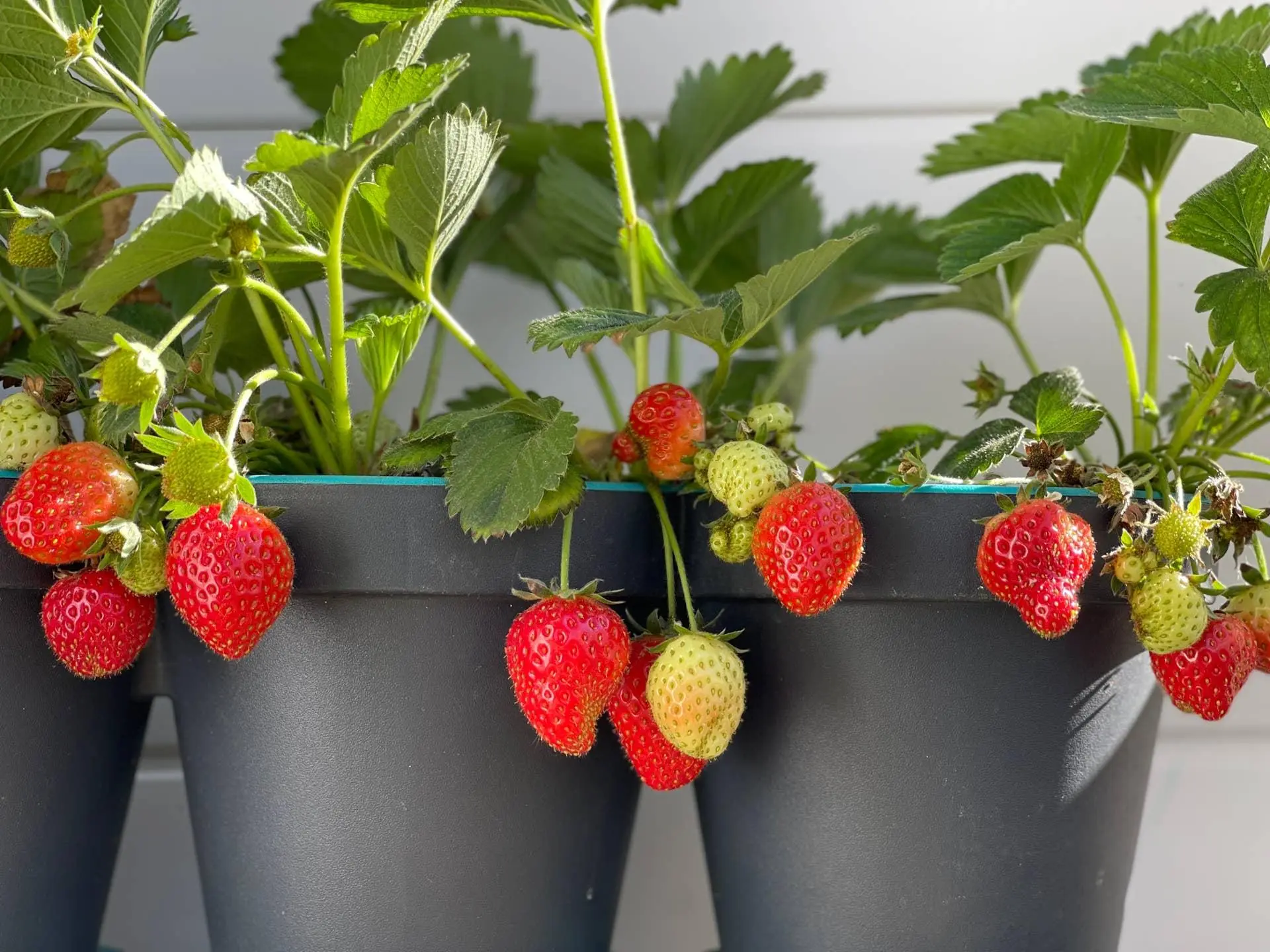
When fruit starts to develop, pick ripe berries regularly. Handle them gently and harvest when they have developed their expected color. Removing ripe fruit helps keep the container tidy and reduces the time overripe berries spend attracting pests.
9. Common Problems When Growing Strawberries in Pots
Why is my strawberry plant flowering but not producing fruit?
First, check whether flowers are fading without forming berries or whether small berries start growing and then stop. Temperature stress, poor growing conditions, flower damage, and inadequate pollination can all contribute to poor fruit set. Strawberries don’t generally require a second cultivar for cross-pollination, but insects visiting the flowers can help pollination occur. If you grow indoors or in a sheltered area where few pollinators visit, gently moving a soft brush across the flowers may help transfer pollen.
Also check the plant’s label and variety. Some types produce their main crop at a different time from others, so a healthy plant may not fruit continuously.
Why are my strawberries small?
Small berries can result from the variety, plant age, crowding, inconsistent moisture, heat, or poor growing conditions. Start with the basics: give each plant room, keep moisture steady, provide adequate light, and remove excess runners. If the plants are healthy but the berries remain small, check whether the cultivar is known for smaller fruit before changing your care routine.
Why are the leaves wilting or turning brown?
Check the potting mix first. If it is dry below the surface, water thoroughly and review how quickly the container dries out. If the mix is already wet, don’t add more water automatically; poor drainage or root problems may be involved. Brown edges can also follow heat stress or fertilizer damage. Look for patterns across the plant and review recent changes in watering, feeding, and weather.
Why does my container dry out so quickly?
Small pots, fabric containers, wind, hot paving, and warm weather can all speed up moisture loss. Move the pot away from extreme reflected heat if possible, use a larger container when practical, and check the soil more often during hot spells. A light mulch over the potting mix can help slow evaporation, but keep it away from the crown so the crown stays exposed and dry enough to avoid rot.
10. What Should You Do With Strawberry Plants at Season’s End?
Container strawberries are more exposed to winter cold than plants growing in the ground because their roots have less insulation. What you should do depends on your climate, cultivar, and container size.
In areas with cold winters, don’t assume a pot left outdoors will protect the roots. Some gardeners move containers to a sheltered, unheated location or use other winter protection suited to their region. In harsher climates, starting with healthy plants again in spring may be more reliable than trying to overwinter a small container.
In mild climates, plants may continue growing for longer, but they still need suitable light, moisture, and care. Remove dead leaves and decaying fruit, and check the plant for signs of disease before keeping it for another season.
For advice that matches your local winter temperatures, consult a university extension service or a trusted nursery in your area. The University of Wisconsin Extension container strawberry guide explains the main considerations, including the challenges of overwintering pots.
Frequently Asked Questions
Can strawberries grow well in containers?
Yes. Strawberries can grow well in pots, window boxes, and grow bags when they have enough light, suitable potting mix, good drainage, and consistent moisture. Choose a variety suited to your climate and avoid overcrowding the container.
What is the best container size for strawberries?
A round pot about 12 inches in diameter is a useful starting point for a small group of plants. Larger containers give roots more room and can hold moisture longer. Make sure the pot has drainage holes, and adjust the number of plants to the container’s size and the variety’s growth habit.
How many strawberry plants can I put in a 12-inch pot?
A 12-inch pot may hold around three or four strawberry plants, depending on the variety and how they grow. If the leaves become crowded or airflow is poor, use fewer plants or choose a wider container.
How much sunlight do potted strawberries need?
Aim for at least six hours of direct sunlight a day. More sun can support better growth when temperatures are suitable, but extreme heat can stress plants and reduce flowering in some varieties. Watch the plant and the potting mix during hot weather.
Should I remove the first flowers from strawberry plants?
It depends on the plant type, its age, and the growing advice supplied with it. Some planting systems remove early flowers to help plants establish, while established plants can be allowed to fruit. Follow guidance for your cultivar and avoid applying one rule to every strawberry plant.
Can I grow strawberries indoors?
It is possible, but a typical indoor windowsill may not provide enough direct light for a good crop. Indoor plants also need appropriate temperatures, drainage, and consistent watering. If natural light is limited, a suitable grow light may help, and flowers may need assistance with pollination where insects cannot reach them.
Can strawberries produce fruit in their first year?
Some day-neutral and everbearing plants can produce fruit in the first growing season, depending on their stage when planted and the growing conditions. June-bearing varieties generally produce their main crop the following season. Check the cultivar description for more specific expectations.
How often should I fertilize strawberries in pots?
Use the schedule on your fertilizer label and account for any nutrients already present in the potting mix. Slow-release and liquid fertilizers have different schedules, so there is no single interval that suits every product. Too much nitrogen can encourage leaves instead of a balanced fruit crop.
Do strawberries come back every year in containers?
They may survive and produce again, but container roots face greater exposure to winter temperatures and moisture problems than roots in the ground. Success depends on your climate, variety, and winter protection. In colder regions, replacing plants in spring may be more dependable.
Further Reading and Gardening References
For more detailed, region-specific guidance on strawberry varieties and container care, consult these university extension resources: