How to Grow Beans in Containers: Bush or Pole, Then Sow Direct
Beans are the warm-season crop that asks the least of you. They grow fast from seed, they feed themselves, and they fill a pot with food in about two months. But they ask one question first, and the whole guide follows from your answer: bush or pole?
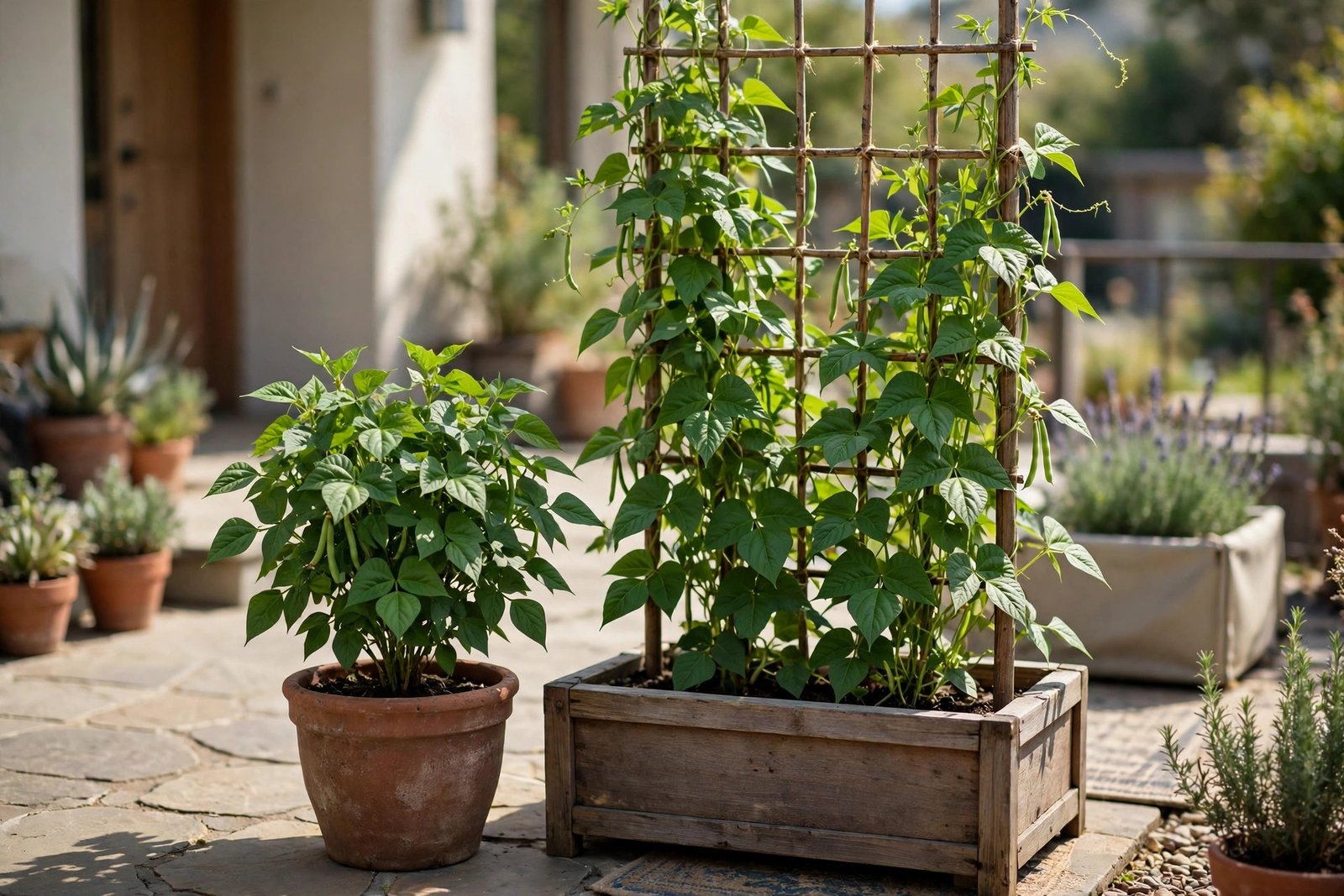
Bush beans stay about two feet tall, need no support, and give you one big flush of pods. Pole beans climb six to eight feet, need a trellis, and keep producing for weeks. Pick the type first, then pick the pot, then sow. That order is the whole method.
One honest note up front. Beans are a warm-season crop, so this is a plan-now guide. Choose the type and the pot today, and sow after the last frost, when the soil is above 60 degrees Fahrenheit. Nothing here asks you to sow beans in November. Peppers are the warm-season crop you start indoors and transplant. Beans are the one you sow direct, straight into the pot.
Plan now, sow in spring. Beans need warm soil to germinate. Wait until the soil is above 60 degrees Fahrenheit, then sow direct. A November sowing in most of the United States would sit in cold soil, and seed can rot before it comes up.

Bush or pole? Pick first, then plant
The choice is simple, and it decides everything else. Bush beans are short, self-standing plants. Pole beans are vines that need something to climb. There is no wrong answer, only a wrong pot for the type you picked. This table puts the two side by side so you can choose in one minute.
| Bush beans | Pole beans | |
|---|---|---|
| Height | About 2 feet tall | 6 to 8 feet tall |
| Pot size | 2 gallons minimum (Maryland Extension); Oregon State recommends at least 5 gallons | At least 5 gallons (Oregon State); pick a pot wider than tall so it does not tip (Maryland Extension) |
| Support | None needed | Trellis or teepee, 6 to 8 feet tall, set up at planting |
| Plants per pot | 3 to 4 plants per 2.5-gallon pot (Alabama Extension) | 3 to 4 plants per 2.5-gallon pot (Alabama Extension); thin to 4 to 6 inches apart |
| Days to harvest | About 50 to 65 days | About 70 to 80 days |
| Picking | One flush over about 2 to 3 weeks | Steady picking for 5 to 6 weeks, all season |
| Best for | Small pots and a first try | Sunny walls, railings, and a long picking season |
The two pot sizes in the table look different because they answer different questions. Maryland Extension lists the smallest pot that works for bush beans: 2 gallons. Oregon State University Extension’s beans guide recommends at least a 5-gallon container for beans in general, because a bigger pot holds moisture better. The table talks about pot volume, not pot depth, because no extension page gives a depth figure for beans. If you buy one pot, buy the 5-gallon size, and pick one wider than tall so a tall vine does not tip it over.
For bush beans, Oregon State and Utah State list Tendercrop, Slenderette, Blue Lake, and Greencrop. For pole beans, both list Kentucky Wonder, Blue Lake, and Romano. Any of these will do in a pot. Pick the one your seed rack carries and get started.
Sow direct, and only direct
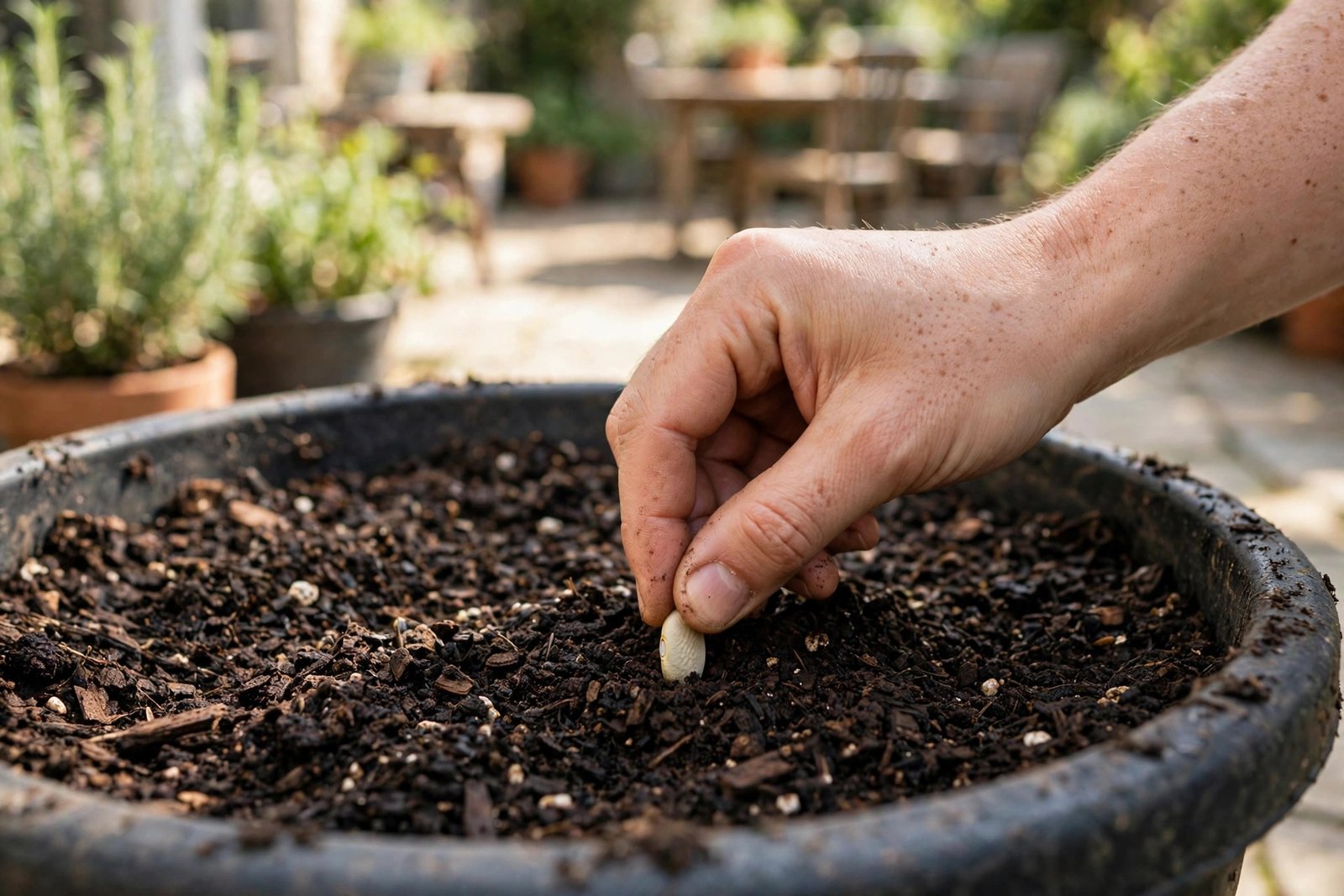
Do not start beans indoors. Alabama Cooperative Extension’s guide to bush and pole beans puts it plainly: transplants are not recommended. Minnesota Extension and Oregon State Extension say the same. Beans grow fast from seed and do not move well. Sow them where they will grow.
Sow about one inch deep and cover the seed with soil. Space bush beans 2 to 4 inches apart and thin them to 2 to 3 inches apart. Space pole beans about 4 inches apart, or put 2 to 4 seeds at the base of each pole, and thin pole plants to 4 to 6 inches apart. If a seed fails to come up, sow another in its place. A gap in the row is easy to fix in the first week.
Wait for warm soil. Utah State University Extension says to sow after the soil warms to above 60 degrees Fahrenheit. Seedlings come up in 7 to 10 days when the soil is 65 to 85 degrees Fahrenheit, so a warm pot is worth the wait. Cold soil slows germination badly. Keep the surface moist until the seedlings appear, then water normally.
Give them full sun, 6 to 8 hours a day, and a soilless potting mix, never garden soil straight from the yard. Every pot needs drainage holes. The mix recipe lives in our soil mix guide for vegetables in pots.
Supports for pole beans
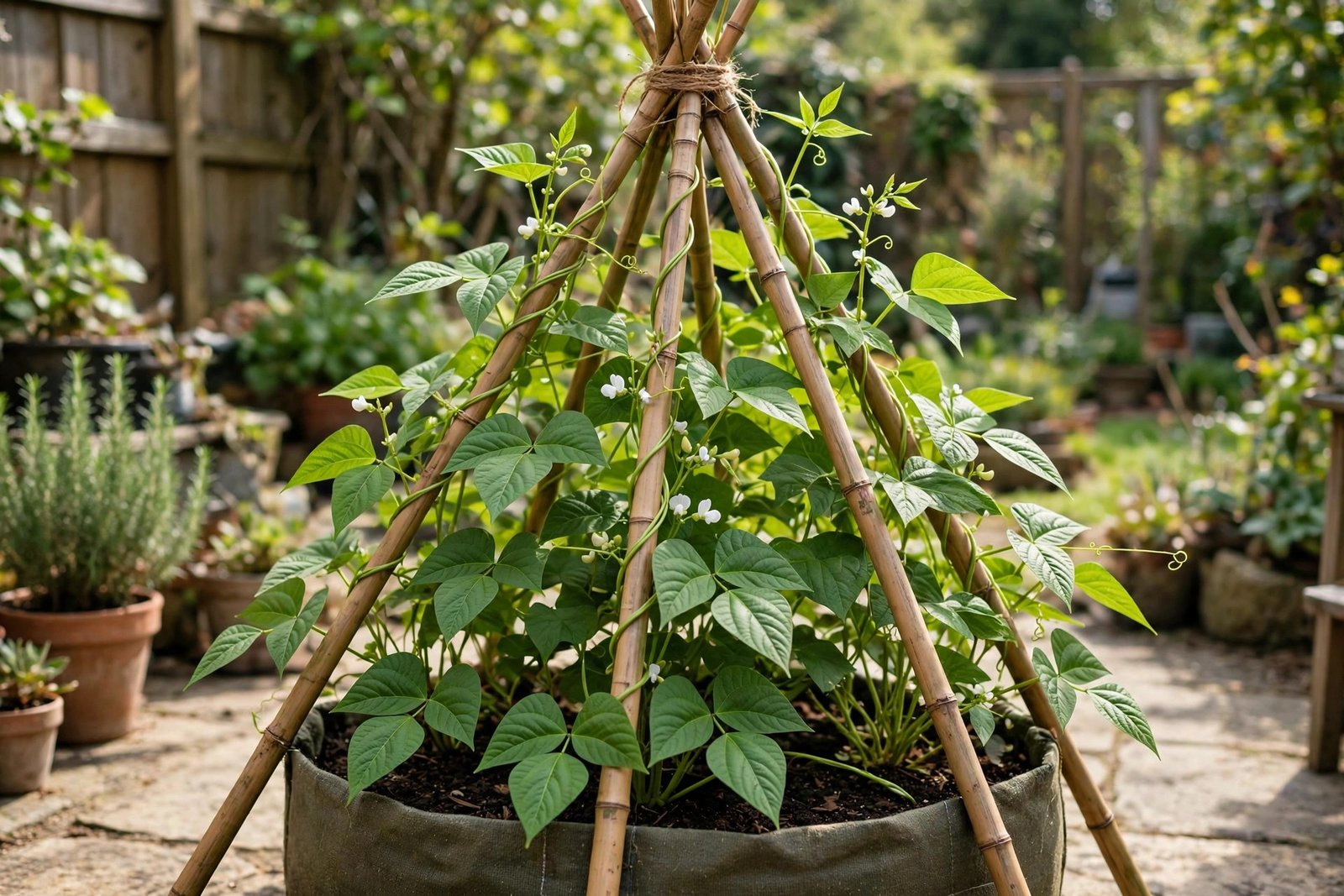
Bush beans need nothing. They grow about two feet tall and stand on their own. Pole beans are the opposite. They need something to climb from the day you sow, and they will reach six to eight feet by midsummer.
Build the support before you sow, not after. Minnesota Extension says to install pole bean supports at planting time, and the UC Master Gardener guide says the same: put supports in place before planting. A simple teepee of six-foot stakes tied at the top works, or a trellis panel against a wall. On a balcony, a railing can do the job if the pot sits close and the vine has something to grip. Cucumbers are the other vining crop we grow in pots, and the trellis lessons carry over.
Mind the wind. A tall vine in a small, light pot can topple. Maryland Extension warns that tall plants in relatively small, lightweight containers can be blown over, and a 5-gallon pot wider than tall is more stable in a breeze. Set the pot where the wind hits it least, and water it well so the mix stays heavy. Pole beans are one of the best vertical crops for a balcony vegetable garden, as long as the pot is wide and the trellis is fixed solid.
Water, sun, and the nitrogen rule
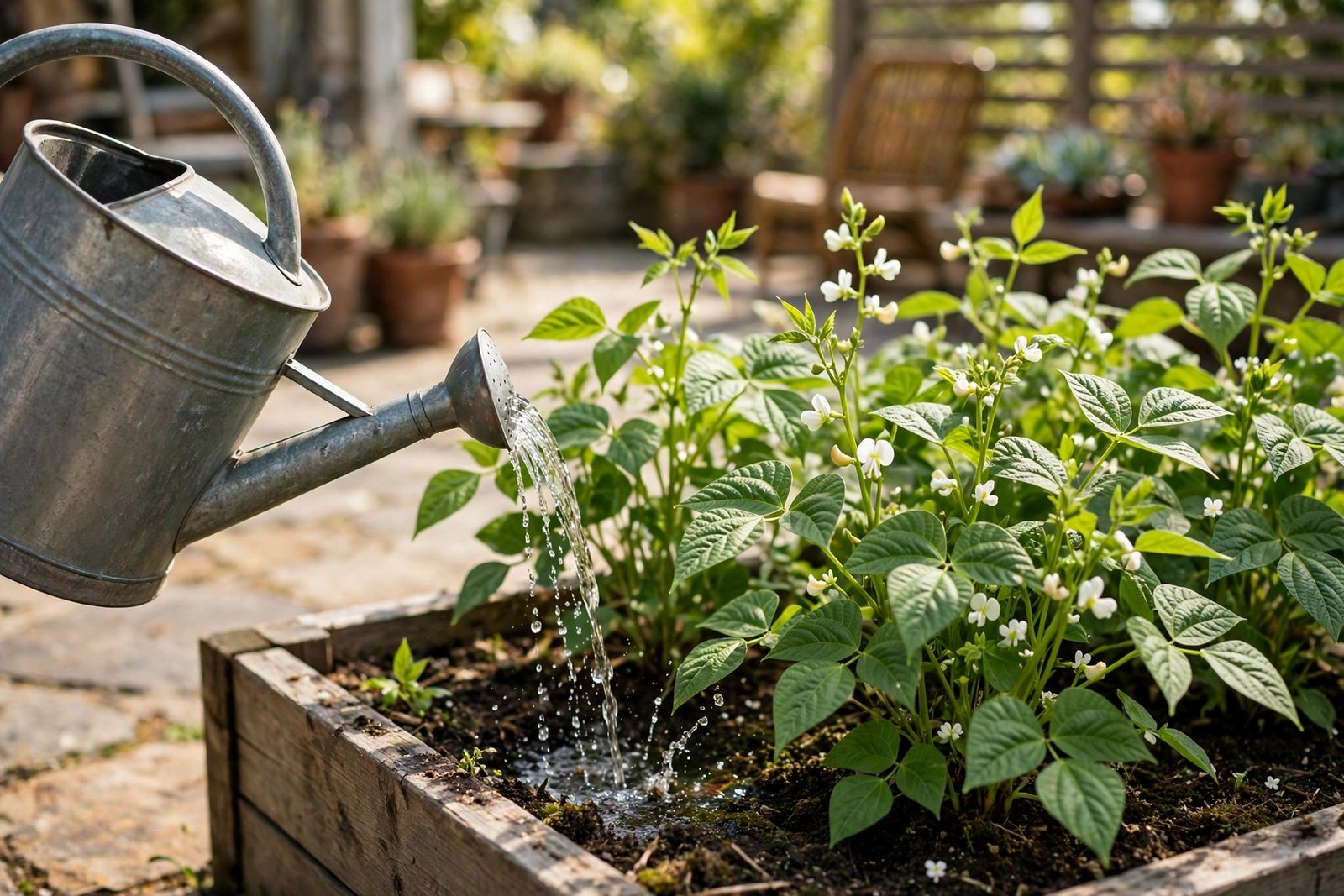
Beans want steady water, about one inch a week, and they want it most when flowers open and pods fill. Utah State University Extension says water needs are most critical during flowering and pod sizing, and drought stress then will cut the yield because flowers abort. In a pot, that means checking daily in hot weather. Penn State Extension’s container guide says most container gardens need water at least once a day during hot summer months, and to water until it starts to drain out of the bottom.
Sun is simple: full sun, 6 to 8 hours a day. A little shade is tolerated, but the yield drops. They grow best in soil with a pH between 6 and 7.
Feeding is where most people go wrong, and the fix is to do less. Beans fix their own nitrogen from the air through soil bacteria, so they have a low fertilizer requirement. Utah State University Extension warns that adding more nitrogen stimulates excessive leaf growth, delays flowering, and reduces pod set. If you have no soil test, Alabama Extension suggests an all-purpose 8-8-8 or 10-10-10 feed at planting, with a light side-dress before first bloom. In good soil, that is all they need. The full feeding detail lives in our fertilizer guide for container vegetables.
The picking rhythm
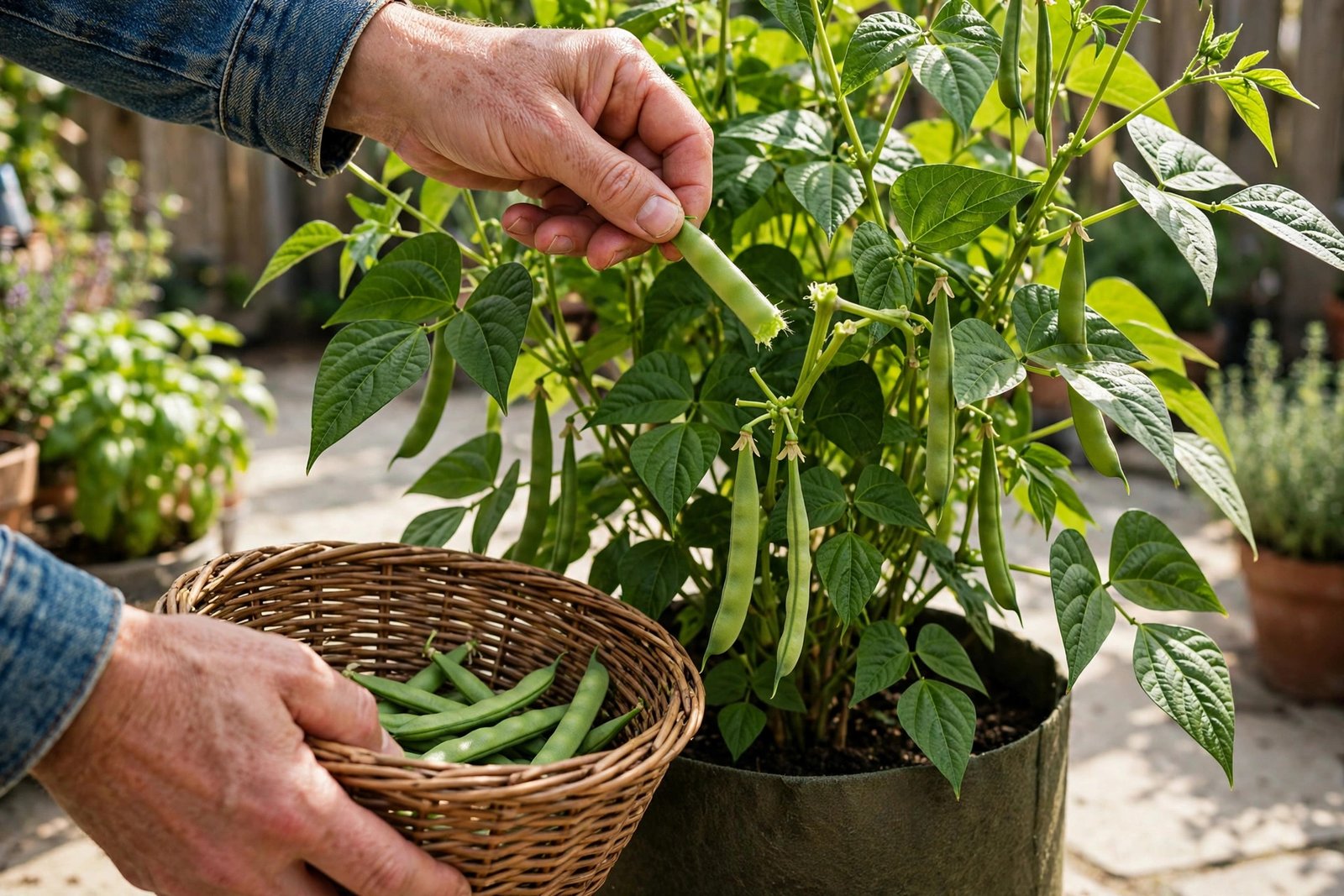
Picking is the skill that decides how many beans you get. Snap beans are ready before the seeds inside the pods bulge. The pods should be firm, smooth, and about as thick as a pencil, and they are ready about 7 to 14 days after flowering. A pod that snaps cleanly when you bend it is ready. A pod that bends without snapping is past its best.
Pick every day or two. The UC Master Gardener guide puts it plainly: harvest every day or two to get the best flavor and encourage more beans to grow. Picking often keeps the plant setting new pods. Pods left on the plant get tough and seedy, and the plant slows down.
The rhythm differs by type. Bush beans flower and mature their pods over 2 to 3 weeks, one concentrated flush. Pole beans flower and produce new pods all through the season, about 5 to 6 weeks of steady picking. That is the real difference between the two types. Bush gives you one big harvest. Pole gives you beans all summer.
Sow again for a longer season. Alabama Extension and Utah State suggest succession planting every 2 to 3 weeks, with bush beans sown until mid-July. Pole beans need no succession planting, because they keep flowering until frost.
Leaves but no pods
If your plants look healthy but set no pods, one of these is usually the cause.
- Heat. Above 95 degrees Fahrenheit during flowering, bean plants shed their flowers. Pole beans usually recover and set pods again once the weather cools.
- Dry roots at flowering. Drought stress during and after flowering cuts the yield because flowers abort. Keep the moisture even, especially while flowers are open.
- Too much nitrogen. Extra nitrogen pushes leaf growth, delays flowering, and reduces pod set. Feed light, or not at all in good soil.
- Overcrowding. Too many plants in one pot fight for light and air. Stick to 3 to 4 plants per 2.5-gallon pot.
- Pods left too long. Old pods tell the plant to slow down. Pick every day or two and the plant keeps setting new pods.
Frequently Asked Questions
Bush or pole beans for containers?
Bush beans suit small pots best. They grow about two feet tall, need no support, and give one concentrated flush over about two to three weeks. Pole beans need a tall trellis and a bigger pot, but they keep producing for five to six weeks or longer. If you have little space and want a simple first try, pick bush. If you have a sunny wall or railing and want beans all summer, pick pole.
Can I transplant bean seedlings?
No, sow beans direct where they will grow. Alabama Extension, Minnesota Extension, and Oregon State Extension all say transplants are not recommended, because beans grow fast from seed and do not move well. Sow about one inch deep once the soil is above 60 degrees Fahrenheit.
How many bean plants per pot?
Alabama Extension lists three to four plants per 2.5-gallon container. A 5-gallon pot is the safer default, especially for pole beans, because it holds moisture better and is harder to tip over. Do not crowd more plants in to get more beans. Crowded plants give leaves and few pods.
Why do my beans have leaves but no pods?
The usual causes are heat above 95 degrees Fahrenheit during flowering, dry roots while flowers are forming, too much nitrogen, or overcrowding. Beans fix their own nitrogen, so extra fertilizer pushes leaf growth and delays flowering. Keep the soil evenly moist at flowering, feed light, and pick pods every day or two so the plant keeps setting new ones.
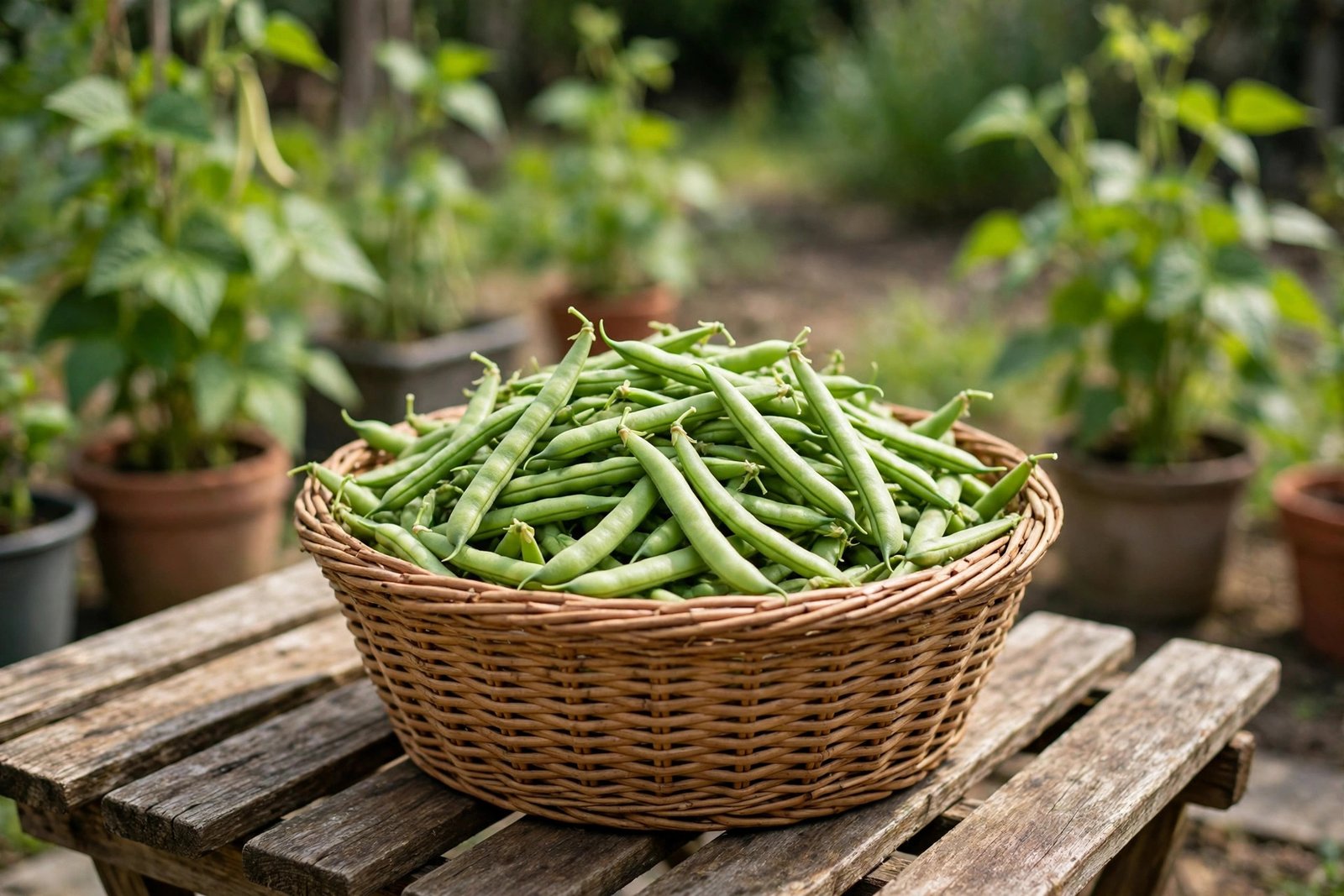
Beans reward the gardener who picks the type first and then leaves the plant alone to do its work. A bush bean in a 5-gallon pot, sown direct in warm soil, watered steady, and picked every day or two will fill a basket in about two months. A pole bean on a trellis will keep that basket full all summer. If you are planning the rest of the season, our best vegetables for pots list shows where beans sit beside the other container crops.
Sources and Further Reading
Alabama Cooperative Extension System, Grow More Beans (Bush and Pole), ANR-2876-B. Oregon State University Extension, Beans (Bush and Pole). University of Minnesota Extension, Growing Beans in Home Gardens. Utah State University Extension, How to Grow Beans in Your Garden. University of Maryland Extension, Growing Vegetables in Containers and Salad Tables. Penn State Extension, Container Vegetable Gardening: Four Keys to Success. UC ANR Master Gardener, Guide to Growing Beans.