
How to Grow Mint Indoors
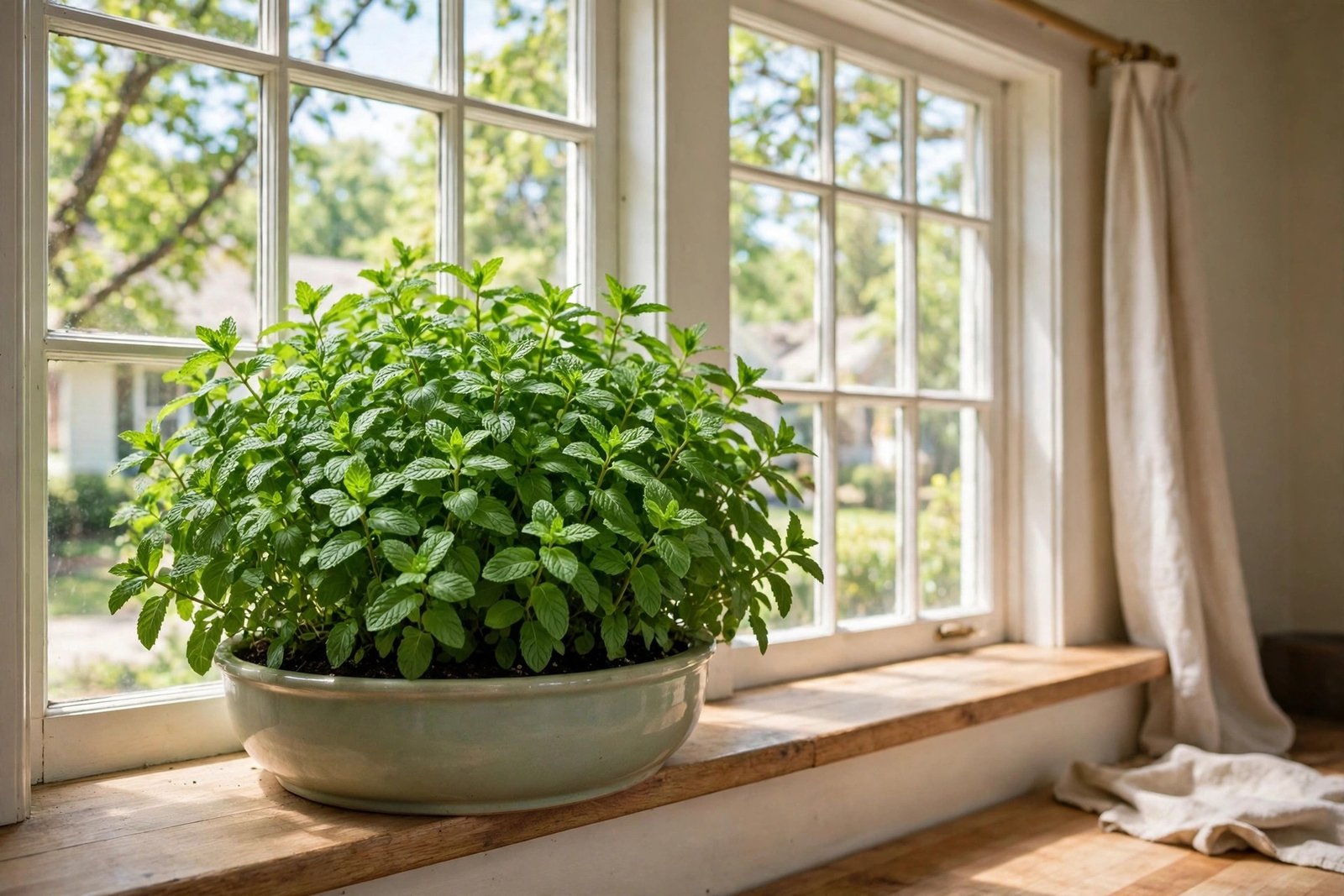
Mint is the easiest herb on the windowsill to keep alive and the hardest one to keep in its place. Most guides lead with light and watering. With mint, the real subject is containment. This plant spreads by underground runners, and it does not ask permission. Give it a shared pot or a garden bed and it will quietly take both over.
So this guide starts with the rule everything else hangs on: one plant, one pot, always. Get that right and mint indoors is almost embarrassingly easy. Get it wrong and you will spend the next two years pulling mint out of pots it was never planted in.
Mint indoors, at a glance:
- The rule: one plant per pot, never shared, no exceptions
- Start: from a cutting in water, not from seed
- Pot: wide rather than deep, about 12 inches across to start
- Water: evenly moist at all times, never standing in water
- Light: 5 to 8 hours of bright light, or an LED top-up
The Deal With Mint: Easy to Grow, Hard to Contain
Mint spreads through runners called stolons that travel under the soil surface and pop up as new plants. Outdoors, that habit turns a single plant into a patch in a couple of seasons. The University of Maryland Extension names mints directly when it advises gardeners to confine invasive herbs in containers. A pot is not just where mint lives. It is the fence that keeps it honest.
The same energy makes mint forgiving. It tolerates a missed watering and bounces back from a hard cut. The plant is not fragile. It is pushy. Your job is to give it a bright spot, steady moisture, and a boundary it cannot cross.
One more thing to settle before you start. A single plant is plenty; a healthy potted plant gives more sprigs than most kitchens use, for years. If you want two kinds, spearmint and peppermint say, that means two pots on the sill, not two plants in one. Our indoor herb garden guide covers the rest of the shelf, but mint always sits apart from it, in a pot of its own.
Start With a Cutting, Not Seed
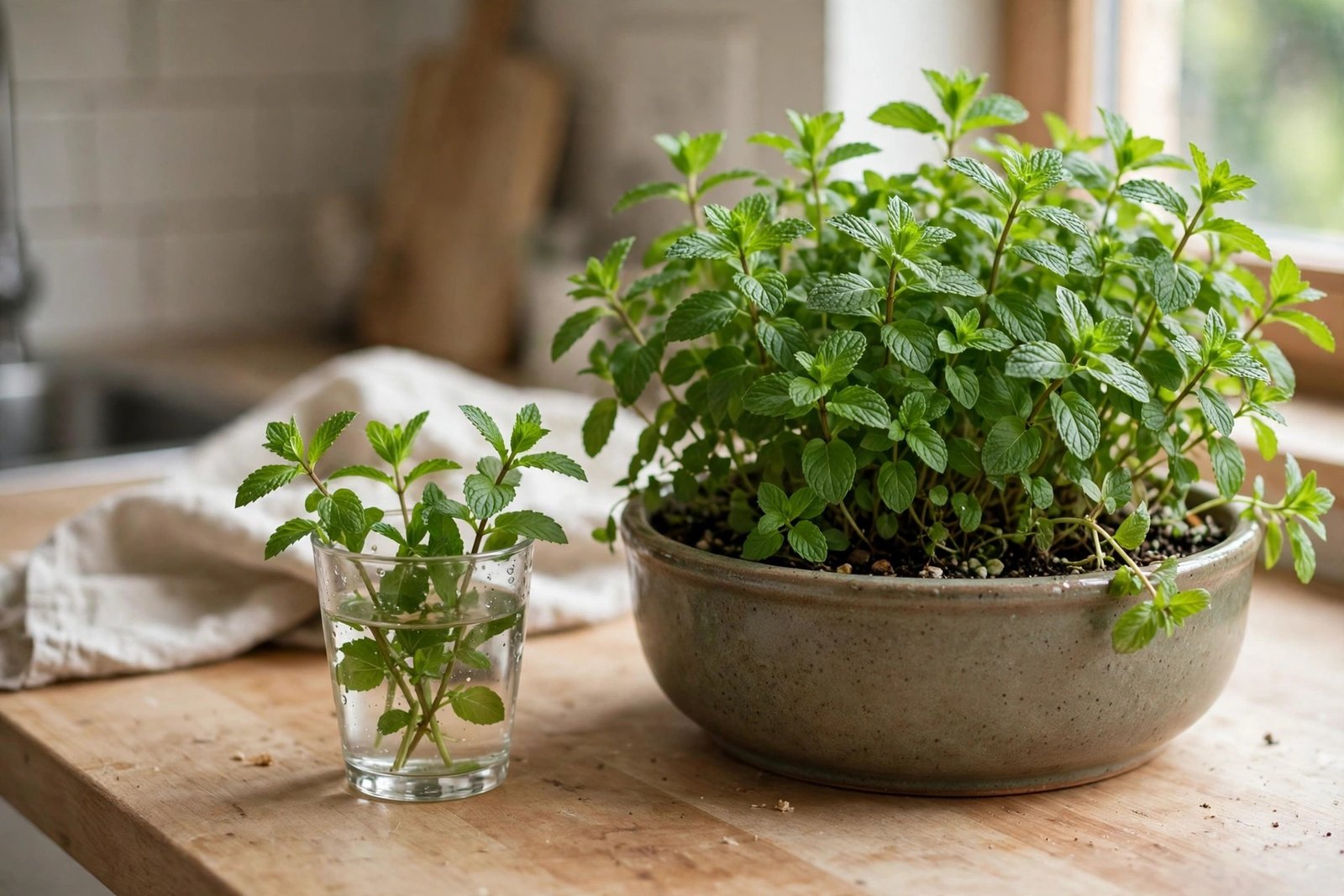
The fastest, surest start is a cutting from a plant you already like. Ask a friend with a garden patch, or take sprigs from a healthy store-bought plant. Cut a stem 4 to 6 inches long, just below a leaf set. Strip the leaves from the lower half of the stem, the part that will sit in water, and set the stem in a glass of clean water on your brightest sill.
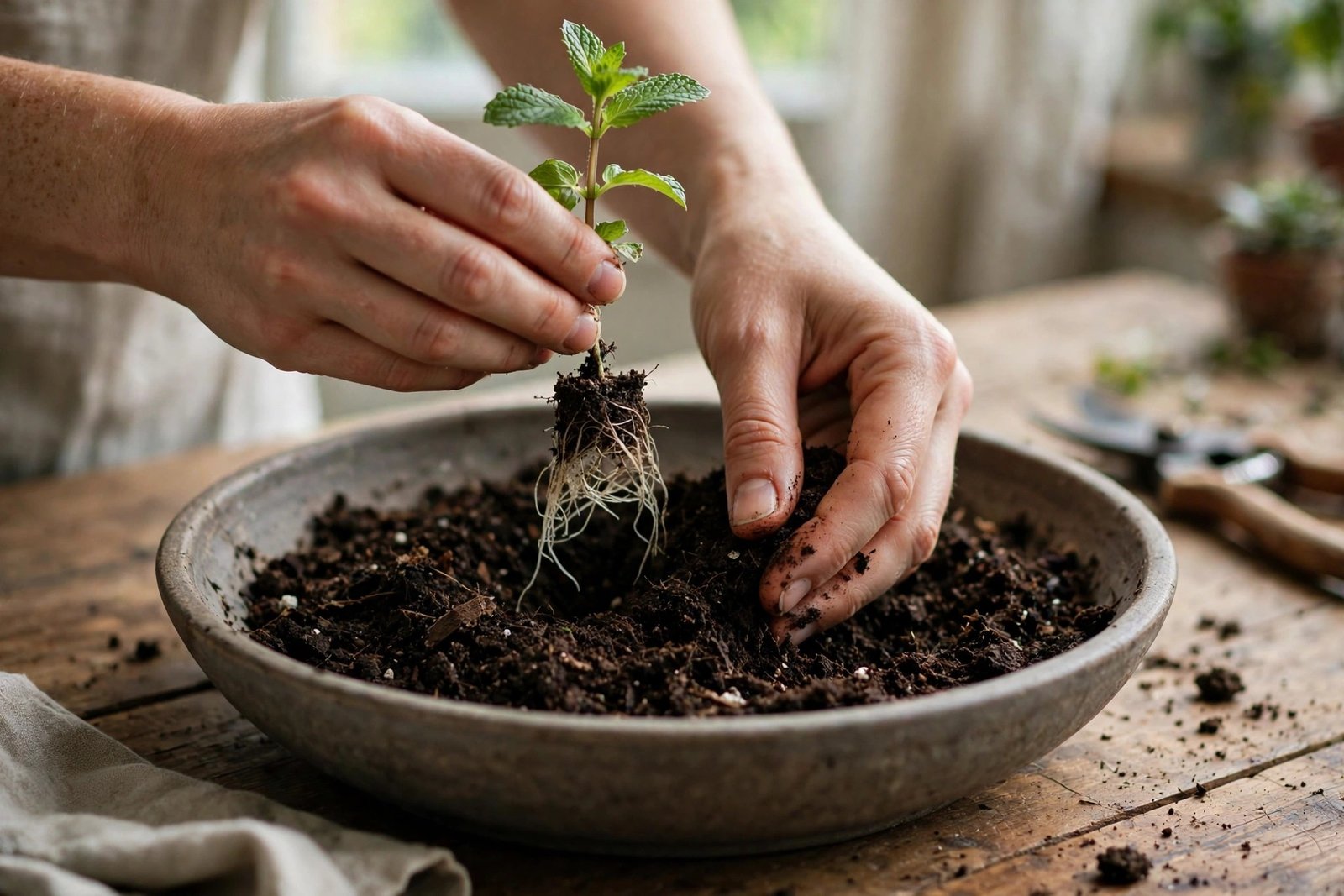
Roots usually show in 7 to 14 days. Change the water every few days. When the roots reach about an inch long, pot the cutting up into moist mix and keep it well watered for the first week. From there it grows as a clone of the parent, with the same flavour and the same vigour.
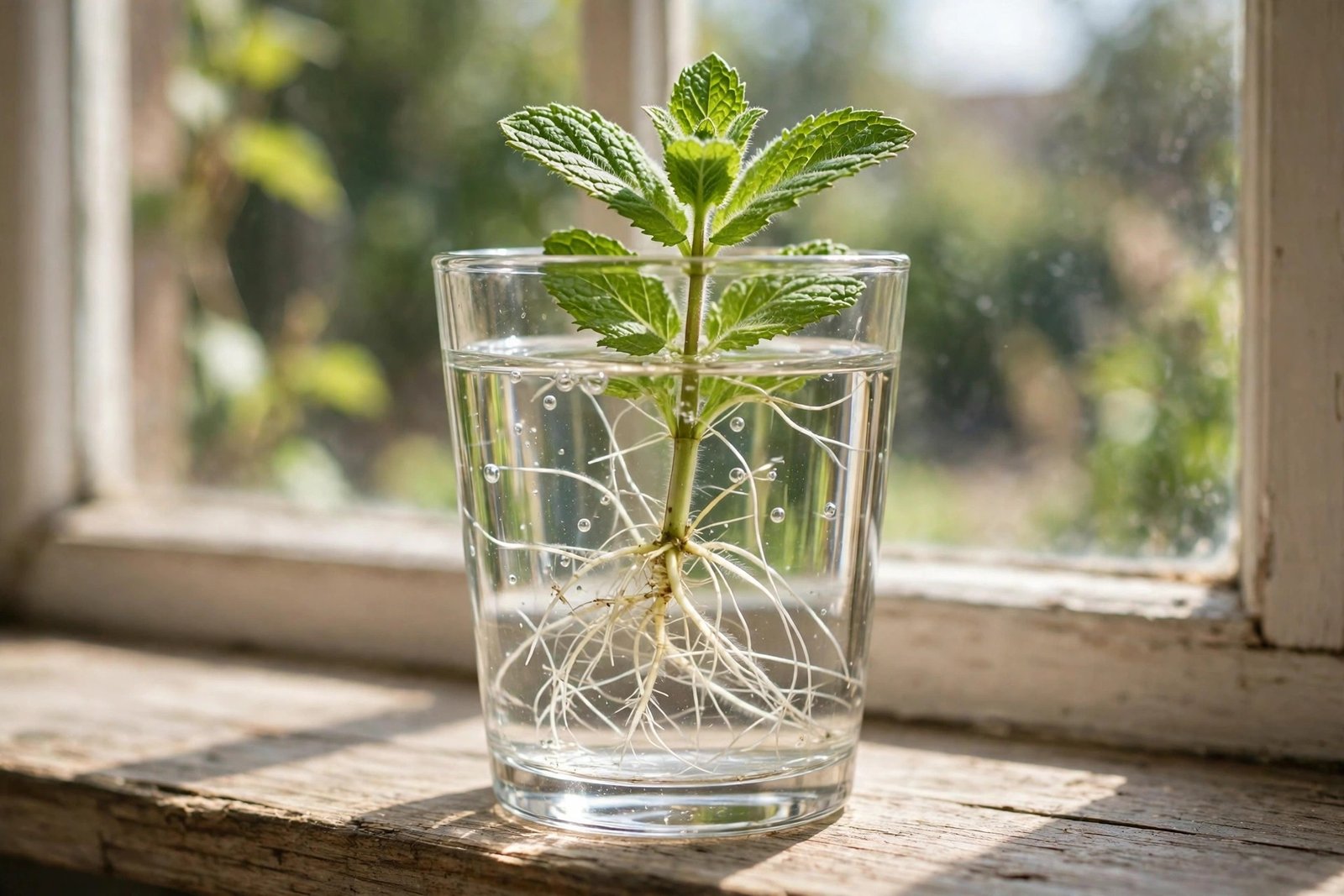
Autumn cuttings from an outdoor plant work just as well. Montana State University Extension notes that perennial herbs can be brought inside for winter, and a light frost even does mint a favour, inducing a short rest before it regrows indoors. Wash the stems, check the leaf undersides for hitchhikers, and root them in water as above.
Why not seed?
Seed works, it is just the weaker option. The seed is tiny, germination takes 10 to 16 days, and results are inconsistent. Worse, peppermint is a hybrid, and hybrids do not grow true to type from seed, so the plant you raise may taste like a pale relative of the one you wanted. If seed is all you have, sow it and carry on, but a cutting is faster, surer, and true to the parent.
The Setup: Wide Pot, Moist Mix, Bright Light
Mint roots run sideways more than down, so the pot should be wide rather than deep. Extension guidance, as reported in the indoor herb guides that cite it, puts a mint pot at 12 to 16 inches across, and 12 inches is a sensible starting point for one plant. Other guides go smaller, 8 to 10 or 8 to 12 inches, and mint will grow in those too. It will simply fill them sooner. Wide is the direction that matters.
| Part of the setup | What mint wants |
|---|---|
| Pot | Wide and shallow beats tall and deep. About 12 inches across for one plant, with drainage holes. Room for runners to circle, not escape. |
| Mix | A mix that holds moisture. University of Maryland Extension advises adding compost and vermiculite for herbs that prefer moist soil. A common grower blend is 2 parts soilless mix to 1 part perlite. |
| Light | 5 to 8 hours of bright light: a south or west window, or an LED to make up the difference in winter. |
| Temperature | Maryland Extension gives 65 to 75°F by day and 55 to 65°F by night for indoor herbs. |
| Water | Evenly moist, always. Mint is one of the herbs that prefers moist soil, so the mix should never dry out fully. Drainage still matters: moist, not swampy. |
Mint is often sold as a shade-tolerant herb, and outdoors it does fine with some shade. Indoors is different, because window light is already a fraction of outdoor light. University of Maryland Extension puts indoor herbs on a southern window for 5 to 6 hours of sun, and mint sits happily in that range. Which sill suits which herb is covered in our list of the best herbs to grow on a windowsill, and the full light picture lives in our guide to how much sunlight indoor herbs need, so those tiers are not repeated here.
Watering: Mint Likes Moist Feet
Here is where mint breaks the rule most herb growers learn first. For basil, rosemary and most of the shelf, you water when the top inch of mix feels dry. Do that to mint and it will sulk. Maryland Extension groups basil, chives and mint together as herbs that prefer moist soil, and mint is the thirstiest of the three. Keep the mix evenly moist, and check it with a finger every couple of days rather than on a fixed calendar. Watering by schedule instead of by touch is one of the classic indoor herb garden mistakes, and mint punishes it at both ends.
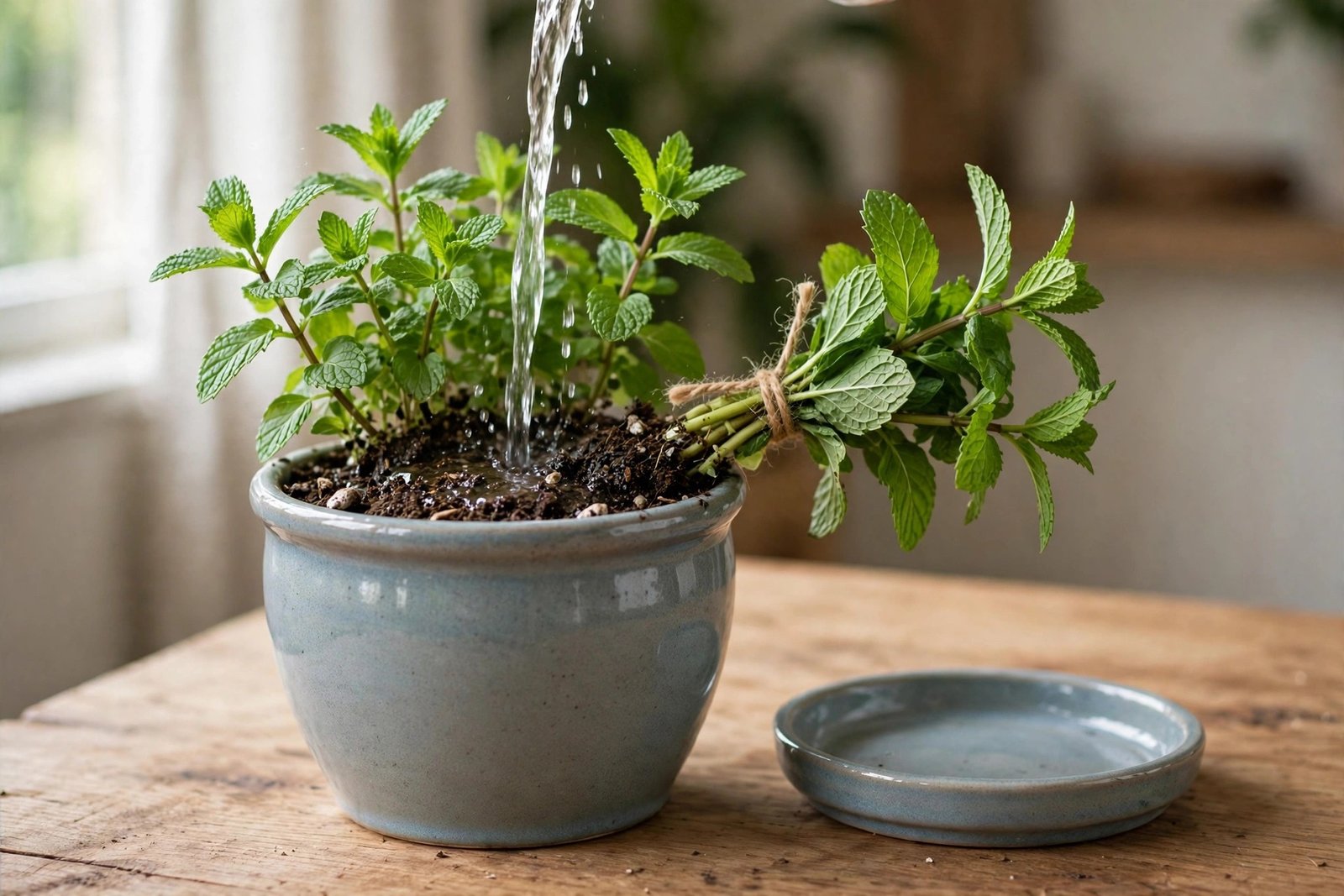
Moist is not the same as wet. The pot still needs drainage holes, and it should never stand in a saucer of water. Roots sitting in stagnant water suffocate and rot, and a mint plant with blackened, mushy stems at the base is usually a plant watered with love and given nowhere for the water to go. Water thoroughly, let the excess drain away, and empty the saucer.
Terracotta is a fine pot for herbs that like to dry out, because the porous clay wicks moisture away. Mint wants the opposite: a glazed ceramic or plastic pot holds moisture longer between waterings. If your mint keeps wilting in a clay pot, the pot itself may be the problem.
Harvest: Pinch the Tips and Keep Pinching
Harvesting mint is the same pleasant job as harvesting basil: take the stem tips, and take them often. Montana State University Extension gives the basic move for mint: cut stems just above a set of leaves. Two new stems grow from that point, so every harvest makes the plant denser. The pinch itself is taught step by step in our guide to growing basil indoors, and it transfers to mint exactly, so it is not repeated here.
Pick in the morning, when flavour peaks, and take sprigs from all over the plant rather than stripping one side. Never take more than about a third of the plant at once. If flower buds appear at the stem tips in summer, pinch them off as you see them: a plant putting energy into flowers puts less into leaves, and the flavour fades.
The Yearly Reset: Cut It Back, Divide It in Time
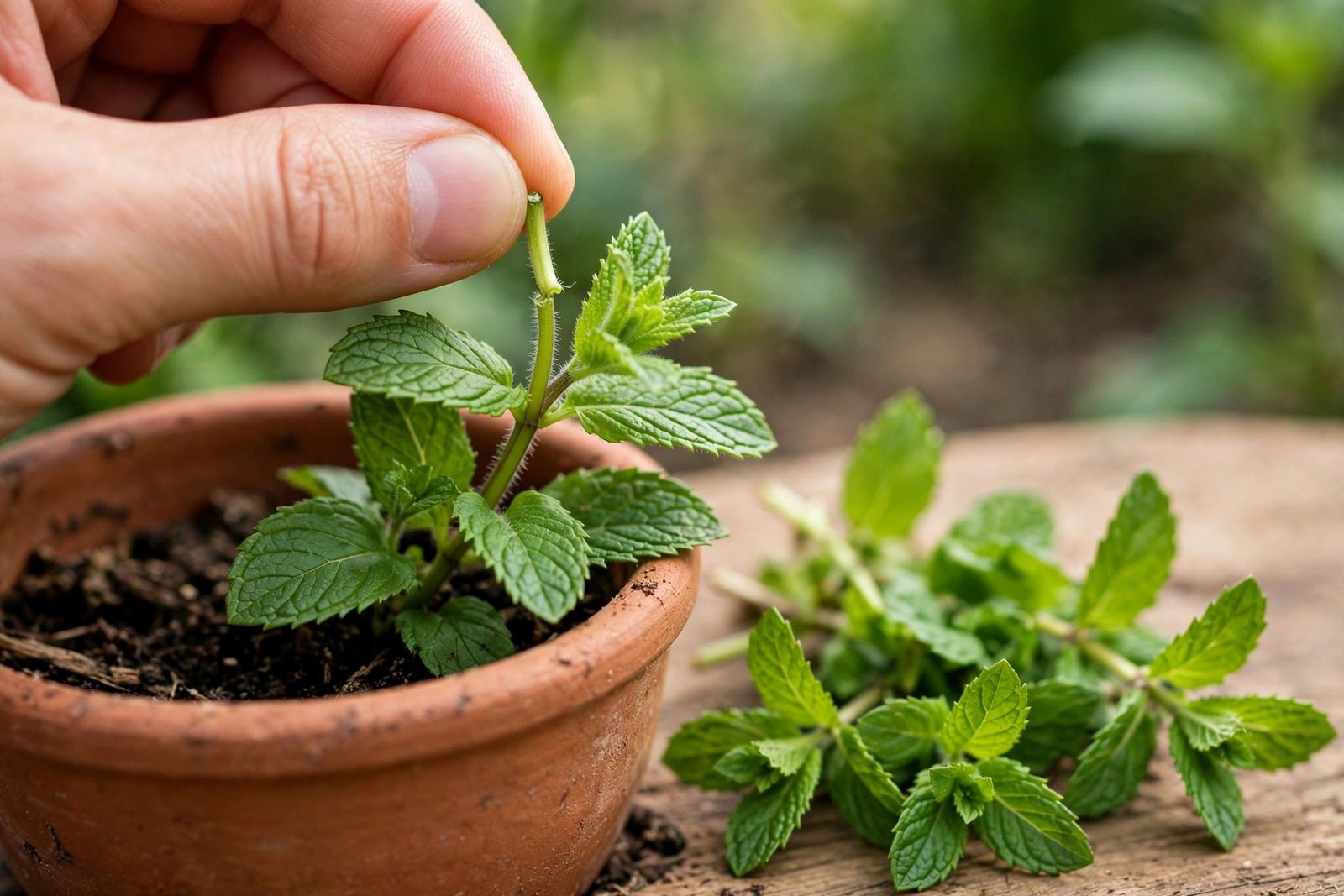
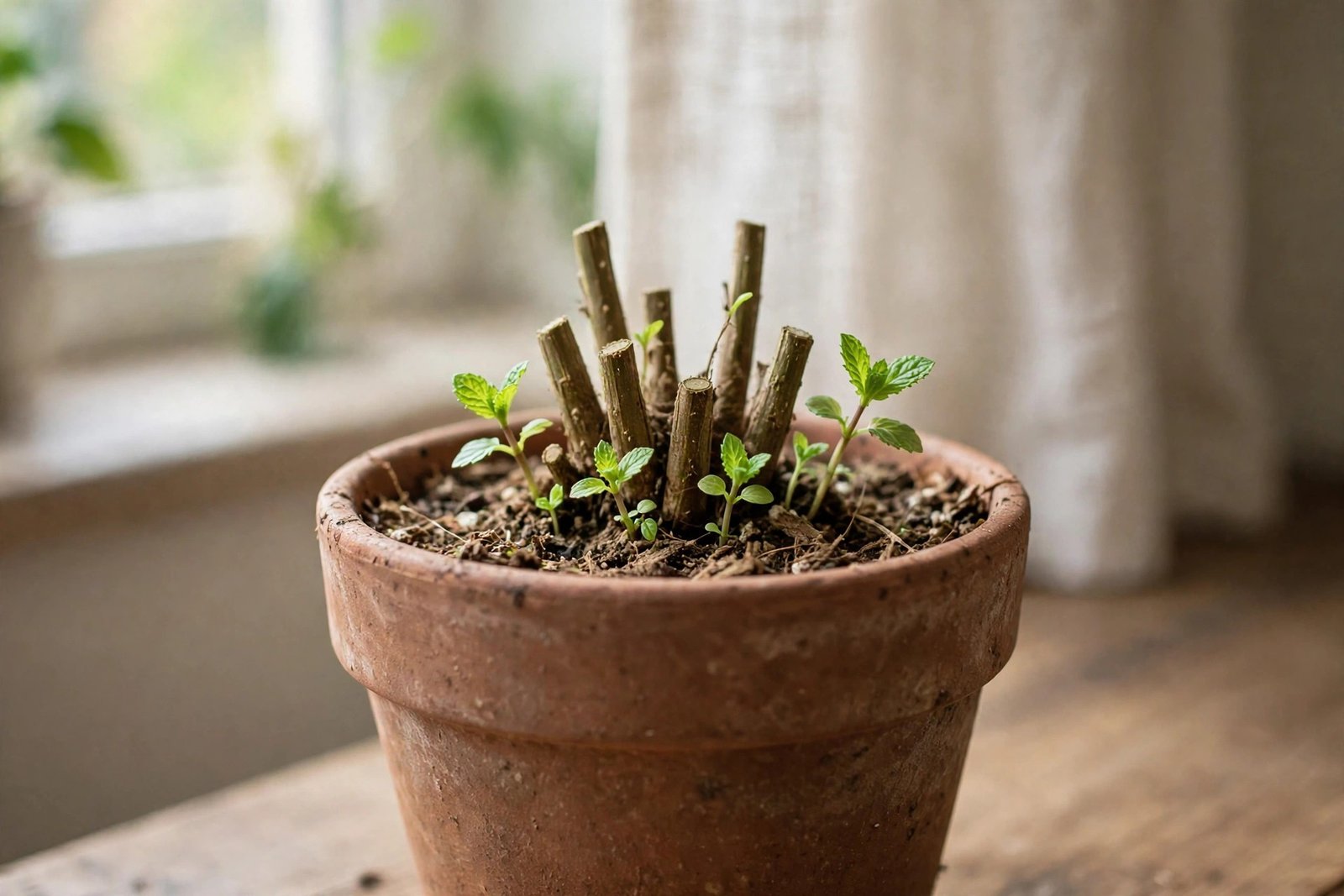
Even a well-kept mint plant gets tired. Growth slows, stems turn woody at the base, and the flavour thins out. The fix is dramatic and simple. Once or twice a year, cut the whole plant back to within an inch of the soil. It looks brutal for a week, then fresh growth pushes up from the crown and the runners, softer and better flavoured than the old stems it replaced. Time a cut-back for early spring if you can, when lengthening days help the regrowth along.
The second clock ticking under the soil is size. Mint fills its pot with roots and runners, and a pot-bound plant declines no matter how well it is watered. Plan on lifting the plant, dividing it or moving it up to a fresh pot of mix, before the third year in the same pot. Keep the healthiest section, replant it, and root a spare cutting or two while you are at it. It is also how you share this plant, which is the one safe way mint travels: in its own new pot.
What Goes Wrong
Leggy, pale stems. The plant is reaching for light it is not getting. Mint on a dim sill stretches, the gaps between leaf sets widen, and the leaves come in small and pale. Move it to your brightest window or add an LED, then cut the stretched stems back so it regrows compact.
Root rot. Stems blackening at the base, leaves yellowing and dropping, and mix that smells sour all point the same way: the roots have been sitting in water. Tip the plant out, trim away black mushy roots, and repot into fresh mix in a pot that drains. Then keep the moisture even, and let the excess go.
Weak flavour. Mint that tastes like scented water has usually been fed too kindly. Grower guidance is consistent on this point: heavy fertilising pushes soft, fast growth and weakens the flavour. Feed lightly if at all, a half-strength liquid feed a few times in the growing season is plenty. Let light and regular pinching do the real work.
The short version: give mint its own wide pot, start it from a cutting, keep the mix moist and the light bright, pinch every time you pick, and cut it back hard once a year. Do those things and one plant will supply your kitchen for years.
Growing Mint Indoors FAQs
Spearmint or peppermint: which is better indoors?
Spearmint is the easier first plant: vigorous, sweet flavoured, and the one most kitchens reach for. Peppermint is stronger and more medicinal in flavour, and just as happy indoors, but it is a hybrid, so it only exists as cuttings and divisions, never true from seed. Grow whichever flavour you will actually use, one plant to a pot either way.
Can mint grow in water only, with no soil?
A jar of mint rooting and leafing on the sill is a fine short-term setup, and it can live in water for a good while. For a plant you plan to keep for years, a pot of mix is better: water alone carries almost no nutrition, and growth slows and thins over time. Root in water, then pot up when the roots reach about an inch.
Why does my mint have no flavour?
Usually one of three things: too much fertiliser pushing soft, fast growth, too little light, or an old plant that needs its yearly cut-back. Feed lightly or not at all, move the plant into your brightest spot, and if the stems have gone woody, cut the whole plant back to within an inch of the soil. Fresh growth in good light is where the flavour lives.
Can I plant mint and basil together in one pot?
No. This is the one rule this guide will not bend. Mint spreads by runners under the surface and will work its way through a shared pot, crowding the basil out within a season. Basil is a well-behaved annual that stays where it is planted; mint is not. Give each plant its own pot and put the pots side by side on the sill instead. They make good neighbours and bad roommates.
How often should I water indoor mint?
Often enough that the mix never fully dries out. There is no honest fixed schedule, because a sunny sill in July and a dim one in January dry a pot at very different speeds. Check with a finger every couple of days and water when the surface starts to feel dry, keeping the mix evenly moist below. Let the excess drain away, and never leave the pot standing in water.
Sources and Further Reading
- University of Maryland Extension, Growing Kitchen Herbs Indoors: 5 to 6 hours of sun on a southern window, basil, chives and mint prefer moist soil, indoor herb temperatures of 65 to 75°F by day and 55 to 65°F at night, compost and vermiculite for moisture-holding mix, and confining invasive herbs such as mint to their own pots.
- Montana State University Extension, Herbs That Thrive Indoors: mint is easy to grow indoors, stems are cut just above a leaf set, and outdoor perennial herbs can be brought in for winter, with a light frost inducing a short rest.
- Extension pot-size guidance, as reported in indoor herb guides citing it: a mint pot of 12 to 16 inches across; other growing guides give 8 to 10 or 8 to 12 inches for a single plant. This guide starts one plant at 12 inches; wide is the rule that matters.
- Grower practice, stated as practice rather than extension fact: a 2 parts soilless mix to 1 part perlite blend, a yearly hard cut-back, and light feeding only, since heavy fertilising weakens flavour.

4 Comments