
Best Fertilizer for Container Vegetables

A pot is a closed kitchen. The plant can only eat what is in the mix, and every watering carries some of it out through the drainage holes. That is why container vegetables need a feeding plan, not a single bag of fertilizer. The plan that extension guides agree on has two parts: a slow-release base mixed in at planting, and a liquid feed added as the plant grows.
The Short Answer: Slow Base, Liquid Top-Up
Mix controlled-release granules into the potting mix when you plant. Then add a fully soluble fertilizer to the watering can as the season goes on. In its container gardens guide, Colorado State Extension puts it plainly: timed-release products alone often do not carry container plants through the growing season, so soluble fertilizer must supplement or replace them. Penn State Extension gives the same system in one line: slow-release at planting, then a soluble feed every two to four weeks.
This guide covers established container vegetables. Seedlings eat far less, and the seed-starting guide covers their first feeds. Microgreens need no fertilizer at all for a short tray crop, as the microgreens guide explains. Herbs sit at the light end of every schedule below.
Read the Bag: What the Three Numbers Mean
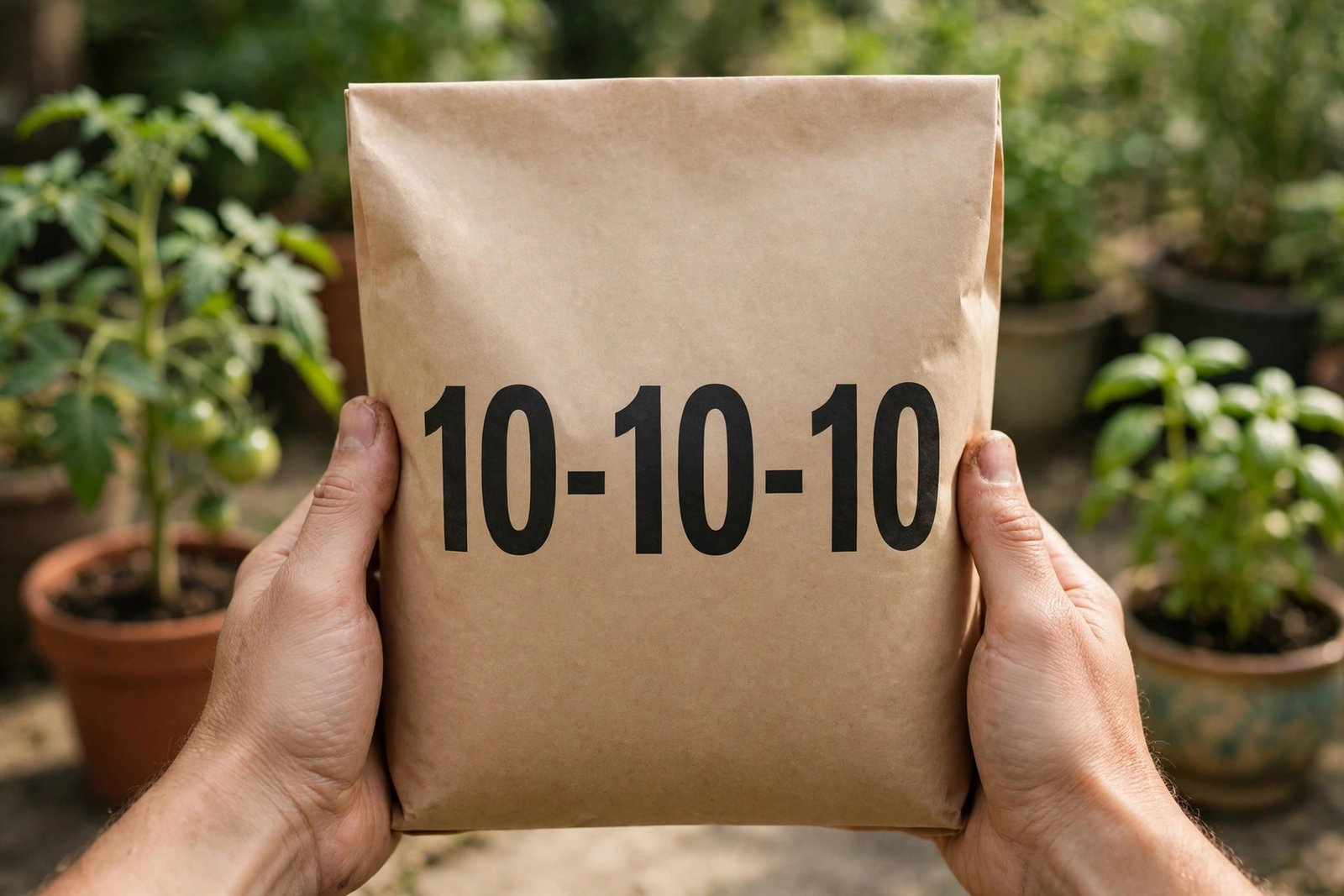
Every fertilizer bag carries three numbers. They are percentages, in order, of nitrogen, phosphate, and potash. A 20-10-5 fertilizer holds 20 percent nitrogen, 10 percent phosphate, and 5 percent potash. Colorado State Extension explains the label this way, and the same page explains ratios: a 15-10-5 has a 3-2-1 ratio, which is the proportion that matters when you compare two products.
Balanced means the three numbers are equal, like 10-10-10 or 20-20-20. A balanced feed suits the growth stage, when the plant is building leaves and stems. A bloom or high-potassium feed has a higher third number, like 9-15-30. That switch matters for fruiting crops. North Carolina A&T State University runs peppers and eggplant on a balanced feed until flowering, then switches to a high-potassium feed. For tomatoes the switch comes after fruit set, when the fruit is about the size of a cherry. Potassium, in the same guide, improves fruit color and flavor along with plant vigor and disease resistance.
One warning belongs here. The numbers are percentages, not amounts. A 20-20-20 is twice as concentrated as a 10-10-10, so the label rate for one is not the rate for the other. Follow the label on the product you hold.
The Four Types, and the Job Each One Does
Four types cover nearly every container. The table shows what each one does, where it falls short, and which job it suits.
| Type | How it works | Where it falls short | Best job |
|---|---|---|---|
| Slow-release granular | Granules mixed into the mix at planting. Coatings release nutrients slowly over weeks to months as water, heat, and microbes break them down. | Alone, it may not carry the whole season. Colorado State says so directly. | The base under every container. Osmocote 14-14-14 is the product North Carolina A&T names, and Hawaii’s extension service gives 1 teaspoon to 1 tablespoon per gallon of mix as a planting rate. |
| Water-soluble (liquid feed) | Powder or liquid dissolved in water. The plant gets it at the next watering. | Easy to overdo, and salts build up fast in a small pot. A skipped week shows quickly. | Top-ups during peak growth, and the weekly feed for fruiting crops. |
| Liquid organic (fish emulsion, seaweed) | Gentle and fast to absorb. Fish emulsion adds trace elements along with the main nutrients, and runs around 8-4-2. | Too slow for a fast-growing plant that needs food now. Fish emulsion can smell, and the smell can attract pets and pests. | Light top-ups and organic-first growers. |
| Granular organic | Dry granules that release nutrients slowly as they break down. They feed soil life as well as the plant. | Too slow when a plant needs food this week. | Base feeding for organic growers, mixed in at planting. Finished compost works the same slow way, and Penn State notes compost up to half the mix can stand in for slow-release fertilizer. |
No product here is a tested pick. Products appear only where an extension source names them, and the label on your product sets the rate.
The Starter-Charge Check
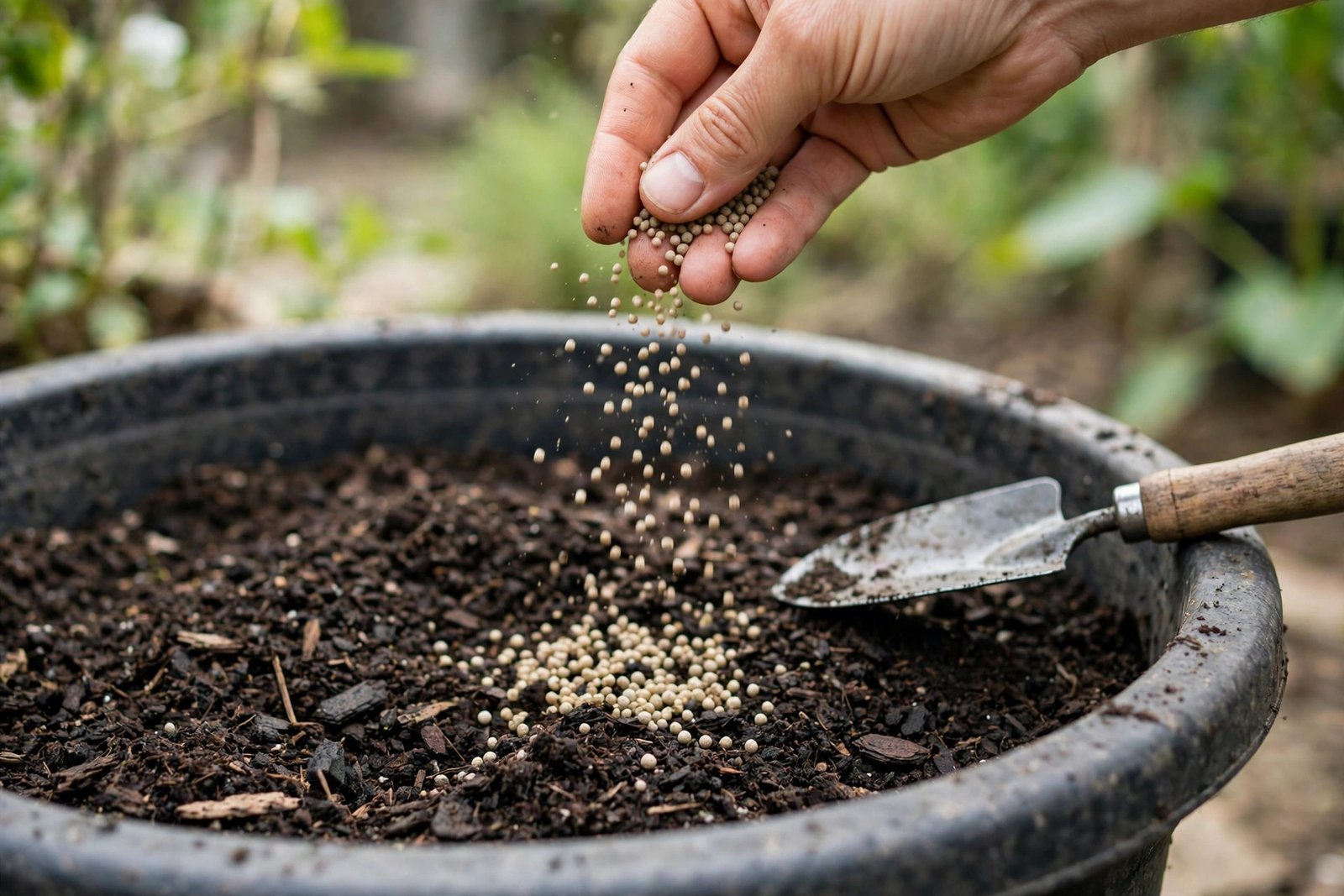
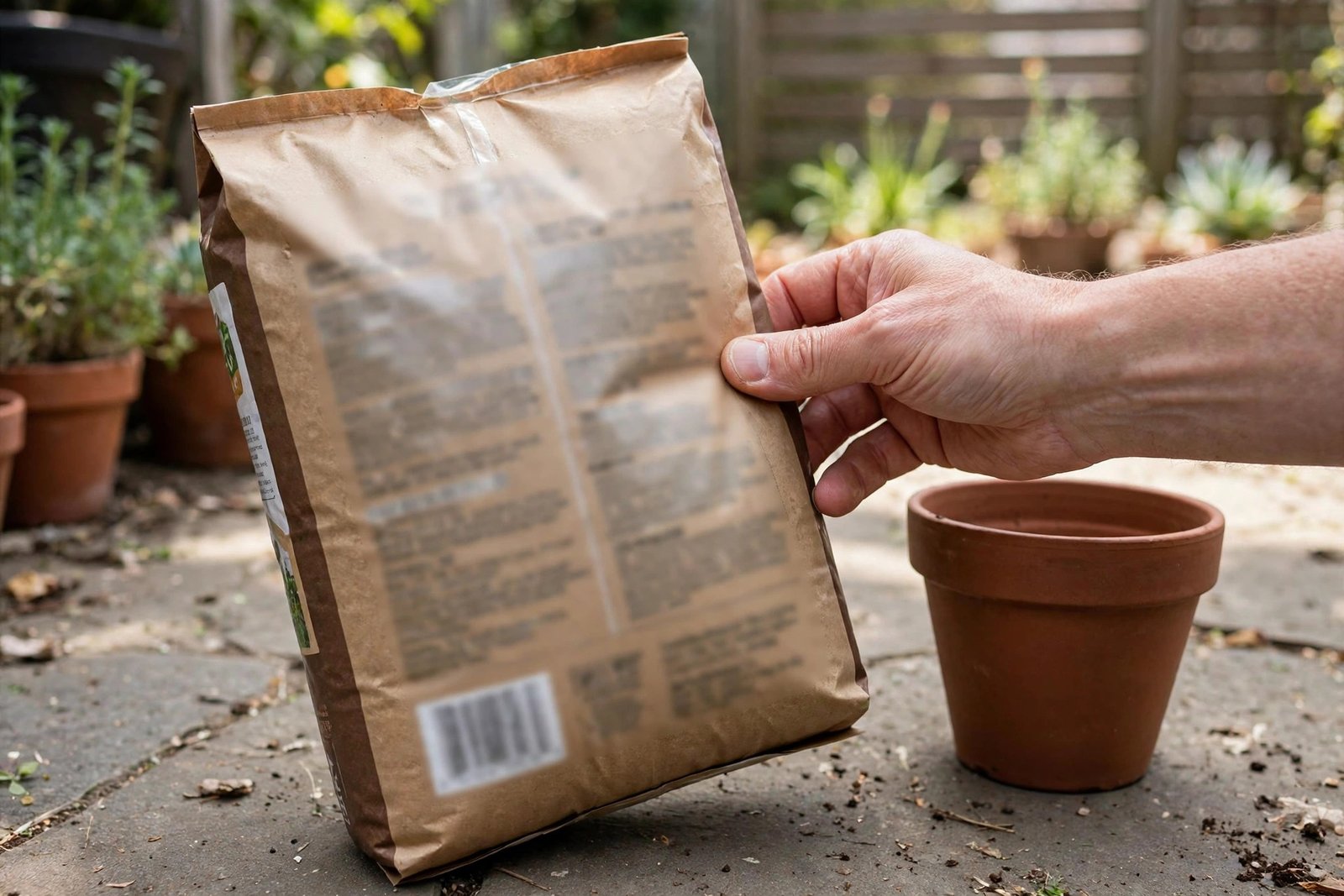
Most bagged mixes arrive with fertilizer already in them. That starter charge is real food, and it changes when you start feeding. The first step is not a schedule. It is the bag. Read it. If it names a feeding period, that period is your starting point.
If the bag says nothing, extension guides disagree, and the disagreement is worth seeing plainly. North Carolina A&T puts the charge at about two weeks for peppers and eggplant, and for tomatoes says it is usually gone after two or three waterings. Virginia Tech Extension and Alcorn State both put it at eight to ten weeks, with water-soluble feeding every two to three weeks after that.
Both can be right. Mixes carry different charges, and heavy watering spends the charge faster. Colorado State notes that well-drained mixes lose fertilizer in the drainage water with every watering. A pot watered daily in summer heat will run through its charge far sooner than a pot watered twice a week in spring. If the bag gives no period at all, assume the short end in a hot, heavily watered pot, and start light soluble feeds once the plant is growing well.
The mix itself is a separate subject. The recipe and the mixing steps live in our guide to the best soil mix for vegetables in pots, and this guide does not repeat them. What matters here is only whether your mix already feeds, and for how long.
The Schedule, by Stage and Crop Group
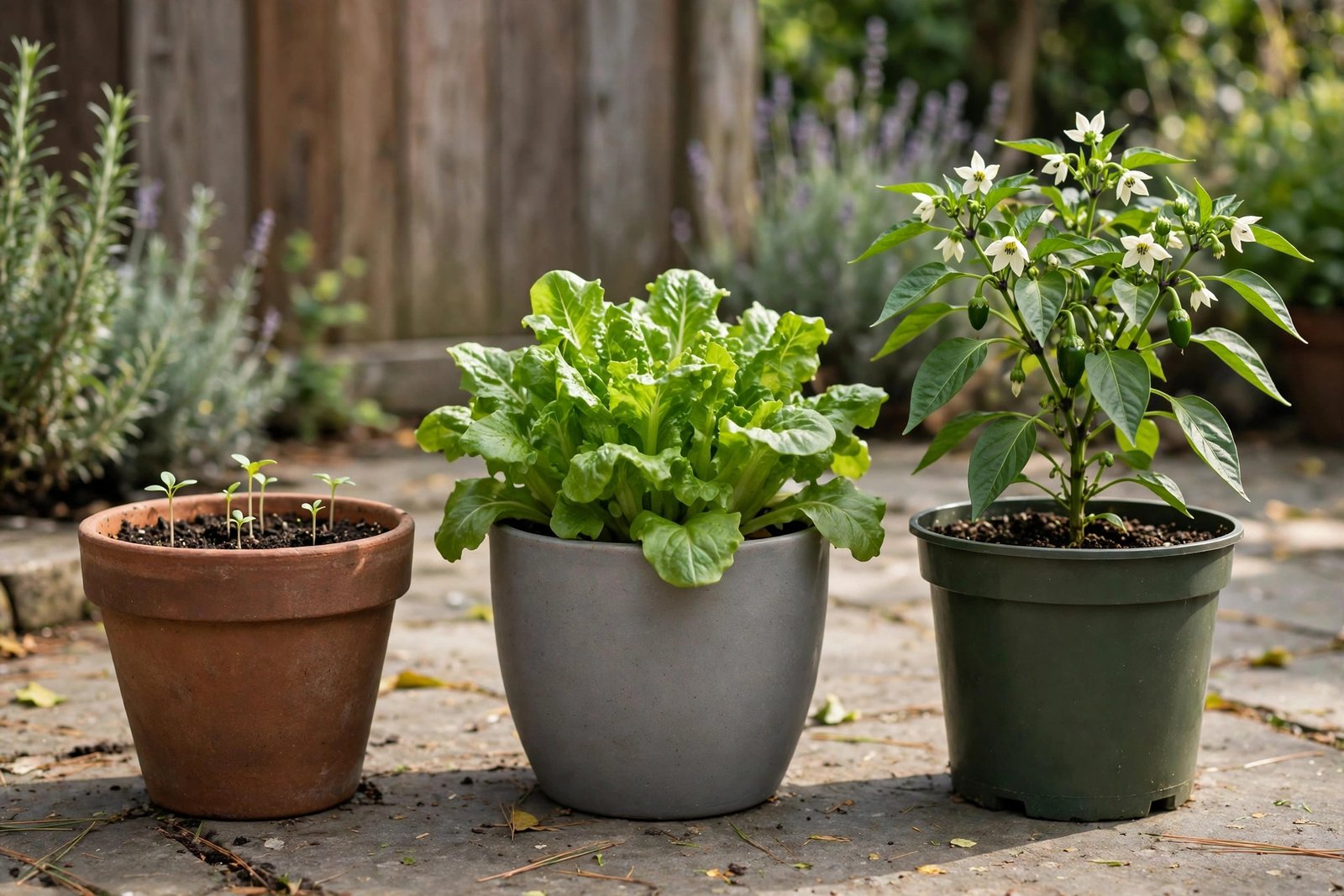
Feeding follows the growth stage, not the calendar date. The table gives one line per stage and crop group. Crop choice comes first, though. If the pots are still empty, our guide to the best vegetables to grow in pots covers which crops earn a container.
| Stage | Fruiting crops | Leafy greens | Root crops | Herbs |
|---|---|---|---|---|
| At planting | Slow-release base mixed in. | Slow-release base mixed in. | Slow-release base mixed in. | Light base only. Herbs ask for the least food of any group. |
| Leafy growth | Balanced water-soluble feed. North Carolina A&T runs it weekly for peppers and eggplant. | Dilute balanced feed every two to three weeks. A 30-day lettuce crop may need only one or two light feeds. | Light balanced feed at the low end of the label range. | Usually nothing yet. The charge carries most herb pots through the early weeks. |
| Flowering and fruiting | Switch to a high-potassium feed at first flowers. Full protocols live in the eggplant guide, the cherry tomato guide, and the pepper guide. | Keep the dilute balanced feed. There is no switch to make, since young leaves are the harvest. | Ease off as roots swell. Follow the low end of the label and let the roots finish. | A light feed now and then is plenty. |
| Wind-down | Taper off as fruiting slows. Stop when the plant stops growing. | Stop with the last picking. | Stop feeding as harvest nears. | Stop as growth slows for the season. |
How often is where the guides differ most, so here is the spread with names attached. North Carolina A&T feeds fruiting vegetables weekly once the charge runs out. Colorado State allows dilute soluble fertilizer with every watering, or full strength weekly or every two weeks, depending on the plant. Virginia Tech and Alcorn State repeat water-soluble feeds every two to three weeks. Penn State re-applies a soluble fertilizer every two to four weeks. These are not four ways of saying the same thing. They reflect different crops, different products, and different climates. Pick the rhythm that matches your product and your plant, follow the label rate, and let the plant’s growth tell you whether the rhythm is right.
Pots kept indoors need less. Virginia Tech notes that indoor plants dry out less quickly and grow more slowly, so they need less fertilizer than the same crop outside. Start at the light end of the schedule and watch growth before adding more. The full indoor routine lives in our guide to growing vegetables indoors.
Apply It Without Burning the Roots
The label rate is a ceiling, not a starting suggestion. Virginia Tech warns plainly that more than the recommended rate can cause fertilizer burn and kill the plants.
Containers have no buffer. Virginia Tech notes that potted plants lack the large volumes of soil and humus that protect garden plants from over-fertilizing. Feed with the watering can. Colorado State’s method puts fully soluble fertilizer in the irrigation water, and the same guide says to follow product directions for concentration and timing. Do not run a dilute feed at every watering and a full-strength feed once a week at the same time. Pick one rhythm and keep the strength matched to it.
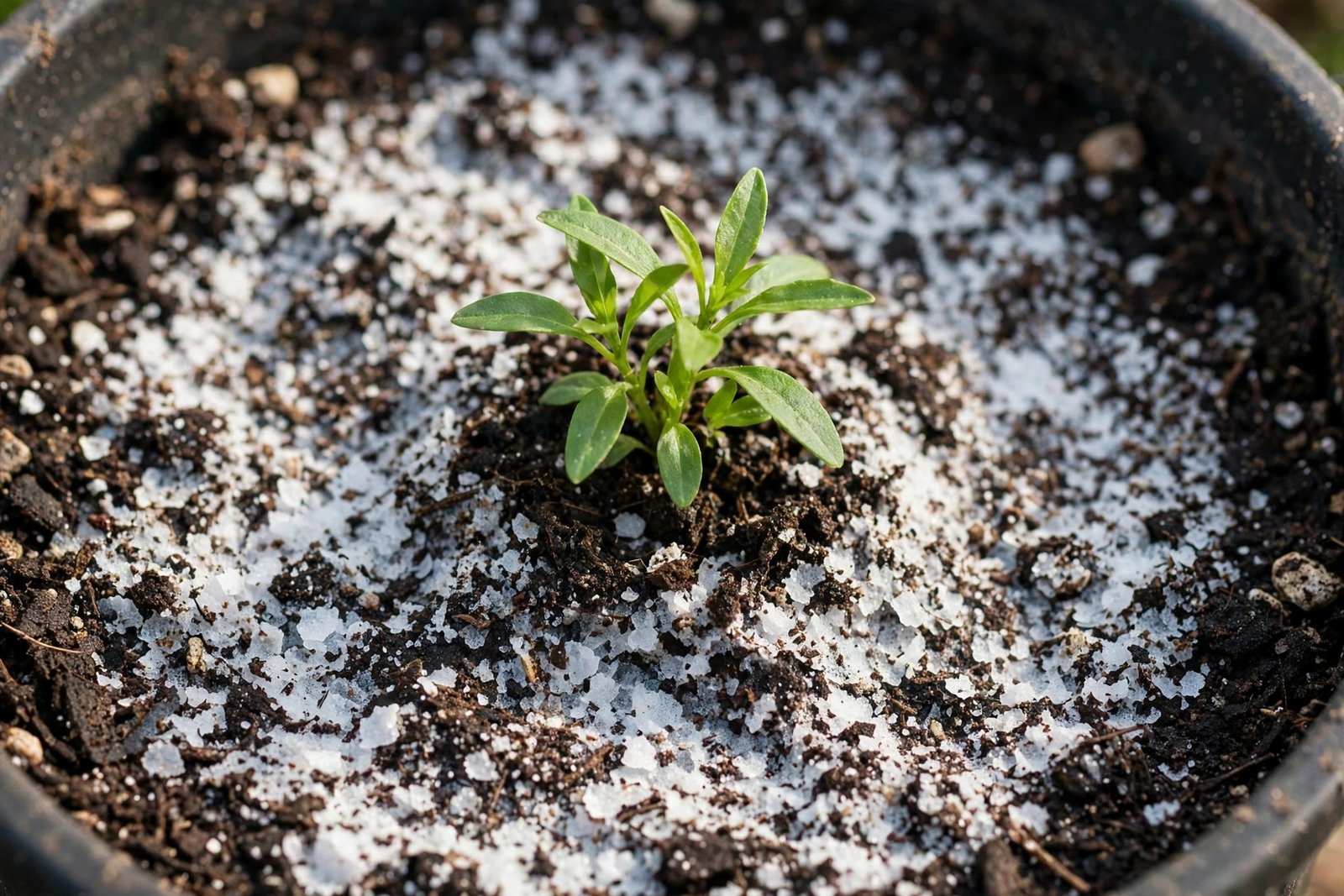
Fertilizers are salts, and salts collect. Colorado State recommends watering completely so about 10 percent of what you add drains out the bottom, which holds salt build-up down. Empty the saucer so the pot does not sit in the drained salts. Hawaii’s extension service adds a weekly thorough watering to flush out excess salts. Burned leaf edges, stunted growth, and fewer blooms are the signs Colorado State names for salt build-up.
| Sign | Likely cause | Fix |
|---|---|---|
| Brown edges on leaves | Salt build-up from feeding | Flush with plain water until it drains freely. Empty the saucer. Hold the next feed. |
| White crust on the mix or pot rim | Salts collecting at the surface | Flush thoroughly once a week, as Hawaii’s extension service recommends. Ease the feed rate down. |
| Wilting in a wet pot | Root damage from too much fertilizer | Flush with plain water. Hold all feeding until new growth resumes. |
| Big leafy plant, slow to flower | Still on the balanced feed after flowering started | Switch to the high-potassium feed at first flowers. Do not add more of the early feed. |
| Growth stalls weeks after planting | The slow-release base ran out | Start soluble top-ups. Colorado State warns that timed-release alone often does not carry the season. |
Frequently Asked Questions
How often should I feed container vegetables?
There is no single number, and any guide that gives you one is hiding the spread. North Carolina A&T feeds fruiting vegetables weekly once the starter charge runs out. Colorado State allows a dilute feed with every watering or a full-strength feed weekly or every two weeks. Virginia Tech and Alcorn State repeat feeds every two to three weeks, and Penn State every two to four weeks. Match the rhythm to your product and your plant, follow the label rate, and adjust by how the plant grows.
My potting mix already has fertilizer. When do I start feeding?
Read the bag first. If it names a feeding period, that period is your start date. If it says nothing, know that extension guides disagree: North Carolina A&T puts the charge at about two weeks, while Virginia Tech and Alcorn State put it at eight to ten weeks. Heavy watering spends the charge faster, so a pot watered daily in summer heat sits at the short end. Start light soluble feeds once the plant is growing well and the charge period has passed.
Can I use one fertilizer for everything in containers?
Almost. One balanced slow-release base at planting plus one balanced liquid feed covers leafy greens, root crops, and herbs, with herbs fed lightest. Fruiting crops are the exception: once flowers open, they do better on a high-potassium feed, so a second bottle earns its shelf space if you grow tomatoes, peppers, or eggplant.
How do I know if I overfed?
Brown leaf edges, a white crust on the mix surface, and wilting in a pot that is already wet are the classic signs. Fertilizers are salts, and salts collect in a small pot. Flush with plain water until it drains freely, empty the saucer, and hold all feeding until the plant shows new growth.
The Bottom Line
Feed the pot in two parts. A slow-release base at planting, then a liquid feed that matches the growth stage. Read the bag before you add anything, switch fruiting crops to a high-potassium feed when flowers open, and treat the label rate as a ceiling. The plant will tell you the rest, in growth you can see.
Sources and Further Reading
- Colorado State University Extension, Container Gardens: the two-part system, soluble feeding rhythms, and salt management.
- Colorado State University Extension, Understanding Fertilizers: NPK grade and ratio, slow-release coatings, and fish emulsion analysis.
- North Carolina A&T State University, Growing Fruiting Vegetables in Containers: the starter charge, weekly balanced feeding, the high-potassium switch, and the Osmocote example.
- Virginia Tech Extension, Vegetable Gardening in Containers: the eight to ten week charge, feeds every two to three weeks, fertilizer burn, and indoor feeding.
- Alcorn State University Extension, Container Vegetable Gardening: the same eight to ten week charge and two to three week repeat.
- Penn State Extension, Container Vegetable Gardening: Four Keys to Success: slow-release at planting, soluble feeds every two to four weeks, and compost as a slow-release stand-in.
- University of Hawaii CTAHR, Potting Mix, Fertilizer, and Irrigation: the Osmocote planting rate, granular re-application, and the weekly salt flush.