Quick answer: Grow bags or pots?
Choose fabric grow bags if you want airflow around the roots, flexible storage and a lightweight container when empty. Choose plastic pots if you prefer a rigid container that generally loses less moisture through its sides.
The deciding factor: Grow bags often need more frequent watering. Container size, weather, drainage and the vegetable you grow matter more than the material alone.
Grow Bags vs. Pots for Vegetables: Which Is Better?

Grow bags and traditional pots can both grow healthy vegetables, but they suit different gardening routines. Fabric grow bags allow air to reach the edges of the growing medium, which can encourage branching roots through a process called air pruning. Plastic pots hold their shape and usually lose less moisture through their sides.
For most home gardeners, the choice comes down to watering, root space and where the containers will sit. A grow bag may work well on a patio if you can check moisture regularly. A plastic pot may be easier to manage if you want to reduce moisture loss during warm weather.
Neither option is automatically better for every vegetable. This guide compares their practical differences and explains how to choose a container for tomatoes, peppers, potatoes and leafy greens.
Grow Bags vs. Pots: At-a-Glance Comparison
| Feature | Fabric grow bags | Plastic pots |
|---|---|---|
| Root growth | Air exposure can encourage root branching | Roots may circle the inside wall if the plant becomes root-bound |
| Water retention | Often dries out faster | Usually loses less moisture through the sides |
| Drainage | Water can escape through the fabric and base | Depends on adequate drainage holes and the growing medium |
| Storage | Many bags fold flat when empty and dry | Rigid containers take up more room |
| Stability | Flexible sides may bulge when filled | Rigid walls hold their shape |
| Best fit | Gardeners who value airflow and can monitor watering | Gardeners who prefer rigid containers and potentially less frequent watering |
These are general tendencies, not guarantees. Container size, growing medium, plant maturity, sunlight and weather all affect how a container performs.
1. Root Growth: Do Grow Bags Help Roots Develop Better?
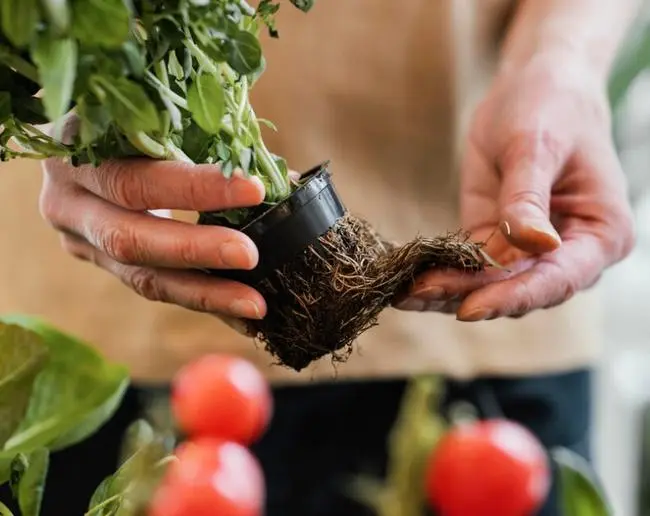
Fabric grow bags allow air to reach the edges of the growing medium. When a growing root reaches the air-exposed fabric, its tip may stop extending. This process, known as air pruning, can encourage the development of side roots.
In a solid-sided pot, roots can follow the inside wall. If a plant stays in a container that is too small for too long, some roots may circle around the pot and become crowded. That does not mean every plastic pot causes poor root growth or that every grow bag produces a better harvest.
Healthy roots still need enough room, oxygen, moisture and nutrients. Air pruning is one feature to consider—not a substitute for the right container size and growing conditions.
Gardening tip
Choose a container based on the mature size of the vegetable, not just the size of the seedling. A fast-growing plant can outgrow a small container before the season ends.
The growing medium matters, too. See our guide to the best soil mix for vegetables in pots for advice on choosing a mix suited to container growing.
2. Watering: Which Container Dries Out Faster?
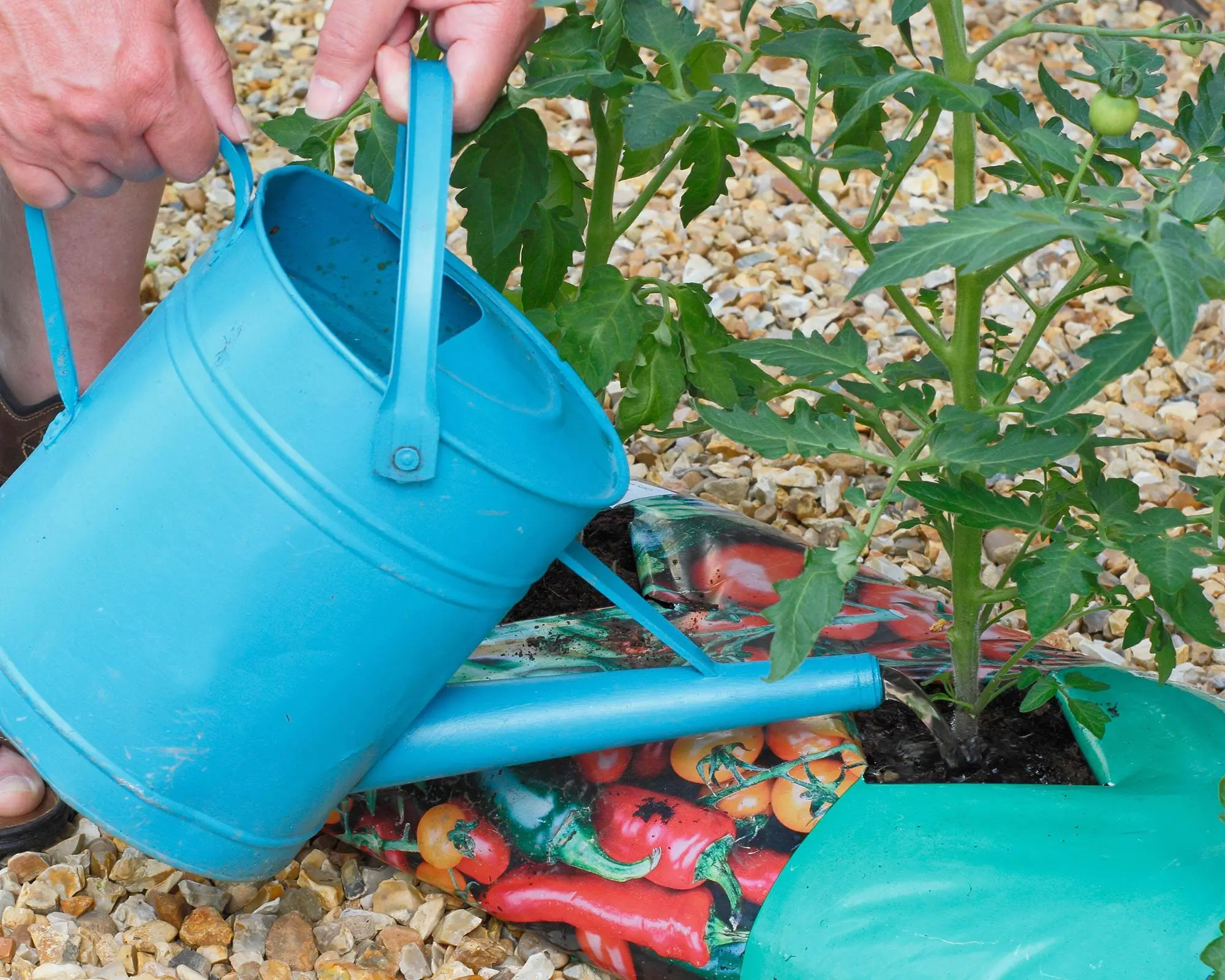
Watering is often the biggest day-to-day difference between grow bags and plastic pots.
Fabric allows air to move through a grow bag’s sides, so moisture can escape through more of its surface. During hot, dry or windy weather, a grow bag may need watering more often than a plastic pot of a similar size. Mature tomato plants can be particularly demanding because they use substantial amounts of water as they grow and produce fruit.
Plastic pots usually lose less moisture through their sides. That can make them easier to manage if you cannot check your plants frequently. However, a small plastic pot in direct sun can still dry out quickly. Container size, plant growth and the potting mix all influence how long moisture lasts.
- Check below the surface. The top layer may look dry while the root zone is still moist.
- Water the root zone thoroughly. Allow excess water to drain rather than leaving the roots in standing water.
- Check more often in hot or windy weather. Conditions can change how quickly containers dry out.
- Adjust for plant size. A large, fruiting plant usually needs more water than a small seedling.
Do not rely on a fixed watering schedule alone. Wilting can indicate dry soil, but roots can also struggle when the growing medium stays too wet. Check the moisture before adding more water.
3. Drainage: Are Grow Bags Better Than Pots?
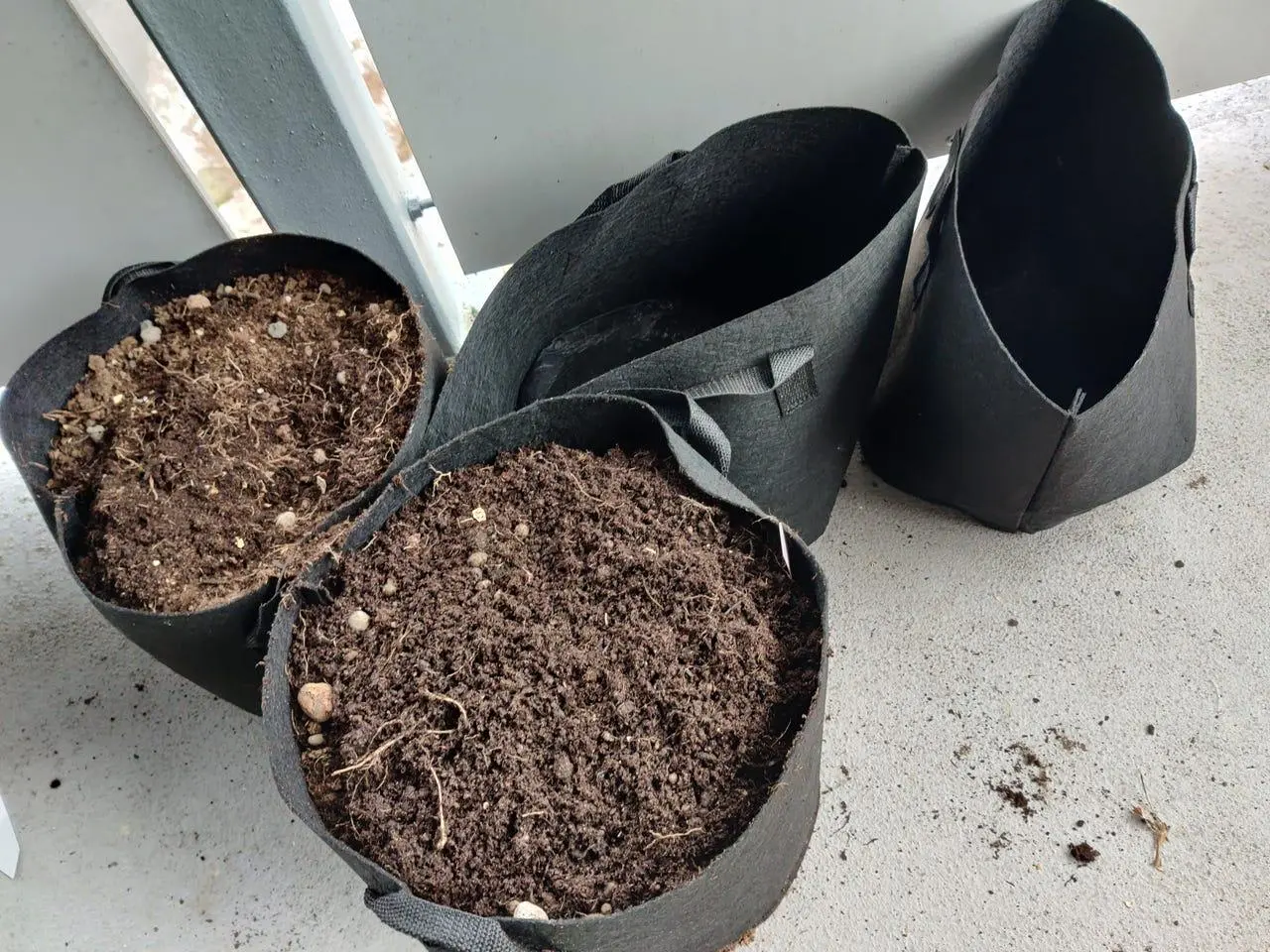
Grow bags allow excess water to escape through their fabric and base. This can help prevent water from becoming trapped around the roots, provided the bag sits on a surface that allows it to drain freely.
Plastic pots can also drain effectively when they have enough unobstructed drainage holes. A pot without adequate drainage can leave roots sitting in saturated growing medium, increasing the risk of root problems.
Both containers need a suitable growing medium that holds enough moisture for the plant while allowing excess water to drain. Fabric does not make overwatering impossible, and plastic does not automatically mean poor drainage.
A common mistake to avoid
Do not add gravel to the bottom of a pot as a drainage fix. Use a container with suitable drainage holes and a well-suited growing medium instead.
4. Heat and Outdoor Growing Conditions
Container material, color, size and placement can all influence the temperature around vegetable roots. A dark container in direct afternoon sun may heat up considerably. A larger volume of growing medium can buffer some temperature changes.
Fabric bags exchange air and moisture through their sides, but that does not mean every grow bag keeps roots cooler than every plastic pot. The result depends on the material, weather and growing location.
If your containers sit on a hot patio or balcony, check them during the warmest part of the day. Where needed, protect them from intense afternoon sun or reflected heat. Tall plants also need adequate support, especially in exposed or windy spots.
Container gardening gives roots less room than an in-ground garden, so moisture and temperature can change relatively quickly. Choose a container you can manage consistently in your actual growing conditions.
5. Cost, Durability and Storage
Grow bags are flexible, and many fold flat when they are empty, clean and dry. This makes them useful for gardeners with limited storage space. Their lifespan depends on fabric quality, seams, sunlight exposure and care.
Plastic pots hold their shape and can be reused for multiple growing seasons if the material stays in good condition. They are easy to arrange, but rigid pots can take up more storage space. Lower-quality plastic may become brittle after prolonged exposure to sunlight.
Compare expected lifespan as well as purchase price. A cheap container may not be the best value if it needs replacing frequently. Also consider the time you will spend watering, cleaning and storing it.
6. Which Container Works Best for Different Vegetables?
The right container depends on the plant’s mature size, root space and water needs. Choose the container around the crop rather than assuming one material is best for every vegetable.
Tomatoes
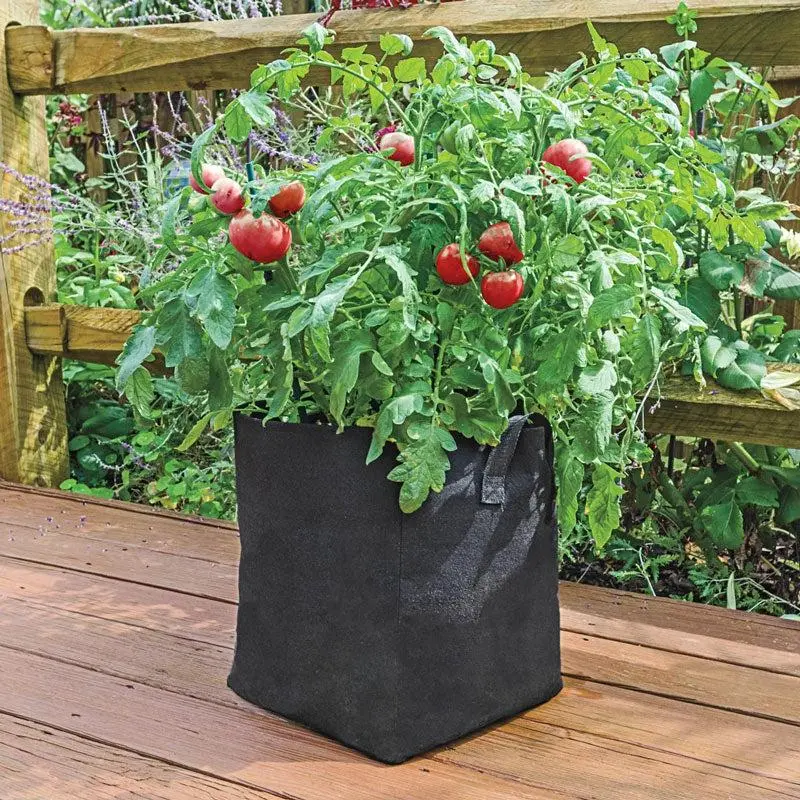
Tomatoes need adequate root space, consistent moisture, sunlight and support. Both grow bags and plastic pots can work well when they are large enough for the variety.
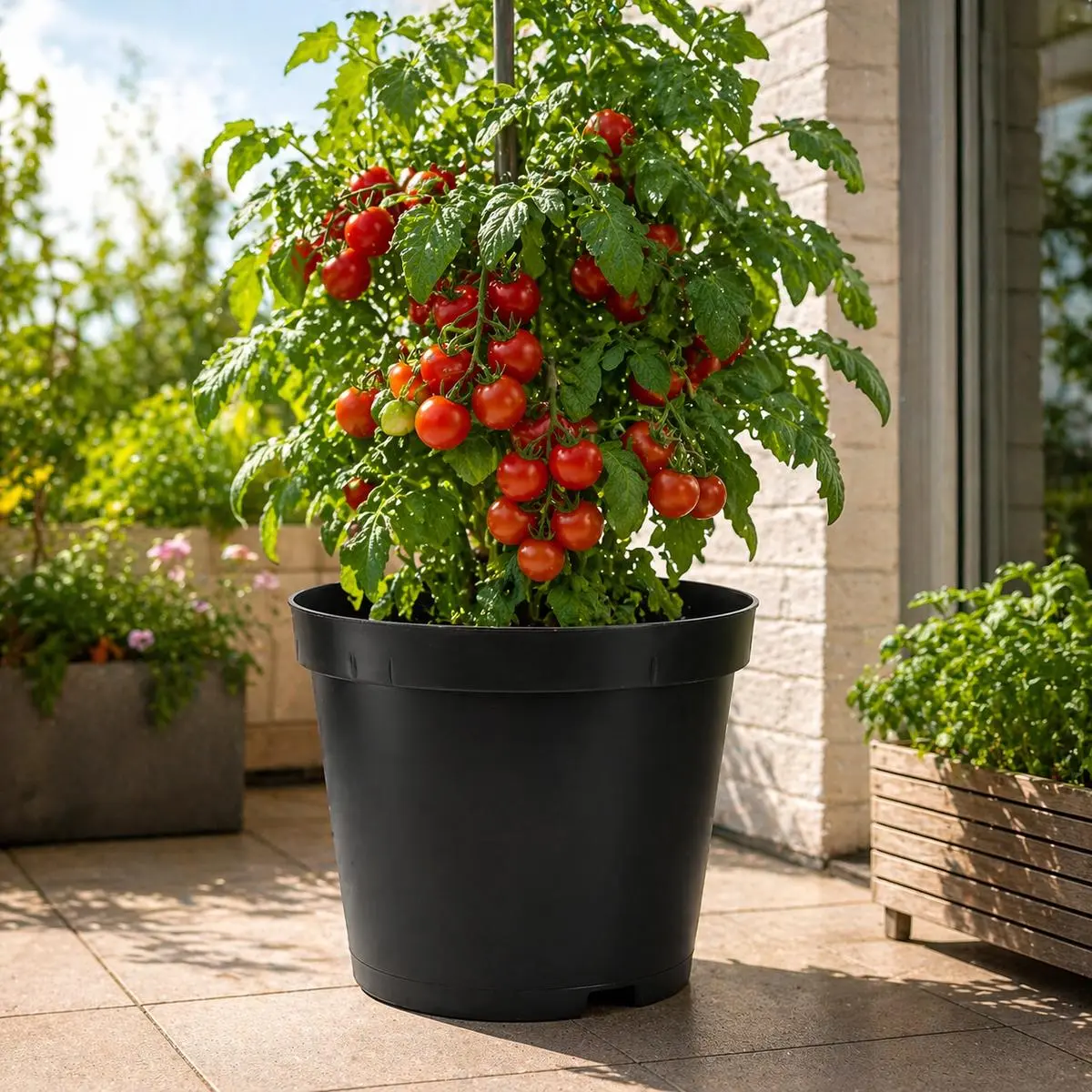
A grow bag may suit gardeners who want airflow around the roots and can monitor watering. A large plastic pot may be easier to manage if reducing moisture loss is a priority. Large indeterminate tomatoes generally need more room and stronger support than compact patio varieties.
Peppers
Peppers can grow in either container type. Choose a size that accommodates the mature plant, and avoid allowing the growing medium to swing repeatedly between very wet and very dry.
If your containers receive strong sun or sit in a windy spot, check fabric bags regularly for moisture. Plastic pots may reduce moisture loss through their sides, but they still need enough root space and adequate drainage.
Potatoes
Grow bags can be convenient for potatoes because they provide flexible space for the growing medium and can make the crop easier to access at harvest. Choose a suitable size for the variety and allow enough room for the crop to develop.
Deep pots and other suitable containers can also grow potatoes if they provide enough volume and drainage. A grow bag does not automatically produce a larger harvest; variety, growing conditions, water and care still matter.
Lettuce and Other Leafy Greens
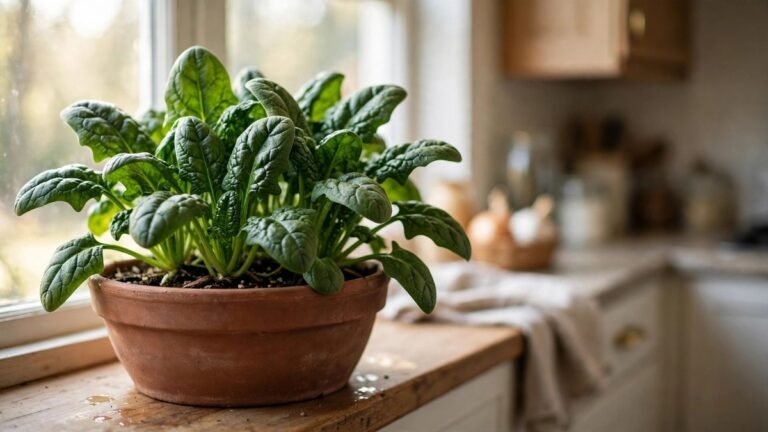
Lettuce, spinach and many other leafy greens can grow in wide planters or appropriately sized pots. They often need less depth than large fruiting vegetables, so a wide container may make better use of limited space.
Leafy greens can struggle when the growing medium dries out. Choose a container that fits your watering routine and the conditions where it will sit. A plastic planter may be convenient in a hot spot, while a grow bag can work well when moisture is checked regularly.
Still deciding what to plant? Explore our guide to the best vegetables to grow in pots.
When Should You Choose Grow Bags?
Grow bags are worth considering when their benefits match your space and gardening routine.
- You want flexible containers that can be folded away when empty.
- You value root aeration and the potential benefits of air pruning.
- You can monitor moisture, especially during hot or windy weather.
- You want to grow vegetables in a suitable patio or outdoor space.
- You can place the bags on a stable surface where water drains freely.
The main trade-off is watering. If you often forget to check your plants or cannot water regularly during hot spells, grow bags may require more attention than you want to give them.
When Do Plastic Pots Make More Sense?
Plastic pots may suit you better if you prefer a rigid container and want to limit moisture loss through the sides.
- You want to reduce moisture loss through the container walls.
- You prefer containers that hold their shape when filled.
- You want to arrange pots neatly or move smaller plants around your space.
- You have room to store rigid containers between growing seasons.
- You can provide adequate drainage and enough growing medium for each plant.
Plastic pots still need regular moisture checks. A pot that is too small, poorly drained or exposed to intense sun can cause problems regardless of its material.
How to Choose the Right Container
Before buying grow bags or pots, work through these five questions:
- What are you growing? Check the mature size and container requirements of the specific vegetable variety.
- How often can you water? If your time is limited, consider a suitably sized container that retains moisture well.
- Where will the container sit? Account for sunlight, wind, reflected heat and drainage.
- How much room do you have? Leave space for the container, mature foliage, plant supports and access for watering and harvesting.
- Can you move and store it safely? A filled container can become heavy, especially after watering. Choose its final position before filling it.
Simple decision guide
Choose a grow bag if airflow, flexible storage and root pruning matter to you—and you can keep up with watering.
Choose a plastic pot if you prefer a rigid shape and want to reduce moisture loss through the container’s sides.
You do not need to use only one container type. You could grow tomatoes in a suitably sized grow bag, keep peppers in plastic pots and use a wide planter for leafy greens. Match each container to the plant and the amount of care you can realistically provide.
For more ideas on arranging vegetables in limited outdoor space, see our guides to small patio vegetable garden ideas and starting a balcony vegetable garden in an apartment.
Frequently Asked Questions
Open a question below to see its answer. Opening another question automatically closes the previous one.
Are grow bags as good as pots?
Grow bags can be just as useful as traditional pots for growing vegetables. They allow air to reach the growing medium through their sides, while plastic pots generally lose less moisture through their walls. The better choice depends on the crop, container size, weather and watering routine.
What are the disadvantages of grow bags?
Grow bags can dry out faster than comparable plastic pots, particularly in hot or windy weather. They may need more frequent watering, can be awkward to move when filled and may wear out over time. Their flexible sides can also make some bags less stable than rigid containers.
Do vegetables grow better in grow bags or plastic pots?
Neither type automatically produces better vegetables. Root space, sunlight, water, nutrients, variety and growing conditions all influence growth. Grow bags offer air pruning, while plastic pots may make moisture management easier in some situations.
Do grow bags need more water than pots?
Often, yes. Moisture can escape through the fabric, so grow bags may dry out faster than similar plastic pots. The difference depends on container size, weather, growing medium and plant maturity. Check moisture in the root zone rather than relying on a fixed schedule.
Can you grow tomatoes in grow bags?
Yes. Tomatoes can grow in grow bags when the container provides enough root space and the plant receives suitable sunlight, water, nutrients and support. Large plants may need more frequent watering during warm weather.
Can fabric grow bags be reused?
Many fabric grow bags can be reused. Remove old roots and growing medium, clean the bags according to the manufacturer’s instructions, and let them dry completely before storing. Replace a bag if its fabric or seams deteriorate enough to affect its use.
Grow Bags vs. Pots: The Final Verdict
Choose grow bags if you value root aeration, flexible storage and a container that is light when empty, and you can keep up with watering. Choose plastic pots if you prefer a rigid shape and want to reduce moisture loss through the container’s sides.
For either option, the essentials remain the same: enough room for the roots, a suitable growing medium, proper drainage and consistent care. Start with the needs of your vegetable and the conditions in your garden. The container that makes those needs easiest to meet is the better choice for you.
For additional guidance, read the University of Maryland Extension guide to growing vegetables in containers, which covers container selection, root development, drainage and watering.

4 Comments