How to Grow Rosemary Indoors
Yes, rosemary can live indoors, and it can live there all winter. But it is a woody Mediterranean shrub, not a soft kitchen herb, and it judges your home by three things: the brightest spot you have, a cool room, and a pot that dries out between waterings. Give it all three and it holds its green needles all winter. Miss two of them and it fades slowly, no matter how much attention you give it.
This guide starts with the dying, because that is where most indoor rosemary stories end. Then it covers the room, the pot, the watering rule, and the cutting rules for a woody shrub, with cuttings as insurance and the move indoors last.
Quick self-check before you start. One, do you have a spot with strong direct sun, or a grow light you can run in a cool room? Two, can that spot stay cooler than a heated living room? Three, are you willing to water less than feels kind? Three yes answers mean rosemary has a real chance in your home. If your only spot is warm and dim, this is the wrong plant for that spot. Our list of the best herbs for a windowsill shows what fits a dim sill better.
Why Indoor Rosemary Dies: It Dies From Kindness
Most indoor rosemary dies from kindness. The owner waters it like a houseplant, keeps it in the warm living room where the family lives, and gives it the light from an ordinary window. Each of those choices is kind. Together they are the three killers, in order: wet roots, dim light, and a warm, dry room.
Wet roots kill first. North Carolina State Extension calls overwatering the common cause of rosemary decline or death. Nebraska Extension says the biggest threat to winter survival is wet, poorly drained soil, because it leads to root rot. Penn State Extension adds that overwatering causes root rot that can be deadly, especially in pots kept indoors over winter. A pot that stays wet in a cool room is the most dangerous combination of all, because the mix dries slowly and the roots sit in it.
Dim light kills second. Rosemary is a full sun plant, and a window that looks bright to you can still be dim to a shrub from dry, rocky Mediterranean hillsides. Weak light stretches the stems thin and pale. A warm, dry room finishes the job. Illinois Extension puts it plainly: we typically keep our homes a little too warm and too dry for rosemary.
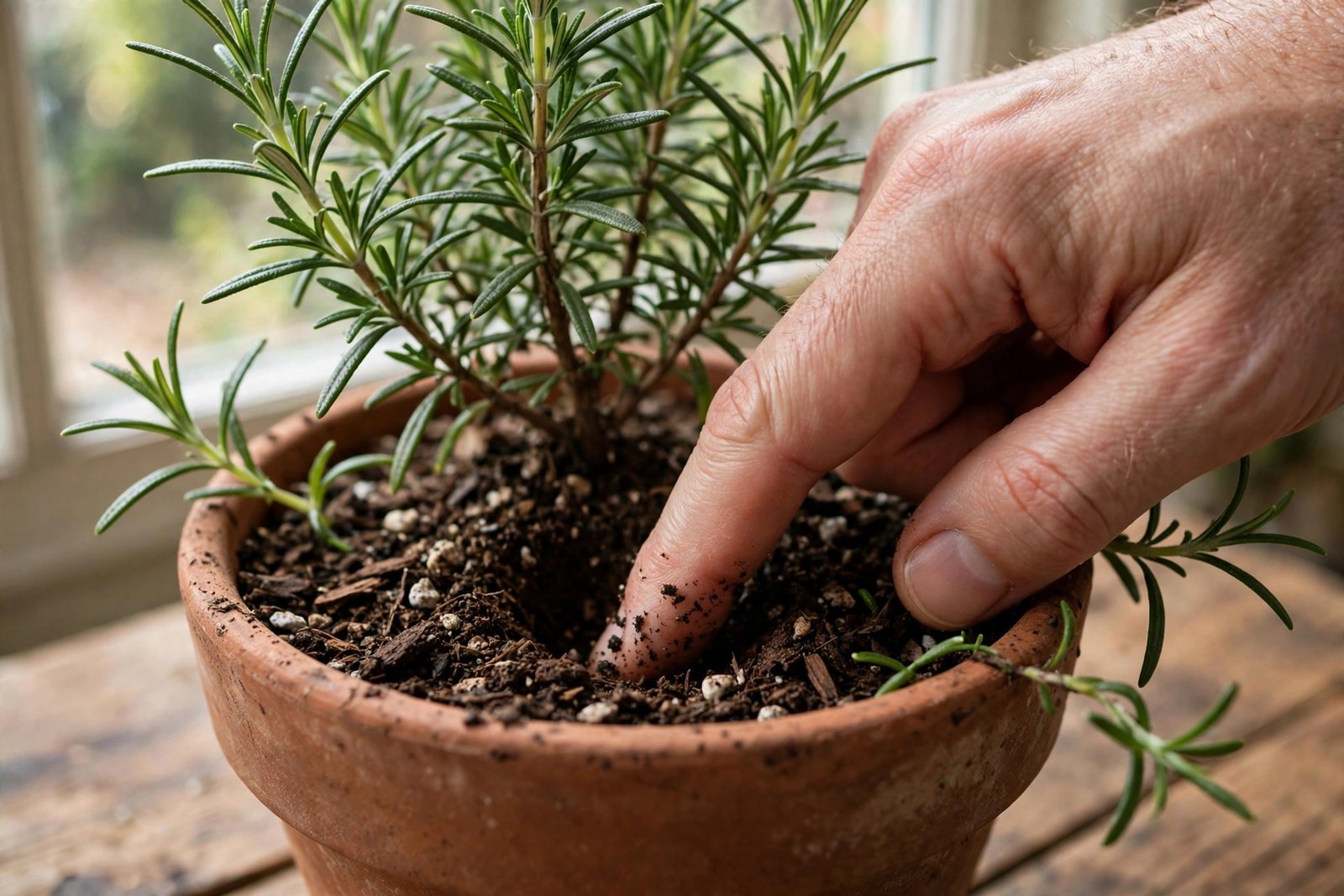
Here is the trap. Needles that go limp and drop can follow too much water or too little of it. Penn State notes that both too little and too much water make overwintering rosemary difficult, so the foliage alone cannot tell you which problem you have. Check the soil and the roots before you reach for the watering can. Push a finger into the mix. If it is wet below the surface and the plant is limp, more water is the worst move you can make. If it is dry right through, water it well and let it drain.
One link instead of a second lesson: the general checkup for indoor herbs, including the watering and light mistakes that catch every beginner, lives in our guide to indoor herb garden mistakes. The rest of this post stays on rosemary.
The Room: The Coolest Bright Spot in the House
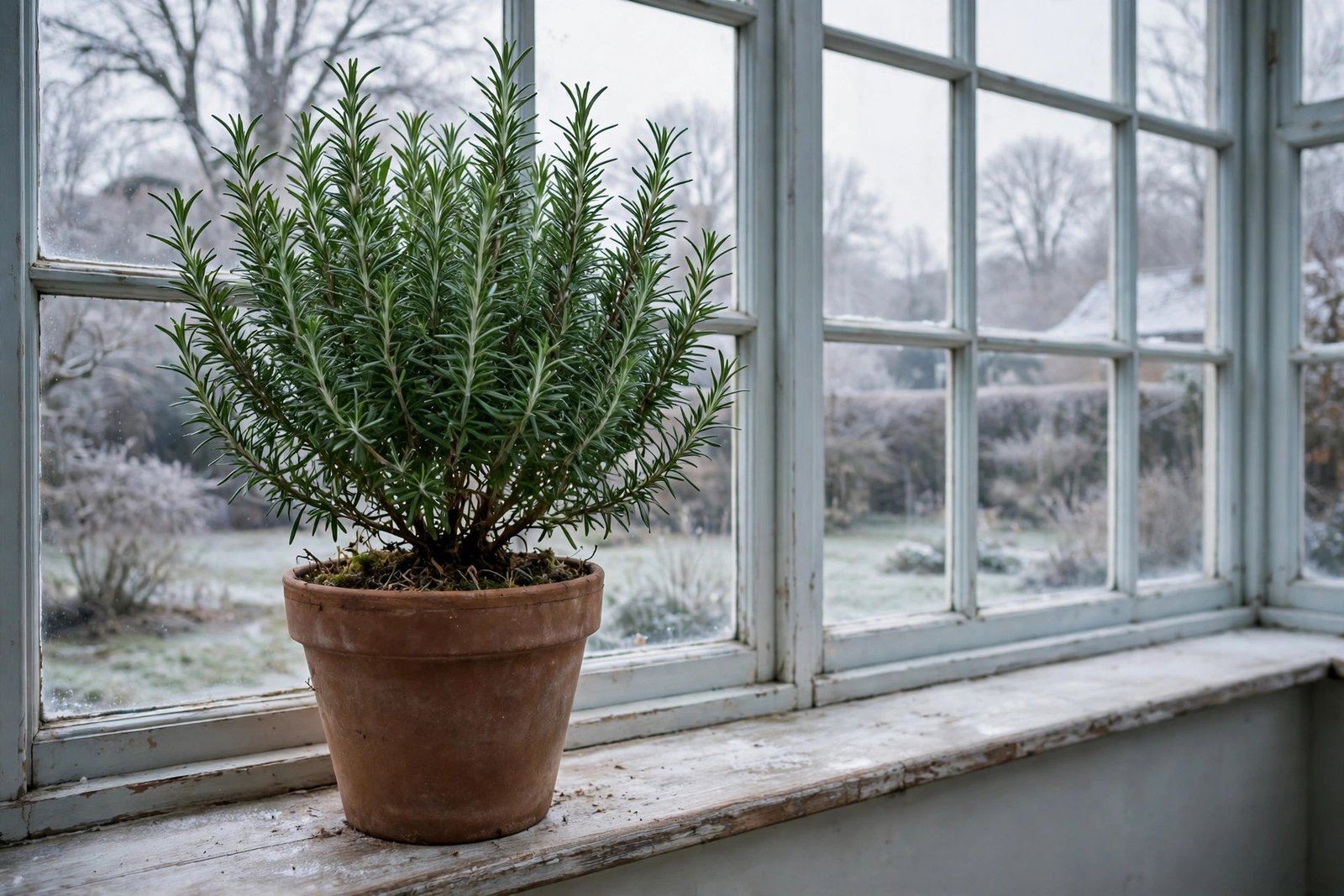
Rosemary wants the coolest sunny spot in the house, not the warm living room. That is the direct opposite of the basil rule, and it is exactly why this plant needs its own guide. A cool sunroom, a bright enclosed porch, or a sunny basement window all beat a warm, dim corner.
The extension figures disagree in the details, so here they are with their scopes labelled. Both rosemary-specific figures sit below the general herb band.
| Source | What it says | Scope |
|---|---|---|
| Illinois Extension | Around 50 to 60°F, with very bright sunlight | Rosemary overwintering |
| Nebraska Extension | Happier at 50 to 55°F if available; normal indoor temperatures are fine | Rosemary as a houseplant |
| Penn State Extension | 65 to 70°F days, 55 to 60°F nights | Herbs in general |
Read the table as a direction, not a thermostat setting. A living room in the low 70s will not kill it outright, and Nebraska says normal indoor temperatures are fine, but a cooler spot with strong light is where the plant does its best.
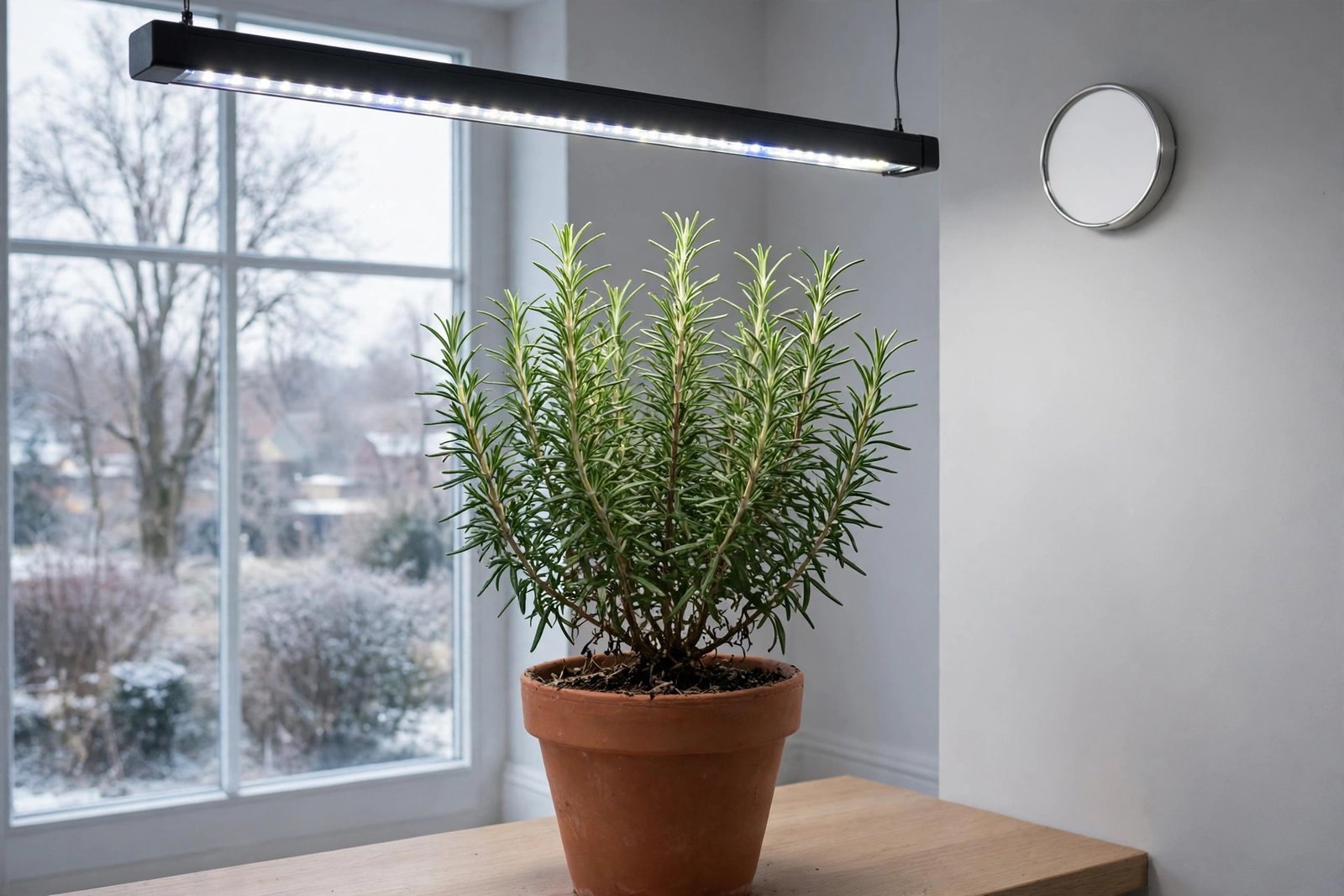
Light is the other half of the same deal. Illinois Extension puts rosemary’s need at more than 6 hours of direct sunlight a day, and NDSU Extension says around eight hours indoors. A south-facing window in full sun is the classic answer, and Penn State names a south-facing window or supplemental lighting for pots brought indoors. If your coolest room is short on sun, put the plant under a grow light in that cool room, which is the combination Illinois Extension suggests. The full light system for indoor herbs, window directions and lamp setup included, lives in our guide to how much sunlight indoor herbs need. This post claims only the rosemary numbers.
Air matters as much as light and temperature. Penn State warns that rosemary is prone to powdery mildew and root rot, and says adequate airflow helps prevent mildew. North Carolina State adds that poor circulation and high humidity can cause powdery mildew. Give the plant space around it and moving air. A small fan helps when the room is still. Dry air is the other edge. Penn State notes that forced-air heating makes the driest winter air for indoor plants, and that low humidity dries leaves out. A shallow tray of pebbles and water under the pot, or grouping containers together, raises the humidity around the plant without wetting the mix. NDSU suggests the pebble tray too.
Two placement details in one line each. Keep the pot a few inches back from cold window glass on freezing nights. And keep it away from heat vents, which blow exactly the warm, dry air this plant dislikes.
The Pot and the Mix: Built to Dry
The pot and the mix have one job: dry out. Rosemary roots rot in mix that stays wet, so everything about the container points toward drainage and air. Clay or terracotta pots help, because the walls breathe. Penn State notes that clay pots permit rapid drying. Iowa State says clay and terracotta work particularly well for herbs because they let the mix dry well between waterings. NDSU calls clay or terracotta best for rosemary for the same reason. Whatever the material, the pot must have drainage holes in the bottom.
Size matters too. The RHS puts the minimum container at 30cm, about 1 foot, wide and deep, with plenty of drainage holes. NDSU adds that the pot should be deep enough for the plant’s deep roots, and bigger than a typical houseplant pot if the plant is moving in from the garden. A pot that is too small leaves no room for the root system a woody shrub builds.
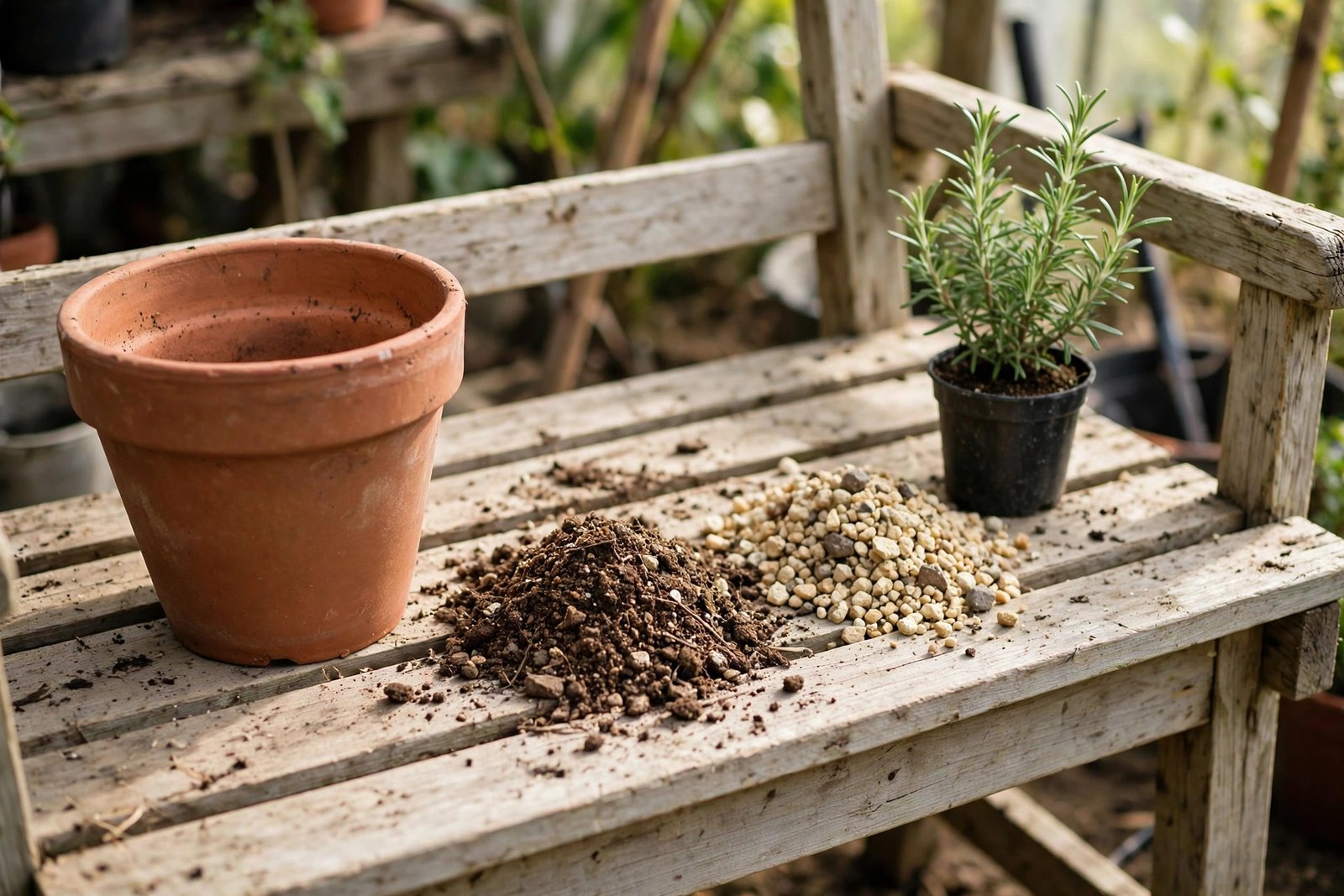
The mix itself should be light, well drained, sandy or gravelly, which is Penn State’s description, with a pH of 6.5 to 7.0. The RHS suggests mixing horticultural grit into the compost, up to 25 percent by volume, to improve drainage. This is where rosemary parts company with basil and mint. Those herbs want a mix that holds moisture. Rosemary wants a mix that sheds water fast and then dries. Pot basics, including how to choose and fill a container, belong to our indoor herb garden hub, so this post stops at the rosemary differences.
Watering the Dry Side
Water rosemary on the dry side, and let the plant tell you when. Penn State’s rule for rosemary is simple: it should dry out slightly between waterings. Nebraska puts the same band in different words: keep plants evenly moist to slightly dry. NDSU says to water sparingly and only when the soil is dry. Three sources, one band. The mix dries a little, then you water. It never stays soggy, and it never goes to wilting.
One more figure, labelled with its scope. Illinois Extension’s overwintering checklist for tender plants in general says to water when the top inch of soil becomes dry. That checklist is general, not rosemary-specific, but it lands in the same band as the rosemary rules above. No rosemary-specific depth figure was found in the extension sources read for this guide, so none is printed as one.
In winter, water less often. The plant is not actively growing, which is why Illinois Extension’s checklist gives wintering plants no fertilizer at all, and a cool room dries the mix slowly. Check the mix instead of watering on a schedule. When you do water, water until it flows out of the drainage holes, then empty the saucer so the pot never sits in water. Save any feeding for the active growing season.
Cutting a Woody Shrub: Sprigs From Green Growth
Harvest rosemary by taking sprigs from green growth. The plant is a woody shrub, and its cutting rules follow from that. Snip shoots as you need them, aiming to keep an attractive shape, which is how the RHS describes the harvest. Nebraska says to harvest from the tender new growth. The soft new growth of late spring and summer has the best flavour, per the RHS, but an evergreen plant can be cut all year round.
The one rule that matters is the old wood rule. Trim lightly after the flowers fade, and avoid cutting back into old wood. That is the RHS guidance, and it adds that rosemary does not usually recover from heavy pruning, so old straggly plants are best replaced. Penn State also says to prune after flowering. Every stem you cut should keep green growth on it. A stem cut back to bare brown wood has nothing to regrow from, and the cut end usually just dies back.
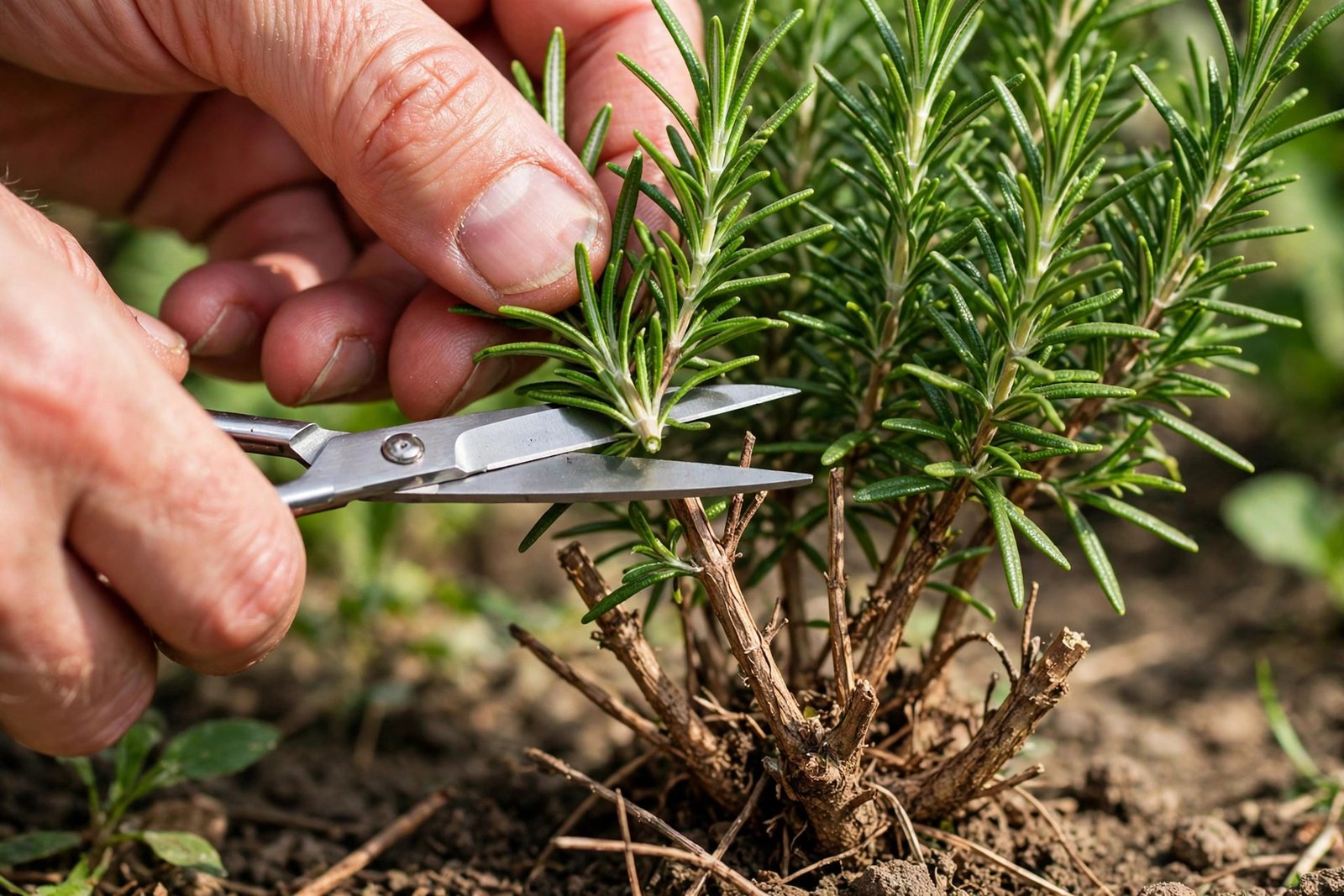
Harvesting and shaping are two different jobs. Harvesting takes sprigs for the kitchen all year. Shaping is the light annual trim after flowering, which keeps the plant compact and bushy instead of leggy and bare at the base. Do the shaping once a year. Do the harvesting whenever dinner needs it, always from green growth.
The contrast with the site’s other herbs is worth one line. Basil asks for warmth and repeated pinching, and mint asks for moist feet and containment. Rosemary asks for the opposite on both counts: a cool bright room, a mix that dries between waterings, and sprigs taken from a shrub. Our guides to growing basil indoors and growing mint indoors cover those two plants on their own terms.
Starting and Replacing: Cuttings Are the Insurance
Start with a bought plant, not a packet of seed. Choose a compact, healthy nursery plant with firm green growth, rather than a tired supermarket pot that has already spent weeks in dim light and wet mix. A plant that starts healthy has a far better chance of surviving its first winter indoors than one that arrives half stressed.
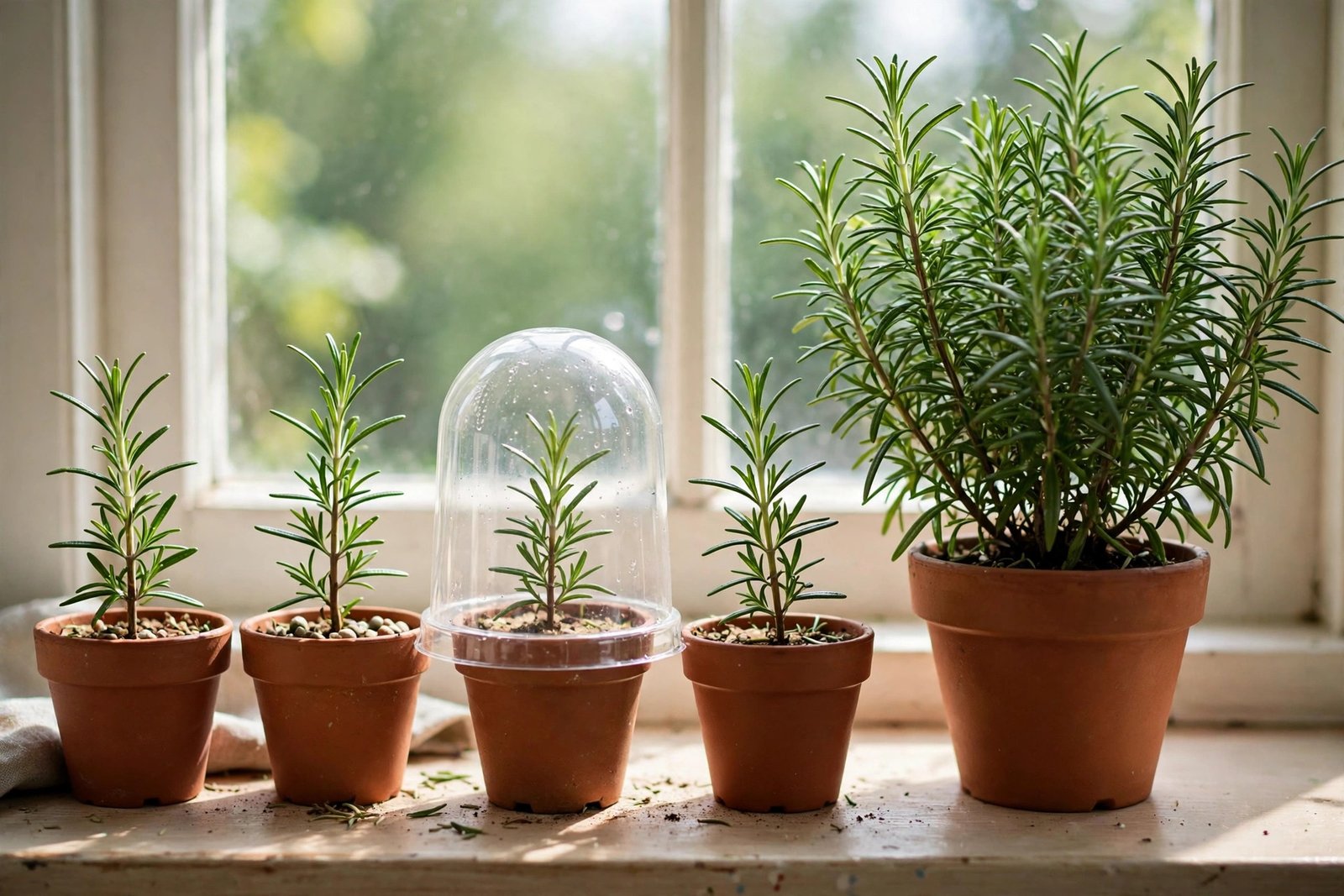
Cuttings are how rosemary is really started, and they double as insurance. Penn State Extension’s rosemary guide sets out the method: take a 6-inch section of stem tip, strip the lower leaves, dip the base in rooting hormone, and place it in a sterile, well-aerated soilless mix with bottom heat of 70 to 75°F. The cuttings root in 10 to 20 days. Take them while the parent plant is healthy, in late spring or summer when new growth is soft, and a winter loss stops being the end of the plant. The RHS lists softwood cuttings from new growth in late spring or summer, and semi-ripe cuttings in summer, as the easy ways to make more plants.
Two rooting figures circulate, and they describe different methods. The 10 to 20 day figure above comes with bottom heat and a soilless mix. Illinois Extension’s general method for tender perennials, tip cuttings under a plastic bag in bright indirect light, puts rooting at three to four weeks. Keep the method attached to the number, and the disagreement disappears. Without bottom heat, expect the slower end of the range.
Seed is the wrong start for a kitchen plant. Penn State says low viability and slow germination make rosemary difficult to propagate from seed, and named cultivars do not stay true to type. North Carolina State agrees that plants are slow to germinate from seed and that cuttings work better. The RHS adds the long view: seed-grown plants can take several years before they are large enough to harvest from. Buy a plant, or take cuttings from a friend’s. Leave seed to growers raising large numbers.
Even a well-kept rosemary ages. The RHS says it is often best to replace rosemary every seven or eight years with a new young plant, even with regular trimming, because older plants turn woody and bare at the base. Cuttings taken from a healthy plant are the replacement, already paid for.
Bringing an Outdoor Plant In
A rosemary that spent summer outside comes in before the cold arrives. Penn State says to take pots indoors 2 to 3 weeks before the first frost date in the fall. Illinois Extension’s rosemary notes set the same deadline: bring the plant in before the first frost.
Check the plant before it crosses the threshold. Illinois Extension’s overwintering checklist for tender plants in general starts with looking the plant over for pests and disease and rinsing the leaves with water, and bringing in only healthy plants. That check matters for rosemary, because Penn State lists thrips, aphids, whiteflies, mealy bugs, and spider mites as problems that may appear indoors.
A plant that lived in its pot all summer comes in as it stands. A plant lifted from garden soil is a different job. Illinois Extension’s general guidance for dug-up plants says to replant in fresh potting soil, getting as much of the root system as possible, and to cut the plant back so about half of the original plant remains. That cut applies to lifted plants only. Do not cut a potted plant in half just because it is coming indoors.
Whether a plant needs to come in at all depends on where you live, and the extension sources do not agree on one hardiness line. Here is the disagreement, labelled.
| Source | Hardiness line |
|---|---|
| Penn State Extension | Zones 8 to 10; hardier cultivars to zone 7 or 6b with protection |
| Nebraska Extension | Zones 7 to 10; ‘Arp’ among the most winter hardy, to zone 6 |
| Illinois Extension | Typically hardy to zone 7; ‘Arp’ and ‘Hills Hardy’ noted hardy to zone 6 |
| NDSU Extension | Hardy to 20°F |
No cultivar promise is printed here, because none of these sources makes one. Illinois notes that single-digit temperatures are often fatal for rosemary, and that careful protection and the right site are what make overwintering outdoors possible at the cold edge. The honest takeaway is simpler: if your winters are cold enough that you are reading this guide, the pot comes in. The indoor routine is the promise. Outdoor hardiness is a gamble with protection, not a guarantee.
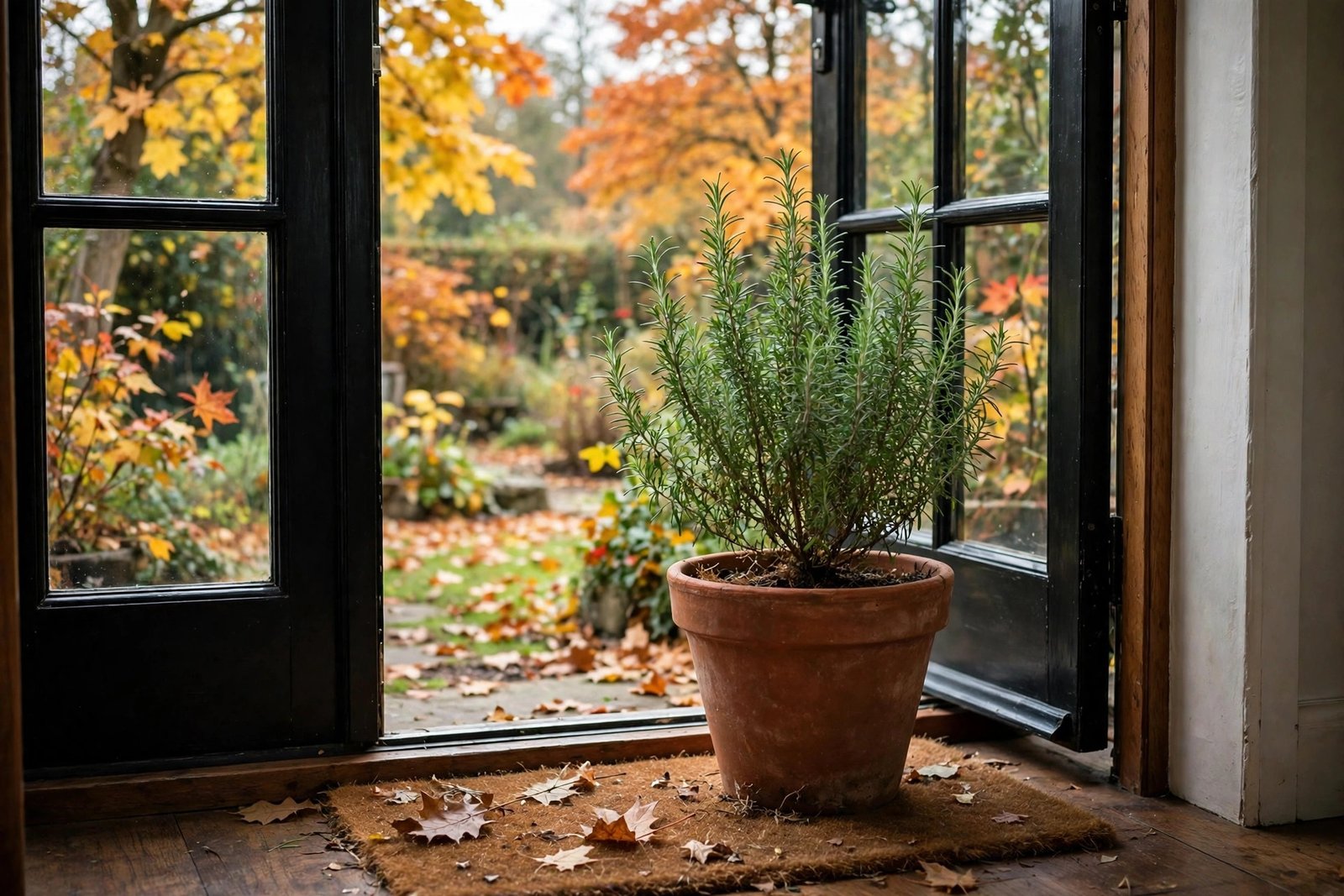
In spring, the plant goes back out after the danger of frost, which is Penn State’s cue. Illinois Extension’s general checklist adds the working rule: set plants outside during the day once day temperatures are over 60°F, and leave them out full time once the frost threat has passed. Acclimate the plant slowly to stronger light and wind, a few days in partial shade first, because a plant that spent winter indoors needs time to adjust.
Rescue Table: What the Plant Is Telling You
When rosemary struggles, the symptom points at the cause, but only if you check the soil and the room before acting. Work the table in order.
| What you see | Check first | Fix |
|---|---|---|
| Needles limp and dropping | The mix. Wet below the surface means too much water. Dry right through means too little. | Wet: stop watering and let the mix dry slightly. Dry: water well until it drains, then empty the saucer. |
| Black or soft stem base | The roots and the drainage. This is the root rot pattern. | Let the mix dry, improve airflow, and take cuttings from healthy green growth now, while the plant still has some. |
| Browning leaf tips | The mix first, then the air. Penn State calls browning tips a sign of root rot, and dry air also dries leaves out. | Check roots and drainage before adding water. If the air is dry, use a pebble tray or group containers. |
| Leggy, pale, stretched stems | The light. Long, lanky growth usually means the plant needs more light. | Move to the brightest spot, or add a grow light in a cool room. |
| White powdery coating | Airflow and humidity. Poor circulation plus high humidity brings powdery mildew. | Give the plant space and moving air. Water the mix, not the leaves. |
Rosemary indoors is a winter project with a simple shape. Bright and cool beats warm and dim. Dry-side watering beats kindness. Cuttings taken in summer beat a rescue in February. Get those three right and the plant holds its green needles all winter.
Frequently Asked Questions
Why is my indoor rosemary dying?
Work the three killers in order. Wet roots come first: overwatering is the common cause of rosemary decline, and a mix that stays wet rots the roots. Dim light comes second, and a warm, dry room third. Check the soil before you act, because limp needles can follow too much water or too little. If the mix is wet, stop watering. If it is dry right through, water well and let it drain.
Can rosemary live in a warm living room?
It can survive there, but it will not thrive there. Nebraska Extension says normal indoor temperatures are fine in winter, but rosemary would be happier at 50 to 55 degrees if a cooler spot is available. Illinois Extension puts the overwintering target at around 50 to 60 degrees with very bright sunlight. A warm living room is survivable when the light is strong. A warm and dim room is the combination to avoid.
Should I grow rosemary from cuttings or from seed?
From cuttings. Penn State Extension says low viability and slow germination make rosemary difficult to propagate from seed, and named cultivars do not stay true to type. A 6-inch stem tip in a sterile soilless mix with bottom heat of 70 to 75 degrees roots in 10 to 20 days. Seed-grown plants can take several years before they are large enough to harvest from, so seed is the wrong start for a kitchen plant.
When should I bring rosemary indoors for winter?
Take pots indoors 2 to 3 weeks before your first frost date, which is Penn State Extension’s timing. Check the plant for pests first, and rinse the leaves before it comes in. Give it the coolest bright spot you have. In spring, move it back outside after the danger of frost has passed, once day temperatures are over 60 degrees, and acclimate it slowly to stronger light.
Sources and Further Reading
- Penn State Extension, Herb Garden Plants: Rosemary (read directly during production): tender perennial evergreen shrub, zones 8 to 10; low seed viability and slow germination, best propagated from stem cuttings; 6-inch stem tip, rooting hormone, bottom heat of 70 to 75°F, roots in 10 to 20 days; pots indoors 2 to 3 weeks before the first frost; clay pots permit rapid drying; prone to powdery mildew and root rot; browning of tips is a sign of root rot; prune after flowering; hardier cultivars to zone 7 or 6b with protection.
- Penn State Extension, Growing Herbs Indoors (read directly during production): rosemary in the 6-hour direct sun group; herbs in general at 65 to 70°F days and 55 to 60°F nights; rosemary should dry out slightly between waterings; forced-air heating makes the driest winter air; a fan improves air circulation; acclimate plants slowly before moving them outside.
- Illinois Extension, The Garden Scoop: Rosemary (read directly during production): typically hardy to zone 7, with ‘Arp’ and ‘Hills Hardy’ noted hardy to zone 6; more than 6 hours of direct sunlight a day; overwintering spot at around 50 to 60 degrees with very bright sunlight; homes typically too warm and too dry; a grow light in a cool location as the alternative; single-digit temperatures often fatal.
- Illinois Extension, Overwintering Tender Plants (read directly during production; general tender-perennial guidance, not rosemary-specific, though the page names rosemary among herbs overwintered indoors): check for pests and rinse leaves before bringing plants in; cut dug-up plants back to about half; water when the top inch of soil is dry; no fertilizer in winter; tip cuttings root in three to four weeks; return outdoors once day temperatures are over 60°F.
- Nebraska Extension in Lancaster County, Rosemary, An Herb for All Seasons (read directly during production): winter hardy in zones 7 to 10; ‘Arp’ among the most winter hardy, to zone 6; wet, poorly drained winter soil the biggest threat to survival; as a houseplant, happier at 50 to 55°F if available; water to keep evenly moist to slightly dry; harvest from tender new growth.
- Iowa State University Extension, Can I Grow Herbs Indoors Over the Winter? (read directly during production): rosemary may need supplemental light from a grow light; clay and terracotta containers dry well between waterings; water when the potting soil is dry to the touch and before the plant begins to wilt; long, lanky growth means more light may be needed.
- North Carolina State Extension, Plant Toolbox: Salvia rosmarinus (read directly during production): low tolerance for wet, humid environments; overwatering the common cause of plant decline or death; difficult to overwinter indoors; poor circulation and high humidity can cause powdery mildew; slow to germinate from seed, more success from stem cuttings.
- RHS, How to Grow Rosemary (read directly during production): container at least 30cm wide and deep; horticultural grit up to 25 percent by volume; trim lightly after flowering and avoid cutting back into old wood; plants do not usually recover from heavy pruning; replace every seven or eight years; harvest all year round, soft new growth has the best flavour; seed-grown plants take several years to reach harvestable size.
- NDSU Extension, Dakota Gardener: Growing Rosemary Indoors (read directly during production): hardy to 20°F; clay or terracotta pots best; pot deep enough for deep roots; water sparingly and only when the soil is dry; around eight hours of direct sunlight; pebble tray to raise humidity.