How to Grow Carrots in Containers: Match the Pot to the Root
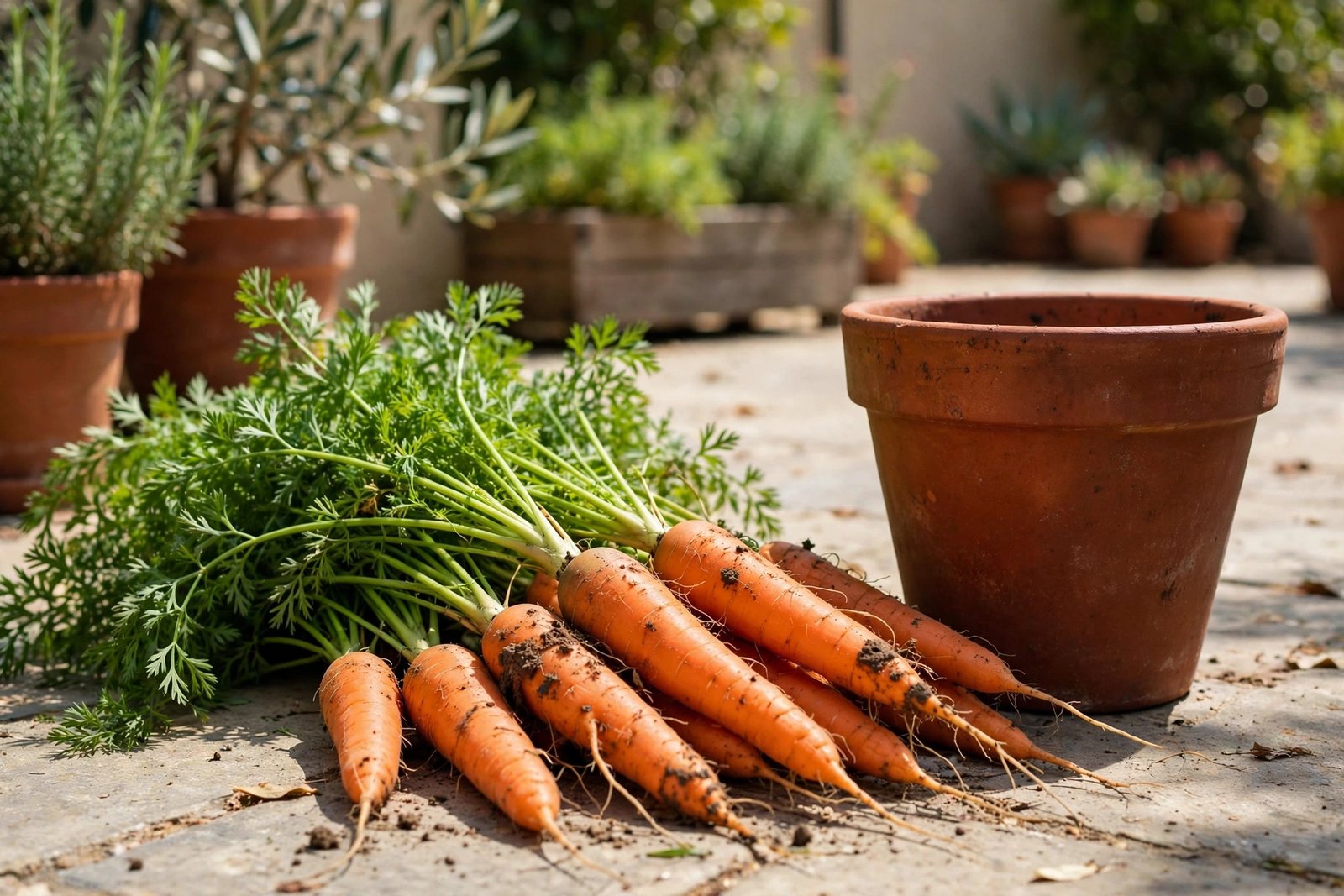
A carrot pulled from a pot tastes different from a bagged one. It is sweet, crisp, and still cool from the mix. The catch is that a carrot grows down, not out, and the pot has to give it room to do that. Get the depth wrong and you get a forked root or a short stub. Get it right and a pot on a patio can grow a real carrot.
This guide is written in November for planning, not for sowing. Carrots are a cool-season crop, best sown in spring and fall. Pick the pot and the variety now, and sow in spring when the soil warms. Nothing in this guide asks you to sow a full crop in November.
The whole guide hangs on one idea. A carrot is a taproot, and a taproot travels straight down until it meets something it cannot push past. Then it forks. Once you see that, the rest follows: pick a variety that fits the pot, give it loose mix and steady water, and thin early so each root has room.
A pot also gives you the one thing carrots care about most: control over the mix. No stones, no clay, no compacted bed. You build the soil the root grows in, and that is the whole advantage of growing carrots in a pot instead of a garden bed.
Why Container Carrots Fork
A forked carrot is not a mystery. The University of Minnesota Extension says forked, or split, roots come from rocky, heavy, or compacted soil, and a drought can split roots too. In a pot, the same thing happens when the root hits the bottom of a shallow pot, a stone in the mix, or a hard layer of dry mix. The root cannot go down, so it splits and goes sideways.

Fresh manure is another cause of forked or hairy roots, so keep it out of the pot. A loose, stone-free mix is the first fix, and the right pot depth is the second. The University of Maryland Extension carrot guide lists the root length for each variety group, and the table below starts there.
Depth by Variety: Match the Pot to the Root
Carrots are grouped by shape into four classes, plus the round types that suit containers best. The root lengths in this table come from the University of Maryland Extension, and they are the only figures in the table that come from an extension page. The pot depth column is our guidance, built on the extension minimums. Read the note under the table before you buy a pot.
If you want named varieties, the University of Wisconsin Extension container list names ‘Danver’s Half Long’, ‘Little Finger’, ‘Nantes Half Long’, ‘Paris Market’, and ‘Yaya’ as container picks. Short-rooted types are the safe first choice in a pot, and the long types are the ones that punish a shallow pot fastest.
| Variety group | Root length (UMD) | Pot depth to aim for* | What to use |
|---|---|---|---|
| Round / Paris Market | 2 to 3 in | 8 in | A wide pot at least 8 in deep |
| Chantenay | 5 to 6 in | 10 in | A 10-in-deep pot |
| Nantes | 6 to 7 in | 10 to 12 in | A 10- to 12-in-deep pot or grow bag |
| Danvers | Up to 7 in | 12 in | A 12-in-deep pot |
| Imperator | 7 to 8 in | 12 in | A 12-in-deep pot or taller grow bag |
How to read the pot depths. The University of Maryland Extension puts carrots in its medium class at 8 to 12 inches deep. NC State Extension says 10 inches minimum, and Colorado State University Extension says 12 inches. The depths in this table are guidance built on those minimums, not figures from any extension page. Some guides go deeper: Almanac says 18 inches for full-size carrots. A 12-inch pot covers every group in this table, and a short round type is happy in 8 inches.
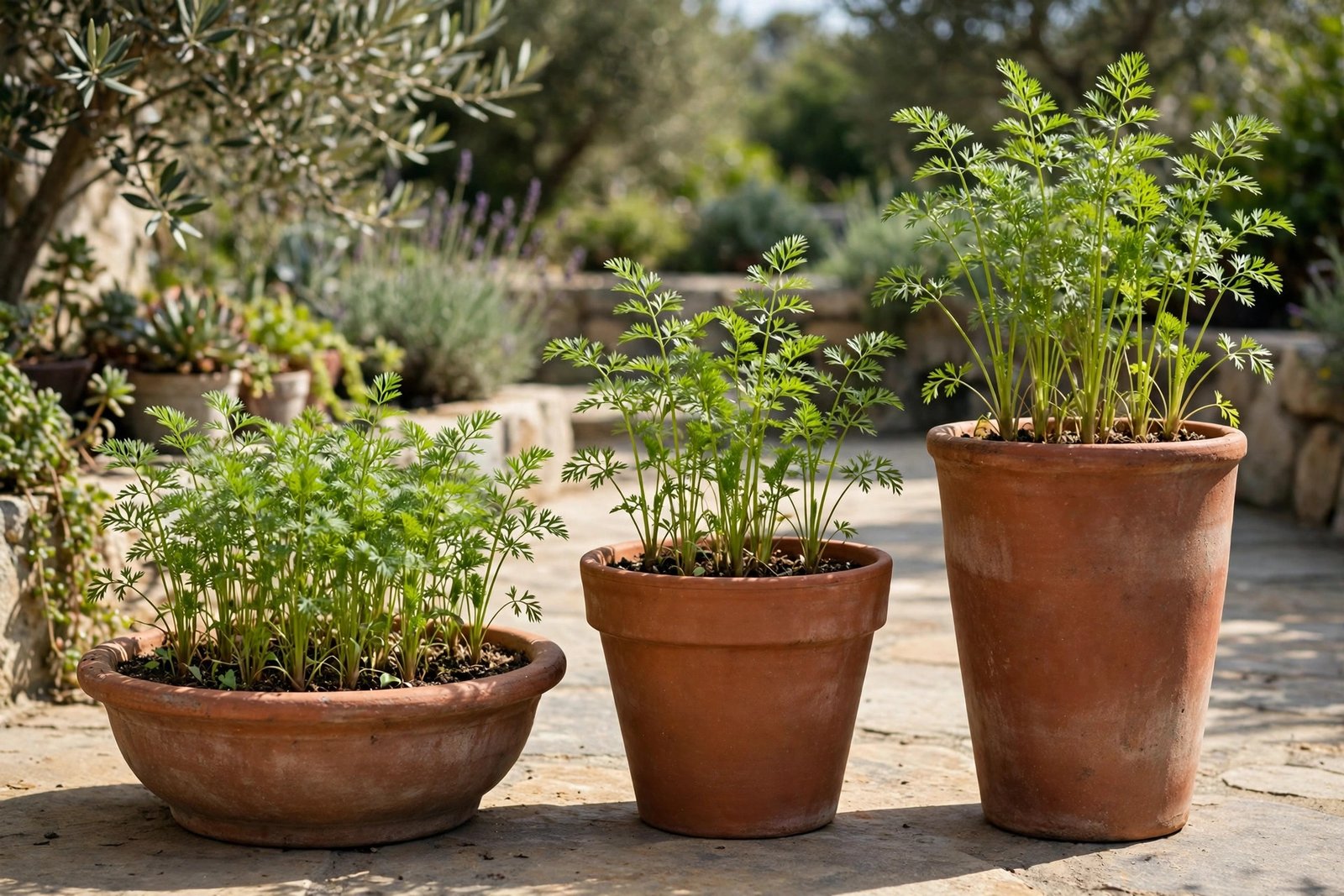
Depth matters more than width for carrots. A wide shallow bowl looks generous and grows nothing but tops. Pick the pot by its depth first, then by its width. It needs open drainage holes, and a wide base beats a tall narrow pot on a windy balcony, because a top-heavy pot tips.
Grow bags are the easy way to get depth without a heavy pot. A fabric grow bag gives you 12 inches of mix, drains well, and costs less than a ceramic pot of the same size. Our grow bags versus pots guide compares the two, so pick the one that fits your patio and your back.
Sow and Thin
Carrots are direct-sown, always. The University of Minnesota Extension says to always direct seed these root crops and never start them in pots, because transplanting damages the taproot and sends it off course. There is no seedling to buy and move. The seed goes straight into the pot where it will grow.
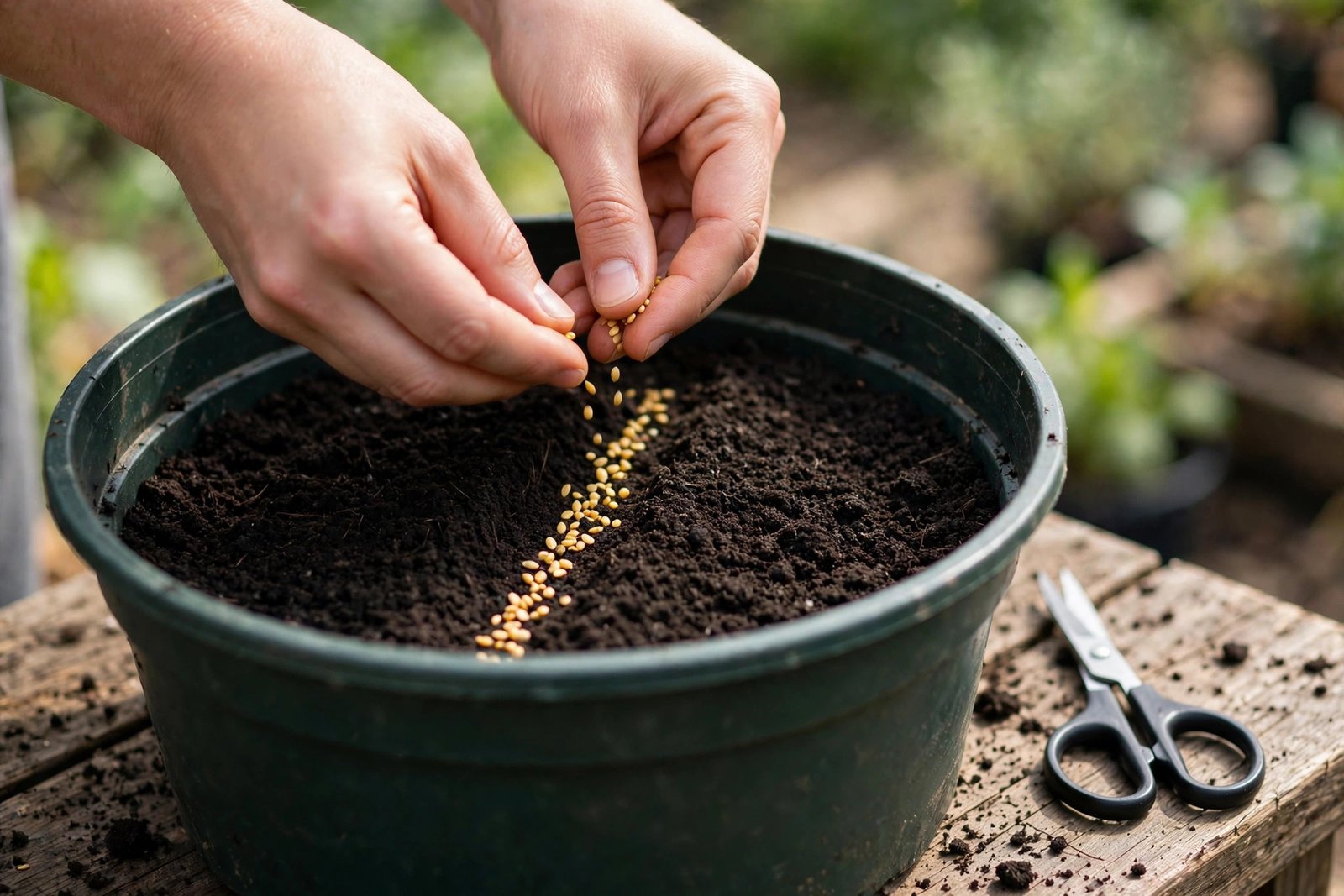
Sow the seed 1/4 to 1/2 inch deep in fine, loose mix, and keep the surface moist until the seedlings show. Sow once the soil is at least 45 degrees F. Germination is best at 55 to 75 degrees F, so a warm spring sowing comes up faster than a cold one. Give the pot at least 6 hours of sun, and 8 to 10 is better. A fall crop is sown 10 to 12 weeks before the first frost, and carrots do not grow well in hot weather, so a midsummer sowing is the one to skip.
Sow in rows or in a grid, whichever lets you thin without stepping on the seedlings. Rows are easier to mark and thin. A grid packs more plants into a wide pot. Either way, the final spacing is 2 to 3 inches, and that spacing is what makes the roots.
The slow start is the part most guides rush past. The University of Minnesota Extension says the seeds can take up to three weeks to germinate. That is a long time to stare at bare mix, and it is the reason many growers think the seed failed when it was only slow. Keep the surface moist, mark the row with a few radish seeds so you can see where the carrots are, and wait. Do not sow more seed on top of the first sowing.
Thin early, when the seedlings are about 1 to 2 inches tall, to a final spacing of 2 to 3 inches apart. Cut the extras with small scissors instead of pulling them out, so you do not disturb the roots you want to keep. A crowded row grows skinny roots, and no amount of feeding fixes that later.
Practical tip, not an extension rule: if the seedlings look crowded and tiny, snip the weakest ones first and finish the spacing a few days later, once the keepers are easier to see.
Your last frost date sets the spring sowing window. Our guide to starting seeds indoors owns the frost-date method and the full timing chart, so this guide does not rebuild it. Carrots are direct-sown, so use that chart for timing only, not for a sowing method.
Carrots are the opposite of potatoes in one way. A potato grows from a seed potato you hill up through the season, while a carrot grows from a tiny seed you sow and thin. Our potato container guide covers the hilling method, and this guide covers the thinning method. The two crops share a pot, not a method.
Water and Feed
Carrots want steady moisture, never soggy and never dry. The University of Minnesota Extension says to give about an inch of water a week, and warns that roots turn bitter, tough, and misshapen without it. Dry soil also cracks roots, and Colorado State University Extension notes that roots crack and taste strong when the soil gets dry. Water deeply and evenly, and ease up near harvest, because too much moisture at the end can crack roots too.
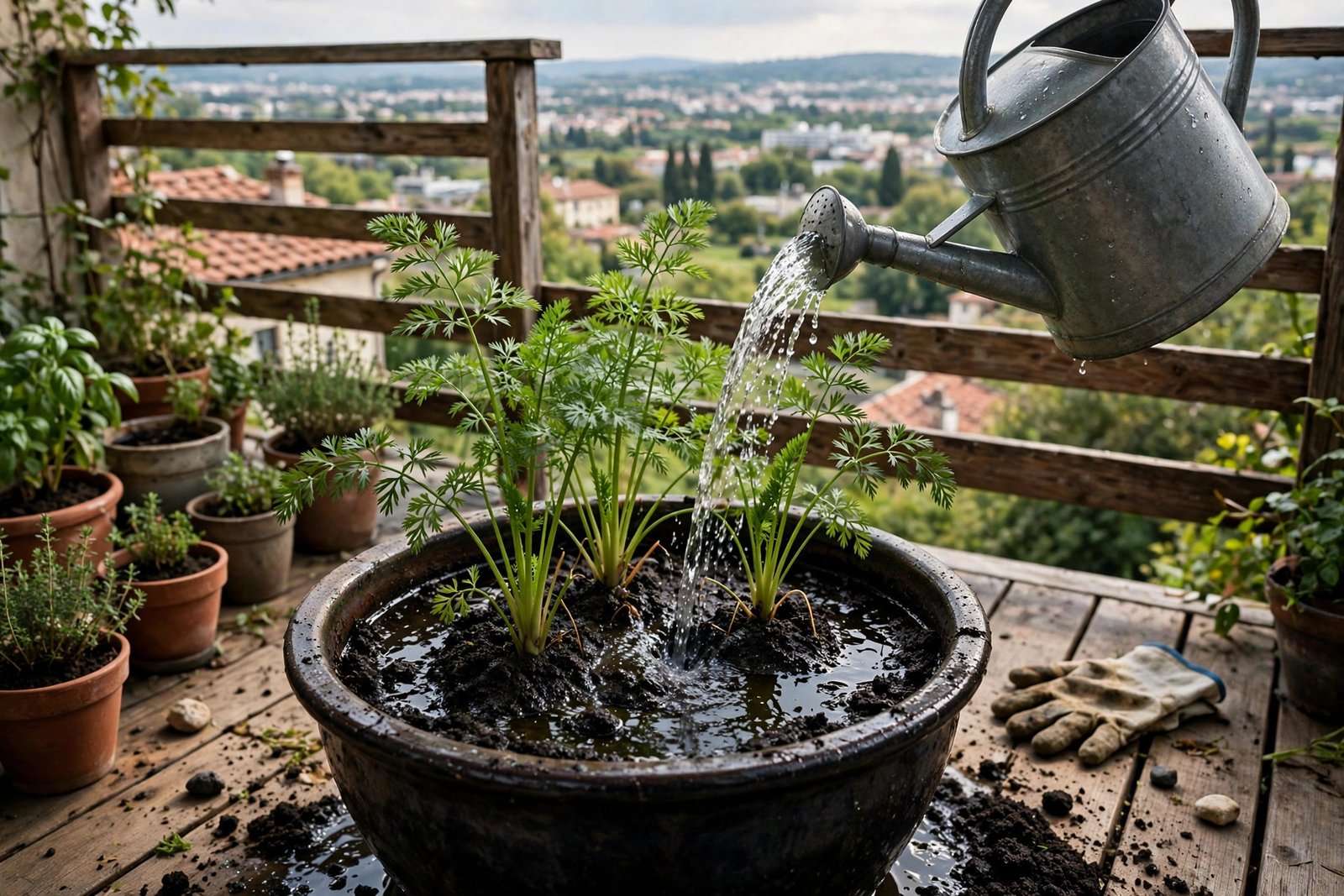
The mix matters as much as the watering. Use a loose potting mix, not garden soil, and pick the stones out before you sow. Our soil mix guide for vegetables in pots covers the recipe, so this guide does not repeat it. Carrots do best in a mix near pH 6 to 7, which most good potting mixes already provide.
Feed lightly. Too much nitrogen grows leafy tops at the expense of roots, and fresh manure forks them. Our fertilizer guide for container vegetables covers the full routine, so this guide does not re-teach rates. A light feed in a good mix is enough for carrots.
What Goes Wrong
Most carrot problems in pots trace back to depth, crowding, or water. Here is the short list, with the cause first.

Forked roots. The taproot hit something: a shallow pot, a stone, compacted mix, fresh manure, or a drought. Fix the mix and the depth, not the seed.
Cracked roots. Uneven water. Dry spells split roots, and a wet finish near harvest cracks them too. Keep the moisture steady from sowing to harvest.
Skinny roots. Crowded seedlings. Thin early to 2 to 3 inches apart, and do not expect a crowded row to catch up.
Patchy germination. The seedbed dried out during the long wait, or the seed was buried too deep. Sow 1/4 to 1/2 inch deep and keep the surface moist until the seedlings show.
Green shoulders. The top of the root saw sunlight. Hill a little mix over the exposed tops to keep them from turning green.
Harvest and Succession
Pull by size, not by the calendar. The University of Minnesota Extension says you can harvest carrots any time they reach a usable size, and the University of Maryland Extension says to pull when the root reaches the right size for the variety. Most varieties are ready in 60 to 75 days from seed, depending on the variety. Check the shoulder at the soil line: when it looks close to an inch across, pull one and look. If it is thin, give the row another week.
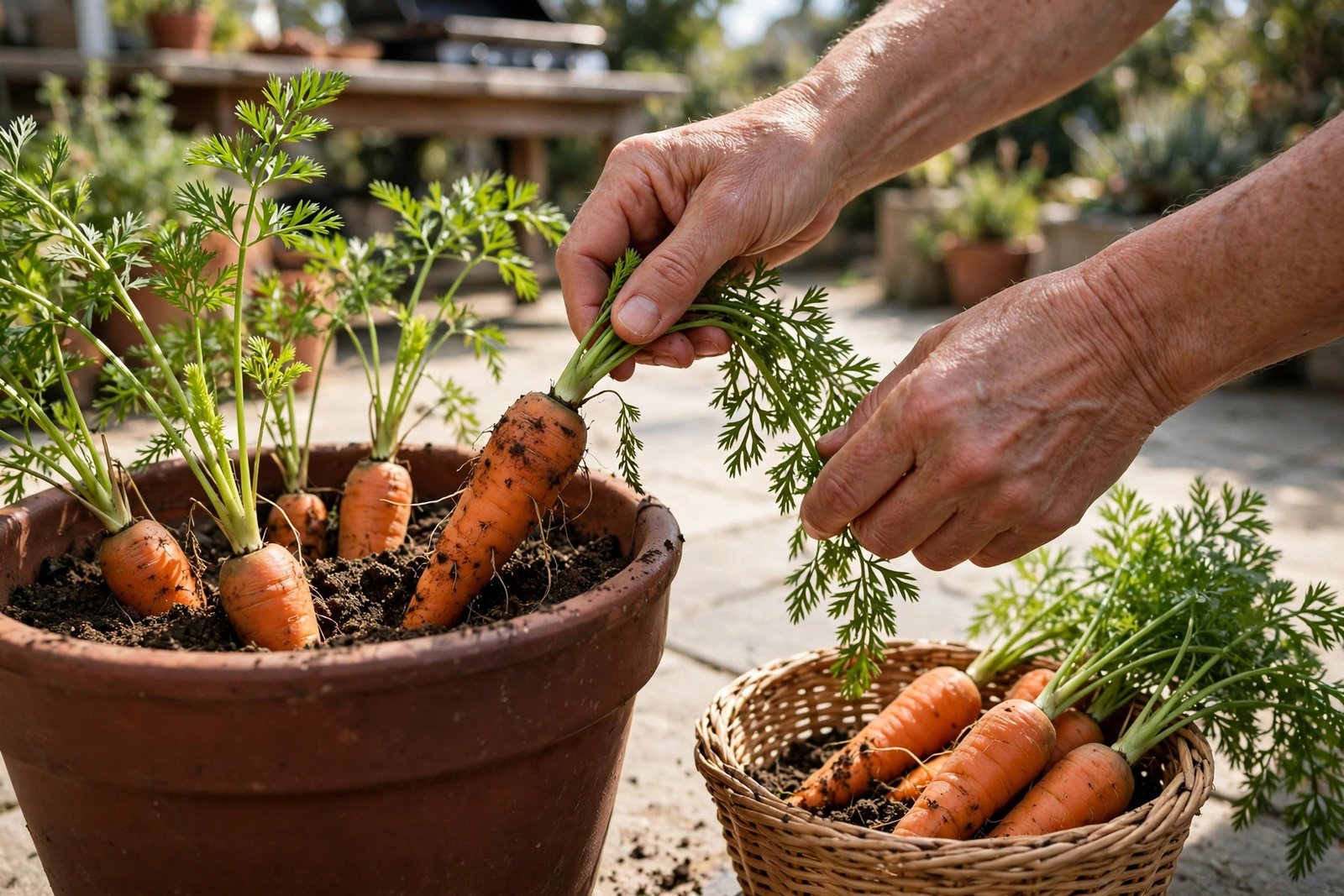
Sow a new row every 3 weeks while the season allows, for a steady supply of young carrots. Two or three plantings spaced 3 weeks apart carry the harvest through the season. A fall sowing goes in 10 to 12 weeks before the first frost.
Carrots belong on the short list of vegetables that do well in pots, and they earn the spot because the work is small and the result is real. Pick a short variety, give it a deep pot and loose mix, thin early, and wait out the slow start. Our best vegetables for pots list puts carrots alongside the other container crops that are worth the space.
Frequently Asked Questions
How deep a pot do carrots need?
It depends on the variety. Extension minimums run 8 to 12 inches deep: the University of Maryland Extension puts carrots in its medium class at 8 to 12 inches, NC State Extension says 10 inches minimum, and Colorado State University Extension says 12 inches. Short round types need the least depth, at about 8 inches, while long types like Danvers and Imperator need 12 inches. No extension page gives a 6-inch figure, so do not trust a pot that shallow for carrots.
Can I grow full-size carrots in a container?
Yes, if the pot is deep enough and the variety fits it. Nantes and Danvers grow well in a 12-inch-deep pot, and Chantenay does well in 10 inches. Imperator is the hardest in a pot because its roots run 7 to 8 inches long, so it needs the deepest pot you have. If this is your first try, start with a short round type like Paris Market.
Why are my carrots forked or short?
Forked roots mean the taproot hit something it could not push past: rocky, heavy, or compacted mix, or a drought while the root was forming, according to the University of Minnesota Extension. Fresh manure can cause forked or hairy roots too. Short roots usually mean the pot was too shallow, the seedlings were crowded, or the mix dried out. Use a loose mix, pick a pot deep enough for the variety, thin to 2 to 3 inches apart, and keep the moisture steady.
When do I sow container carrots?
Carrots are a cool-season crop, best sown in spring and fall. For a fall crop, the University of Maryland Extension says to sow 10 to 12 weeks before the first frost. Sow once the soil is at least 45 degrees F, with 55 to 75 degrees F best for germination. This guide is written for November planning: pick the pot and the variety now and sow in spring. Do not sow a full crop in November and expect a winter harvest.
Sources and Further Reading
University of Maryland Extension, Growing Carrots in a Home Garden
University of Maryland Extension, Types of Containers for Growing Vegetables
NC State Extension, Extension Gardener Handbook, Chapter 18: Plants Grown in Containers
Colorado State University Extension, Vegetable Gardening in Containers (CMG GardenNotes #724)
University of Minnesota Extension, Growing Carrots and Parsnips in Home Gardens
University of Georgia Cooperative Extension, Homegrown Carrots (CAES C1232)
University of Wisconsin-Madison Division of Extension, Growing Vegetables in Containers
University of Wisconsin-Madison Division of Extension, Vegetable Varieties for Containers
University of Wisconsin-Madison Division of Extension, Growing Carrots, Beets, Radishes, and Other Root Crops in Wisconsin (A3686)