
How to Grow Lettuce Indoors: Cut-and-Come-Again Harvests for Weeks
Lettuce is the fastest full-size crop you can grow on an indoor shelf. Sow a shallow tray today and you can cut your first leaves in about 30 days. Keep a small batch going every two weeks and the salads never really stop.
The trick is to grow lettuce indoors as a harvest system, not as a one-off planting. You pick a cutting method first. You match the variety to that method. Then you follow a simple calendar and keep the rhythm going.
This guide covers lettuce only, in depth. If you want the bigger picture across every crop, start with our guide to growing vegetables indoors. Here we stay with one plant and do it properly.

The short version
- Pick cut-and-come-again leaf lettuce for the fastest, longest harvest.
- Sow seed shallow, only 1/4 to 1/2 inch deep. It needs light to sprout.
- Keep the room cool. Lettuce grows best at 60 to 65°F.
- Run lights 14 to 16 hours a day, just a few inches above the plants.
- Take the first cut in about 30 days, then sow a new tray every 10 to 14 days.
Decide How You Will Harvest First
Most indoor lettuce advice starts with gear. That is backwards. Your harvest method decides your variety, your spacing and your calendar. Pick one of these three lanes before you open a seed packet.
Cut-and-Come-Again Leaf Lettuce (the Default)
You sow a tray of loose-leaf lettuce and pick the outer leaves as they size up. The center keeps growing and replaces what you took. One sowing gives you several cuts spread over a few weeks. It is the most forgiving method indoors and the one this guide is built around. If you only try one lane, try this one.
Baby-Leaf Patches
You sow thickly and shear the whole patch young, like a lawn of salad. The leaves are tender and the first harvest comes fast. The trade-off is yield per tray. A sheared patch gives you one main cut, maybe a lighter second one, and then it is done. Baby leaf works best when you sow small patches often instead of one big tray.
Full Heads Indoors (the Slow Lane)
Romaine and butterhead can finish indoors, but they ask for patience. Illinois Extension puts butterhead at about 60 to 70 days from seed. Heads also want more room per plant and steadier conditions. Grow them because you love a proper head of lettuce. Do not grow them if you want fast salads. Most indoor growers end up happiest in the first lane, with one head type running slowly at the back of the shelf just for fun.
Best Lettuce Varieties for Indoor Growing
Buy the variety that fits your lane. The days below come from the University of Arkansas Extension cultivar list, and they count from sowing to a finished plant in the garden. Indoors, treat them as a relative guide. Leaf types still beat heads by weeks.
| Variety | Type | Days | Indoor note |
|---|---|---|---|
| Grand Rapids | Leaf | 45 days | Loose, frilly leaves that size up fast for cutting |
| Bibb | Butterhead | 60 days | Classic soft head. Keep it in your coolest spot |
| Parris Island | Romaine | 60 days | Upright leaves suit the back row of a shelf |
| Little Gem | Romaine | 60 days | Compact heads that suit small spaces |
| Buttercrunch | Butterhead | 65 days | Bolts less than Bibb, so a safer pick for warm rooms |
Utah State Extension also lists Salad Bowl, Black Seeded Simpson, Oak Leaf and Red Sails as reliable leaf types, and all four suit the cutting lane. Red Sails adds a bronze tint that looks good on the shelf and in the bowl. A mixed packet of leaf types is a smart first buy, because you learn which textures your household actually eats.

What You Need
The kit list is short and cheap. Most growers already own half of it.
- A wide, shallow container or tray with drainage. Lettuce roots stay near the surface, and a broad tray gives you far more cutting area than a tall, narrow pot.
- A quality potting mix. The principles in our guide to the best soil mix for vegetables in pots apply here too: light, free-draining and able to hold steady moisture.
- Lettuce seed. One packet holds hundreds of seeds and covers several sowings.
- An LED or fluorescent shop light and a timer. A specialty grow light is optional for a leafy crop.
- Scissors or a sharp knife for harvest day.
Leave the heat mat in the shed. Lettuce is not a pepper. Warmth is the enemy at sowing time, and the next section explains why.
Sow the First Batch
Fill, Moisten and Sow Shallow
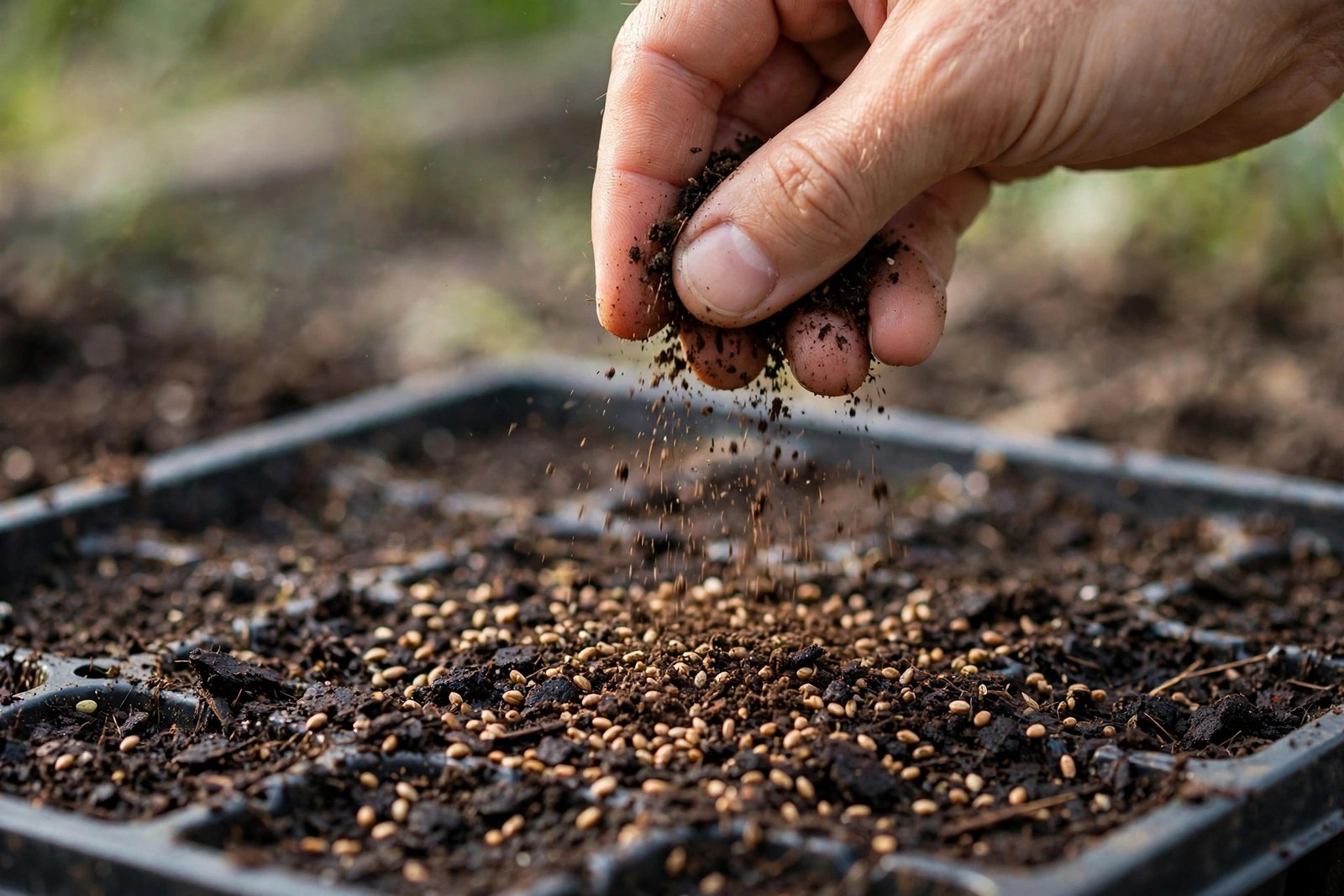
Fill your tray with mix and water it before the seed goes in. Pre-moistened mix stays put, so the tiny seeds do not wash into clumps when you water later. Scatter the seed evenly across the surface. Cover it with only 1/4 to 1/2 inch of mix, or press the seed in gently and dust a little mix over the top.
That shallow depth is not a suggestion. Lettuce seed needs light to germinate, and the University of Arkansas Extension warns against planting it deeper. Deep seed is one of the two big reasons indoor trays fail. The other one is heat.
The Cool Germination Rule
Lettuce seed sprouts best in cool mix. Illinois Extension puts the sweet spot at soil temperatures of 55 to 65°F. As the mix climbs past roughly 75 to 80°F, germination drops off sharply. Seed scientists call this shutdown thermodormancy.
It catches indoor growers out because our homes work against it. Heat mats, windowsills above radiators and the top of a fridge all run warm. Put the new tray in the coolest bright room you have instead. Expect sprouts in about 7 to 14 days. The University of Illinois Extension lettuce guide walks through the same temperature numbers for garden beds, and they explain most failed indoor trays too.
Your First 30 Days: The Indoor Lettuce Calendar
Here is the whole first month on one page. Write the sowing date on a label, stick it on the tray, and you will always know what happens next.
| When | What happens | What you do |
|---|---|---|
| Day 0 | Sowing day | Seed goes in shallow. The tray moves to a cool room. |
| Days 7 to 14 | Sprouts appear | First leaves show. Lights go on, set just above the seedlings. |
| About Day 14 | Thinning | Snip out the weakest seedlings. Leaf lettuce ends up about 4 inches apart. |
| Days 21 to 30 | Leaves size up | Outer leaves reach 3 to 6 inches. The tray looks like a salad now. |
| About Day 30 | First cut | Take the outer leaves and leave the center growing. Illinois Extension puts leaf lettuce at 30 to 40 days from seed. |
| Day 30 onward | Re-cuts and new sowings | Cut again as leaves regrow, and sow the next tray to keep the line moving. |
Compare that pace with a fruiting crop and you see why lettuce is the indoor sprinter. Our guide to growing cherry tomatoes indoors plans around months, not weeks. Lettuce pays you back while the tomatoes are still thinking about flowers.

The Two Dials: Light and Temperature
Indoor lettuce care comes down to two dials. Get the light right and keep the room cool, and most other problems never show up.
Light: Bright and Close
Under lights, the routine comes down to two numbers. Run them 14 to 16 hours a day. The University of Maryland Extension recommends that schedule for young vegetable plants in its seed-starting guide, with about 8 hours of darkness at night. A timer turns the whole thing into a system you never think about.
Distance matters as much as duration. Keep the fixture 2 to 3 inches above the seedlings, then raise it as the plants grow. Light fades fast with distance, and a lamp hanging a foot above the tray is mostly decoration.
Plain shop lights work fine for lettuce. You do not need a specialty panel for a leafy crop. A bright window can top up the lights, but it cannot replace them. Maryland Extension is blunt that interior windows alone will not grow good seedlings. For the full picture of matching light setups to different crops, see the light tiers in our indoor vegetable growing guide.
Temperature: The Cool Room Advantage
Lettuce thrives at 60 to 70°F and grows best at 60 to 65°F, according to Illinois Extension and Johnny’s Selected Seeds. That is cooler than most living rooms in January, and it is good news. The spare room, the basement shelf and the cool back bedroom all beat the toasty kitchen.
Watch the heat sources, not just the thermostat. Radiators, heating vents and the tops of appliances create warm pockets that stress plants and turn leaves bitter. If a room feels stuffy to you in the evening, it is probably too warm for lettuce.
Water and Feeding Without Fuss
Keep the mix evenly moist. Illinois Extension calls a uniform supply of moisture essential for fast leaf growth, and it matters even more here because lettuce roots are shallow. A tray can swing from damp to dry in a single day under lights, so check it daily until the rhythm feels automatic.
Water from the bottom when you can, or water gently at the base of the plants. Soaking the leaves under lights invites problems you do not need.
Feeding can stay simple. A fresh potting mix carries a young tray a long way. If growth looks pale after a few weeks, use a gentle general feed exactly as the packet directs and watch the response. Lettuce is a light feeder compared with fruiting crops, and more food does not mean more leaves.
Cut-and-Come-Again: Harvest So It Regrows
The method works because you never touch the growing point. The center of the plant, down in the crown, is the engine. Your scissors only take the outer ring.
Pick outer leaves once they reach 3 to 6 inches long, the range Illinois Extension recommends. Work around the tray and take a few leaves from each plant rather than stripping one plant bare. Morning cuts taste best, when the leaves are crisp and full of water.
Leave the center and the smallest leaves alone. They are next week’s harvest.

Eventually a sowing tires out. The leaves come in smaller, the flavor sharpens, and the center may start to stretch upward in a warm room. That plant has done its job. Pull it, refresh the mix and let a younger tray take the space. With succession sowing running, you will not miss it.
Never Run Out: The Succession Plan
One tray is a snack. The system is the meal.
Illinois Extension recommends sowing lettuce every 10 to 14 days for an ongoing supply, and indoors that rhythm fits a simple three-tray rotation. One tray is being cut. One tray is growing on. One tray has just been sown. When the cutting tray tires out, the growing tray steps up and you sow a fresh one to take its place.

Label every tray with its sowing date. It takes five seconds, and it removes all the guesswork from the calendar in this guide.
This is also where indoor growing beats the garden. Frost cannot cancel your sowing day, and a cold snap cannot stall the rotation. The trays just keep turning, all winter long.
Warm Room, Bitter Leaves: Indoor Lettuce Problems
Most indoor lettuce problems trace back to the two dials. Match the symptom, then fix the cause.
| Symptom | Likely cause | Fix |
|---|---|---|
| No sprouts after two weeks | Mix too warm, or seed sown too deep | Move the tray somewhere cooler. Sow the next batch only 1/4 to 1/2 inch deep. |
| Tall, pale, floppy seedlings | Light too far away, or on for too few hours | Drop the fixture to a few inches above the leaves and run it 14 to 16 hours a day. |
| Bitter leaves, center stretching upward | Room too warm, the plant is starting to bolt | Harvest right away. Move the next tray to a cooler spot and pick a slow-bolting variety. |
| Brown, papery leaf edges on fast-growing heads | Tipburn, often tied to rapid growth in still air | Add gentle air movement around the shelf and keep watering steady. |
| Wilting a day after watering | Shallow roots dried out in a small tray | Water thoroughly, and check trays daily under lights until the rhythm feels automatic. |

For comparison, spinach indoors bolts even faster in warm rooms, so give that crop the coolest spot you have.
Soil or Hydro? A Short, Honest Answer
Start with soil. A tray of potting mix asks for almost no setup, forgives beginner mistakes and costs very little. For a first indoor crop, that is the right answer.
Hydroponics works too, and commercial growers have it down to a science. Cornell’s controlled-environment research program finishes hydroponic heads in about 24 days after transplant, at tightly managed light and temperature. Treat numbers like that as a reference point for what the crop can do, not as a promise for a home shelf.
If you fall in love with indoor lettuce, a small hydro unit makes a fine second step. Learn the plant in soil first.
Frequently Asked Questions
Can you grow lettuce indoors without a grow light?
A very bright south-facing window can keep leaf lettuce alive, but growth is usually slow and the plants stretch toward the glass. University of Maryland Extension notes that interior windows will not grow good seedlings. A simple LED or shop light on a timer gives far more reliable results, and it does not need to be an expensive grow light.
How long does lettuce take to grow indoors?
Leaf lettuce is ready for its first cut about 30 to 40 days after sowing, according to Illinois Extension. Baby leaves come sooner, and full heads take longer. Butterhead types need about 60 to 70 days to finish. Cool rooms and steady light keep you at the fast end of those ranges.
How many hours of light does indoor lettuce need?
Plan on 14 to 16 hours a day. University of Maryland Extension recommends 14 to 16 hours of light for young vegetable plants, with about 8 hours of darkness. Keep the fixture just 2 to 3 inches above the seedlings and raise it as they grow. A cheap timer makes the schedule automatic.
Why didn’t my lettuce seeds sprout indoors?
Warm potting mix is the most common reason. Lettuce seed struggles to germinate when the mix climbs above about 75 to 80°F, a response called thermodormancy. Move the tray off heat mats and warm appliances and into a cool room. Seed buried too deep is the second suspect. Lettuce needs light to germinate, so sow it only 1/4 to 1/2 inch deep.
Why is my indoor lettuce bitter?
Heat is the usual cause. Warm rooms push lettuce toward bolting, and the leaves turn bitter and tough as the center starts to stretch upward. Move the tray to the coolest bright spot you have, harvest sooner rather than later, and switch the next sowing to a slow-bolting type such as Buttercrunch.
How many times can you cut cut-and-come-again lettuce?
There is no fixed number, and any source that promises one is guessing. Extension guides teach the method without setting a count. In practice you can expect several cuts spread over a few weeks from one sowing. The plant tells you when it is done. The leaves get smaller, the flavor sharpens and growth slows. Retire it and let the next tray take over.
What temperature is too warm for lettuce indoors?
Lettuce grows best at 60 to 65°F and still does well up to about 70°F. Above that range the plant gets stressed. Germination drops off first, then flavor suffers as bolting starts. A heated winter room that feels comfortable to you can already be warm for lettuce, so keep trays away from radiators, heat vents and the tops of appliances.
One Tray This Week
Lettuce asks for so little and gives it back so fast. A cool room, a bright light, a shallow sowing and a pair of scissors will keep salads coming all winter. Start one tray this week, and sow the next one before the first is finished.
When the lettuce shelf feels easy, the same lights can carry herbs through winter too. Our indoor herb garden guide is the natural next step.
Sources and Further Reading
- University of Illinois Extension, lettuce growing guide and spring greens articles (growing and germination temperatures, harvest timing, succession intervals, cut-and-come-again method)
- Illinois Fruit and Vegetable News, seed germination temperature table (germination ranges and days to emergence)
- University of Maryland Extension, Grow It Eat It seed-starting guide (light hours, fixture distance, window limitations)
- University of Arkansas Extension, FSA-6011 lettuce fact sheet (seed depth, cultivar days to maturity, thinning spacing)
- Utah State University Extension, lettuce variety guide (indoor-suitable leaf, butterhead and romaine varieties)
- Johnny’s Selected Seeds, lettuce growing guidance (growing temperatures, thermal dormancy note)
- Cornell University controlled-environment agriculture research, via Greenhouse Product News (commercial hydroponic light and finishing benchmarks, used as reference only)

3 Comments