
How Much Sunlight Do Indoor Herbs Really Need?
Growing herbs indoors can be simple, but the right light makes a big difference. Basil may become thin and weak on a dim windowsill, while mint and parsley can often manage with less direct sun. The trick is to match each herb to the light your home actually provides.
Most culinary herbs grow best with around 6–8 hours of direct sunlight a day, although some need more and others tolerate less. If your windows do not provide enough light, a suitable LED grow light can help keep your plants growing well.
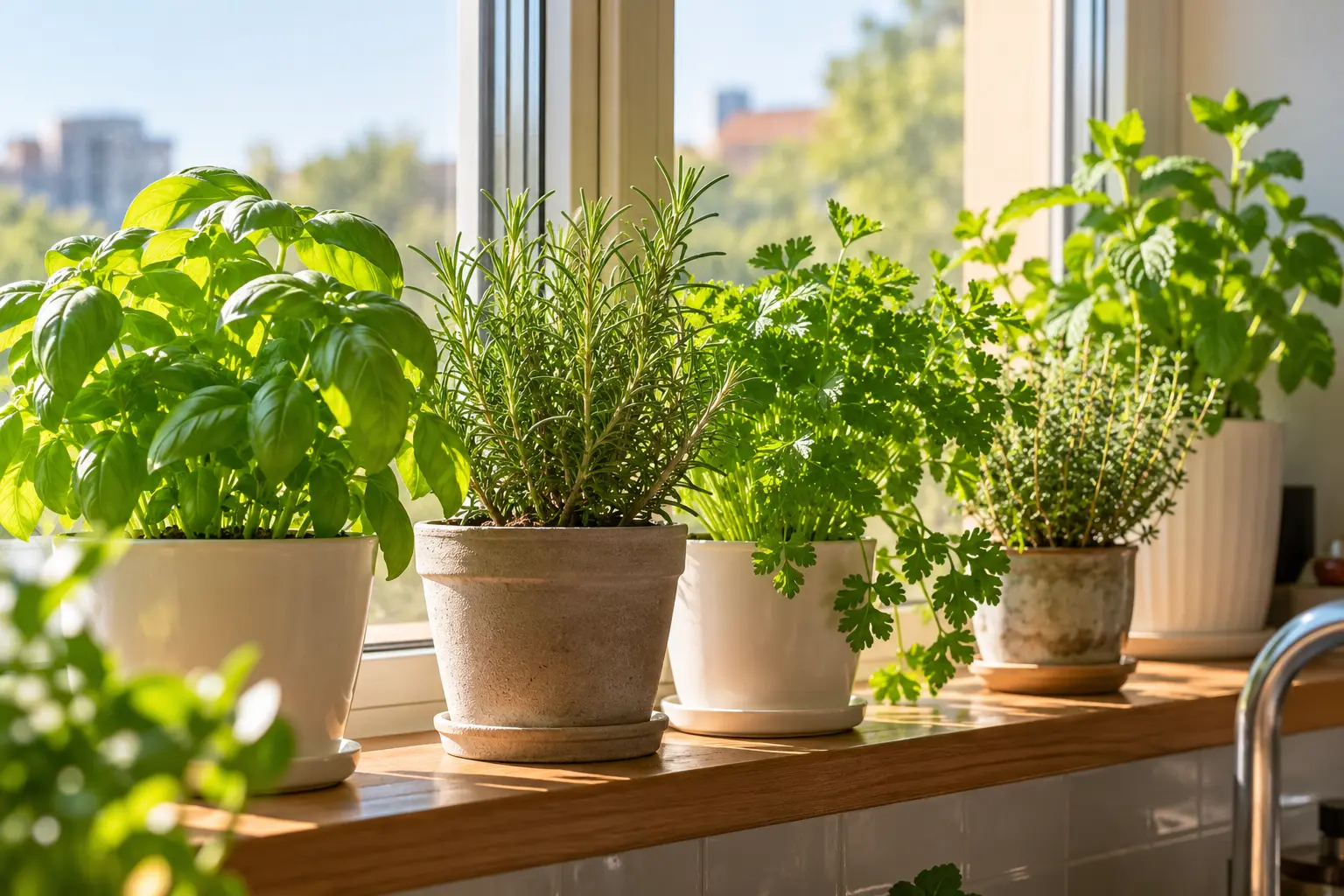
Aim for 6–8 hours of direct sunlight for many popular kitchen herbs. Sun-loving herbs such as rosemary, thyme, and oregano often benefit from the brighter end of that range. Mint, parsley, and chives may tolerate less direct sun, but they still need a bright growing spot.
Count the hours of actual sunlight reaching the leaves, not just the time the room looks bright.
How Much Sunlight Do Common Indoor Herbs Need?
Not every herb has the same light requirements. Use this table as a starting point, then watch how your plants respond to their specific window and growing conditions.
| Herb | Light to aim for | Practical tip |
|---|---|---|
| Basil | About 6–8 hours of direct sun | Choose a bright window and rotate the pot regularly. |
| Rosemary | About 6–8 hours or more | Give it one of your brightest available spots. |
| Thyme | About 6–8 hours | Strong light helps support compact growth. |
| Oregano | About 6–8 hours | A sunny windowsill is usually a good place to start. |
| Sage | About 6–8 hours | Provide bright light and avoid keeping the soil constantly wet. |
| Parsley | Bright light; several hours of sun | It can tolerate somewhat less direct sun than many Mediterranean herbs. |
| Mint | Bright light with some direct sun | It can adapt to partial sun, but very dim rooms may produce weak growth. |
| Chives | Bright light; several hours of sun | Keep the plant near a bright window and trim leaves as needed. |
| Cilantro | Bright light, with some direct sun | It may tolerate a little less sun, especially when temperatures rise. |
These ranges are practical starting points, not strict limits. Window direction, season, outdoor shade, plant maturity, and the intensity of the light all affect growth.
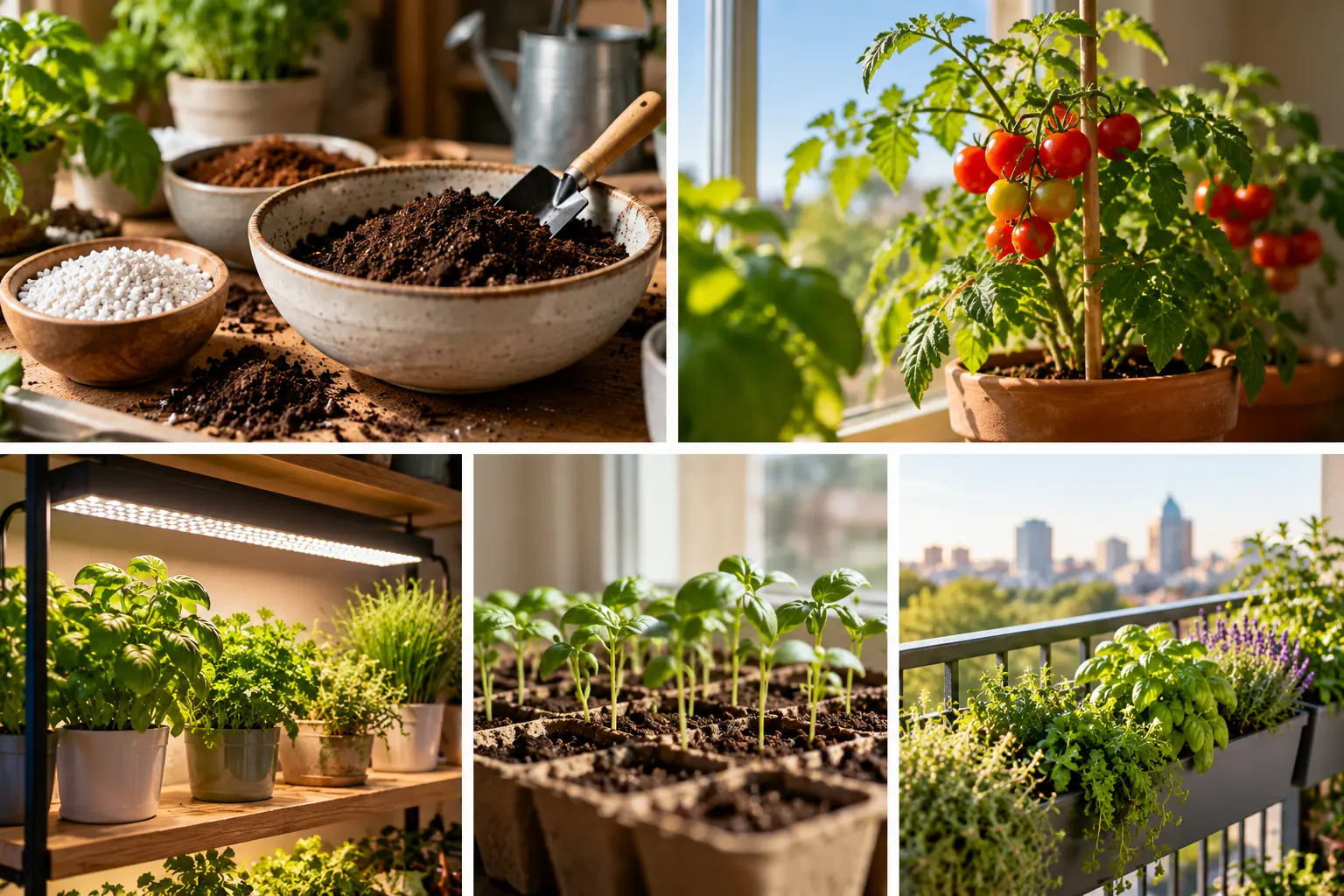
Which Window Is Best for Indoor Herbs?
The direction a window faces affects how much direct sunlight reaches your herbs. The best window also depends on nearby buildings, trees, curtains, and the time of year.
South-facing windows
In the Northern Hemisphere, a south-facing window often provides the strongest and longest stretch of natural light. It is a good first choice for herbs that need plenty of sun, including rosemary, thyme, and basil.
East-facing windows
East-facing windows usually receive gentler morning sunlight. They can work well for herbs that appreciate bright conditions but may struggle with the strongest afternoon heat. Check whether the sun actually reaches the leaves for long enough.
West-facing windows
West-facing windows receive afternoon light, which can be quite strong. They may suit sun-loving herbs, although intense summer heat behind glass can stress plants. Move a plant slightly farther from the glass if its leaves show signs of heat stress.
North-facing windows
North-facing windows in the Northern Hemisphere generally provide less direct sunlight. You may be able to grow some herbs there, but many will need a brighter location or a grow light to stay compact and productive.
Try this: Watch your chosen windowsill at different times of day. Note when direct sunlight reaches the leaves and when it moves away. That simple check is more useful than assuming a room is bright enough because it looks sunny.
Direct Sunlight vs. Bright Indirect Light
Direct sunlight reaches the plant without first being blocked or scattered by an obstacle. You can usually see a clear shadow from the leaves when the sun shines on them.
Bright indirect light means the spot receives plenty of daylight, but the sun does not shine directly on the plant for much of the day. Light filtered through a sheer curtain is one example.
Many herbs prefer direct sun, so a bright-looking room does not automatically provide enough light. If your basil or rosemary grows slowly or develops long, weak stems, try a sunnier window before changing several other parts of your care routine.
How Can You Tell If Indoor Herbs Need More Light?
Your herbs often show when their growing spot is too dim. Look at the overall shape of the plant and how new growth develops.

- Long, thin stems: The plant may be stretching toward a stronger light source.
- Leaning growth: Stems and leaves may turn toward the brightest part of the room.
- Small or sparse leaves: New growth may remain weak when the plant lacks enough light.
- Slow growth: Your herb may produce fewer new leaves than expected.
- Less vigorous growth: A plant that once looked compact may become thin or floppy.
These symptoms do not prove that light is the only problem. Overwatering, poor drainage, root problems, pests, and temperature stress can cause similar changes. Check the growing conditions together instead of moving the plant repeatedly without a plan.
Which Herbs Can Grow With Less Direct Sunlight?
If your home does not have a very sunny window, start with herbs that can tolerate somewhat lower light. Mint, parsley, and chives are worth considering. Cilantro may also work in a bright spot that receives less direct sun than a south-facing window.
Keep expectations realistic: lower-light tolerance does not mean a herb can thrive in a dark room. Even shade-tolerant herbs need enough light to make healthy new growth.
Rosemary, thyme, oregano, and many basil varieties generally perform better with stronger light. If these are your priority herbs and your windows are dim, supplemental lighting may be the simplest solution.
If you are still deciding what to grow, our guide to herb garden ideas for small spaces can help you plan a compact setup that suits your home.
Can You Grow Indoor Herbs With an LED Grow Light?
Yes. A suitable LED grow light can supplement weak natural light or provide the main light source when your home has no sufficiently sunny window. Choose a light intended for growing plants rather than relying on an ordinary decorative lamp.
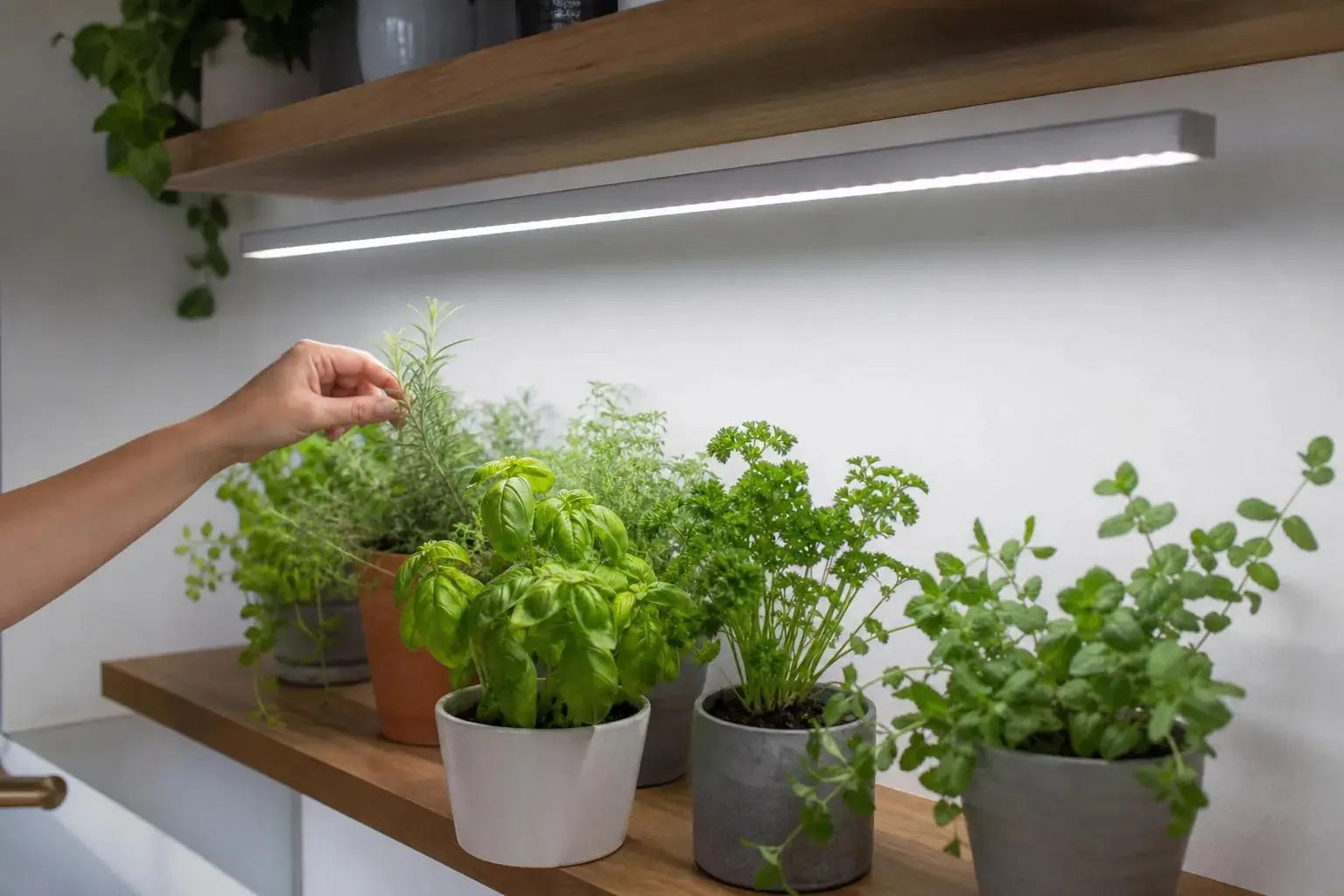
How long should the grow light stay on?
A common starting point is around 12–16 hours of supplemental light per day, depending on the light’s intensity, distance from the plants, and whether they also receive sunlight. Follow the manufacturer’s growing guidance and adjust based on plant response.
Do not assume every grow light delivers the same amount of usable light. A weak lamp placed far above the leaves may not provide enough, even if it stays on for many hours. Likewise, more hours are not always better: plants also benefit from a regular dark period.
How far should the light be from the herbs?
Follow the manufacturer’s recommended distance because LED fixtures vary in strength. Start with that guidance, then watch the leaves. If plants stretch, the light may be too weak or too far away. If leaves bleach, curl, or develop heat-related damage, the light may be too intense or too close.
A plug-in timer makes it easier to keep the daily schedule consistent. If your herbs receive some sunlight from a window, you may need less supplemental lighting than plants grown entirely under a lamp.
Do Indoor Herbs Need More Light in Winter?
Often, yes. Winter days are shorter, the sun sits lower in the sky, and nearby buildings or trees may block light that reached your windows in summer. A windowsill that worked well in June may not provide enough light in December.
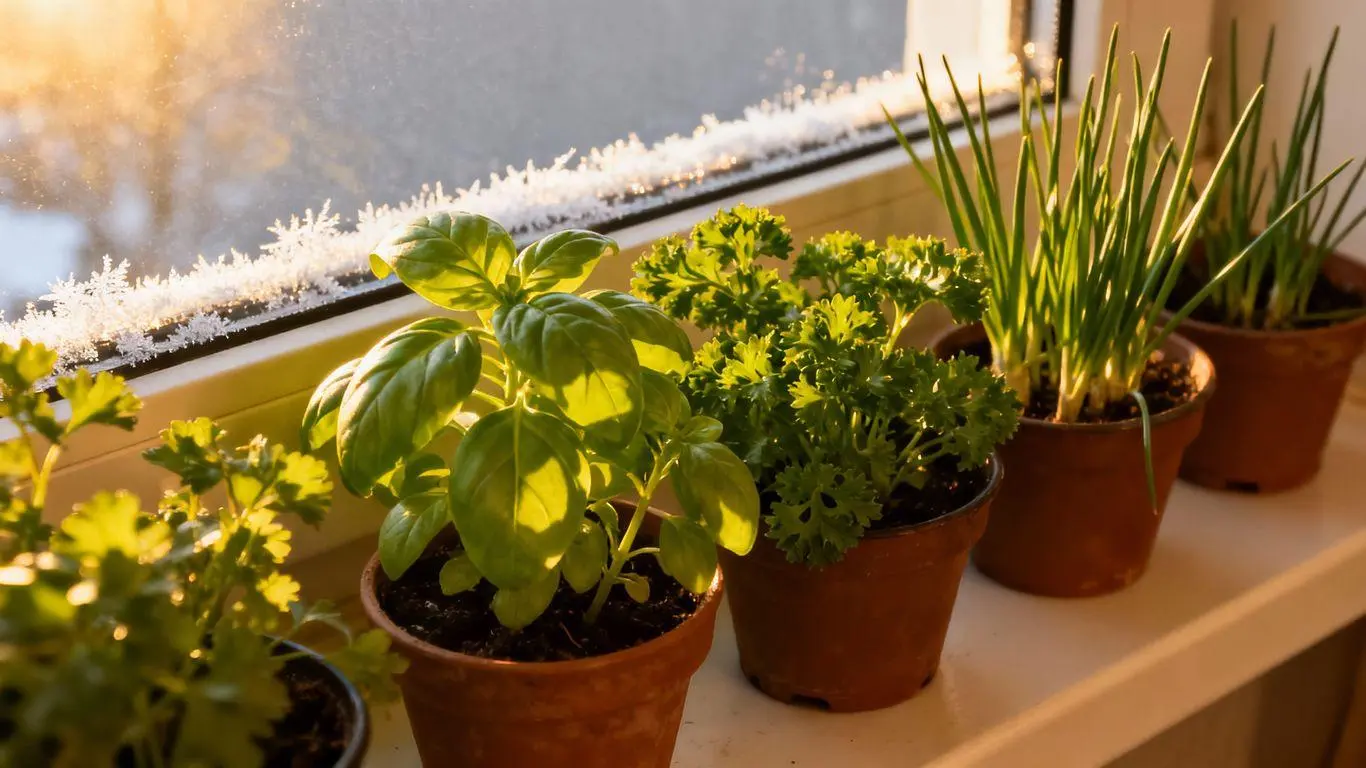
To help your plants through the darker months:
- Move sun-loving herbs to the brightest suitable window.
- Keep window glass clean so dust does not unnecessarily reduce incoming light.
- Rotate pots occasionally to encourage more even growth.
- Use a grow light if plants become leggy or stop producing healthy new leaves.
- Keep pots away from cold drafts and avoid placing leaves against chilly glass.
Plants may grow more slowly in winter, so do not respond to every slow-growing herb by adding more water or fertilizer. Check its light, temperature, and soil moisture first.
Does Potting Soil Affect How Well Indoor Herbs Grow?
Light is essential, but it is only one part of indoor herb care. Roots also need oxygen, suitable moisture, and a container with drainage. A plant in constantly soggy soil may struggle even when it sits in a sunny window.

Use a quality potting mix designed for containers rather than dense garden soil. Make sure the pot has drainage holes, and empty excess water from its saucer. If you are growing vegetables in containers as well as herbs, see our practical guide to choosing a soil mix for vegetables in pots.
Can You Move Indoor Herbs Outside for More Sun?
You can move many potted herbs to a sunny balcony or patio when the weather suits them. Outdoor light is often much stronger than indoor light, though, so do not move a plant from a dim room straight into intense midday sun.
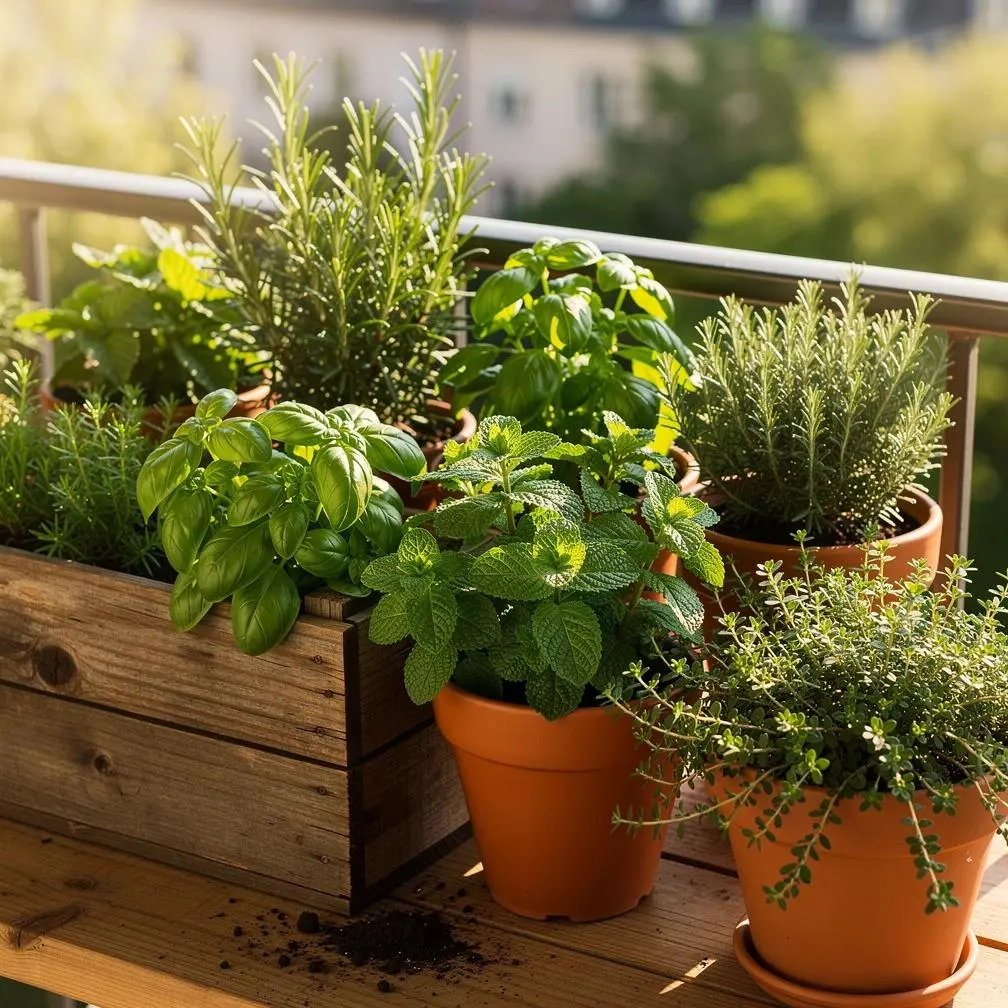
Gradually introduce indoor-grown herbs to outdoor conditions over several days. Begin with a sheltered spot and gentler light, then increase sun exposure as the plants adjust. Check the forecast before moving tender herbs outside, especially when nights are cold or afternoon temperatures are extreme.
For more ideas on arranging containers in a compact outdoor area, explore our guide to creating a balcony garden in an apartment.
Common Indoor Herb Lighting Mistakes
- Judging light by room brightness alone: A room can look bright to your eyes while still providing too little light for sun-loving herbs.
- Putting every herb in the same spot: Rosemary and mint do not have identical light needs.
- Ignoring seasonal changes: Sunlight duration and intensity change throughout the year.
- Keeping a grow light too far away: The leaves may receive much less light than expected.
- Leaving a grow light on all day and night: Most herbs benefit from a consistent dark period.
- Blaming every problem on sunlight: Watering, drainage, temperature, and pests can also affect growth.
Frequently Asked Questions
How many hours of sunlight do indoor herbs need each day?
Many culinary herbs do well with around 6–8 hours of direct sunlight daily. Rosemary, thyme, and oregano generally need a bright location, while mint, parsley, and chives can tolerate somewhat less direct sun. The exact requirement depends on the herb and the strength of the light.
Can herbs grow indoors without direct sunlight?
Some herbs can grow in bright indirect light, but a room with very little natural light may not support healthy growth. A suitable LED grow light can supplement daylight or provide the main light source when a sunny window is not available.
What is the best window for growing herbs indoors?
In the Northern Hemisphere, a south-facing window often provides the most direct sunlight. East- and west-facing windows can also work, depending on the herb and the light reaching the plant. North-facing windows usually provide less direct sun.
Can basil grow indoors on a windowsill?
Yes. Basil can grow well on a sunny windowsill that provides several hours of direct sunlight. If its stems become long and weak or new growth stays sparse, try a brighter spot or supplement the window light with a grow light.
Which herbs are best for a low-light apartment?
Mint, parsley, and chives are reasonable herbs to try in a bright but less sunny spot. They still need adequate daylight, so a dim corner far from windows is unlikely to work well. If natural light is very limited, consider supplemental lighting.
How long should I leave an LED grow light on for indoor herbs?
Around 12–16 hours a day can be a useful starting point for many indoor growing setups, but the right schedule depends on light intensity, distance, and natural sunlight. Follow the fixture’s instructions and provide a regular dark period.
Why are my indoor herbs tall, thin, or leaning toward the window?
Tall, thin stems and growth leaning toward a window can indicate insufficient or uneven light. Move the plant to a brighter suitable location, rotate the pot occasionally, or add a grow light. Also check watering, drainage, and temperature, because light is not the only factor that affects growth.
Do indoor herbs need extra light during winter?
They may. Shorter days and weaker sunlight can reduce the light available through a window. Move herbs to the brightest suitable spot and consider a grow light if new growth becomes weak or stretched.
Further Reading
For additional guidance on growing herbs indoors, these university Extension resources provide useful information about light, plant selection, and supplemental lighting:
- Iowa State University Extension: Growing Herbs Indoors
- Penn State Extension: Growing Herbs Indoors
- Iowa State University Extension: Growing Indoor Plants Under Supplemental Lights
The most reliable approach is to start with the brightest suitable spot you have, learn how each herb responds, and add supplemental light when natural sunlight falls short.


9 Comments