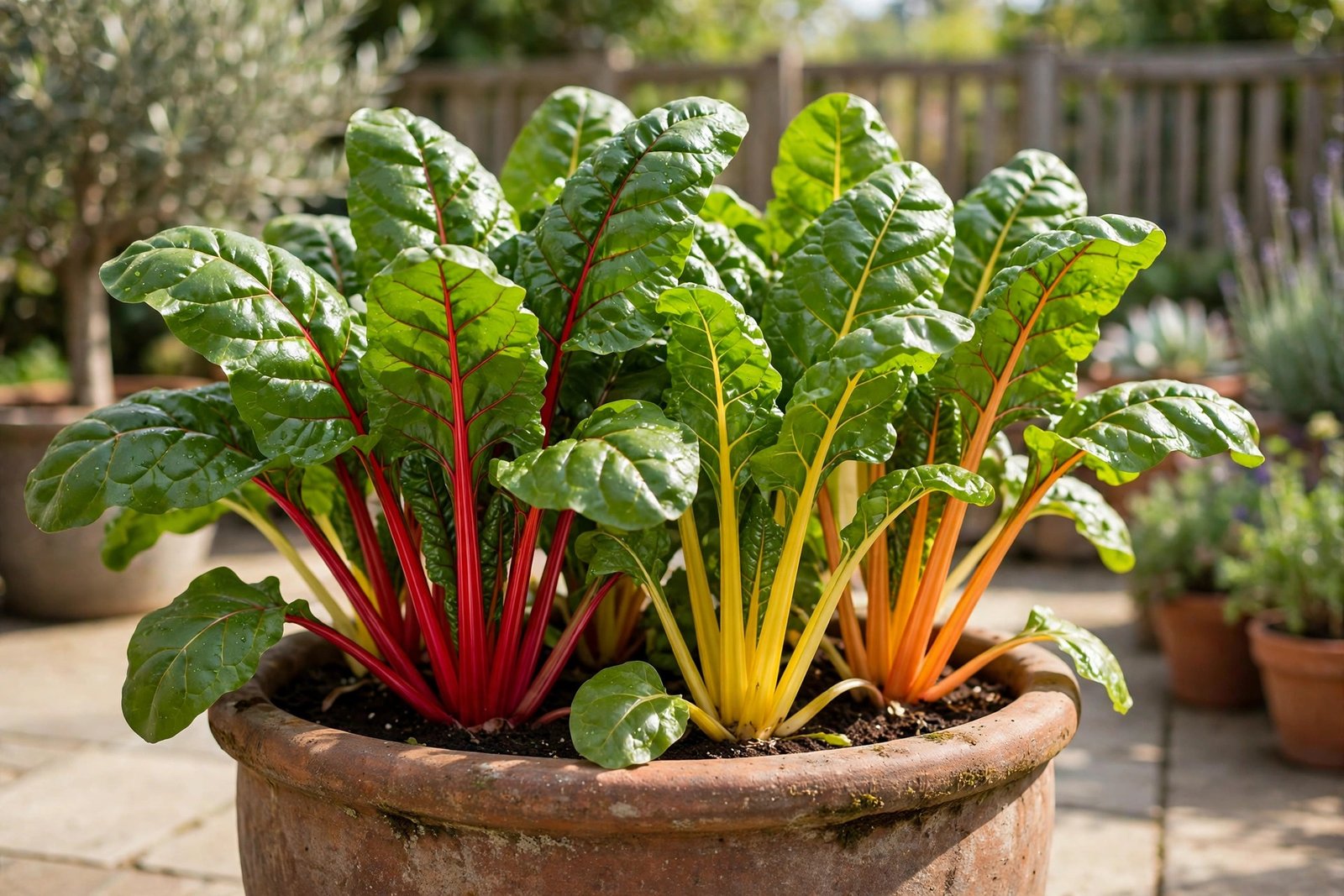
How to Grow Swiss Chard in Containers: One Pot, Months of Leaves
Swiss chard grows well in a pot, and one pot can keep cutting for months. The trick is to pick the pot before you buy the seed, because the sources do not agree on how big a pot chard needs. This guide starts with that disagreement, then covers the varieties, the seed cluster trap, and the cut-and-come-again harvest that makes one plant last all season.
One honest note up front: this is a plan-now guide, not a sow-now guide. It is late November. Order seed in January, start indoors in February to April, and sow outdoors in late March to April. The work to do now is to pick the pot and the spot, so you are ready when the soil warms.
Chard is Beta vulgaris, the same species as beet. It is the beet bred for leaves, not for root, which is why it cooks like spinach but grows nothing like a beet underground. If you have grown beet microgreens, the seed cluster will look familiar, but this is a different crop with a different job.
Cooks reach for chard the way they reach for spinach, and the leaves do swap into most spinach recipes. The plants are different, though. Spinach bolts at the first hot afternoon, while chard shrugs off heat and keeps cutting. Our spinach indoors guide shows a plant that wants cool weather and a short season. Chard wants a pot, a sunny patio, and a pair of scissors.
The Pot-Size Question First
Ask five guides how big a pot Swiss chard needs and you get five answers. That is not sloppy gardening. It is two different ideas about chard roots, and the pot you buy depends on which idea you follow.
| Source | How deep | How big | The logic |
|---|---|---|---|
| Harvest to Table | 12 in deep | 3 or 5 gal for one plant, 10 gal for two | Shallow roots, but a big plant needs room |
| RHS | 10 in deep | Not stated | A deep pot for a leafy plant |
| Matt Magnusson | 8 in is enough | Growing area over depth | Shallow roots, width matters more than depth |
| The Almanac House blog | 12 in deep | 5 gal for 2 to 3 plants, 10 gal for 4 to 5 | Long taproot, depth matters more than width |
| jardineriaon | 30 cm deep, about 12 in | 25 L per adult plant | Needs room to grow vigorously |
The split is taproot against shallow roots. The Almanac House blog says chard has a long taproot, so depth matters more than width. Matt Magnusson says the roots are shallow, so the growing area matters more than depth. Harvest to Table lands in the middle: it calls the root system shallow, then still asks for 12 inches of depth.
Buy this: a pot at least 12 inches deep and 3 to 5 gallons for one plant, or 5 gallons for two or three plants you plan to cut young. That size satisfies every source except Magnusson’s 8-inch floor, and it sides with the taproot claim, which is the safer bet in a pot. If all you have is an 8-inch pot, it still works for young leaves, as Magnusson shows, but expect a smaller plant and more frequent watering.
Two pots of chard can keep you in leaves for a whole season, according to Harvest to Table. And you do not need many plants: jardineriaon says two to four plants is enough for family use. One good pot, well fed and cut often, beats a row of crowded small ones.
Pick a Variety: Color or Cooking
Chard varieties differ in stem color and leaf size, not in how hard they are to grow. Pick for the pot you have and the kitchen you cook in.
| Variety | Stems | Leaves and flavor | Best for |
|---|---|---|---|
| Bright Lights (rainbow) | Red, orange, yellow, pink, purple | Colorful, mild | The prettiest pot on the patio, salads |
| Fordhook Giant | Thick white | Large, crinkled, milder flavor | Cooking, big leaves |
| Ruby (Rhubarb) | Bright red | Standard chard leaves | Single-color stems, color in the pot |
| Green (plain Swiss) | White | Dark green, stronger flavor | Classic cooking |
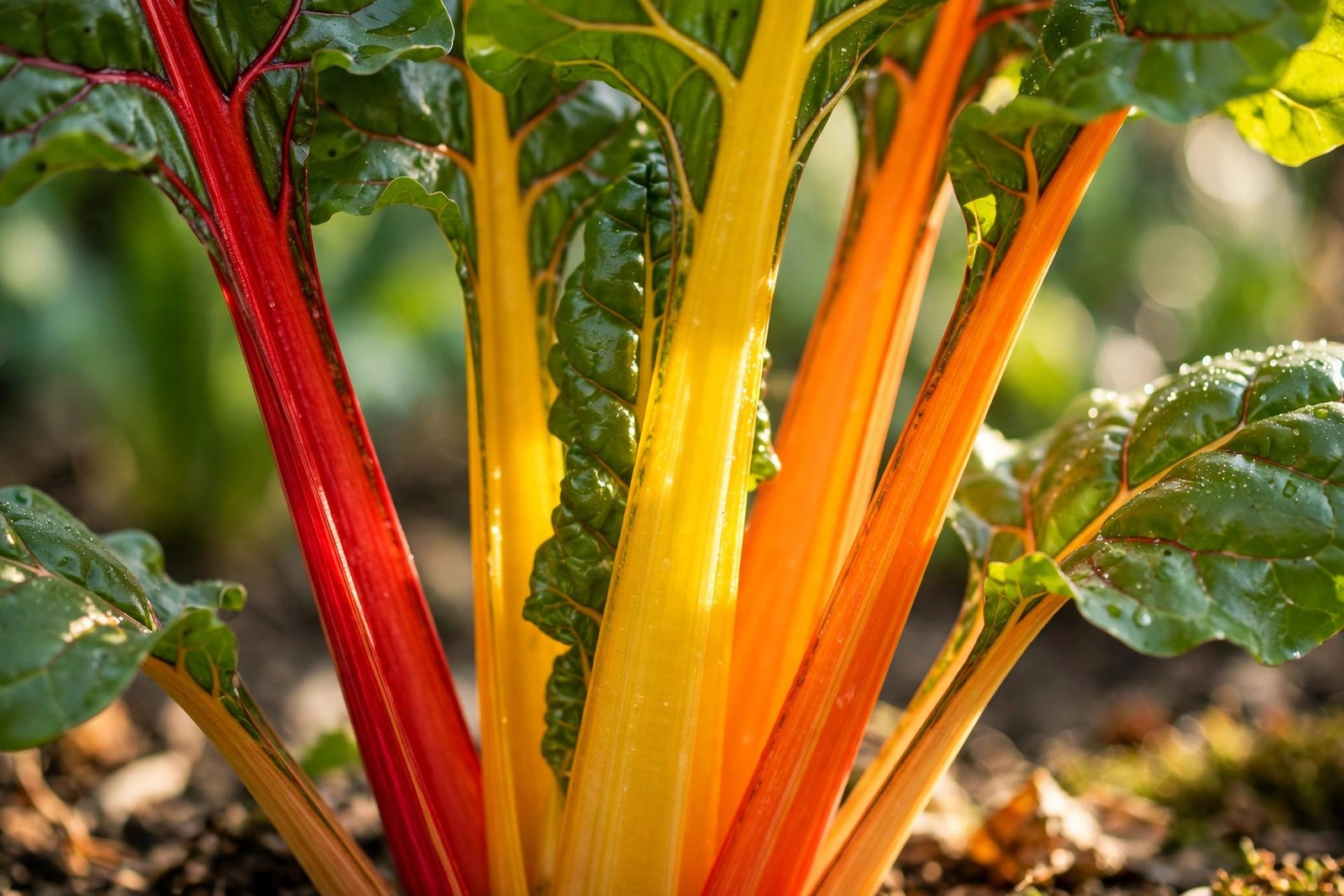
Bright Lights is the rainbow mix, with stems that run from brilliant red through orange and yellow to white, and the RHS calls it the most striking choice for a pot. Fordhook Giant is the classic: large, crinkled leaves on thick white stems, with a milder flavor than the green kind. Ruby, also sold as Rhubarb, gives you single-color bright red stems. Plain green chard is the original, with dark green leaves and a stronger flavor.
One trade-off to know before you pick: Matt Magnusson notes that green varieties grow bigger than the red ones, and the red ones are more prone to bloom. If the pot is for cooking first, green or Fordhook Giant will give you more leaf. If the pot is for the patio and the plate, Bright Lights earns its place.
Start: The Seed Cluster Trap
A chard “seed” is not one seed. It is a corky cluster that holds two to four seeds, and several seedlings will sprout from one spot. That is the trap: a beginner sees a full pot of seedlings and leaves them all, and the pot turns into a crowd.
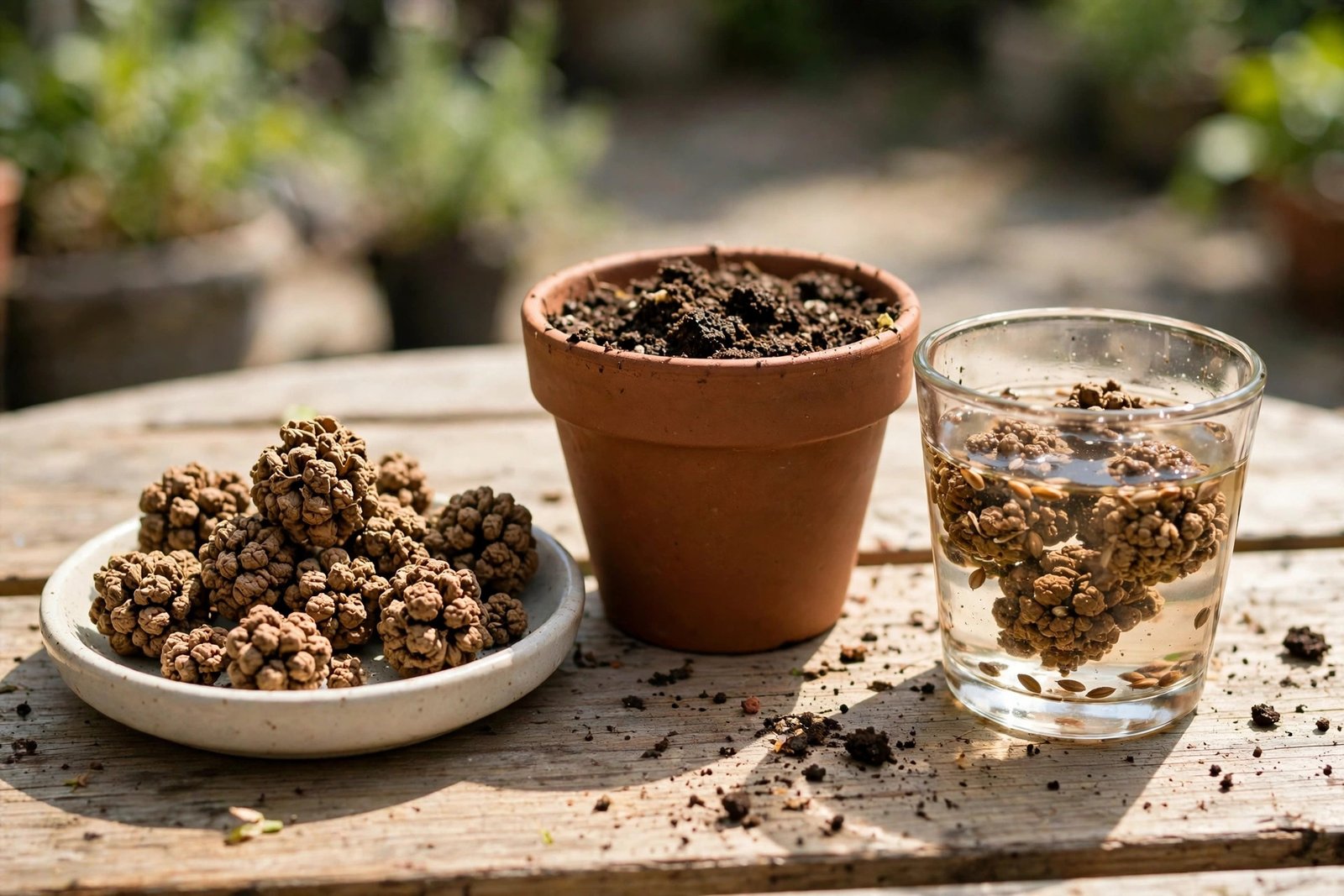
Soak the clusters in water for a few hours before planting, then push them about half an inch into damp mix, about 2 inches apart. They come up in 7 to 14 days. When several seedlings rise from one cluster, snip the extras off at the soil with scissors and keep the strongest one. Never pull the extras out. Pulling disturbs the roots of the plant you are keeping.
Thin again once the plants are a few inches tall, to about 6 to 8 inches between plants. Harvest to Table spaces full plants 8 to 10 inches apart, and the RHS keeps them closer, 2 to 3 inches, when harvesting baby leaves. The thinnings are tender and good in a salad, so nothing is wasted. Start seeds indoors 4 to 6 weeks before the last frost, and move seedlings out when there is no longer any risk of frost, at 4 to 8 inches tall. Our start seeds indoors guide covers the indoor step. Direct sow outdoors when the soil reaches 50F.
Soil and Pot: Mix, Drainage, Fabric or Plastic
Fill the pot with potting mix, never garden soil. Garden soil compacts in a container and holds more water than a mix. A good mix has compost and worm castings for food, plus perlite or vermiculite for drainage. Our best soil mix for vegetables in pots guide lays out the mix. Leave about an inch of space below the rim so you can water without spilling, and wet the mix before you plant.
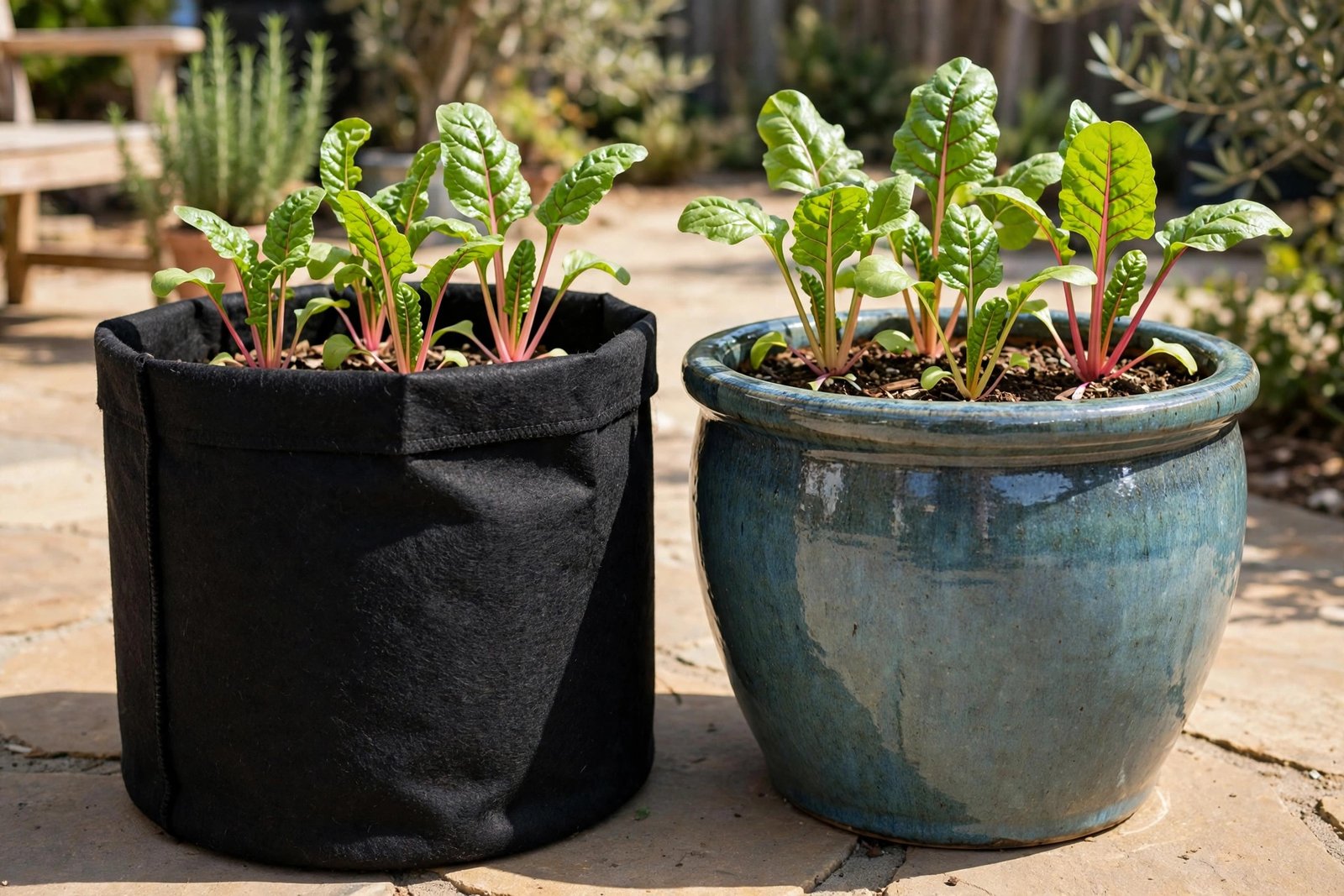
Drainage holes are not optional. Chard rots in soggy soil, so the pot must drain, and the saucer must be emptied after watering.
Fabric or plastic is a real choice, and it is about water, not fashion. A fabric grow bag dries out faster than a plastic pot, especially in wind, and chard likes to stay evenly damp. A glazed or plastic pot forgives a missed day more. The Almanac House blog grows chard in fabric bags and still says a plastic pot forgives you more if you skip a day on a warm afternoon. Our grow bags vs pots comparison covers the trade-off in full.
Light and Water: Even Moisture or Bitter Leaves
Six to 8 hours of sun is best, according to Harvest to Table. Matt Magnusson puts the floor at 5 to 6 hours. The Almanac House blog goes lower still: 4 to 6 hours, and its north-facing balcony gets about 5 hours and the plants do fine. So chard is not a full-shade plant, but it is one of the few vegetables that still produces with less than a full day of sun. Do not promise it full shade.
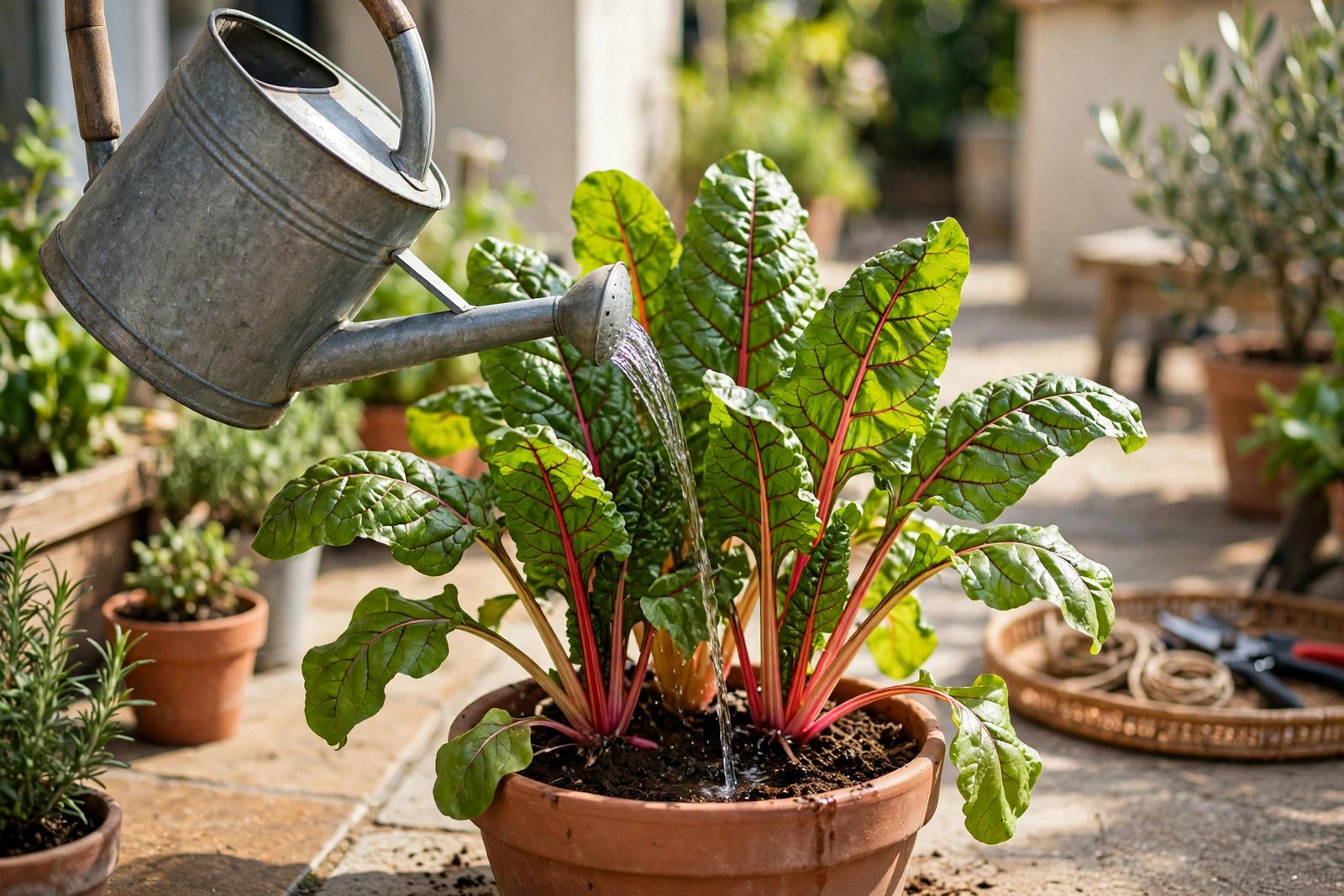
Water is where chard turns bitter. Water when the top inch of mix feels dry, aim at the soil, and keep the moisture even. Uneven watering is the most common reason for tough, bitter leaves, says The Almanac House blog. Water thoroughly until it drains from the bottom, and mulch the surface to hold moisture. Chard is a thirsty plant, and a skipped day on a hot afternoon shows up in the leaves.
Feed a Plant You Keep Cutting
Every cut takes nutrients out of the pot, so a plant you harvest for months needs feeding through the season. The sources disagree on how often, and the difference is the form of the feed.
Harvest to Table calls chard a heavy feeder and feeds a balanced fertilizer every 2 to 3 weeks when the mix has no slow-release fertilizer in it. The Almanac House blog works a few tablespoons of slow-release granular feed into the top of the mix at planting, then again every 5 to 6 weeks. Both are right for their feed: liquid feeds wash through faster, granular slow-release feeds last longer. The safe line is light and regular: feed at planting, then feed again on a steady schedule through the season. If your mix already has slow-release fertilizer in it, you may not need to feed at all.
Harvest Cut-and-Come-Again
Start picking when the outer leaves are 6 to 8 inches long, usually about 8 weeks from seed. Cut the outer leaves about an inch above the soil with scissors or a sharp knife, and leave the small center leaves alone. The plant keeps sending up new growth from the middle. Take no more than a third of the plant at one time.
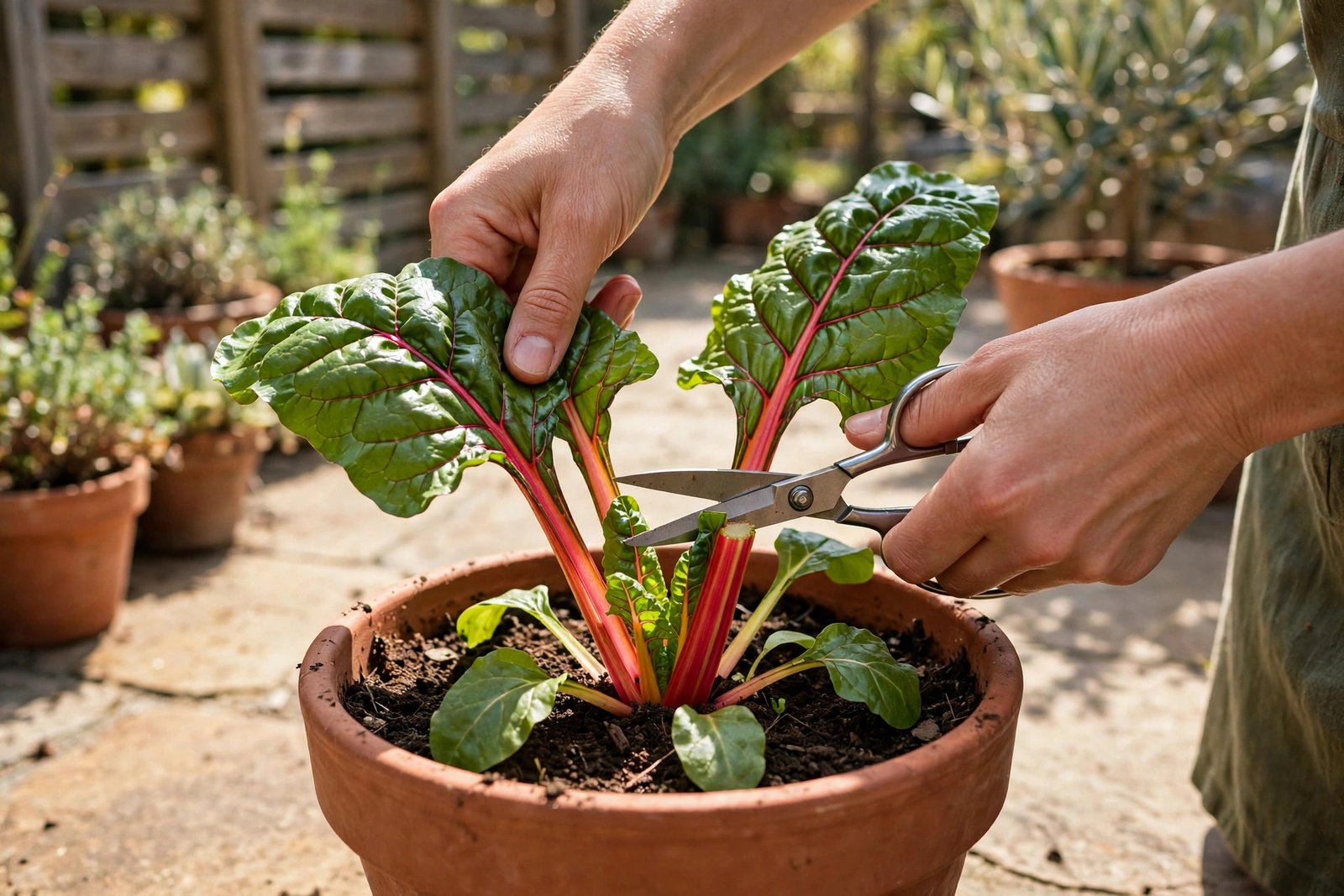
Pick often. Chard that sits too long gets large, coarse, and bitter. Younger leaves taste sweeter and cook faster. If a plant gets leggy or tired in midsummer, cut it back hard to about 2 inches, give it water and a little feed, and it will push out fresh leaves in a couple of weeks.
One plant can be productive for all or most of the season, says Harvest to Table, and in a warm climate production can run 4 to 6 months, according to jardineriaon. That is the payoff for the pot-size work at the start: one good pot, months of leaves.
Succession and Cold: Keep It Going
Sow a second batch in July and you will have leaves into the fall, says the Almanac House blog. Matt Magnusson sows in spring and again in summer and fall, so fresh chard is ready through the year. Staggering the sowing beats planting everything at once and watching it all age together.
Chard tolerates light frost, and the RHS says plants in a sheltered spot survive mild winters to produce a fresh crop in spring. Matt Magnusson overwinters chard in zone 7. In a cold climate, protect the pots before the first frost. Chard is a biennial, so in its second spring it will bolt and flower. Pull the plants then and start over.
When Leaves Look Wrong
Most chard problems trace back to water, light, or a crowded pot. A few specifics:
- Tough, bitter leaves. Uneven watering is the usual cause, and leaves left on the plant too long also turn coarse and bitter. Water evenly and pick the outer leaves young, at 6 to 8 inches.
- Pale squiggly trails. Leaf miners. Pick off the affected leaves and throw them in the trash, not the compost.
- Holes in young leaves. Slugs and snails. Check the pot in the evening, and mulch the surface, which helps keep them down.
- Wilting. Check the soil moisture first. Chard is thirsty, and a dry pot wilts fast. Water thoroughly until it drains, and do not let the pot stand in water after.
- Bolting in heat. Chard rarely bolts in its first season, but in a very hot climate it prefers partial shade. If a plant bolts, harvest what is there and sow again.
- Aphids on young leaves. Small colonies on the new growth. Rinse them off with water, or use potassium soap or neem oil.
How to Use the Harvest
Chard cooks like spinach, and the leaves swap into most spinach recipes. The stems need a little longer than the leaves, so cook them first. Harvest to Table sautes chopped stems with garlic for 3 to 5 minutes, then adds the leaves for 2 to 3 minutes until wilted. Or roast the stems at 400F for 10 to 15 minutes, then add the leaves for 3 to 5 minutes until crisp.
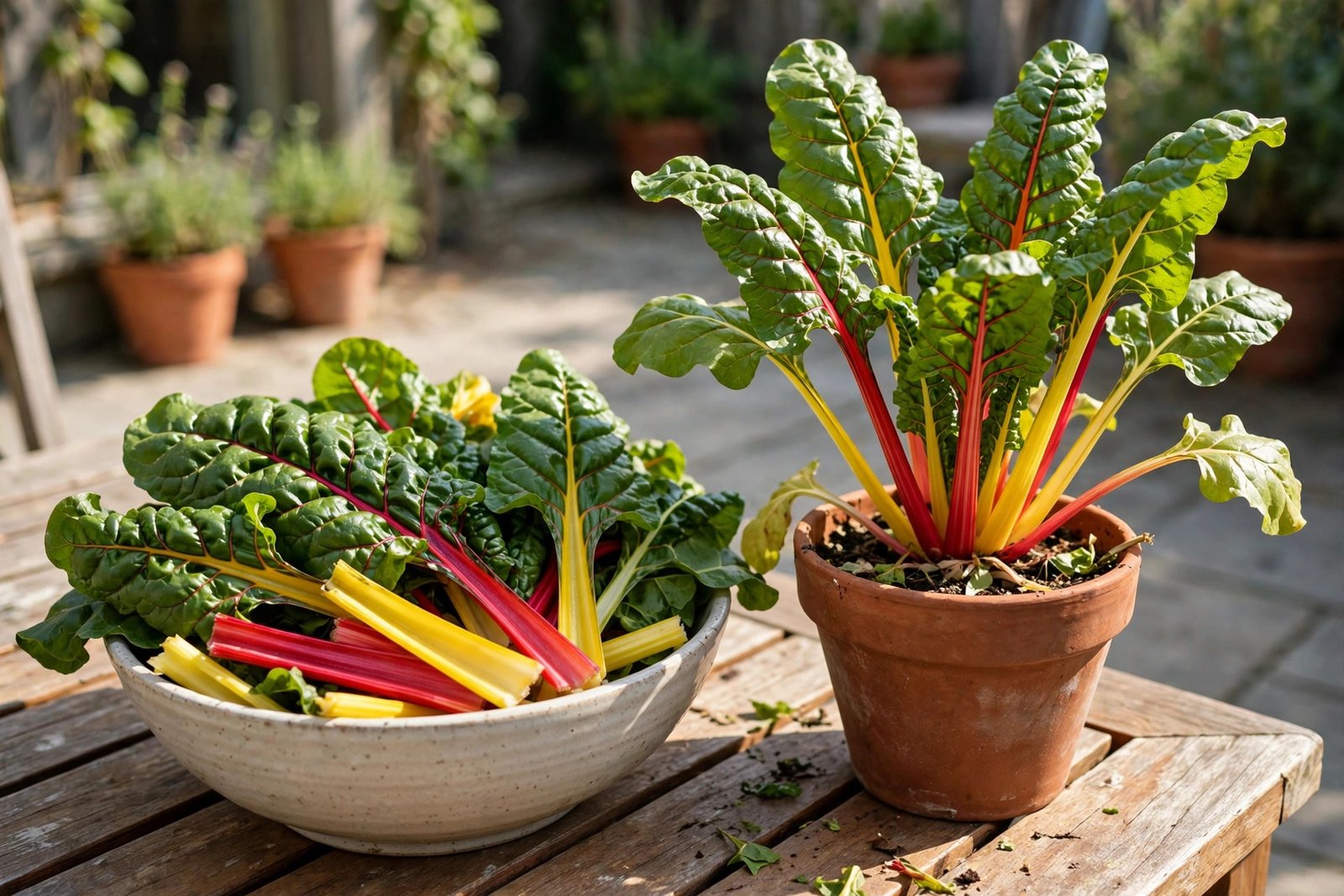
Young leaves go raw into salads. Older leaves suit pasta, lasagna, soups, and sautes. The earthy, mineral flavor puts some people off raw chard, so start with young leaves in a saute before you decide. Freeze extras after blanching: boil the leaves for 3 to 5 minutes, rinse cold, dry, and pack flat.
That is the whole plant: a pot picked with care, seed ordered in January, and one plant that keeps cutting for months. Pick the pot and the spot this winter, and chard will be ready when the soil warms. It earns its place among our best vegetables to grow in pots, and it is one of the few that looks as good as it cooks.
Frequently Asked Questions
What size pot does Swiss chard need?
At least 12 inches deep and 3 to 5 gallons for one plant, or 5 gallons for two or three plants cut young. Sources disagree: Harvest to Table says 12 inches deep, the RHS says 10 inches, and Matt Magnusson says 8 inches is enough if the pot is wide. The 12-inch pot satisfies every source except the 8-inch floor, and it sides with the taproot claim, which is the safer bet in a pot.
Should I sow chard now or wait for spring?
Wait. It is late November. Order seed in January, start indoors 4 to 6 weeks before the last frost, and sow outdoors in late March to April, a few weeks before the last frost. A second sowing in July gives leaves into the fall. The work to do now is to pick the pot and the spot.
Why are my chard leaves tough and bitter?
Uneven watering is the most common reason, and leaves left on the plant too long also turn coarse and bitter. Water when the top inch of mix feels dry, keep the moisture even, and pick the outer leaves young, at 6 to 8 inches, instead of letting them grow large.
Is Swiss chard the same plant as beet or spinach?
Chard is the same species as beet, Beta vulgaris, but it is the beet bred for leaves, not for root. It is not spinach. The leaves cook like spinach and swap into most spinach recipes, but spinach bolts at the first hot afternoon while chard keeps cutting through heat.
Sources and Further Reading
Harvest to Table, Growing Swiss Chard in Containers Step-by-Step
Royal Horticultural Society, Grow your own colourful chard in a pot
Matt Magnusson, How I grow Swiss chard in containers and raised beds
The Almanac House blog, Swiss Chard in Containers (Cut-and-Come-Again)
jardineriaon, Complete Guide to Growing Swiss Chard in Pots