
Indoor Gardening
Indoor Herb Garden: A Beginner’s Guide to Growing Herbs Indoors
Learn how to grow fresh culinary herbs indoors with practical advice on light, containers, potting mix, watering and harvesting, even when you only have a small space.
Quick answer
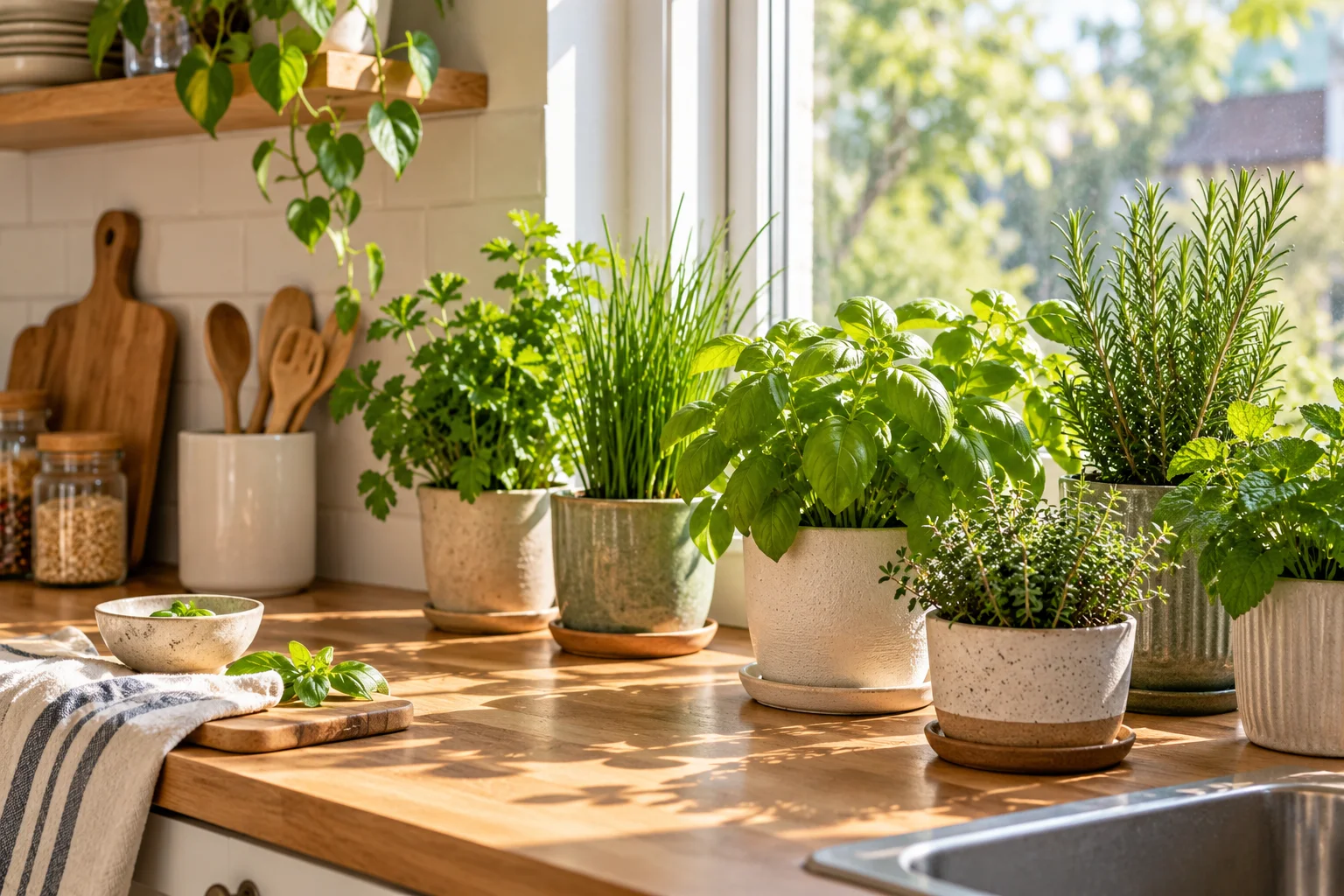
Yes, you can grow many useful culinary herbs indoors without a traditional garden. The biggest factors are suitable light, good drainage, the right herb for your conditions and a watering routine based on the plant and potting mix rather than a fixed calendar.
For a first setup, start small: one bright location, two or three herbs you will actually use and containers that drain well.
In this guide
An indoor herb garden does not need to look like a greenhouse. A few well-placed pots beside a bright window can give you fresh basil, chives, parsley, mint or other culinary herbs within easy reach.
The easiest way to begin is to work with the space you already have. Check the light first, then choose herbs that fit those conditions. From there, simple containers, a suitable potting mix and sensible watering do most of the work.
What You Need to Start an Indoor Herb Garden
You do not need expensive equipment. A small indoor setup can begin with a handful of practical basics:
Containers with drainage: excess water needs a path out of the root zone.
Quality potting mix: use a lightweight mix designed for containers.
Suitable herbs: choose plants that match your available light and space.
Usable light: a bright window is ideal for many culinary herbs.
Water: enough to moisten the mix without keeping roots constantly soggy.
A practical location: keeping herbs visible makes routine care easier to remember.
Choose the Right Spot Before You Choose Your Herbs
Look around your home before buying plants. The best location is usually the brightest practical spot that also works with your daily routine. A sunny windowsill can be excellent, but a bright kitchen counter or shelf can work too when the light is strong enough.
Sunny windowsill
A bright window can provide the natural light many culinary herbs need. Leave enough room for airflow and everyday use.
Kitchen counter
A counter near a bright window keeps herbs easy to see and harvest. Avoid spots where pots will be knocked over during cooking.
Small shelf
Shelves save counter space. Make sure the plants still receive adequate light or add suitable supplemental lighting.
One compact herb station
Grouping a few herbs together often makes watering and checking leaves simpler than scattering pots throughout the home.
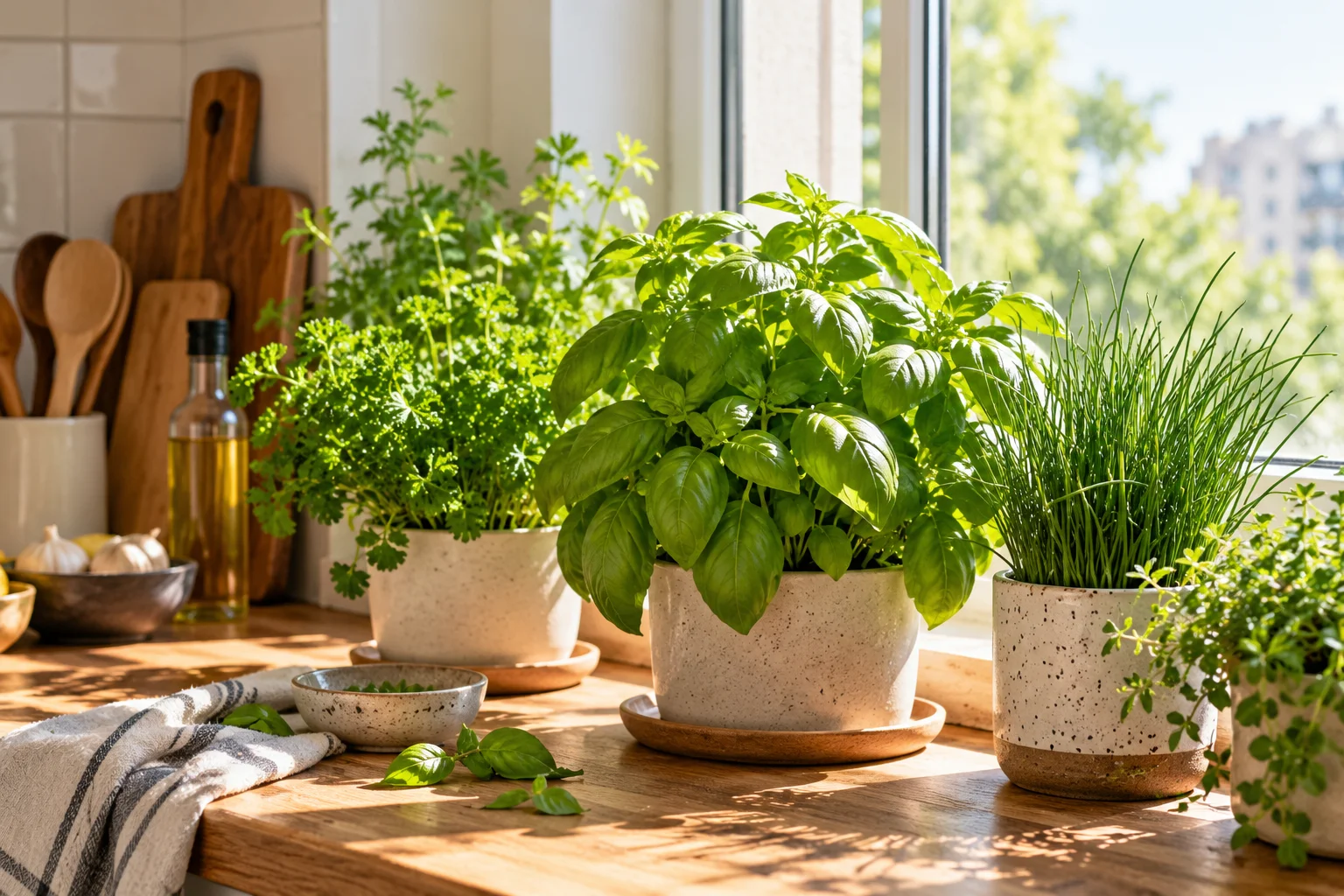
A simple rule: choose the strongest practical light source you have, then choose herbs that can handle it. This is easier than choosing plants first and trying to make a poor location work.
Best Herbs to Grow Indoors for Beginners
Some herbs adapt to container life more easily than others. Your best starting choices depend on light, available space, moisture needs and what you actually use in the kitchen.
| Herb | Beginner level | Light | Moisture | Space | Good for |
|---|---|---|---|---|---|
| Basil (Ocimum basilicum) | Easy | Bright | Keep evenly moist | Small | Cooking, salads, sauces |
| Mint Mentha spp. | Easy | Moderate to bright | More consistent moisture | Small | Tea, drinks, desserts |
| Chives Allium spp. | Easy | Moderate to bright | Even moisture | Small | Garnishes, eggs, soups |
| Parsley (Petroselinum crispum) | Easy to moderate | Bright | Moderate | Small | Cooking |
| Thyme Thymus spp. | Moderate | Bright | Let mix dry somewhat | Small | Cooking, roasted dishes |
| Rosemary (Salvia rosmarinus) | Moderate | Bright | Let mix dry between waterings | Medium | Cooking, potatoes, soups |
How Much Light Do Indoor Herbs Need?
Light is one of the biggest factors in an indoor herb garden. Many culinary herbs perform best with several hours of strong sunlight. University of Maryland Extension recommends a sunny south- or west-facing window for many indoor herbs, while Penn State Extension notes that light needs vary between herbs.
Watch the plant as well as the window. Thin, stretched stems and weak growth can be signs that the available light is not strong enough. When natural light falls short, a suitable grow light can supplement what the plant receives from the room.
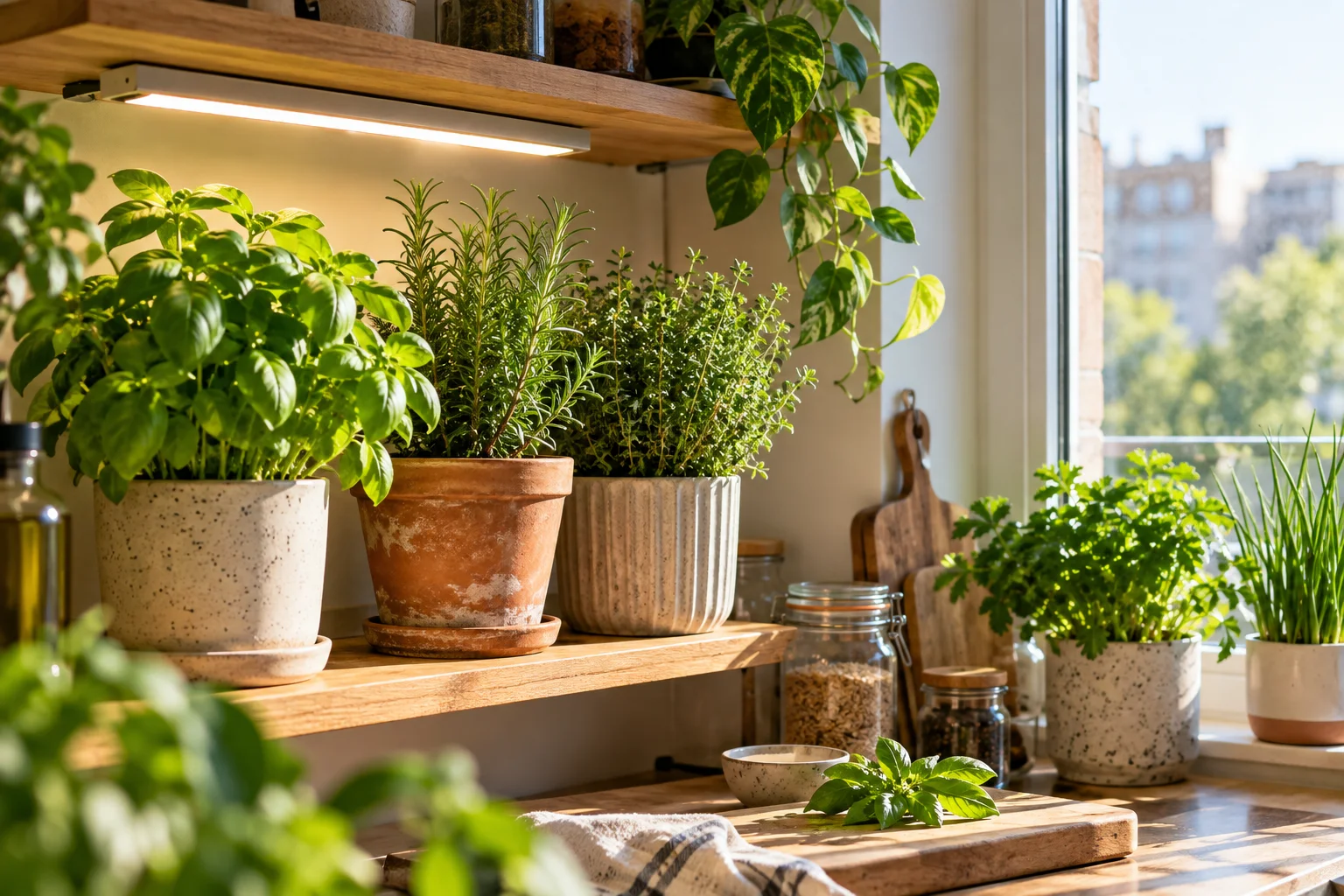
Use natural light first
Start with the brightest practical window. If growth becomes noticeably uneven, rotate the container occasionally.
Use a grow light when needed
A suitable LED grow light can help in darker rooms or during periods when natural daylight is insufficient.
Choose the Right Pots and Containers
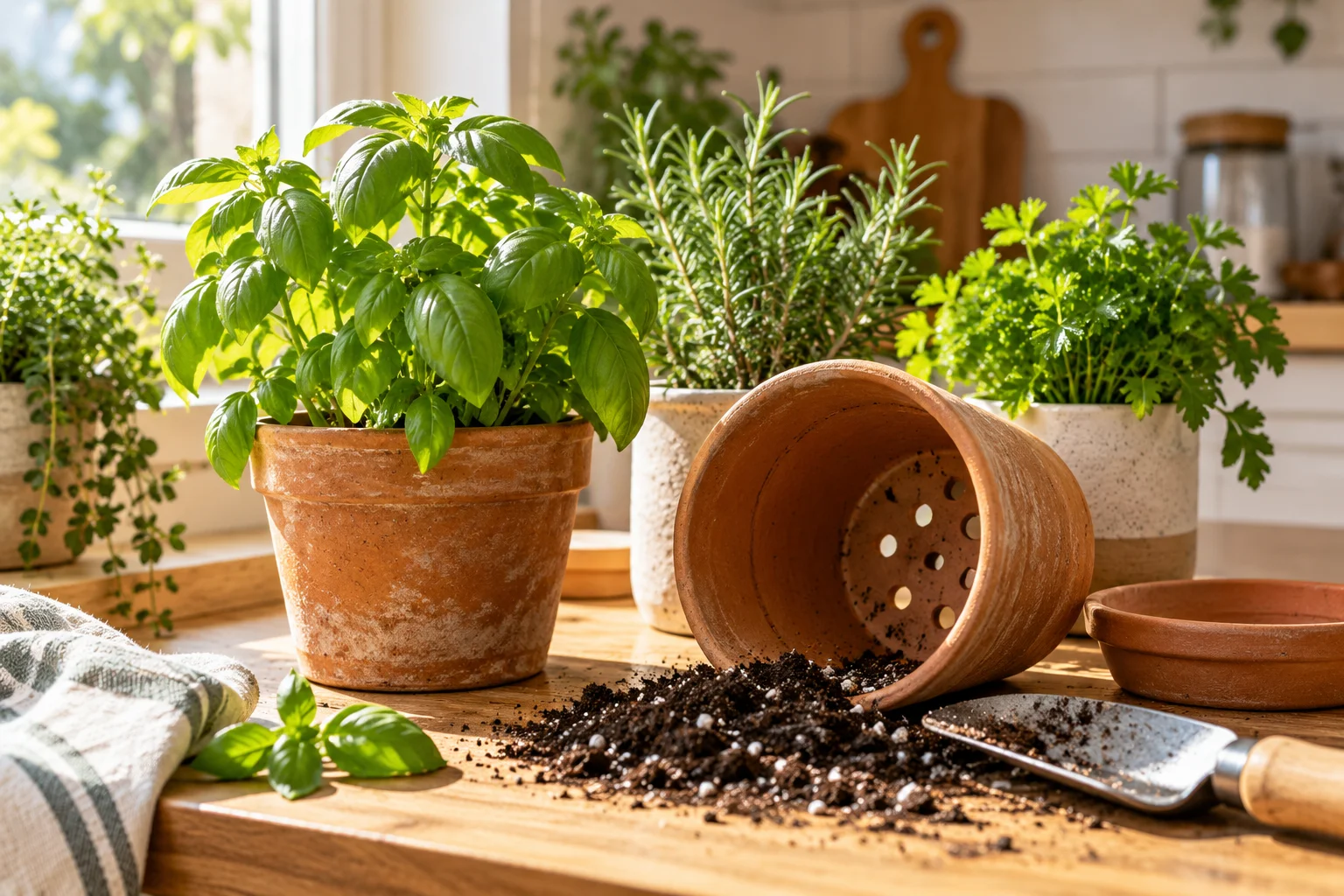
Drainage matters more than the appearance of the pot. Use a container with drainage holes and place it on a saucer or tray. Terracotta, ceramic and quality plastic can all work.
Choose a container that fits the herb rather than moving a small plant into a very large pot. A much larger volume of wet mix can stay moist around the roots longer than the plant needs.
What Potting Mix Should You Use?
For indoor containers, use a lightweight commercial potting mix rather than digging soil from an outdoor garden. University of Maryland Extension recommends a well-draining, lightweight mix for herbs grown in containers.
The goal is a mix that holds enough moisture for the herb without becoming heavy and waterlogged. Follow the product directions rather than adding amendments automatically.
How to Water Indoor Herbs
There is no single watering schedule that fits every indoor garden. Sunlight, season, room temperature, pot size and airflow all affect how quickly the mix dries.
Check the potting mix before watering. Water thoroughly when the plant’s moisture needs call for it and let excess water drain from the bottom. Do not leave the pot sitting in collected water.
Rosemary and thyme generally tolerate more drying between waterings than basil, mint and chives. Match the routine to the herb instead of using one identical schedule for every pot.
A Simple First-Week Routine
The first week is about observation rather than constant adjustment. Give the plant time to settle and watch how the leaves, light and potting mix behave.
Check drainage
Make sure water can leave the container freely and that the saucer is not holding standing water.
Watch the light
Notice whether the plant leans toward the window or develops weak, stretched growth.
Check moisture
Feel the mix before watering rather than following a calendar.
Look for stress or pests
Scan leaves and stems for discoloration, wilting or visible pests.
How to Plant Your Indoor Herbs
Starter plants are often the quickest route for beginners, while seeds give you more choice over varieties. Whichever route you choose, keep the process simple.
Prepare the pot
Confirm the drainage holes are open and place the container on a saucer or tray.
Add the potting mix
Fill the container with a suitable mix and leave enough space for the root ball and final watering.
Set the plant at the right level
Keep the crown and stem around the same level they were growing at rather than burying the plant too deeply.
Water and place
Water the fresh planting thoroughly, let excess drain and return it to its intended light conditions.
How to Harvest Herbs Without Hurting the Plant
An indoor herb garden is meant to be used. Harvest small amounts regularly while leaving enough healthy foliage for continued growth.
For basil, cut or pinch stems above a healthy pair of leaves. For chives, cut leaves cleanly while leaving enough growth for the clump to recover. For rosemary and thyme, take smaller sprigs from healthy growth rather than removing large sections at once.
Common Indoor Herb Garden Mistakes
Too little light
A beautiful pot cannot compensate for a poor light source. Review the location when growth becomes weak or stretched.
No drainage
Containers without drainage can trap excess water around roots.
Watering on a fixed schedule
Indoor conditions change. Check the mix and the plant before adding more water.
Overcrowding
A few well-spaced herbs are easier to light, water, inspect and harvest than a crowded collection.
Heat or strong drafts
Avoid placing pots directly beside heating or cooling vents and other strong drafts.
Indoor Herb Garden Ideas for Small Spaces
Small-space gardening works best when every pot earns its place. A narrow windowsill can hold a few compact herbs, while a shelf, rolling cart or dedicated kitchen corner can create more room without using much floor space.
Think vertically when useful, keep the collection manageable and favor herbs you cook with often. If natural light is limited, one compact shelf with suitable supplemental lighting can be more practical than scattering plants through dim corners.
Indoor Herb Garden FAQ
Can I grow herbs indoors without direct sunlight?
Some herbs tolerate lower light better than others, but many culinary herbs perform best with strong light. Supplemental lighting can help when natural light is not enough.
What are the easiest herbs for a beginner?
Basil, mint, chives and parsley are useful starting points for many beginners. Your available light and watering habits should still guide the final choice.
Can I grow several herbs in one pot?
Sometimes, but separate pots usually make light and watering easier because herbs can have different moisture needs and growth habits. Mint is often easier to manage on its own.
How often should I water indoor herbs?
Check the potting mix instead of using one fixed schedule. Different herbs and different rooms dry at different rates.
Sources and Further Reading
The practical guidance in this guide is based on university extension resources and adapted for indoor kitchens, apartments and other small-space growing situations.
Start With the Space You Have
You do not need a greenhouse or a large kitchen to begin. Pick one bright spot, start with a few herbs you will actually use and build a care routine you can keep up with.
Once that small garden is working, you can expand naturally into shelves, containers, balconies and other growing spaces.