
How to Grow Vegetables Indoors
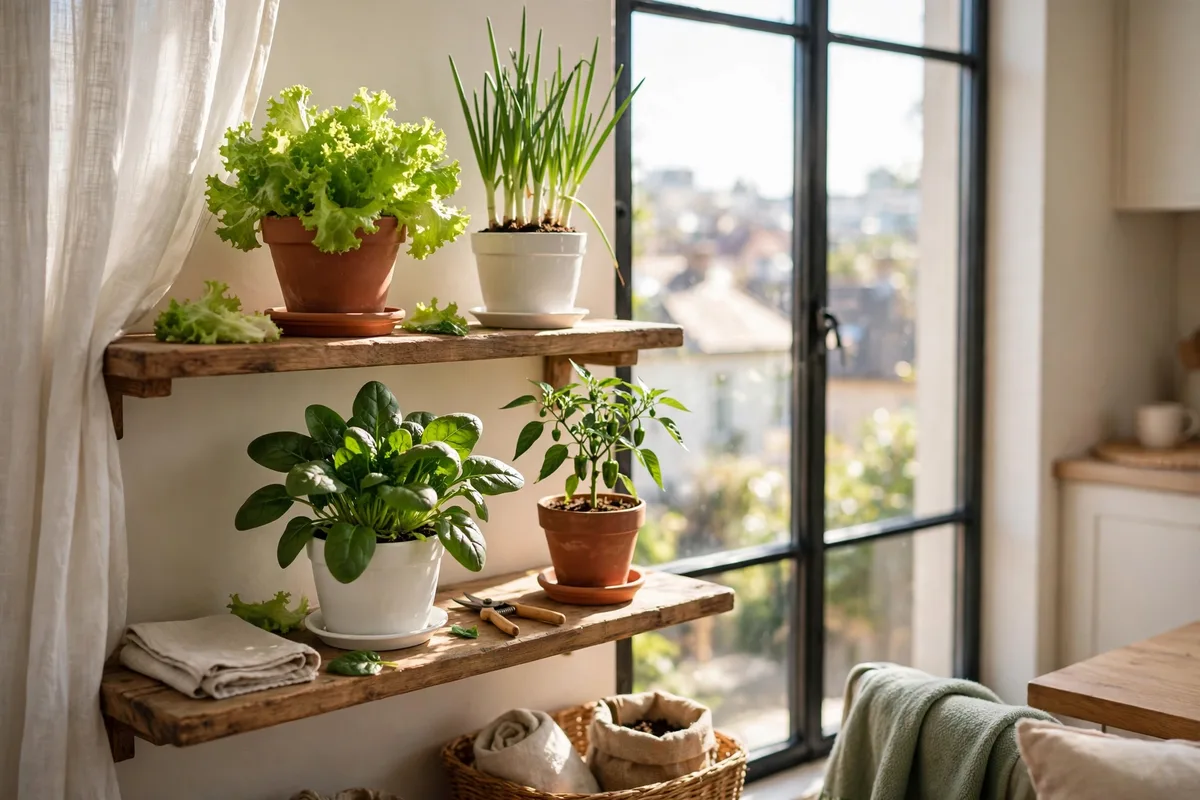
Growing vegetables indoors is mostly a light decision, not a gear decision. Pick crops that match the light your home really has, and a windowsill turns into a small but steady salad bar. Pick crops that want more light than you can give, and the same windowsill turns into a row of pale, leggy disappointments.
This guide works in that order. Light first, then the crops sorted into three tiers by how much light they demand, then the simple setup and weekly routine that keep them going. If it is herbs you are after, basil and friends live in our indoor herb garden guide. This page is vegetables only.
The short answer:
- Leafy greens grow at a bright window with no special equipment.
- Roots and peppers want a basic grow light to perform well.
- Fruiting crops like dwarf tomatoes are a project, and a rewarding one, with a light and some patience.
- Expect salads and garnishes, not a replacement for the grocery run.
Start With Your Light, Not a Seed Catalog
Every indoor vegetable question is a light question in disguise. Seed packets assume outdoor sun. Window glass already cuts a share of that light, and a few feet into the room it falls off fast. So audit your brightest spot first, then choose crops that fit it.
Read your window honestly
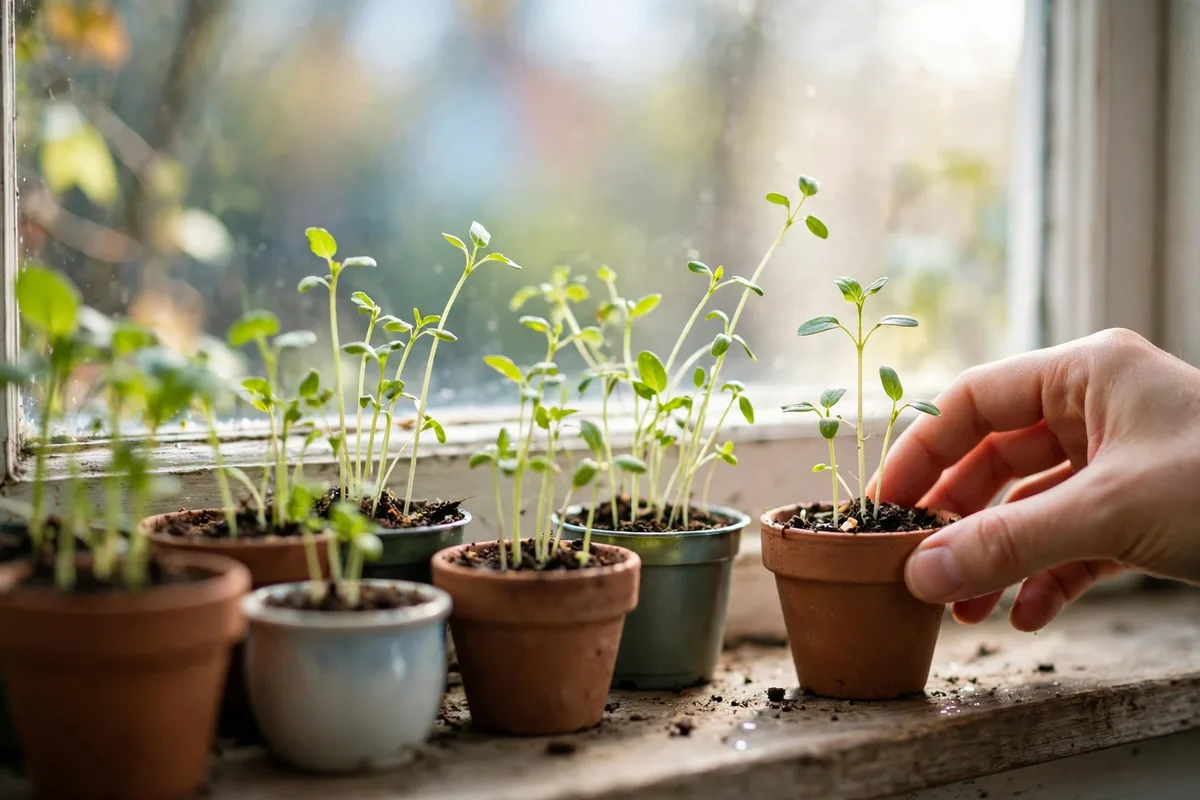
Watch one full day if you can. A south-facing window gives the longest, strongest light. East and west windows give a solid half day. A north window gives gentle light that suits almost nothing edible. Count the hours of direct sun that actually land on the sill, not the hours the room feels bright. University of Maryland Extension puts cool-season crops like lettuce and spinach at 3 to 5 hours of direct sun outdoors, and warm-season crops like tomatoes and peppers at 6 to 8. Behind glass, treat those numbers as the floor, not the target.
Two habits help any window perform its best. Put the pots right at the glass, not on a table across the room. And turn each pot a quarter turn every few days so plants grow straight instead of leaning. Our guide to how much sunlight indoor plants really get walks through how to measure a spot properly if you want the full method.
When a grow light earns its shelf space
A simple LED bar changes what your home can grow. It lifts roots and peppers from struggling to reliable, and it keeps everything growing when winter days shrink. You do not need a tent or a rack of equipment. One full-spectrum bar over a shelf is enough for a starter setup.
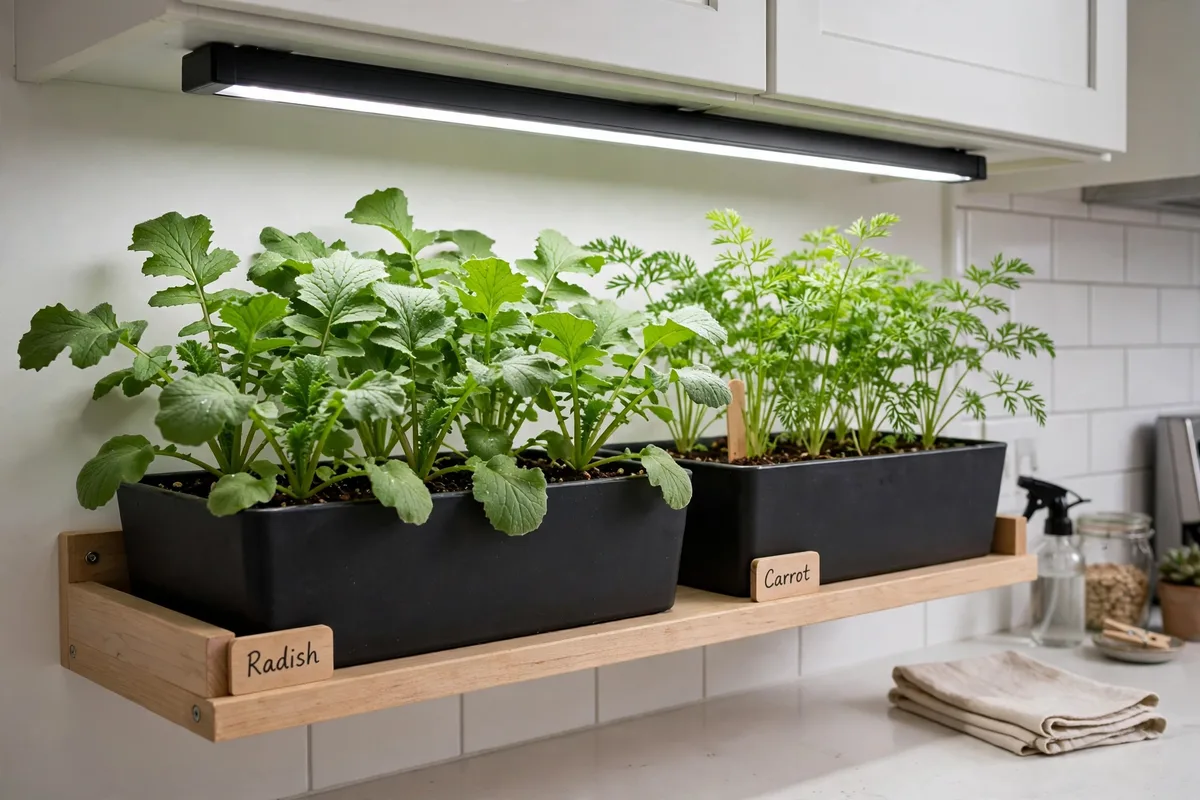
Keep the fixture close to the leaves. University of Maryland Extension guidance for indoor greens runs lights about 6 to 12 inches above the foliage, on long days of around 14 to 16 hours total light. A modest light hanging close beats a strong light mounted high. A cheap plug-in timer keeps the schedule steady on the days you forget.
The Three Tiers at a Glance
Match the crop to the tier your light can support. Container minimums below follow University of Maryland Extension’s container table. Harvest timing follows seed packet guidance for the types named, and indoors it often runs a little slower.
| Crop | Tier | Light | Container | First harvest |
|---|---|---|---|---|
| Loose-leaf lettuce | 1 | Bright window or basic LED | Wide planter, 1/2 gallon or more | First cut in about 30 days |
| Spinach and Swiss chard | 1 | Bright window or basic LED | 1 to 2 gallon pot | Baby leaves in about 4 to 6 weeks |
| Scallions (green onions) | 1 | Bright window | Any wide pot | Green tops in a few weeks |
| Microgreens | Fast lane | Window or LED | Shallow tray | 7 to 21 days |
| Radishes | 2 | Strong window plus LED backup | Deep window box | About 25 to 30 days |
| Short carrots | 2 | Grow light recommended | 2 gallon, deep | About 55 to 65 days for short types |
| Compact peppers | 3 | Best window plus LED | 2 to 5 gallon pot | First ripe fruit in about 3 to 4 months from seed |
| Dwarf tomatoes | 3 | Best window plus LED | 2 gallon or more | First ripe fruit about 7 to 9 weeks after transplant |
Tier 1: Bright-Window Greens
These crops forgive a modest window and pay you back fast. They grow leaves, not fruit, and leaves are the cheapest thing a plant makes. Start here and an indoor garden feels easy from week one.
Lettuce and salad greens
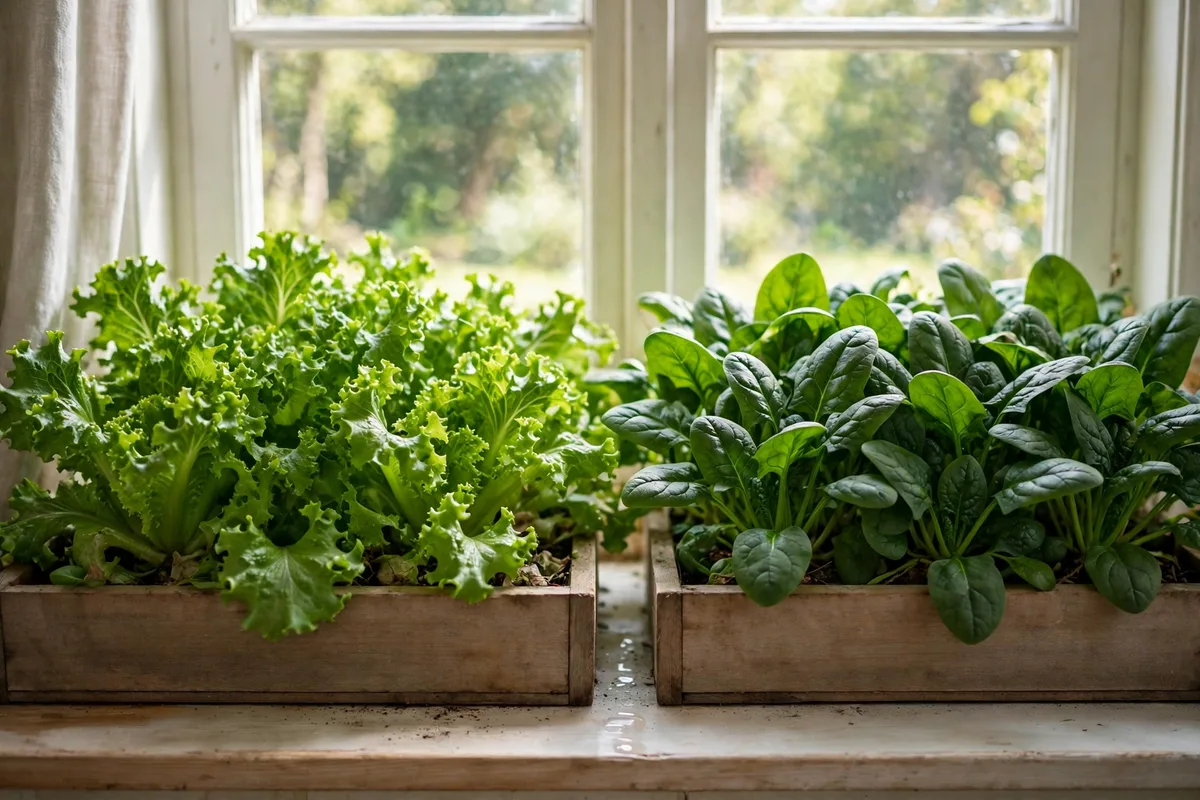
Loose-leaf lettuce is the easiest indoor vegetable there is. Sow a pinch of seed in a wide, shallow planter, keep the mix moist, and thin the seedlings so each plant gets elbow room. Cut the outer leaves once they reach a few inches and the plant keeps producing, giving you small salads for weeks from one sowing. Heat makes lettuce bitter and quick to bolt, so a cool sill away from radiators suits it well.
Leafy greens are the fastest place to start: our step-by-step guide to growing lettuce indoors runs the full 30-day calendar.
Spinach and Swiss chard
Spinach loves the same cool, bright spot as lettuce and sulks in warm rooms. Sow it a little thicker than the packet says, since indoor germination can be patchy. Swiss chard is the tougher cousin. It handles warmer rooms and keeps sending up new leaves after cutting.
Spinach pays back a cool room: our step-by-step guide to growing spinach indoors covers the cool-room routine from sowing to succession picking.
Scallions, the forgiving allium
Scallions ask for almost nothing. Sow seed in any wide pot, or push the white root ends of store-bought green onions into mix and watch them regrow. Snip the tops with scissors and they stand back up. They tolerate the light at the edge of a bright window where other crops fail, which makes them the best first plant for a doubtful spot. For the fastest win of all, you can regrow green onions in water, with fresh tops ready in about a week.
Tier 2: Roots That Want a Light
Root crops grow underground, but they still run on light. A radish in dim light makes lovely leaves and no root. Give this tier your brightest window plus an LED bar, and both crops below become realistic.
Radishes: the fast feedback crop
Radishes are the quickest root you can grow, ready in about a month. Choose round types like Cherry Belle that swell near the surface. Sow in a box at least 6 to 8 inches deep, thin seedlings to about 2 inches apart, and keep the mix evenly moist. Crowding is the classic mistake here. Ten radishes fighting in a small box give you ten threads. Five with space give you five real radishes.
Short carrots: patience in a deep pot
Carrots indoors are a slow, satisfying side project. Skip the long types and grow short round or stubby varieties bred for shallow soil, in a pot with 10 to 12 inches of loose mix. Keep the surface moist until the fine seed sprouts, which can take two weeks or more. The harvest is modest. A handful of sweet, small carrots is the honest prize.
Tier 3: The Fruiting Project
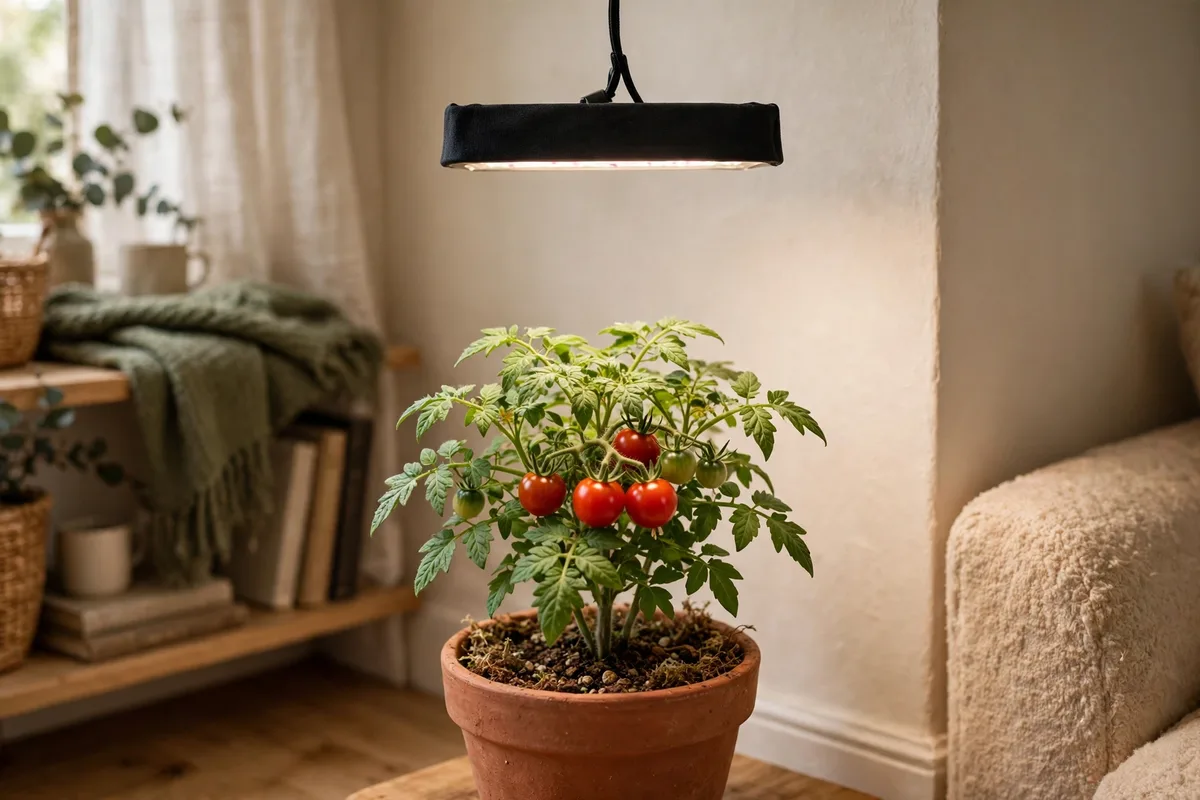
Fruit is the most expensive thing a plant makes, and indoor light is a tight budget. Peppers and dwarf tomatoes can crop indoors, but they want your best light, your biggest pots, and your patience. Treat them as the project tier, not the starter tier. Both fruiting crops start from seed indoors: the seed-starting guide covers trays, mix and timing.
Compact peppers: the bridge crop
A compact pepper plant is the friendliest way into fruiting crops. It stays small, flowers willingly under a light, and ripens a modest run of fruit over a long season. Indoors there are no bees, so tap the plant gently or shake it when it flowers to move pollen around. Expect a slow start. Peppers take their time, then produce in waves once they settle in.
Dwarf tomatoes, honestly
True dwarf and micro tomatoes are bred for exactly this job, staying under a foot or two tall while still setting real fruit. They crop well under a strong light in a 2 gallon or larger pot. The full method is a guide of its own, covering varieties, light targets and hand pollination step by step, so this hub keeps to the summary and sends you to our guide to growing cherry tomatoes indoors for the deep version.
The Fast Lane: Microgreens
If you want a harvest this week, microgreens are it. Sow thickly in a shallow tray, give the tray light once the seeds sprout, and cut your first crop in 7 to 21 days depending on the variety, per University of Maryland Extension’s guide to growing microgreens and baby greens indoors. When you are ready for the full tray method, seed rates and crop picks, our guide to how to grow microgreens owns that whole topic.
Containers, Mix, and Where Pots Live Indoors
Indoor containers follow the same rules as outdoor ones, plus a few house rules. Drainage holes are non-negotiable. So is a saucer or tray under every pot, because indoor pots live on floors, shelves and windowsills that water can stain. Lift pots on small feet or a stand so air moves underneath and surfaces stay dry.
Depth follows the crop. Leafy greens have shallow roots and thrive in wide planters with about 6 inches of mix. Carrots need the depth listed in their tier entry, filled with loose mix so the roots can push down straight. Fruiting crops get the biggest pots you can place, because more mix holds moisture steadier between waterings.
Use bagged potting mix, never garden soil from a bed. Garden soil compacts in pots, drains poorly and brings fungus gnats in with it. The full recipe, including what to add for drainage and feed, lives in our guide to the best soil mix for vegetables in pots. And if your real growing space is a sunny balcony rather than a shelf, our list of the best vegetables to grow in pots covers the outdoor version of this same decision.
Watering and Feeding: The Weekly Routine
Indoor pots dry out slower than outdoor pots, and that fools people in both directions. The fix is a routine built on checking, not on a calendar.
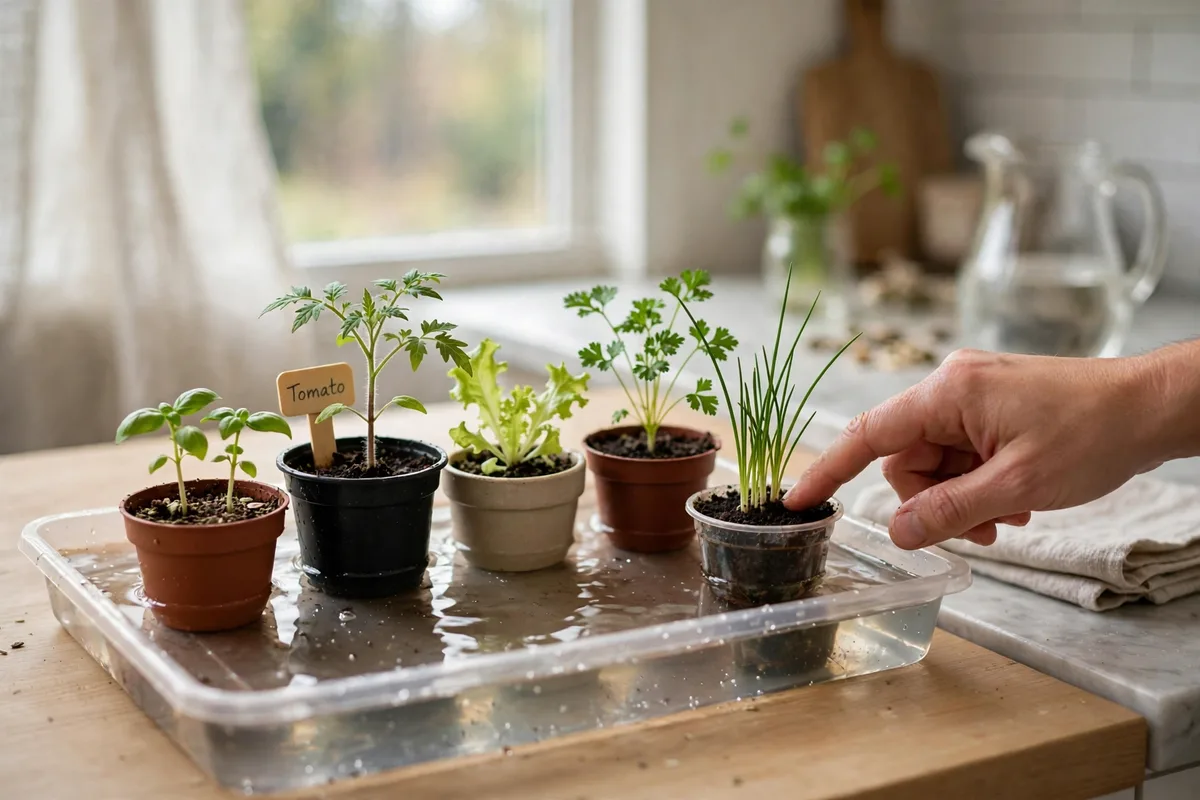
Push a finger an inch into the mix every couple of days. Water when that top inch feels dry, and water slowly until a little runs from the drainage holes. Empty the saucer afterward. Roots sitting in standing water suffocate, and the surface staying wet breeds the gnats covered below. For small pots, set the pot in a shallow tray of water for 20 minutes and let the mix drink from below, which keeps leaves and the surface drier.
Feeding is the second half of the routine. Potting mix holds only a small starter charge of nutrients, and indoor crops have no soil bank to draw on. A half-strength balanced liquid feed every week or two keeps greens dark and growth steady. Go gently. Overfeeding indoors shows up as soft, sappy growth that pests love.

What Indoor Growing Won’t Do
Here is the honest section most guides skip. Most disappointment in growing vegetables indoors comes from expecting outdoor harvests on an indoor light budget.
An indoor shelf will not feed a family. It will not replace your produce shopping. What it does give is real and worth having. A steady trickle of salad leaves you cut minutes before eating. Garnishes and scallion tops on demand. A few radishes and carrots with flavor no store bag matches. One pepper plant ripening fruit in February feels like a small miracle. It is still one plant.
Some crops stay off the indoor list entirely. Sweet corn, sprawling squash, full-size cabbage and big indeterminate tomatoes need space, pollinators or light levels a home cannot reasonably give. Winter is the hardest season, not the easiest, since window light drops then. Start with Tier 1, learn your light, and let one good shelf argue for the next upgrade.
Common Indoor Vegetable Problems
Leggy, pale seedlings
Long thin stems leaning hard toward the window mean one thing. The light is too weak or too far away. Move seedlings right up to the glass, turn them daily, or get them under a light hung close above the leaves. Leggy seedlings rarely recover into sturdy plants. If a batch has stretched badly, sow again with better light rather than nursing it along.
Fungus gnats
Tiny black flies hovering over the pots are fungus gnats, the signature indoor pest. Their larvae live in mix that stays wet at the surface. Let the top inch dry between waterings, bottom water where you can, and hang a yellow sticky trap nearby for the adults. The flies are more annoying than dangerous to you, but a heavy infestation weakens seedlings.
Flowers but no fruit
Peppers and tomatoes indoors flower into still, bee-free air. Pollen needs a nudge. Shake the plant gently every day or two while it blooms, or tap the flower clusters as you pass. Also check the basics first. Fruit set stalls when light is low, nights are cold, or the plant is hungry. Fix the light before you blame the pollen.
White fuzz on the mix
A white film on the surface is usually harmless surface mold feeding on the mix itself, a sign the surface stays wet and the air is still. Scrape it off, water from below, and improve air movement around the pots. It rarely harms established plants. Seedlings that keel over at the base are a different problem, called damping off, and those are lost. Sow the next batch in fresh mix with better airflow.
Frequently Asked Questions
What vegetables grow best indoors?
Leafy greens, and it is not close. Loose-leaf lettuce, spinach, Swiss chard and scallions grow at a bright window with no special equipment and give cut-and-come-again harvests. Radishes and short carrots join the list once you add a basic grow light. Peppers and dwarf tomatoes crop indoors too, but treat them as a project tier that wants your strongest light.
Can you grow vegetables indoors all year round?
Yes, with one catch. Indoor temperatures stay steady, so the season never really ends, but window light drops hard in winter. Greens keep going at a bright window for most of the year. In the darkest months a small grow light keeps the shelf productive, and cool-season greens often prefer a cool winter room to a hot summer one.
Do I need a grow light to grow vegetables indoors?
Not for Tier 1. Lettuce, spinach, chard and scallions crop fine at a genuinely bright window, especially a south-facing one. A grow light becomes necessary when you want roots like radishes and carrots to size up, when fruiting crops like peppers and tomatoes are the goal, or when winter light at your window falls short.
How much light do indoor vegetables need?
At a window, count direct sun hours on the sill. University of Maryland Extension puts cool-season crops at 3 to 5 hours of direct sun and warm-season crops at 6 to 8, and glass cuts light further. Under an LED, think in long days instead. Around 14 to 16 hours with the fixture 6 to 12 inches above the leaves is the working range for indoor greens.
What size containers do indoor vegetables need?
Smaller than most people expect. University of Maryland Extension minimums run from half a gallon for leaf lettuce and 2 gallons for carrots and chard up to 5 gallons for a full-size pepper, with compact peppers and cherry tomatoes in between. Depth matters as much as volume. Greens want width, carrots want depth, and every pot wants drainage holes.
Why are my indoor vegetables leggy?
Leggy growth is a light complaint. Seedlings stretch toward the window when light is too weak or too far away, and the stems never thicken up afterward. Move plants right against the glass, turn the pots every few days, or hang a light close above them. A badly stretched batch is usually worth resowing under better light.
Can I grow vegetables indoors in a small apartment?
Yes. This guide assumes apartment scale from the start. One bright windowsill handles Tier 1 greens in wide planters. One shelf with a single LED bar adds the root tier and microgreens. Nothing here needs a spare room, a tent or a hydroponic system, and the whole setup can live in the corner of a kitchen.
How much can I actually harvest from indoor vegetables?
Honest answer: salad scale. Growing vegetables indoors gives you fresh leaves for salads and sandwiches, scallion tops and garnishes on demand, small handfuls of radishes and carrots, and a modest run of peppers or cherry tomatoes from a project plant. It supplements the grocery run beautifully. It does not replace it, and any guide that promises otherwise is selling something.
Sources and Further Reading
- University of Maryland Extension: Growing Vegetables in Containers and Salad Tables. Container minimums by crop, direct sun hours for cool-season and warm-season crops, drainage and saucer guidance.
- University of Maryland Extension: Growing Microgreens and Baby Greens Indoors. The 7 to 21 day microgreens window, lights 6 to 12 inches above the foliage, and long light days under lamps.
- University of California Cooperative Extension, Los Angeles County Master Gardeners: container gardening handbook. Soil depths by crop and the rule that leafy crops tolerate less light while fruiting crops need the most.
- Seed producers’ packet guidance for the named varieties: radish timing, short carrot types around 55 to 65 days, and dwarf tomato types bred for pots.


10 Comments